
Gas fireplace heat built for Liberty County's mild winters.
Coastal Georgia doesn't need a furnace running all winter—it needs instant, reliable warmth for the cold snaps and ice storms that do come through Hinesville, Fort Stewart, and the rest of Liberty County. Find the right unit and connect with a trusted local dealer.
Every Project Starts From One of These Five Situations
Convenience heat for coastal Georgia's short winters.
Liberty County sits in climate zone 2A—hot, humid, and mild through most of the year, with a very light winter heating load and winter lows that average around 41°F. That's a fraction of what a place like Bismarck, ND or Burlington, VT racks up in a single month. Homes here don't need a fireplace to survive January; they need one for the handful of genuinely cold nights, the occasional ice storm that rolls through the Georgia coast and knocks out power for days, and the simple ambiance that a lit hearth adds to a living room in Hinesville or a farmhouse outside Midway.
That's exactly where gas fireplaces earn their keep in Liberty County. Natural gas service reaches many neighborhoods around Hinesville, while propane remains the standard fuel in more rural stretches of the county—Riceboro, Walthourville, Gum Branch, and much of the land surrounding Fort Stewart. Either way, a gas fireplace gives you real, on-demand heat with none of the wood storage, ash cleanup, or chimney maintenance that oak, pine, and hickory burning requires here. For military families rotating through Fort Stewart on a predictable timeline, or homeowners upgrading an older masonry fireplace, gas offers the fastest path from empty firebox to working heat source—and Liberty County has no wood-smoke air quality restrictions to complicate the choice either way.
Three steps. No salesperson until you're ready.
Tell us about your project
Your zip code, your situation, and the fuel you're leaning toward—or let the answers point you to one.
See what's actually available
The brands dealers within 100 miles genuinely carry—real options, never a catalog mirage.
Get your dealer & Project Guide
A trusted local dealer, plus the free Project Guide & Parts List that names every component of the job.
Frequently Asked Questions
How much does a gas fireplace installation cost in Liberty County?
Most gas fireplace and insert installations in Liberty County run roughly $3,500 to $9,000, depending on whether you're installing a direct-vent unit into an existing masonry fireplace, adding a new built-in unit during a remodel, or running gas line to a home that isn't currently plumbed for it. Homes near Hinesville with existing natural gas service tend to land on the lower end since the fuel line is often already in place. Rural properties around Midway or Riceboro that rely on propane sometimes need a new or upgraded tank, which adds to the project cost. A local dealer can give you a firm number after seeing your home and venting path.
Can I convert my existing wood-burning fireplace to gas?
Yes, and it's a common upgrade in Liberty County's older homes, particularly in and around Hinesville and Midway where many houses still have the original brick fireplace. A gas insert slides into the existing masonry opening and vents through a stainless liner run up the same chimney, so you keep the look of your fireplace while gaining instant, thermostatically controlled heat. Given the region's mild climate, most homeowners choose this route for the convenience and appearance rather than to replace a heavy heating load—it's an upgrade in usability more than a necessity for warmth.
Do I need natural gas, or should I plan on propane?
It depends on where in Liberty County you live. Natural gas lines run through a good portion of Hinesville and its immediate surroundings, so if your home already has gas appliances there, adding a fireplace is usually straightforward. Outside that service area—including much of the land around Fort Stewart, Midway, Riceboro, and Walthourville—propane is the standard option, supplied by regional propane companies with either an existing tank or a new installation. Most gas fireplace models can be configured for either fuel; your installer sets the correct orifice and regulator for whichever you have.
Do I even need a gas fireplace given how mild the winters are here?
It's a fair question with Liberty County having a very light winter heating load and winter lows hovering around 41°F—this isn't a climate where a fireplace is doing the heavy lifting of keeping a house warm all season. Most homeowners here install a gas fireplace for ambiance, for the occasional hard freeze or ice storm, and as backup heat when coastal Georgia's periodic winter storms take down power lines. It's less about daily necessity and more about having reliable, attractive heat on the nights you actually need it—which is a very different calculation than a homeowner in Duluth, MN or Fargo, ND is making.
Do I need a permit to install a gas fireplace in Liberty County?
Yes—a new gas fireplace installation typically requires both a building permit and a gas line permit through Liberty County's building department (or the City of Hinesville's permitting office if you're inside city limits). The gas line work must be done by a licensed gas fitter, which is one of the main reasons homeowners work with an established hearth dealer rather than a general handyman—they coordinate the gas line, venting, and inspection sign-off as part of the install rather than leaving you to manage separate trades.
Will my gas fireplace still work if the power goes out?
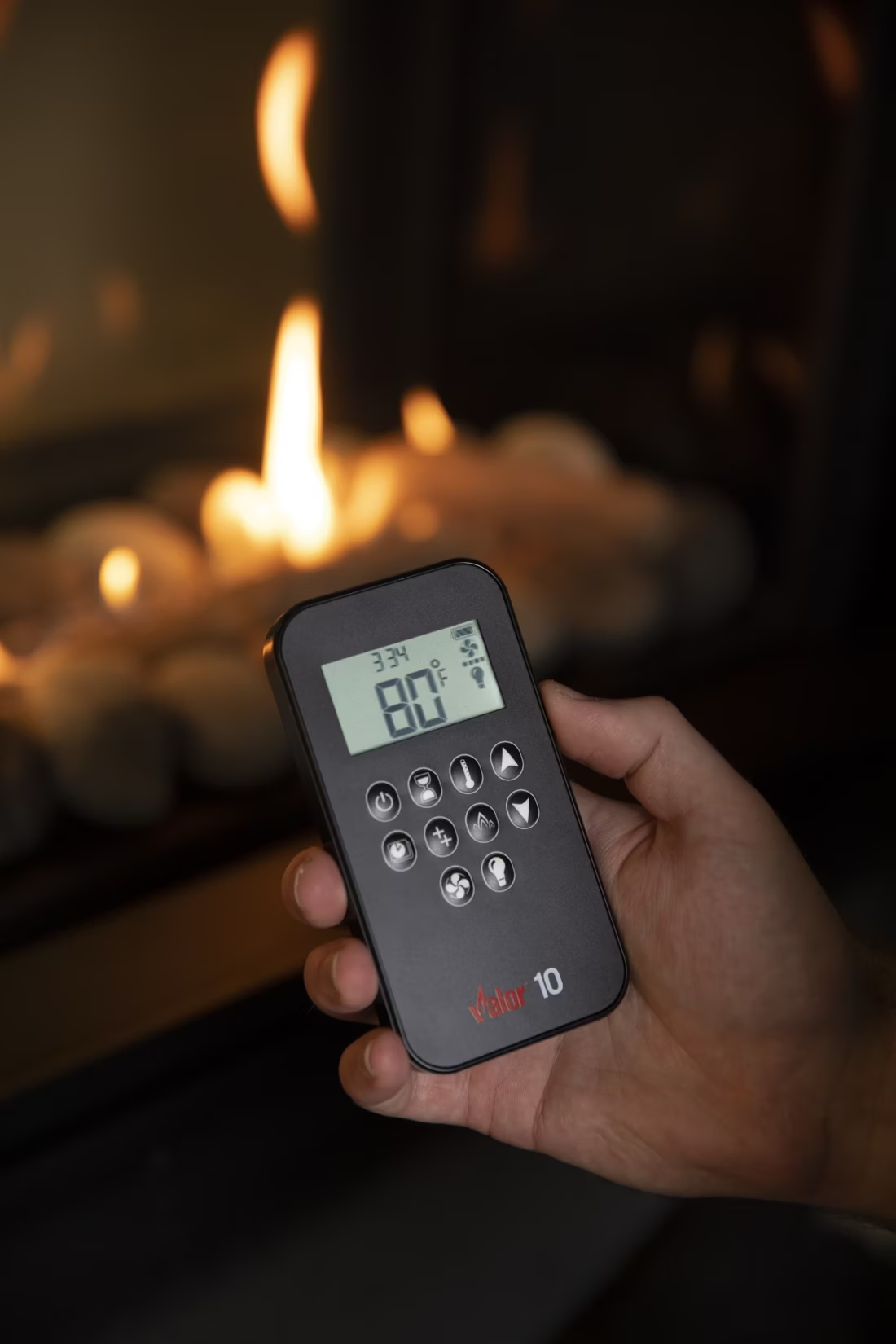
Most modern gas fireplaces will, which matters in a county that sees occasional coastal storms and ice events capable of knocking out power for days. Units with intermittent pilot ignition (IPI) run on a small battery backup that kicks in automatically when utility power drops, so the fireplace lights on demand just like normal. Valor takes a different approach: their fireplaces generate their own electricity through the pilot's thermocouple, so there's no battery to replace at all. If backup heat during a storm is a priority for your Liberty County home, ask your local dealer which ignition system a given model uses.
What's the difference between vented and vent-free gas fireplaces?
Vented (direct-vent) gas fireplaces draw combustion air from outside and exhaust it back outside through a sealed vent pipe—they're the cleanest, safest, and most universally code-compliant option. Vent-free units burn fuel directly into the room without external venting; they're legal in Georgia but come with strict room-sizing rules and oxygen depletion sensors, and some states prohibit them outright. For Liberty County's humid coastal climate, direct-vent units are the more common recommendation—they don't add moisture or combustion byproducts to a home that's already managing Georgia humidity for most of the year.
How often does a gas fireplace need to be serviced?
Plan on an annual inspection, even for a unit you only run occasionally. A certified technician checks the burner, pilot assembly, venting, and gas connections, and cleans the glass and interior—important because a fireplace that sits idle for most of Liberty County's mild year can develop pilot or igniter issues that only show up the first cold night you try to use it. Most local service providers charge $150 to $250 for a standard annual visit.
Gas vs. wood—which makes more sense for a Liberty County home?
Wood is still workable here—oak, pine, and hickory are all common and locally available, and there are no air quality restrictions limiting wood burning in the county. But given how few genuinely cold nights Liberty County sees each winter, most homeowners find that gas fits better with how the fireplace actually gets used: flip a switch, get instant heat and ambiance, and skip the wood stacking and ash cleanup for a fireplace that might only run a few dozen nights a year. Wood tends to make more sense for households that want an off-grid backup heat source or simply enjoy the ritual of a real fire; gas wins for convenience, cleanliness, and reliability during the region's occasional cold snaps and storm-related outages.
What do I measure to size a fireplace insert?
Four numbers tell you what fits: the front width, the front height, the back width, and the overall depth of your existing fireplace opening. Grab a tape measure, jot those down, and snap a photo of the wall—those two things do more to move your project forward than anything else you can do today.
What does it take to replace an existing fireplace?
Fireplaces are like icebergs—bigger behind the wall than in front of it. Replacement means removing the surrounding tile or stone (the finish material laps onto the fireplace face), pulling the old unit, setting the new one in the same enclosure, and re-finishing the wall. A hearth professional can determine what's behind your wall without demolition during an in-home preview.
What is an in-home preview and do I need one?
It's a visit where a hearth professional measures your space, confirms the model you picked actually works in your home, and walks the specs—framing, gas line, venting, finish work—before anything is ordered. Some details you just can't know until you see the house. Never make a down payment without one; it's the single most-skipped step that burns buyers.
Can I install a fireplace myself?
If you're putting a fire in your house on purpose, it's best to work with an expert. Unless you're genuinely experienced in framing, gas line, vent pipe, and the national code on clearances to combustibles, have a professional do it—and ideally the same company that sells you the fireplace, so warranty, service, and liability all live under one roof.
Stove and Fireplace Dealers in Liberty County
Find your gas fireplace in Liberty County.
Tell us a bit about your home and we'll match you with a trusted local dealer and a free Project Guide & Parts List—a plan for your gas fireplace project in Liberty County, including the exact parts, vent kit, and recommended installer.
Find Your Fireplace →