
Find the right electric fireplace for Liberty County's mild winters.
With winter lows averaging 41°F and only about 1,519 heating degree days a year, Liberty County homes rarely need serious heat—they need ambiance and the occasional evening warm-up. Find the right unit and connect with a trusted local dealer.
Every Project Starts From One of These Five Situations
Coastal Georgia doesn't need a furnace-grade fireplace.
Liberty County sits in climate zone 2A, on the Georgia coast near Hinesville, Midway, Riceboro, and the Fort Stewart-Hunter Army Airfield community. With an average winter low of 41°F and just 1,519 heating degree days per year—a fraction of what a heating-dominated climate like Duluth, MN or Bismarck, ND sees—this is not a county where anyone is relying on supplemental heat to survive a cold snap. Most days, the thermostat barely notices winter.
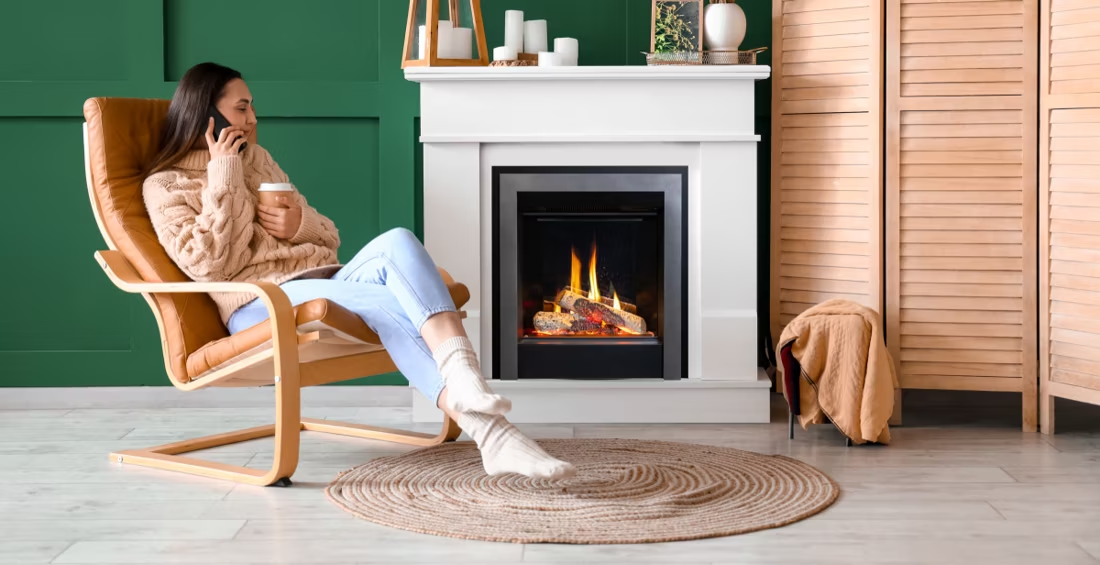
That makes electric fireplaces a strong fit for the way people here actually use a hearth: for the look and glow of a fire, for a den or bonus room that doesn't have a chimney, or for a rental or military-housing situation on Fort Stewart where a wood or gas install isn't practical. There's no venting to run, no gas line to plumb, and no permit headache—an electric insert or wall unit plugs into a standard outlet and can be up and running the same day a local dealer installs it. For the handful of colder nights each winter, the built-in heater kicks on and takes the edge off a room; the rest of the year, it's just ambiance.
Three steps. No salesperson until you're ready.
Tell us about your project
Your zip code, your situation, and the fuel you're leaning toward—or let the answers point you to one.
See what's actually available
The brands dealers within 100 miles genuinely carry—real options, never a catalog mirage.
Get your dealer & Project Guide
A trusted local dealer, plus the free Project Guide & Parts List that names every component of the job.
Frequently Asked Questions
How much does an electric fireplace installation cost in Liberty County?
Most electric fireplace installs in Liberty County run $400 to $1,200, which is a fraction of what wood or gas installations cost because there's no chimney, gas line, or venting involved. A basic plug-in insert or wall-mount unit sits at the low end; built-in units that require some carpentry—framing a niche, running a dedicated circuit, or recessing the unit into a wall—land at the higher end. Because Liberty County's winters rarely demand serious heat output, most homeowners here are buying for the fire-view effect and occasional warmth rather than as a primary heat source, which keeps the project simple and affordable.
Do I need a permit to install an electric fireplace in Liberty County?
Usually not for a plug-in insert or freestanding unit—those don't require a building permit since there's no venting or gas work involved. If you're having a built-in unit wired into a dedicated circuit, an electrician may need to pull an electrical permit depending on the scope of the work, but this is a minor step compared to the permitting required for a wood or gas installation. A local dealer can tell you quickly whether your specific unit and installation plan needs a permit.
Will an electric fireplace actually heat my Liberty County home?
Most electric fireplaces are designed as supplemental heat for a single room, not a whole-home heat source—and that's a good match for Liberty County, where the average winter low is 41°F and heating degree days total only around 1,519 for the year. A typical electric insert puts out enough heat to take the chill off a den, bonus room, or bedroom on the occasional cold night, but it isn't sized or intended to replace your HVAC system. If you're looking for real supplemental heat for a drafty room, ask your local dealer about higher-output models with a larger heating element rather than assuming all electric units perform the same.
What's the difference between an electric insert and an electric fireplace?
An electric insert is built to slide into an existing fireplace opening—including an old masonry fireplace that's no longer used for wood burning—and it typically plugs into an outlet inside the firebox or nearby. An electric fireplace (sometimes sold as a wall-mount or built-in unit) is a standalone unit designed to be mounted on a wall or recessed into new framing, with no existing fireplace required. For Liberty County homes with an unused wood fireplace, an insert is often the simplest option since it uses the opening you already have. For a bonus room, primary bedroom, or new build with no fireplace at all, a wall-mount or built-in electric unit is the more common choice.
Can I install an electric fireplace myself, or do I need a professional?
A basic plug-in electric insert or freestanding unit is genuinely a DIY-friendly project—plug it in and it works. Built-in or recessed units are a different story: they often require a dedicated 20-amp circuit, proper framing, and clearance from combustibles per the manufacturer's instructions, which is where a licensed electrician or hearth dealer earns their fee. For anything beyond the simplest plug-and-play unit, working with a local dealer means the unit is sized correctly for the space, the electrical work is done to code, and the finish work looks intentional rather than improvised.
How does an electric fireplace compare to a gas fireplace in Liberty County?
Gas fireplaces in Liberty County typically run $4,500 to $11,000 installed, since they require venting, a gas line, and permitting through the county. Electric fireplaces run $400 to $1,200 because none of that infrastructure is needed. For a climate with only 1,519 heating degree days a year, that cost gap matters—most homeowners here aren't heating aggressively enough to justify the added expense and complexity of gas unless they specifically want the look and feel of a real flame or plan to use the fireplace as a genuine secondary heat source. Electric is the practical choice for ambiance and light supplemental warmth; gas is the choice for homeowners who want a more authentic fire experience and are willing to pay for the installation that comes with it.
Are electric fireplaces a good fit for rental or military housing in Liberty County?
Yes—this is one of the more common use cases in Liberty County given the large renter and military-housing population tied to Fort Stewart and Hunter Army Airfield. Because electric units require no venting, no gas line, and no permanent structural modification, a freestanding or wall-mount unit can be installed and later removed without leaving behind chimney work or gas lines that a landlord or housing office would need to sign off on. It's worth checking with a property manager or housing office before installation, but electric is generally the lowest-friction fireplace option for non-permanent living situations.
What electric fireplace models work best in a humid coastal climate like Liberty County's?
Liberty County's coastal humidity doesn't affect electric fireplace performance the way it can affect masonry or metal wood-burning components, since there's no combustion, moisture-sensitive gasket, or chimney to worry about. That said, it's worth choosing a unit with a sealed electrical housing and asking your dealer about models rated for higher-humidity environments, especially for installations near screened porches, sunrooms, or other spaces with more airflow and moisture exposure than a typical interior room.
Electric vs. wood fireplace—which is right for my Liberty County home?
Wood fireplaces in Liberty County are typically installed for ambiance and the authentic experience of a fire using local oak, pine, or hickory, and they hold appeal even in a mild climate—but they come with chimney maintenance, a $4,500 to $9,000 typical install cost, and real heat output that most Liberty County homes don't need given the area's 41°F average winter low. Electric fireplaces skip all of that: no chimney, no ash, no wood storage, and a $400 to $1,200 install range. For most homeowners here, the decision comes down to whether they want the ritual and authenticity of a real fire or the simplicity and low cost of a plug-in unit. Both are reasonable choices in this climate—it's a matter of preference rather than heating necessity.
Can I put a TV above my fireplace?
Yes—with an asterisk. Fireplaces are hot and TVs don't like heat. Either put a mantel between them to deflect rising warmth, or choose a fireplace with heat-management technology that creates a cool zone on the wall above—the wall stays around 125 degrees, barely warm, while the room still gets full heat. If you like clean lines and don't want a mantel, heat management is the answer.
Do electric fireplaces actually produce heat?
Yes—most put out around 4,800–5,000 BTUs from a standard outlet, which comfortably warms a bedroom, office, or den as a comfort-zone heater. What they won't do is carry a whole house the way wood, gas, or pellet can. Think of electric as ambiance-first with honest supplemental heat: flames on with no heat in July, flames plus warmth in January.
What is an in-home preview and do I need one?
It's a visit where a hearth professional measures your space, confirms the model you picked actually works in your home, and walks the specs—framing, gas line, venting, finish work—before anything is ordered. Some details you just can't know until you see the house. Never make a down payment without one; it's the single most-skipped step that burns buyers.
Should the dealer who sells my fireplace also install it?
Ideally, yes. A fireplace project involves vent pipe, gas line, electrical, and often tile or stone. Hire three or four separate trades and you own the liability and the game of telephone between them. One company selling and installing means one accountable party, start to finish—ask about factory training, on-time completion records, and what happens if an inspection fails.
Stove and Fireplace Dealers in Liberty County
Find your electric fireplace in Liberty County.
Tell us a bit about your home and we'll match you with the right electric fireplace or insert, plus a free Project Guide & Parts List with your recommended local dealer in Liberty County.
Find Your Fireplace →