
Warmth and Ambiance Without the Chimney.
Lee County's winters are short and mild, so most homeowners here want a fireplace for atmosphere and the occasional cool snap—not an all-night heat source. Electric delivers both, with no venting and no gas line. Find the right unit and connect with a trusted local dealer.
Every Project Starts From One of These Five Situations
A short heating season built for modern convenience.
Lee County sits in southwest Georgia's climate zone 3A, where the average winter low hovers around 37°F and the county racks up roughly 2,024 heating degree days a year—a fraction of what a county in the upper Midwest sees. Leesburg and Smithville get their share of chilly, damp January mornings, but sustained hard freezes are rare and the burning season is short. Oak, pine, and hickory grow throughout the county and show up plenty in backyard fire pits and smokers, but wood and pellet stoves are genuinely uncommon here—the region simply doesn't generate the sustained cold-weather demand that makes a cordwood or pellet heating system worth the investment for most households.
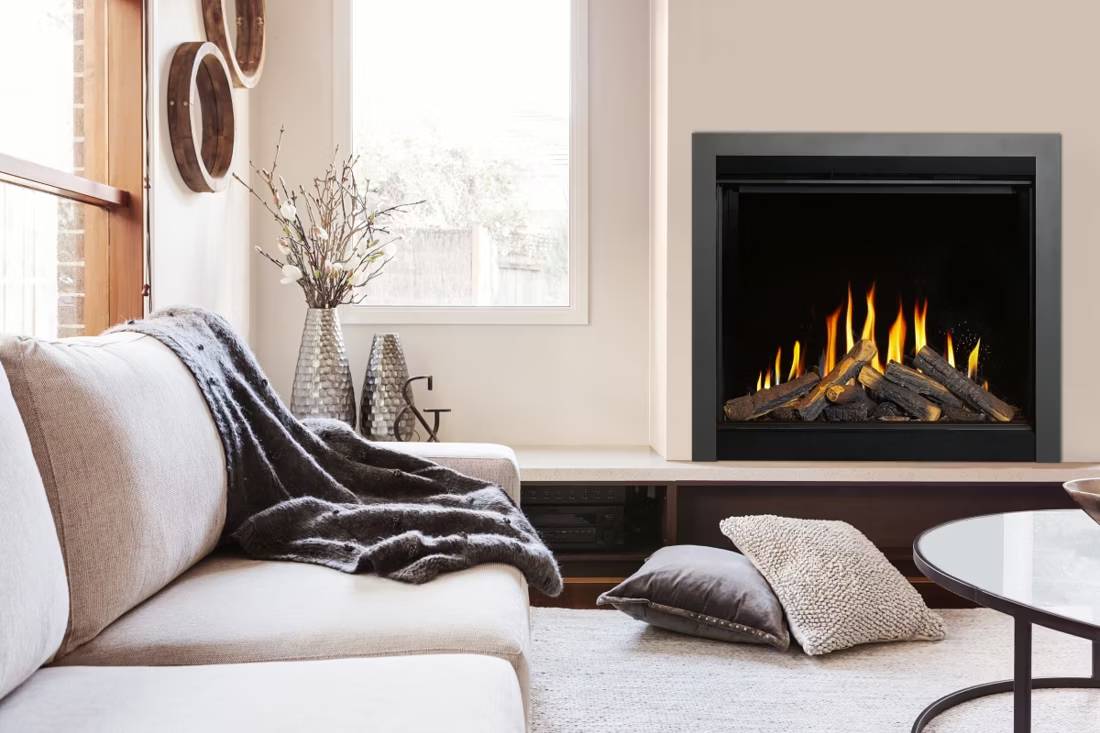
That's exactly the climate where electric fireplaces make the most sense. A built-in or wall-mounted electric unit gives you real flame-effect ambiance on the county's cooler evenings, zone heat for a single room when you don't want to run central HVAC, and none of the venting, gas line, or chimney work that a wood or gas installation requires. Georgia Power serves most of Lee County, with some rural pockets on Southwest Georgia EMC lines—either way, the grid here is reliable enough that an electric fireplace's plug-and-play simplicity is a real advantage rather than a compromise. For a county where a hard freeze is the exception, not the rule, electric heat that installs in an afternoon is often the smartest fit.
Three steps. No salesperson until you're ready.
Tell us about your project
Your zip code, your situation, and the fuel you're leaning toward—or let the answers point you to one.
See what's actually available
The brands dealers within 100 miles genuinely carry—real options, never a catalog mirage.
Get your dealer & Project Guide
A trusted local dealer, plus the free Project Guide & Parts List that names every component of the job.
Frequently Asked Questions
How much does an electric fireplace installation cost in Lee County?
Most electric fireplace installs in Lee County run between $400 and $2,500. A simple plug-in insert into an existing mantel or a wall-mounted unit on a standard 120-volt outlet sits at the low end. Built-in electric fireplaces that require a dedicated 240-volt circuit, custom framing, or a mantel surround built to match existing trim run toward the higher end. Because there's no chimney, venting, or gas line involved, electric installs are typically the fastest and least invasive fireplace project a Lee County homeowner can take on—often completed in a single day.
Do I need a permit to install an electric fireplace in Lee County?
In most cases, a simple plug-in electric fireplace or insert doesn't require a permit through the Lee County Building Department since no gas line, venting, or structural chimney work is involved. If your project includes adding a new dedicated electrical circuit or an electrician is running new wiring to support a larger built-in unit, that electrical work typically does require a permit and inspection. A local dealer or licensed electrician handling the install can tell you which category your specific project falls into before work starts.
Will an electric fireplace actually heat a room in Lee County's mild winters?
Yes, for the way most Lee County homes actually use one. With an average winter low around 37°F and only about 2,024 heating degree days a year, few households need a fireplace to carry the whole heating load—central HVAC handles that. A mid-size electric fireplace with a built-in heater (typically 4,600–5,000 BTU) is more than enough to take the chill off a single room, an addition, or a converted garage on the county's coolest nights, and you can run it without turning on the fireplace's flame effect at all if you just want the heat.
What's the difference between an electric fireplace and a space heater?
A space heater is a portable appliance built purely for heat output. An electric fireplace is designed first as a furniture-grade or built-in visual feature—realistic flame effects, log or crystal media, and finish options that match cabinetry or stone surrounds—with a space-heater-level heating element included as a secondary function. For Lee County homeowners who want the look of a fireplace in a living room or bedroom without any of the wood, gas, or venting requirements, an electric fireplace does double duty: ambiance most of the year, supplemental heat on the county's occasional cold mornings.
What will it cost to run an electric fireplace in Lee County?
Electric fireplaces are inexpensive to operate compared to central heat because you're only heating one room rather than the whole house. A typical unit drawing around 1,500 watts on high heat costs roughly 15-25 cents an hour to run at current Georgia Power residential rates—a fraction of what it costs to run central HVAC for the same square footage. Given Lee County's short, mild heating season, most homeowners find the annual electric cost is minor, especially since the unit can run flame-only (with the heater off) most of the year.
Should I get an electric insert, a wall-mounted unit, or a mantel package?
It depends on what you're starting with. If you already have a masonry fireplace opening that's sitting unused, an electric insert slides into that existing opening and gives you flame and heat without any wood, gas, or chimney maintenance. If you're building out a new living space or don't have an existing fireplace, a wall-mounted or built-in unit works well in newer Lee County homes and additions where you want a clean, modern look. A freestanding mantel package is a good option for renters or homeowners who want the look without any permanent modification. A local dealer can walk your space and tell you which format fits your framing and outlet situation.
Electric vs. gas—which is right for my Lee County home?
Both are common choices here, and the right one depends on what you're optimizing for. Gas fireplaces put out more real heat and can run during a power outage with the right ignition system, which matters if you want a legitimate backup heat source. Electric fireplaces install faster, cost far less upfront, need no gas line or venting, and give you full control over flame effect independent of heat output—useful if you mainly want ambiance on mild evenings rather than serious heat. For a climate zone where hard freezes are rare, many Lee County homeowners choose electric for a secondary room and reserve gas, if they install it at all, for a primary living space.
Why don't more homes in Lee County use wood or pellet stoves?
Wood and pellet stoves are built around sustained, cold-weather heating demand, and Lee County's climate just doesn't generate much of it—an average winter low near 37°F and roughly 2,024 heating degree days a year is closer to a mild Gulf Coast climate than a Northern one. Oak, pine, and hickory are all plentiful locally and get plenty of use in fire pits and smokers, but the economics of installing and maintaining a wood or pellet heating system rarely make sense for a household that only sees a handful of genuinely cold nights each winter. Electric and gas fireplaces, which deliver heat and ambiance without a fuel supply chain to manage, are the far more common choice in the county.
How much maintenance does an electric fireplace need?
Very little, which is part of the appeal. There's no chimney to sweep, no venting to inspect, and no fuel to store. Routine care is mostly dusting the unit and occasionally replacing an LED light module or heating element after years of use—most quality units are rated for 20,000+ hours of LED life. A yearly check that the heater fan is running clean and the flame effect mechanism is dust-free is generally all that's needed to keep a Lee County installation running well for a decade or more.
Can I put a TV above my fireplace?
Yes—with an asterisk. Fireplaces are hot and TVs don't like heat. Either put a mantel between them to deflect rising warmth, or choose a fireplace with heat-management technology that creates a cool zone on the wall above—the wall stays around 125 degrees, barely warm, while the room still gets full heat. If you like clean lines and don't want a mantel, heat management is the answer.
Do electric fireplaces actually produce heat?
Yes—most put out around 4,800–5,000 BTUs from a standard outlet, which comfortably warms a bedroom, office, or den as a comfort-zone heater. What they won't do is carry a whole house the way wood, gas, or pellet can. Think of electric as ambiance-first with honest supplemental heat: flames on with no heat in July, flames plus warmth in January.
Can a fireplace actually lower my heating bill?
Yes—by creating a comfort zone. A furnace heats every square foot of the house just to warm the one room you're in; a gas fireplace on low burns roughly a sixth of the gas a typical furnace does. Set the furnace around 55–60 degrees as a baseline, then heat the rooms your family actually uses. Families who heat this way commonly save $20–$60 a month.
How much should I budget for a fireplace?
For an average home—covering the fireplace, the vent pipe, and basic installation—a budget between $3,900 and $5,500 gives you a lot of options across wood, gas, and pellet. By the time you add finish work, gas line, and electrical, the average complete installation lands between $5,000 and $12,000 all-in. In a remodel or new build, a good rule is to put about 2.5% of the total project cost toward the fireplace.
Stove and Fireplace Dealers in Lee County
Find your electric fireplace in Lee County.
Tell us a bit about your home and we'll match you with the right electric fireplace or insert, plus a free Project Guide & Parts List and a trusted local Lee County dealer to install it.
Find Your Fireplace →