
The right fireplace for Lee County's short heating season.
With winter lows averaging 37°F and only a light winter heating load most years, most Lee County homes get their best results from a fireplace. We'll match you with a local dealer who knows what actually works here.
Every Project Starts From One of These Five Situations
Mild winters, practical heat: fireplaces in Lee County, Georgia.
Lee County sits in southwest Georgia's IECC climate zone 3A—hot, humid summers and short, mild winters. Winter lows average 37°F, and the county's winter heating need is only a fraction of what a place like Duluth, Minnesota racks up in a single hard month. The heating season here is really just a handful of cold nights scattered between November and February, not a months-long stretch that demands round-the-clock fuel. Oak, pine, and hickory grow throughout the county, and open masonry fireplaces are a longstanding part of local farmhouses, but they're used more for ambiance on a chilly evening than as a serious heat source.
Because of that climate, wood stoves and pellet stoves are genuinely rare in Lee County—not because they don't work, but because the numbers don't make sense here the way they do in colder states. This hub focuses on what does make sense: gas fireplaces and inserts (propane is the default in most of the county) and electric units for supplemental warmth or ambiance in bedrooms, dens, and additions. Pick your fuel below to see local dealers, typical installation costs, and the resources tied to your specific project—whether that's a new gas insert in Leesburg or an electric unit in a rural addition.
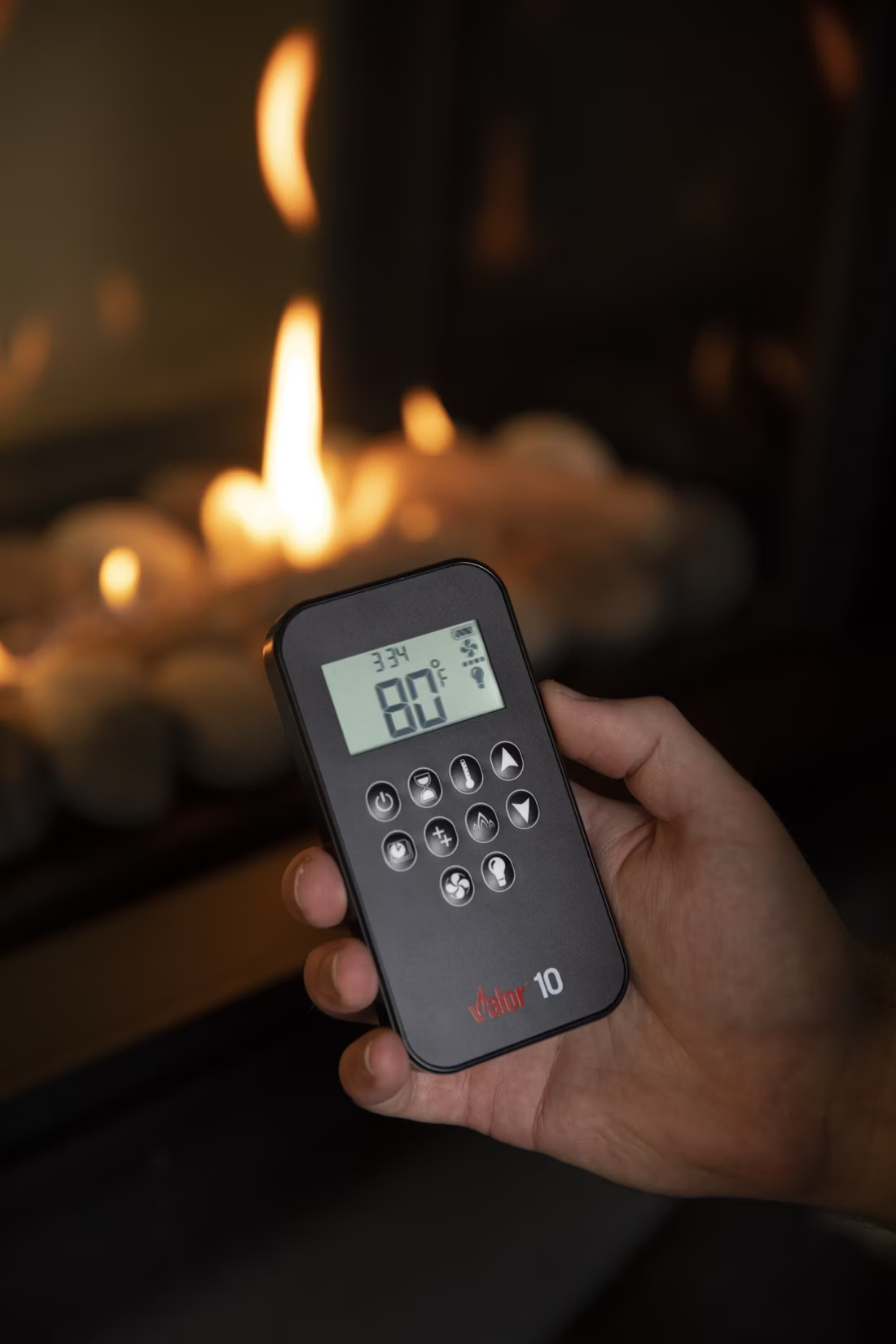
Four fuels. One honest answer for Lee County.
Three steps. No salesperson until you're ready.
Tell us about your project
Your zip code, your situation, and the fuel you're leaning toward—or let the answers point you to one.
See what's actually available
The brands dealers within 100 miles genuinely carry—real options, never a catalog mirage.
Get your dealer & Project Guide
A trusted local dealer, plus the free Project Guide & Parts List that names every component of the job.
Frequently Asked Questions
Which fuel works best in Lee County?
For most homes here, it's gas or electric. With winter lows averaging 37°F and a heating season that's really just a run of cool nights rather than a sustained cold stretch, Lee County doesn't have the demand profile that makes wood or pellet heat practical the way it does in a place like Bozeman or Fargo. Propane-fed gas fireplaces and inserts are the common choice for real supplemental heat, and electric units cover ambiance and secondary rooms well. Wood-burning fireplaces still exist—mostly traditional masonry builds using local oak or hickory—but they're used for atmosphere on a cold snap, not as a primary heat source. Pellet stoves are essentially absent; the mild climate doesn't justify the fuel storage and hopper-filling routine for the handful of genuinely cold nights per year.
Do I need a permit to install a fireplace in Lee County?
Generally yes for gas installations. A new gas fireplace, insert, or stove typically requires a building permit through the Lee County Building Department, plus licensed gas-fitter work for the propane line connection. Electric fireplaces usually don't require a permit unless you're doing a built-in installation with new wiring or a dedicated circuit, in which case an electrical permit applies. Most local dealers handle the permitting as part of the installation, so you're not filing paperwork yourself in most cases.
Does a wood-burning fireplace even make sense in Lee County's climate?
It's uncommon, and it's worth being honest about why. With winter lows averaging in the high 30s and only a light dusting of genuinely cold nights each year, Lee County simply doesn't get the sustained cold that makes wood heat efficient or economical—nothing like the six-month burn season a Duluth or International Falls homeowner plans around. Some Lee County homes do keep a traditional masonry fireplace burning local oak or pine on the occasional 20-degree night, purely for atmosphere, but almost nobody here is sizing a wood stove as a primary heat source. If you want real heat on cold nights, a gas insert will outperform wood in this climate with far less hassle.
Can one local dealer handle both gas and electric fireplaces?
Yes—in Lee County's market, that's actually the norm rather than the exception. Because wood and pellet demand is so limited here, most hearth retailers serving the county have consolidated around gas and electric, and dealers who carry one typically carry both. That's convenient if you're comparing a propane insert against an electric unit for the same room and want to see both options from a single showroom visit.
How does fireplace service work in a small county like Lee?
With a population under 4,000 spread across a mostly rural county, Lee County doesn't have hearth service technicians based locally in the same numbers a metro area would. Most gas and electric service calls are handled by technicians traveling in from the greater Albany area, and scheduling ahead of the first cold snap in November tends to go smoother than trying to book an emergency visit in January. Annual gas system checks—pilot assembly, valve, and venting—are worth doing every fall even though the heating season here is short.
What's the typical cost range for a fireplace installation in Lee County?
Gas fireplace, insert, or stove: roughly $4,000–$9,500 depending on whether propane line work is needed and how much venting the install requires. Electric fireplace: $200–$3,000 for the unit itself, with $400–$1,200 in labor for anything beyond a plug-and-play wall unit—which covers most inserts and built-ins. Traditional wood-burning masonry fireplace work (repair or restoration, since new wood installs are rare here) varies widely and is best quoted directly by a local mason. Pellet stove installs are uncommon enough in this county that pricing should be confirmed directly with a dealer who stocks one.
What is an in-home preview and do I need one?
It's a visit where a hearth professional measures your space, confirms the model you picked actually works in your home, and walks the specs—framing, gas line, venting, finish work—before anything is ordered. Some details you just can't know until you see the house. Never make a down payment without one; it's the single most-skipped step that burns buyers.
Does a fireplace add value to my home?
On average, a fireplace adds back to the home about the same amount you spent installing it. Add the monthly savings from heating the rooms you actually use instead of the whole house—often hundreds of dollars a year—and the value case is strong before you even count what a fire does for how your family uses the room.
Wood, gas, pellet, or electric—how do I choose?
Match the fuel to your life, not the other way around. Wood: lowest fuel cost and total power-outage independence, but you're hauling and stacking. Gas: press a button, set a thermostat, no maintenance to speak of. Pellet: wood economics with automatic feeding, in exchange for weekly cleaning and a need for electricity. Electric: plugs in anywhere with honest supplemental heat. Nobody regrets the fuel that fits how they actually live.
Can a fireplace actually lower my heating bill?
Yes—by creating a comfort zone. A furnace heats every square foot of the house just to warm the one room you're in; a gas fireplace on low burns roughly a sixth of the gas a typical furnace does. Set the furnace around 55–60 degrees as a baseline, then heat the rooms your family actually uses. Families who heat this way commonly save $20–$60 a month.
Stove and Fireplace Dealers in Lee County
Listings include WhyFire partner dealers, dealers we have verified as authorized for the brands we recommend, and established local businesses that carry hearth products. Every listing shows which one it is. The ones marked Preferred run on WhyFire's software, so they can show you real pricing and book your appointment right here. No manufacturer pays for placement. How we verify dealers →
Ever-Glo Propane Propane Gas Service, Inc.
Driver Energies LLC
Conger Lp Gas Inc.
Find your fireplace in Lee County.
Tell us about your project and we'll match you with a trusted local dealer and send you a free Project Guide & Parts List—the exact parts, including the vent kit, for a fireplace built for Lee County's climate.
Find Your Fireplace →