
A Niche Fit for Lawrenceville's Mild Piedmont Winters.
Pellet heat isn't the default choice in Gwinnett County, but for the right home—backup warmth, a den, a lake cabin—it can still make sense. Let's figure out if it's right for yours.
Every Project Starts From One of These Five Situations
Pellet heat is possible here—but it's the exception, not the rule.
Lawrenceville sits in climate zone 3A at just over 1,000 feet in the Georgia Piedmont, where the average winter low hovers around 32°F and the heating season totals roughly 2,931 heating degree days. Compare that to a place like Duluth, Minnesota, which racks up more than three times that HDD count most winters, and it's clear why pellet stoves never became a mainstream heating choice here. Most Gwinnett County homes rely on central heat pumps and gas furnaces sized for short, mild cold snaps rather than months of sustained sub-freezing weather.
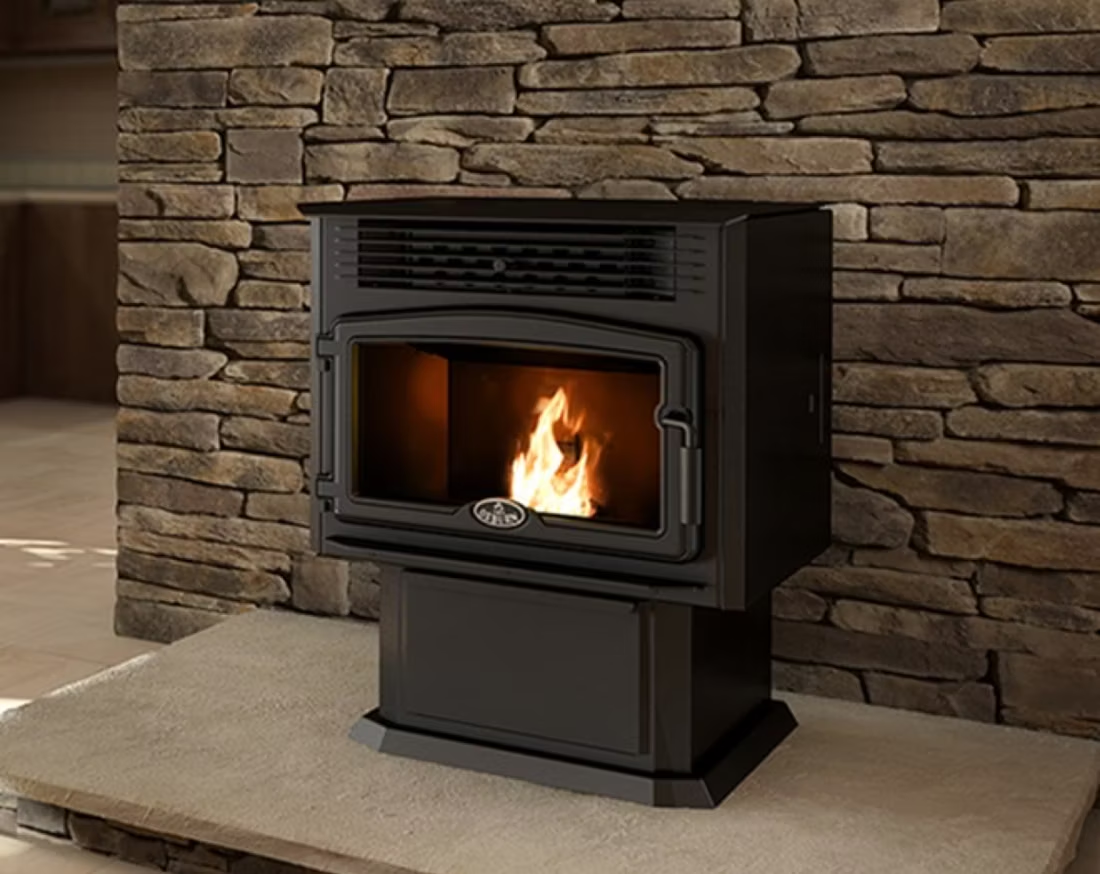
That doesn't mean pellet heat has no place in Lawrenceville—it just means the buyers tend to be specific: homeowners who want a controllable secondary heat source for the occasional ice storm power outage, a den or bonus room that runs cold, or a cabin-style property elsewhere in the state where pellets make more sense. Gwinnett County has no wood-smoke air quality restrictions, so there's no regulatory barrier to installing one—the limiting factor is simply that demand is low enough that pellet fuel isn't sold on every corner the way it is in New England or the Mountain West. Regional bagged fuel from brands like Lignetics, Hamer Pellet Fuel, and Greenway Renewable Energy is available through farm-supply and hearth retailers in the metro Atlanta area, but you may need to plan ahead rather than grab a few bags on a whim.
Three steps. No salesperson until you're ready.
Tell us about your project
Your zip code, your situation, and the fuel you're leaning toward—or let the answers point you to one.
See what's actually available
The brands dealers within 100 miles genuinely carry—real options, never a catalog mirage.
Get your dealer & Project Guide
A trusted local dealer, plus the free Project Guide & Parts List that names every component of the job.
Frequently Asked Questions
How much does a pellet stove installation cost in Lawrenceville?
Pellet stove installations in Lawrenceville generally run in the $3,000 to $6,500 range, on the lower end of hearth appliance costs because pellet units vent through a small-diameter pipe run through an exterior wall rather than requiring a full masonry chimney. Costs climb if the installer needs to run a dedicated electrical circuit for the auger and blower motor, or if the unit is going into a room without an existing outlet nearby. Because pellet stoves are uncommon locally, get quotes from a couple of Gwinnett-area hearth dealers rather than assuming a single flat price—installer familiarity with pellet venting varies more here than it would in a market where pellet stoves are the norm.
Why don't more homes in Lawrenceville have pellet stoves?
It comes down to climate and infrastructure. With an average winter low around 32°F and roughly 2,931 heating degree days per season, most Gwinnett County homes are built and heated around heat pumps from Georgia Power or the City of Lawrenceville's municipal electric service, supplemented by gas where it's available. That's enough to handle the region's short, mild cold spells without a dedicated wood-pellet appliance. Pellet stoves tend to be popular in places with long, hard winters where a homeowner wants to run one appliance for months at a time—that's simply not the day-to-day reality here.
Where can I buy pellet fuel near Lawrenceville?
Bagged pellet fuel from brands like Lignetics, Hamer Pellet Fuel, and Greenway Renewable Energy is carried at some farm-supply and feed stores around metro Atlanta, along with a handful of hearth retailers who stock it seasonally. Because pellet stoves are a niche appliance in Gwinnett County, don't expect year-round shelf stock the way you'd find in a Northeast or Midwest hardware store—it's worth calling ahead in early fall to confirm availability, or asking your installer to set up a standing seasonal order before the first cold snap.
What size pellet stove do I need for my Lawrenceville home?
Most Lawrenceville buyers are using a pellet stove for a single room, bonus space, or backup heat rather than whole-home heating, so a small to mid-size unit rated for 1,000 to 1,800 square feet typically covers the need. Given the region's mild winter lows, you're rarely trying to overcome extreme cold the way a Northern buyer would be—the goal is usually comfortable zone heat for a den or finished basement, or reliable backup warmth during an ice storm outage. A local dealer can size the unit properly during an in-home visit rather than guessing off square footage alone.
Will a pellet stove keep my house warm during a power outage?
Not on its own—this is the one caveat worth knowing before you buy. Pellet stoves rely on an electric auger to feed fuel and a blower to circulate heat, so a standard unit shuts down the moment power from Georgia Power or the City of Lawrenceville's grid goes out. If backup heat during ice storms is your main reason for considering pellet, you'll want to pair the stove with a battery backup system or small generator, or look at a wood or gas alternative instead, since both can be configured to run without grid power.
Do I need a permit to install a pellet stove in Lawrenceville?
Most permanent pellet stove and insert installations require a building permit through the Gwinnett County Building Department, covering the venting penetration and any electrical work for the auger and blower circuit. A certified local installer typically pulls this permit as part of the job. Because pellet installs are less common here than gas or electric hearth products, it's worth confirming your installer has handled the specific inspection requirements for pellet venting before signing a contract.
How much maintenance does a pellet stove need?
Pellet stoves need more routine attention than a gas fireplace but less than a wood stove. Expect to empty the ash pan every few days during regular use, clean the burn pot weekly to keep the flame steady, and have the venting and hopper mechanism professionally serviced once a year. In a mild climate like Lawrenceville's, where a pellet stove might only run on occasional cold nights rather than daily all winter, this maintenance rhythm is lighter than it would be for a Northern household burning multiple tons of pellets a season.
Should I get a pellet stove or a gas fireplace instead?
For most Lawrenceville homes, gas is the more practical everyday choice—it's a standard, well-supported fuel option in this market with instant on-off operation and no fuel storage to manage, and local dealers stock a wide range of gas fireplaces and inserts. Pellet stoves make more sense for a specific niche: homeowners who like the visual of a real flame, want a self-contained heat source that doesn't depend on the home's gas line, or are heating a detached space like a workshop or converted garage. If your priority is dependable daily heat for a Georgia Piedmont winter, start the conversation with gas; if you're drawn to the pellet-burning experience specifically, a local dealer can walk you through whether your space and usage pattern justify it.
What pellet stove brands are actually available through Lawrenceville dealers?
Because pellet appliances are a smaller category in this market, not every hearth retailer in Gwinnett County stocks them, and inventory can shift season to season. Regional fuel brands like Lignetics, Hamer Pellet Fuel, and Greenway Renewable Energy supply the bagged pellets you'd burn, but the stove itself comes from national manufacturers that a local dealer special-orders or keeps limited floor stock of. Rather than shopping by brand name first, it's more useful here to find a dealer who's actually installed and serviced pellet units before and let them recommend what they can reliably support with parts and service down the road.
What's the difference between an insert and a zero-clearance fireplace?
An insert is a fireplace that slides into a pre-existing wood-burning fireplace—if you don't have one, there's nothing to insert it into. A zero-clearance fireplace is built into a framed wall, which makes it the answer for remodels and new construction. Simple test: existing masonry fireplace means insert; blank or framed wall means zero-clearance.
Why is my open fireplace making my house colder?
Open fireplaces suck—literally. As the fire burns, it consumes air your furnace already paid to heat and pulls it out through the chimney, so the house is actually colder after the fire goes out than before you lit it. An insert fixes this: it seals the chimney, puts fixed glass across the front, and turns that hole in your house into a real heat source.
Does a fireplace add value to my home?
On average, a fireplace adds back to the home about the same amount you spent installing it. Add the monthly savings from heating the rooms you actually use instead of the whole house—often hundreds of dollars a year—and the value case is strong before you even count what a fire does for how your family uses the room.
What is an in-home preview and do I need one?
It's a visit where a hearth professional measures your space, confirms the model you picked actually works in your home, and walks the specs—framing, gas line, venting, finish work—before anything is ordered. Some details you just can't know until you see the house. Never make a down payment without one; it's the single most-skipped step that burns buyers.
Nearby Dealers
Hearth shops serving Lawrenceville and the surrounding area.
Gas Equipment Company - Lawrenceville
Pellet Brands Stocked Around Lawrenceville
Manufacturers will point you to the nearest stocking dealer.
See if a pellet stove fits your Lawrenceville home.
Tell us about your space and how you'd actually use it, and we'll match you with a trusted local dealer plus a free Project Guide & Parts List—including the vent kit—for your pellet project in Lawrenceville.
Find Your Fireplace →