
Keep Your Family Warm and Safe—No Matter What
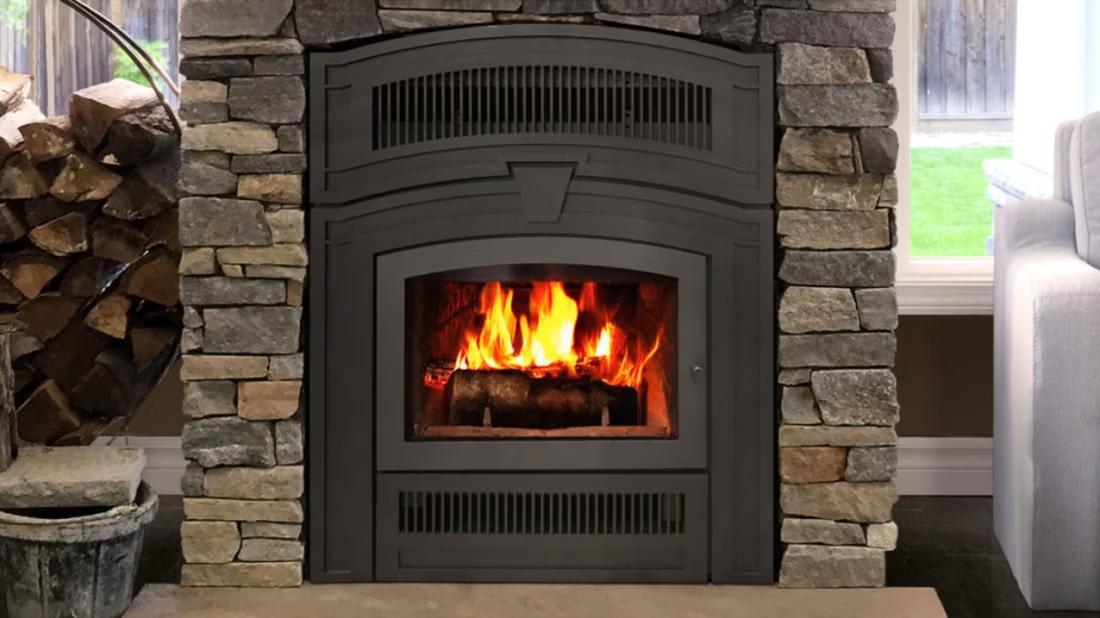
Wood heat is a niche choice in Cobb County—but for backup warmth during ice storms or a genuine wood-burning fireplace, we'll match you with a local dealer who can do it right.
Every Project Starts From One of These Five Situations
Here, wood heat is the exception, not the rule.
Kennesaw sits at 1,115 feet in the northwest Atlanta metro, in climate zone 3A. Winters here are mild—the average January low is 31°F, and the city has a light overall winter heating load, a fraction of what a place like Duluth, Minnesota sees in a single winter. Natural gas and electric heat pumps handle the vast majority of home heating load in Cobb County, and that's not going to change. Wood-burning fireplaces and stoves in Kennesaw are almost always a secondary choice, not the primary heat source.
That said, a real market for wood heat exists here. Some homeowners want a genuine wood-burning fireplace or insert for the ambiance and the ritual—not the BTUs. Others want backup heat: Cobb County has seen multi-day power outages after ice storms (the February 2014 storm that shut down metro Atlanta is still a reference point), and a wood stove keeps burning when Georgia Power's grid doesn't. Local firewood is easy to source—oak and hickory split well and burn hot once seasoned six months to a year, while pine is common but needs to be well-dried to avoid heavy creosote buildup in the flue.
Three steps. No salesperson until you're ready.
Tell us about your project
Your zip code, your situation, and the fuel you're leaning toward—or let the answers point you to one.
See what's actually available
The brands dealers within 100 miles genuinely carry—real options, never a catalog mirage.
Get your dealer & Project Guide
A trusted local dealer, plus the free Project Guide & Parts List that names every component of the job.
Frequently Asked Questions
Is a wood stove or fireplace even worth it in Kennesaw's climate?
It depends on what you want from it. If you're looking for your primary heat source, no—with average winter lows around 31°F and a light overall winter heating load, Kennesaw's climate doesn't demand it, and a heat pump or gas system will carry the load more efficiently. But if you want backup heat for ice-storm power outages, a genuine wood-burning fireplace instead of a gas log set, or supplemental heat for a den or basement, a wood stove or insert still makes sense for plenty of Cobb County homeowners. Be honest about the use case before you buy—it changes which unit size and type actually fits.
How much does a wood stove or insert installation cost in Kennesaw?
Because wood heat is a smaller niche in this market, pricing is less standardized locally than it is for gas or electric work. Expect a range similar to what's typical across the Southeast for a comparable install: a freestanding wood stove with new Class A chimney pipe generally runs $4,000-$8,000, while a wood-burning insert into an existing masonry fireplace tends to run less—often $3,000-$6,000—since it reuses the existing chimney with a stainless liner. Get quotes from more than one dealer here; with fewer installers specializing in wood-burning appliances than in gas, prices can vary more than you'd expect.
Do I need a permit to install a wood stove in Kennesaw?
Yes. A new wood-burning appliance is a building permit item through the City of Kennesaw's Building & Codes Department (or Cobb County's permitting office if your property sits outside city limits), and the installation has to meet current clearance and venting code regardless of how the stove is fueled. Most hearth dealers who install wood stoves in this area will pull the permit for you as part of the job—ask before you sign, since it's not automatic with every installer the way it is in markets where wood heat is more common.
What firewood is available locally, and what burns best?
Oak, pine, and hickory are the three species you'll run into most from Cobb County tree services and firewood sellers. Oak and hickory are the better choice for a wood stove—dense hardwoods that season in six to twelve months and burn long and hot once dried below 20% moisture. Pine is abundant and cheap here, but it burns fast, throws more sparks, and needs a full season of drying to keep creosote from building up in the flue. If you're buying a load, ask how long it's been split and stacked—'seasoned' firewood sold too early is one of the most common complaints in this market.
Will a wood stove keep my house warm during a power outage?
Yes, and that's one of the main reasons Kennesaw homeowners still install one. Unlike a gas furnace (which needs an electric blower) or a heat pump, a wood stove keeps producing heat with the power out entirely. Cobb County has been hit by multi-day outages during ice storms—the 2014 metro Atlanta ice storm is the one everyone still remembers—and homes with a working wood stove or insert stayed warm while neighbors on Georgia Power's grid waited it out. If backup heat is your main goal, size the stove to actually heat the room you'd hole up in, not the whole house.
Are there any air quality restrictions on burning wood in Kennesaw?
No—Kennesaw and Cobb County don't have the winter inversion or wildfire-smoke issues that trigger burn bans in parts of the West, and there's no non-attainment designation here restricting wood-burning appliances. That said, any new stove you install still has to meet current EPA emissions standards, and a well-maintained, properly seasoned-wood-fed unit produces far less smoke than an old, uncertified stove regardless of local air quality rules.
Should I get a wood stove or a wood-burning insert?
If your home already has a masonry fireplace—common in older Cobb County subdivisions—a wood-burning insert is usually the better fit. It slides into the existing firebox, uses a stainless liner inside your current chimney, and turns a fireplace that loses more heat than it gives off into an actual heat source. A freestanding stove makes more sense if you don't have an existing fireplace, want it in a room that doesn't have one (a basement or converted garage, for example), or want maximum heat output for backup-power scenarios.
Why not just get a pellet stove instead of wood?
Pellet stoves are even less common in Kennesaw than wood stoves, and for a similar reason—mild winters don't create much demand for either as a primary heat source. Regional pellet brands like Lignetics and Hamer Pellet Fuel are sold in this area, but they're bought almost entirely for grilling and smoking, not home heating, so pellet fuel and service support for a stove is thinner here than in colder climates. The bigger issue for backup heat specifically: pellet stoves need electricity to run the auger and blower, so they won't help you during the ice-storm outages that are the main reason Kennesaw homeowners look at wood heat in the first place.
Wood stove vs. electric fireplace—which makes more sense here?
For most Kennesaw homes, an electric fireplace or insert is the simpler, cheaper option—installation typically runs a few hundred to just over a thousand dollars, there's no chimney or venting to maintain, and Georgia Power's residential rate (about 15.5 cents per kWh) makes running one for ambiance or supplemental heat inexpensive. The tradeoff is that electric units do nothing for you if the power goes out, which is precisely when a wood stove earns its keep. If backup heat during storms matters to you, wood wins; if you just want the look and occasional warmth of a fire with zero maintenance, electric is the easier call.
Why won't my new wood stove get going like my old one?
New wood stoves are 70%+ efficient, so far less heat goes up the flue—which also means less draft to get a fire established. The rule: build a genuinely hot fire for about 45 minutes before you choke it down. Skip that and you get smoke in the room, creosote in the chimney, and a fire that never takes off. Most performance complaints trace straight back to this.
What's the difference between an insert and a zero-clearance fireplace?
An insert is a fireplace that slides into a pre-existing wood-burning fireplace—if you don't have one, there's nothing to insert it into. A zero-clearance fireplace is built into a framed wall, which makes it the answer for remodels and new construction. Simple test: existing masonry fireplace means insert; blank or framed wall means zero-clearance.
Can a fireplace actually lower my heating bill?
Yes—by creating a comfort zone. A furnace heats every square foot of the house just to warm the one room you're in; a gas fireplace on low burns roughly a sixth of the gas a typical furnace does. Set the furnace around 55–60 degrees as a baseline, then heat the rooms your family actually uses. Families who heat this way commonly save $20–$60 a month.
How much should I budget for a fireplace?
For an average home—covering the fireplace, the vent pipe, and basic installation—a budget between $3,900 and $5,500 gives you a lot of options across wood, gas, and pellet. By the time you add finish work, gas line, and electrical, the average complete installation lands between $5,000 and $12,000 all-in. In a remodel or new build, a good rule is to put about 2.5% of the total project cost toward the fireplace.
Nearby Dealers
Hearth shops serving Kennesaw and the surrounding area.
Find your wood fireplace in Kennesaw.
Tell us about your home and how you'd actually use it, and we'll match you with a trusted local dealer and send over a free Project Guide & Parts List—the exact parts, including the vent kit, for your Kennesaw installation.
Find Your Fireplace →