
Efficient pellet heat for Jones County's mild winters.
From Gray to Round Oak to the lake homes ringing Lake Sinclair, pellet stoves give Jones County homeowners steady, thermostat-controlled heat without splitting or stacking wood. Find the right unit and connect with a trusted local dealer.
Every Project Starts From One of These Five Situations
Consistent heat without the woodpile.
Jones County sits in climate zone 3A, a mixed-humid stretch of middle Georgia between Macon and Milledgeville where the average winter low hovers around 33 degrees and the county racks up only about 2,480 heating degree days a year—a fraction of what a place like Duluth, MN sees in a single hard month. That mild profile means most Jones County homes don't need a furnace-replacing heat source. What they need is something that takes the chill off a January morning in Gray, warms a weekend cabin on Lake Sinclair, or keeps a den comfortable in Round Oak or Haddock without babysitting a fire. A pellet stove fits that role well.
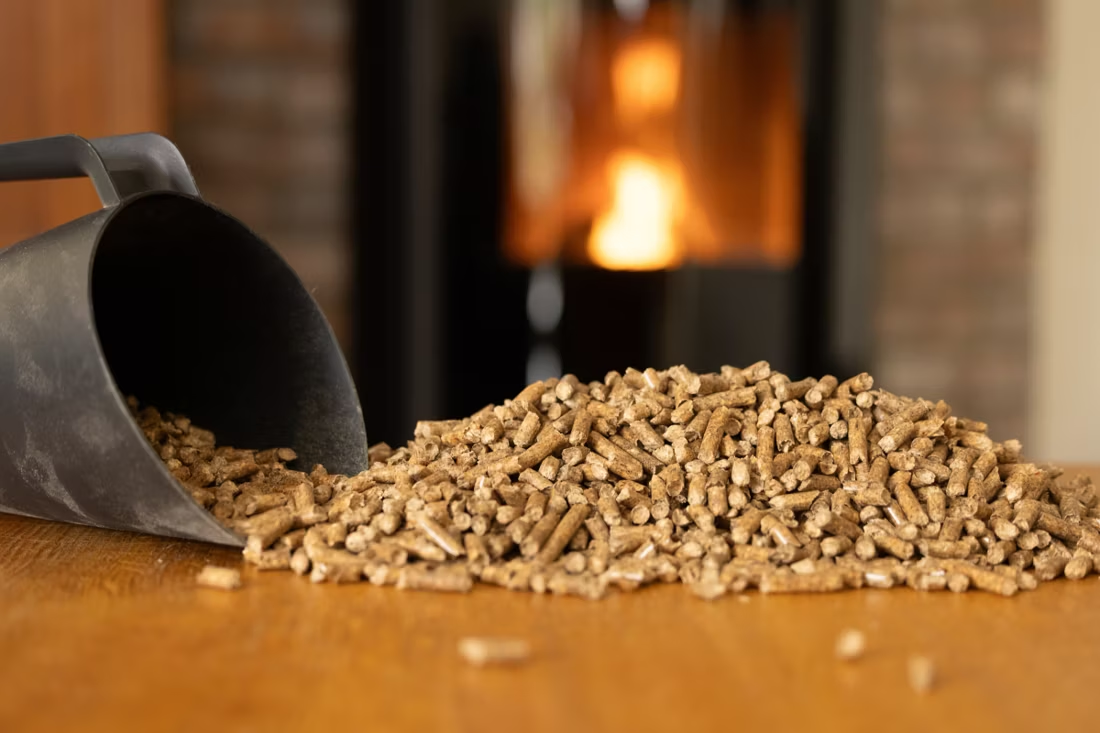
Jones County has no air quality non-attainment designations and no winter inversion or burn-ban history, so there's nothing standing between a homeowner and a pellet appliance the way there is in stricter-air-quality parts of the country. Pellets themselves are widely available in this part of Georgia through regional producers like Lignetics, Hamer Pellet Fuel, and Greenway Renewable Energy, all of which run on Southern pine and hardwood byproducts rather than the oak, pine, and hickory locals might otherwise be splitting for a wood stove. The tradeoff is simple: less physical labor, consistent hopper-fed heat, and a thermostat you can actually set.
Three steps. No salesperson until you're ready.
Tell us about your project
Your zip code, your situation, and the fuel you're leaning toward—or let the answers point you to one.
See what's actually available
The brands dealers within 100 miles genuinely carry—real options, never a catalog mirage.
Get your dealer & Project Guide
A trusted local dealer, plus the free Project Guide & Parts List that names every component of the job.
Frequently Asked Questions
How much does a pellet stove installation cost in Jones County?
Most pellet stove and insert installations in Jones County run in the $3,000 to $6,500 range, with the low end covering a freestanding stove with straightforward through-wall pellet venting and the high end covering an insert into an existing masonry fireplace with a full liner and hearth work. Because Jones County's mild winters mean many households are installing a pellet stove as supplemental or zone heat rather than a whole-home furnace replacement, a smaller unit is often all that's needed—which keeps costs toward the lower end of that range. A local dealer will give you a firm number after seeing your fireplace or install location.
Does a pellet stove make sense in a climate as mild as Jones County's?
Yes, though the role is different than in a colder state. With an average winter low around 33 degrees and only about 2,480 heating degree days a year, Jones County doesn't need a pellet stove running as primary heat the way a home in Fargo, ND or Bismarck, ND would. Instead, most local installs are used for zone heating in a main living area, backup warmth during the occasional hard freeze or ice event, and ambiance in a den or lake house. A modest-sized pellet stove or insert covers those needs comfortably without oversizing the unit for a climate that rarely demands it.
Where do pellets come from for Jones County homes, and are they easy to find?
Yes—pellets are readily available in this part of Georgia. Regional producers including Lignetics, Hamer Pellet Fuel, and Greenway Renewable Energy supply hardwood and Southern pine pellets to feed and hardware retailers across middle Georgia, and most local hearth dealers stock bagged pellets or can point you to a nearby supplier. Because Jones County sits close to pine and hardwood processing in the region, pellet supply here tends to be steady and reasonably priced compared to areas that have to ship pellets in from farther afield.
What's the difference between a pellet stove and a wood stove for a Jones County home?
A wood stove burns split cordwood—plenty of it available locally in oak, pine, and hickory—and requires cutting, stacking, seasoning, and manually tending a fire. A pellet stove burns compressed wood pellets fed automatically from a hopper, so you set a thermostat and the unit maintains a burn on its own, with far less ash and no chimney creosote buildup to worry about. For Jones County's mild-winter households who want convenient supplemental heat for a den, sunroom, or lake cabin without committing to a woodpile, pellet is usually the easier day-to-day choice. Homeowners who already burn local hardwood and enjoy the process often stick with wood instead.
Do I need a permit to install a pellet stove in Jones County?
Most pellet stove and insert installations require a building permit through the Jones County Building Department, covering the appliance placement, clearances, and through-wall or roof venting. There are no air quality curtailment periods or burn restrictions in Jones County, so unlike counties with winter inversion problems, there's no seasonal rule about when you can or can't run the stove. A local installer will typically pull the permit as part of the job.
Will my pellet stove work during a power outage?
Not without a backup power source. Pellet stoves rely on electricity to run the auger that feeds fuel and the blower that distributes heat, so a standard unit will shut down in an outage. Many Jones County homes are served by Central Georgia EMC or Georgia Power depending on location, and outages in this part of the state are usually short—but if backup heat during storms matters to you, ask a local dealer about battery backup options or pair the pellet stove with a wood-burning unit elsewhere in the house for true off-grid heat.
What size pellet stove do I need for a lake house near Lake Sinclair or a full-time home in Gray?
It depends on how the space is used. A weekend or seasonal cabin along Lake Sinclair often does fine with a smaller pellet stove sized for a single great room, since it's not running around the clock. A full-time home in Gray, Round Oak, or Haddock heating a main living area daily through the cooler months can size up slightly for more consistent output. Given Jones County's mild climate, oversizing is the more common mistake—a unit that's too large for the space will short-cycle rather than run efficiently. A local dealer can size the stove correctly after seeing the room and square footage.
How much maintenance does a pellet stove need?
Pellet stoves need regular ash removal from the burn pot (every few days with steady use), a periodic cleaning of the hopper and auger system, and an annual professional inspection of the venting and blower components. Compared to a wood stove and chimney, it's a lighter maintenance load—no annual chimney sweep is required for a properly vented pellet unit, though the vent pipe should still be checked yearly. Local hearth dealers who sell pellet stoves in Jones County typically offer this service directly.
Pellet stove or wood stove—which is the better fit for my Jones County home?
With oak, pine, and hickory readily available locally, a wood stove is a viable option for anyone willing to source and season firewood, and it works without electricity—useful during storm-related outages even though Jones County's mild winters make extended outages less of a heating emergency than in colder states. A pellet stove trades that off-grid capability for push-button convenience, consistent heat output, and far less labor—a better match for most Jones County households given how mild and short the heating season actually is here. Either fuel is available from local dealers, and the right pick usually comes down to how much hands-on fire-tending you actually want.
What's the difference between an insert and a zero-clearance fireplace?
An insert is a fireplace that slides into a pre-existing wood-burning fireplace—if you don't have one, there's nothing to insert it into. A zero-clearance fireplace is built into a framed wall, which makes it the answer for remodels and new construction. Simple test: existing masonry fireplace means insert; blank or framed wall means zero-clearance.
Why is a fireplace insert so efficient?
An insert does two things: it seals the chimney completely, so you stop losing air you already paid to heat, and it radiates warmth into the room through the firebox and glass. Most add a heat-exchange fan that pulls cool room air underneath, wraps it around the hot firebox, and pushes it back out warm. Your home is more efficient before you've even lit the first fire.
Can a fireplace actually lower my heating bill?
Yes—by creating a comfort zone. A furnace heats every square foot of the house just to warm the one room you're in; a gas fireplace on low burns roughly a sixth of the gas a typical furnace does. Set the furnace around 55–60 degrees as a baseline, then heat the rooms your family actually uses. Families who heat this way commonly save $20–$60 a month.
Does a fireplace add value to my home?
On average, a fireplace adds back to the home about the same amount you spent installing it. Add the monthly savings from heating the rooms you actually use instead of the whole house—often hundreds of dollars a year—and the value case is strong before you even count what a fire does for how your family uses the room.
Pellet Brands Stocked Around Jones County
Manufacturers will point you to the nearest stocking dealer.
Find your pellet stove in Jones County.
Tell us a bit about your home—whether it's a full-time house in Gray or a weekend place on Lake Sinclair—and we'll match you with a trusted local dealer and send over a free Project Guide & Parts List with the exact parts and vent kit for your pellet project.
Find Your Fireplace →