
Bring instant warmth to Heard County's mild winters.
For the short, mild winters of west Georgia's Piedmont country, an electric fireplace delivers real ambiance and spot heat without a chimney, a gas line, or a permit headache. Find the right unit and connect with a trusted local dealer.
Every Project Starts From One of These Five Situations
Mild winters, modern convenience.
Heard County is home to just over 2,000 residents scattered across farmland, pine and hardwood forest, and small crossroads communities like Franklin and Ephesus, tucked against the Alabama line along the Chattahoochee River. Sitting in climate zone 3A, the county sees hot, humid summers and winters that rarely hold a hard freeze for long—most heating needs here are supplemental rather than the all-winter grind you'd find further north. That's exactly the kind of climate where electric fireplaces earn their keep: no need to size a whole-home combustion system for a heating season that's often over by February.
Southern Rivers Energy serves most of the county's homes with reliable grid power, which means an electric fireplace install is usually the simplest hearth project available—no venting, no chimney, no combustion air to plan for, and often no permit at all for a plug-in unit. Plenty of Heard County households still burn oak, pine, and hickory cut from their own land for ambiance and backup heat, but electric has become the go-to choice for additions, guest rooms, manufactured and mobile homes (common throughout rural west Georgia), and rental properties where a zero-clearance, no-maintenance heat source just makes sense.
Three steps. No salesperson until you're ready.
Tell us about your project
Your zip code, your situation, and the fuel you're leaning toward—or let the answers point you to one.
See what's actually available
The brands dealers within 100 miles genuinely carry—real options, never a catalog mirage.
Get your dealer & Project Guide
A trusted local dealer, plus the free Project Guide & Parts List that names every component of the job.
Frequently Asked Questions
How much does an electric fireplace installation cost in Heard County?
A basic plug-in electric insert or mantel package typically runs $300 to $800 installed in Heard County, since most units plug into a standard 15- or 20-amp outlet and need nothing more than a stud-cut or mantel fit. A recessed wall-mount or built-in unit that requires a licensed electrician to run a dedicated circuit usually runs $1,500 to $4,000 depending on wall framing, wiring distance from the panel, and finish work like a custom surround. Homes on older wiring—common in some of the county's older farmhouses—sometimes need panel work first, which adds to the total. Local dealers will size the circuit and give a firm quote after seeing your wall and panel.
Will an electric fireplace actually heat a room, or is it just for looks?
Most electric fireplaces include a real 1,500-watt heating element that can comfortably warm 400 to 1,000 square feet, which covers a typical living room or den. Given Heard County's mild zone 3A winters, that's usually plenty—these units aren't meant to replace central heat on the rare hard-freeze night, but they easily handle the shoulder-season chill and the day-to-day heating most homes here actually need. You can also run the flame effect with the heater off, which is popular for warm-weather ambiance during the county's long, mild springs and falls.
Do I need a permit to install an electric fireplace in Heard County?
A plug-in electric fireplace that uses an existing standard outlet doesn't require a permit. If you're adding a dedicated circuit for a built-in or recessed wall unit, that electrical work needs to be pulled through the Heard County Building & Development Department in Franklin and performed by a licensed electrician. Most dealers who sell built-in electric units either employ a licensed electrician or work with one locally, so the permit gets handled as part of the install rather than left for you to sort out.
Electric vs. wood—which makes more sense for a Heard County home?
Wood has deep roots here—oak, pine, and hickory are all abundant in the county's forests, and a lot of longtime residents still cut and burn their own. Wood also keeps working when the power goes out, which matters during the ice storms that occasionally knock down lines across Southern Rivers Energy's service area. Electric, on the other hand, wins on convenience: no wood handling, no ash, no chimney to maintain, and it's the simpler choice for additions, mobile homes, or rooms without an existing flue. Given the county's mild winters, plenty of homes are fine running electric for daily ambiance and reserving wood heat, if they have it, for the occasional cold snap or outage.
What types of electric fireplaces are available for Heard County homes?
You'll find three main styles: freestanding stove-style units that plug in anywhere with no installation, wall-mount or recessed built-in units that sit flush in a wall (usually needing a dedicated circuit), and insert-style units built to slide into an existing masonry fireplace opening. For older Heard County homes with an unused wood fireplace, an electric insert is a popular way to get instant heat and glass-front ambiance without touching the chimney. For newer construction or additions, a recessed wall unit gives the cleanest built-in look.
Will my electric fireplace work if the power goes out?
No—electric fireplaces need grid power or a generator to run, so they won't provide heat during an outage. That's worth factoring in for Heard County's more rural stretches, where ice storms or falling limbs can knock out Southern Rivers Energy service for hours at a time. If backup heat during outages matters to your household, a wood stove or insert is worth pairing with an electric unit—many local homes run both, electric for everyday convenience and wood as the fallback.
How much does it cost to run an electric fireplace in Heard County?
Most units draw around 1,500 watts on the heat setting, which costs roughly 15 to 20 cents an hour to run at typical Southern Rivers Energy residential rates—a few dollars for an evening of use. Running just the flame effect without heat draws a fraction of that, often under 100 watts, which is why a lot of homeowners leave the ambiance on through Heard County's mild spring and fall evenings without worrying about the bill.
Are electric fireplaces a good fit for mobile and manufactured homes?
Yes, and it's one of the more common installs in this part of west Georgia given the mix of manufactured housing across the county. Electric units are zero-clearance, don't require any roof or wall penetration for venting, and put far less stress on a manufactured home's structure than a masonry or vented gas install would. A plug-in freestanding unit is often the simplest option; if you want a built-in look, a licensed electrician can confirm the home's wiring can support a dedicated circuit before installation.
Electric vs. pellet stove—which is the better fit?
Pellet stoves burn compressed wood pellets from regional suppliers like Lignetics, Hamer Pellet Fuel, or Greenway Renewable Energy, and they put out real, sustained heat—useful if you want something closer to a primary heat source. But they need venting, a hopper to load, and periodic ash cleanout. Electric fireplaces skip all of that: no venting, no fuel to store, no maintenance beyond dusting the unit. For Heard County's short heating season, electric usually wins on simplicity for ambiance and daily use, while pellet makes more sense for households that want a serious secondary heat source and don't mind the upkeep.
Can I put a TV above my fireplace?
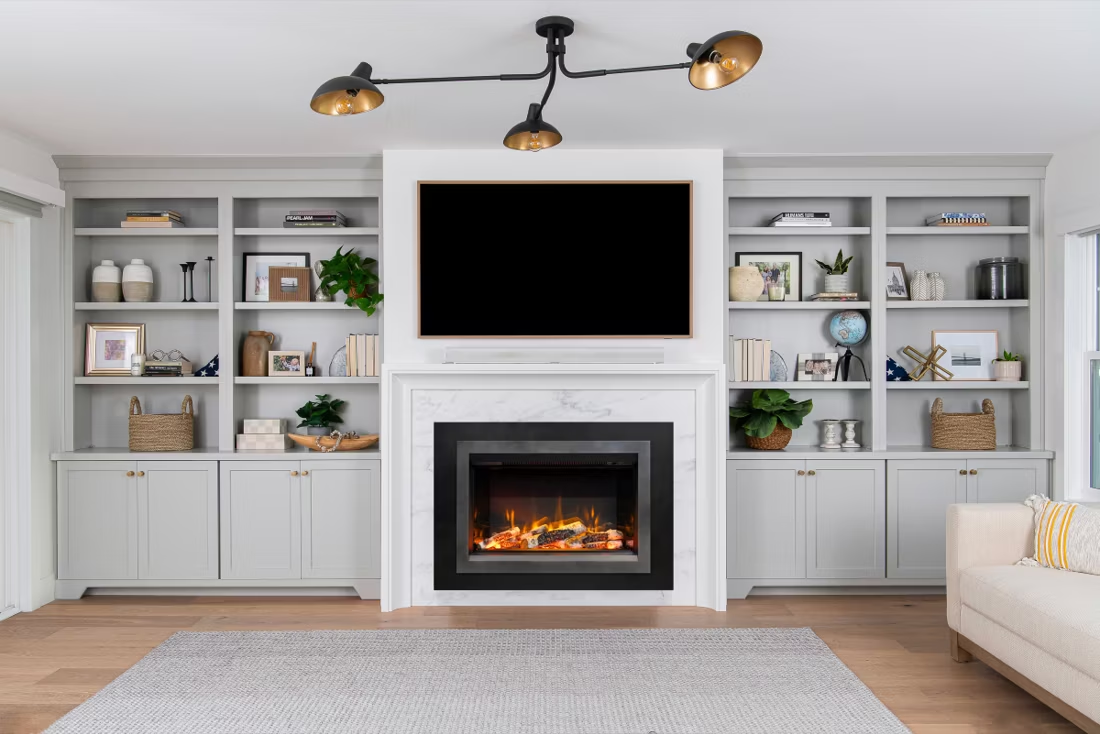
Yes—with an asterisk. Fireplaces are hot and TVs don't like heat. Either put a mantel between them to deflect rising warmth, or choose a fireplace with heat-management technology that creates a cool zone on the wall above—the wall stays around 125 degrees, barely warm, while the room still gets full heat. If you like clean lines and don't want a mantel, heat management is the answer.
How much does an electric fireplace cost to run?
With the heater on, a typical unit draws about 1,500 watts—at average electric rates that's roughly 20 cents an hour. Run the flame effect alone and it costs pennies; the flames are LED-driven and use about as much power as a light bulb. There's no pilot light, no fuel delivery, and essentially no maintenance.
Can a fireplace actually lower my heating bill?
Yes—by creating a comfort zone. A furnace heats every square foot of the house just to warm the one room you're in; a gas fireplace on low burns roughly a sixth of the gas a typical furnace does. Set the furnace around 55–60 degrees as a baseline, then heat the rooms your family actually uses. Families who heat this way commonly save $20–$60 a month.
Can I install a fireplace myself?
If you're putting a fire in your house on purpose, it's best to work with an expert. Unless you're genuinely experienced in framing, gas line, vent pipe, and the national code on clearances to combustibles, have a professional do it—and ideally the same company that sells you the fireplace, so warranty, service, and liability all live under one roof.
Find your electric fireplace in Heard County.
Tell us a bit about your home and we'll match you with the right electric fireplace or insert, then hand you a free Project Guide & Parts List—the exact parts and your recommended local Heard County dealer.
Find Your Fireplace →