
Keep Your Family Warm and Safe—No Matter What
From Cairo to Whigham, Beachton, and Calvary, wood heat in Grady County is less about surviving brutal winters and more about weathering the occasional freeze, riding out a power outage, and enjoying a real fire on the handful of genuinely cold nights each year. Find the right stove or insert and connect with a trusted local dealer.
Every Project Starts From One of These Five Situations
Supplemental warmth for a mild climate.
Grady County sits in Georgia's far southwest corner, hard against the Florida line near Tallahassee and Thomasville, with about 10,800 residents spread across Cairo, Whigham, Beachton, and Calvary. Climate zone 2A means short, mild winters—the average winter low is around 38°F and the county logs roughly 1,756 heating degree days a year, a fraction of what a place like Duluth, Minnesota racks up in a single January. Straight primary-heat wood burning the way it's practiced in the mountains isn't the norm here.
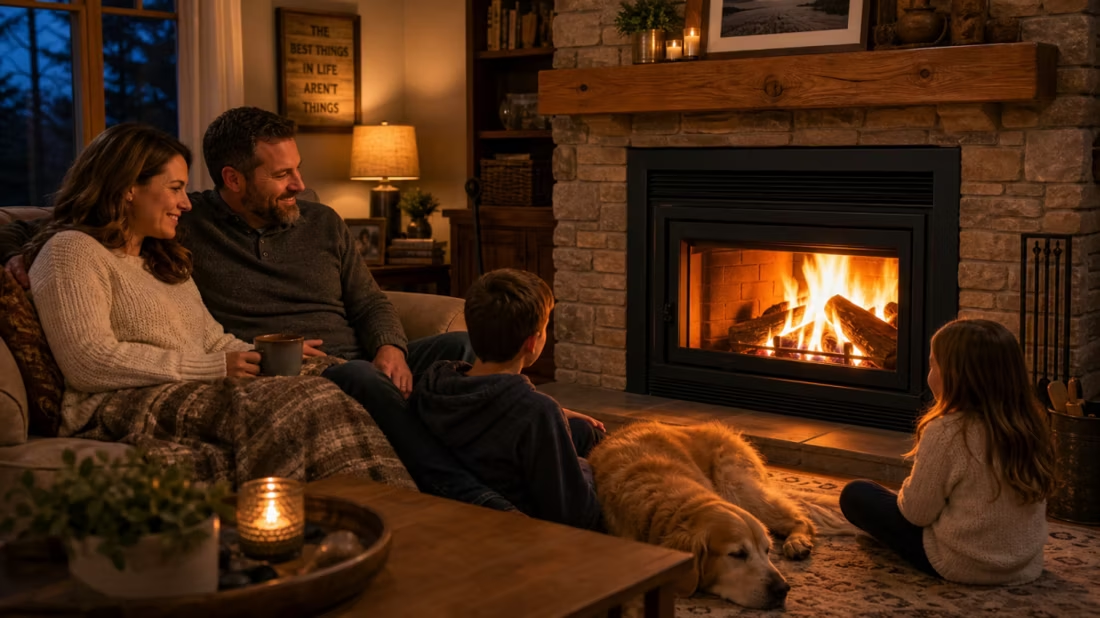
What's common instead is a wood stove or insert that gets real use a few dozen nights a winter, backs up the HVAC when an ice storm or tropical remnant knocks the power out, and burns oak, pine, and hickory that's genuinely local—pecan orchard trimmings, pine plantation thinnings, and hardwood pulled from the bottomlands along the Ochlockonee River. Grady County has no non-attainment status and no winter burn restrictions, so there's no air-quality curtailment to plan around the way there is in some western states. For most homeowners here, the appeal is straightforward: a lower-cost heat source for the coldest stretches, a hedge against outages, and the atmosphere of a real fire during the holidays and hunting season.
Three steps. No salesperson until you're ready.
Tell us about your project
Your zip code, your situation, and the fuel you're leaning toward—or let the answers point you to one.
See what's actually available
The brands dealers within 100 miles genuinely carry—real options, never a catalog mirage.
Get your dealer & Project Guide
A trusted local dealer, plus the free Project Guide & Parts List that names every component of the job.
Frequently Asked Questions
How much does a wood stove installation cost in Grady County?
Most wood stove installations in Grady County run somewhere in the $3,000 to $7,000 range, with the low end covering a freestanding stove installed with existing chimney access and the high end covering new Class A chimney pipe run through a roof or wall on a home that's never had one. Because the county's older farmhouses around Cairo and Whigham often have masonry fireplaces already in place, a lot of installs here are inserts rather than ground-up chimney builds, which tends to keep costs on the lower half of that range. A local retailer will give you a firm number after walking your home.
What size wood stove do I need for a Grady County home?
Because winter low temperatures here average around 38°F and the county only sees about 1,756 heating degree days a year, most Grady County homes don't need the large, high-output catalytic stoves you'd size for a Northern climate. A small to mid-size stove is usually plenty to heat a main living area or supplement a heat pump during a cold snap, and it will run more efficiently at partial load than an oversized unit would. If you're aiming for occasional whole-home backup heat during an ice storm outage, a local dealer can size up slightly, but true 24/7 primary heating capacity is rarely necessary in this climate.
Where can I find a certified wood stove installer near me?
Look for NFI (National Fireplace Institute) or CSIA-certified installers—several hearth retailers serving Grady County also cover the Thomasville and Tallahassee markets, since Cairo sits within easy driving distance of both. Certified installers know how to size clearances and venting correctly for a masonry retrofit, which is the most common project type in this county's older housing stock. Steer clear of general handymen for wood-burning work—improper clearance-to-combustibles is the single biggest cause of chimney fires, even in a mild climate where the stove doesn't run every day.
What's the difference between a wood stove and a wood insert?
A wood stove is a freestanding unit on a hearth pad that vents through its own chimney and can go almost anywhere with the right clearances. A wood insert slides into an existing masonry fireplace opening and uses the chimney that's already there, which is why inserts are so common in the older brick-fireplace homes around Cairo and Whigham. If your house already has a fireplace, an insert is usually the simpler and less expensive path; if you're building new or don't have an existing chimney, a freestanding stove is typically the better fit.
Do I need a permit to install a wood stove in Grady County?
Generally yes—a building permit is required for a new wood-burning appliance installation, and it's worth checking with the Grady County building permit office before work starts, especially inside city limits in Cairo where local code enforcement applies. Any new stove sold also has to meet current EPA 2020 NSPS emissions standards. Most established local dealers handle the permitting as part of the installation, so in practice you're rarely filing paperwork yourself.
What's the best wood stove for Grady County's climate?
Given how mild winters are here, you don't need an extreme cold-climate stove built to hold a 20-hour overnight burn at sub-zero temperatures—that's overkill for a county averaging a 38°F winter low. Mid-size non-catalytic stoves from brands like Pacific Energy or Lopi are a common, sensible fit: efficient, easy to operate, and sized right for supplemental heat or ambiance rather than round-the-clock primary heating. If backup power-outage heat is your priority, ask your local dealer about a slightly larger unit that can carry a main living area through a multi-day outage after an ice storm.
How often should my chimney be inspected in Grady County?
The CSIA recommends an annual inspection for any wood-burning appliance, and that holds even in a mild climate like Grady County's, where a stove might only see two or three months of real use. Lighter seasonal use means less creosote buildup than a full-time cold-climate stove would see, but resin-heavy pine—one of the more common local firewood species alongside oak and hickory—can still build up faster than hardwood alone. Schedule the sweep in late summer or early fall, before the first cold front of the season arrives.
Where can I get firewood in Grady County?
Oak, pine, and hickory are all readily available locally—Grady County's mix of pecan orchards, pine plantations, and hardwood bottomlands along the Ochlockonee River means firewood suppliers and seasonal sellers around Cairo and Whigham typically sell by the truckload or the rick rather than the full cord you'd see quoted up north. Oak and hickory split and seasoned over a summer burn hot and clean; pine is common and burns fine for supplemental use but should be well-seasoned to avoid excess creosote. Ask any local dealer for a referral if you don't already have a supplier.
Wood stove vs. pellet stove—which makes more sense in Grady County?
Wood stoves work without electricity, which matters if you want backup heat during an outage after an ice storm or a tropical system moves through—a real consideration in this part of Georgia. Pellet stoves, fed by bagged pellets from regional suppliers like Lignetics, Hamer Pellet Fuel, or Greenway Renewable Energy, are more convenient and burn cleaner, but they need electricity to run the auger and blower, so they go dark exactly when the power does. Given Grady County's mild HDD count, either fuel is more likely to be supplemental than primary—the deciding factor is usually whether outage backup matters to you or convenience does.
What does it take to replace an existing fireplace?
Fireplaces are like icebergs—bigger behind the wall than in front of it. Replacement means removing the surrounding tile or stone (the finish material laps onto the fireplace face), pulling the old unit, setting the new one in the same enclosure, and re-finishing the wall. A hearth professional can determine what's behind your wall without demolition during an in-home preview.
Can a wood stove burn all night?
The right one can. If waking up to a warm house and live coals matters to you, say exactly that when you're shopping—firebox size and burn-rate control determine overnight performance far more than any number on a spec sheet. It's a much more useful question than asking about BTUs.
Does a fireplace add value to my home?
On average, a fireplace adds back to the home about the same amount you spent installing it. Add the monthly savings from heating the rooms you actually use instead of the whole house—often hundreds of dollars a year—and the value case is strong before you even count what a fire does for how your family uses the room.
How much should I budget for a fireplace?
For an average home—covering the fireplace, the vent pipe, and basic installation—a budget between $3,900 and $5,500 gives you a lot of options across wood, gas, and pellet. By the time you add finish work, gas line, and electrical, the average complete installation lands between $5,000 and $12,000 all-in. In a remodel or new build, a good rule is to put about 2.5% of the total project cost toward the fireplace.
Find your wood stove in Grady County.
Tell us a bit about your home in Grady County and we'll match you with a trusted local dealer and send over a free Project Guide & Parts List—the exact stove or insert, vent kit, and installation plan for your project, no big-box guesswork.
Find Your Fireplace →