
Efficient pellet heat for Franklin County winters.
From Carnesville to Lavonia to the Lake Hartwell shoreline, Franklin County winters are mild but real. Find the right pellet stove or insert for your home, and connect with a trusted local dealer who can install it correctly.
Every Project Starts From One of These Five Situations
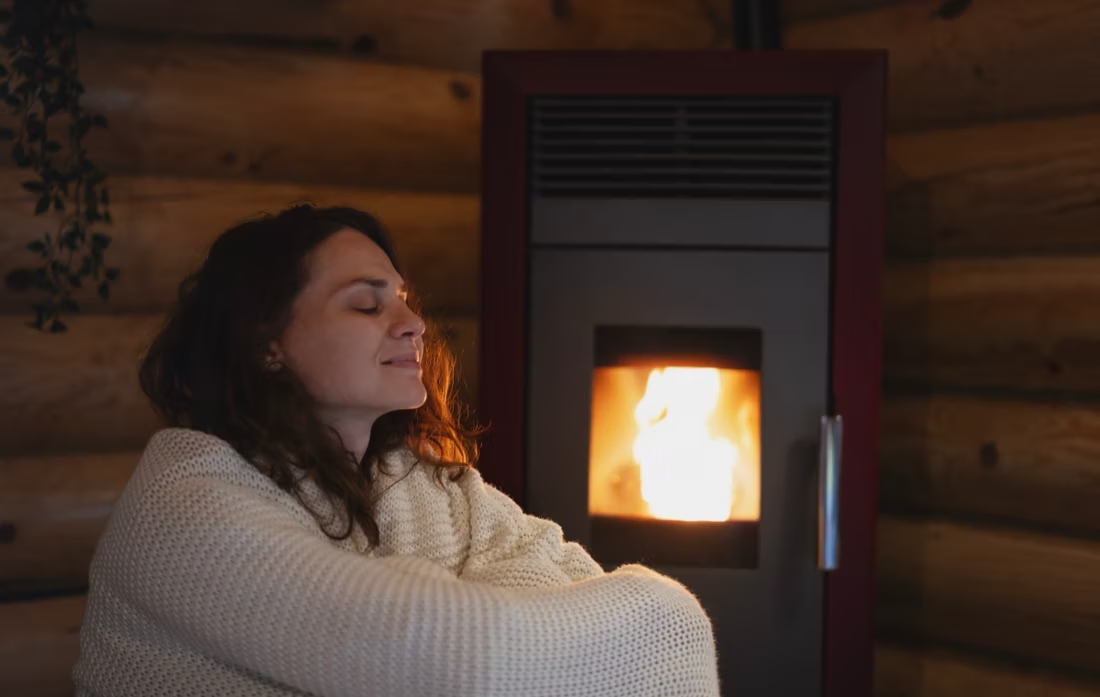
Consistent heat, without tending a wood pile.
Franklin County sits in the foothills of northeast Georgia, along the shores of Lake Hartwell, with roughly 10,000 residents spread across Carnesville, Lavonia, Royston, and the surrounding farmland. The climate here is Zone 4A—mixed-humid, with an average winter low around 33°F and about 3,004 heating degree days a year. That's a fraction of what a place like Duluth, MN or Burlington, VT sees each winter, which means Franklin County homes don't need a heating system built for extreme cold. They need something that runs efficiently on the 60 or 70 nights a year that actually dip toward freezing, without the daily labor of splitting and stacking cordwood.
That's where pellet stoves fit in. Franklin County has strong local wood heat traditions—oak, pine, and hickory grow throughout the county—but a pellet stove gives homeowners the same radiant, real-fire feel with a hopper you fill every day or two instead of a woodpile you maintain all fall. Regional pellet brands including Lignetics, Hamer Pellet Fuel, and Greenway Renewable Energy supply the Southeast, so bags are generally easy to find at farm supply and hardware stores without long-haul freight costs driving up the price. There are no air quality non-attainment issues or winter inversion advisories in Franklin County, so there's nothing restricting when you can run a stove—pellet heat here is simply about comfort, lower bills, and a den or living room that stays warm without running the whole HVAC system.
Three steps. No salesperson until you're ready.
Tell us about your project
Your zip code, your situation, and the fuel you're leaning toward—or let the answers point you to one.
See what's actually available
The brands dealers within 100 miles genuinely carry—real options, never a catalog mirage.
Get your dealer & Project Guide
A trusted local dealer, plus the free Project Guide & Parts List that names every component of the job.
Frequently Asked Questions
How much does a pellet stove installation cost in Franklin County?
A freestanding pellet stove installation in Franklin County typically runs $3,000 to $6,000, depending on the unit and whether venting has to be run through an exterior wall or an existing chimney. A pellet insert dropped into an existing masonry fireplace tends to land in a similar range, since it reuses the chimney chase rather than requiring new framing. Because Franklin County's winters are mild compared to mountain counties farther north, most homeowners here are sizing a stove for a single living area or den rather than whole-home heat, which keeps the unit size—and the cost—on the lower end of what you'd see in a colder climate. A local dealer can give you a firm number after seeing your room and venting path.
What size pellet stove do I need for my home?
With Franklin County's average winter low sitting around 33°F and heating degree days near 3,000 a year, most homes here don't need the largest pellet stoves on the market. A small to mid-size unit (rated for 1,000–1,800 square feet) is usually enough to heat a main living area or den, and many homeowners use it as supplemental heat alongside central HVAC rather than a whole-home primary source. Older farmhouses and homes with less insulation around Carnesville and Royston may want to size up slightly. A local dealer will walk your space and factor in ceiling height, insulation, and layout before recommending a specific model.
Where can I find a certified pellet stove installer near me?
Look for a dealer whose installers carry NFI (National Fireplace Institute) certification—it signals they're trained specifically on venting, clearances, and appliance-specific install requirements rather than treating a pellet stove like a generic wood stove. A certified local dealer serving Franklin County will handle the venting run, whether that's straight out an exterior wall or up through an existing chimney, and will typically pull any required permit as part of the job. Avoid a general handyman install—pellet stove venting has specific pitch and clearance requirements that differ from wood stove chimneys.
What's the difference between a pellet stove and a pellet insert?
A pellet stove is a freestanding unit that sits on its own hearth pad and vents through a wall or existing chimney—it can go almost anywhere in a room with the right clearances. A pellet insert is built to slide into an existing masonry fireplace opening, turning a rarely-used wood-burning fireplace into an efficient, thermostat-controlled heat source. For Franklin County homes with an existing fireplace—common in the older homes around Carnesville and Royston—an insert is usually the more straightforward option since it reuses the chimney chase. Homes without an existing fireplace typically go with a freestanding stove instead.
Do I need a permit to install a pellet stove in Franklin County?
Most pellet stove installations require a building permit through the Franklin County building department, since the appliance involves venting through an exterior wall or chimney. A local dealer will typically handle the permit application as part of the installation, so you shouldn't need to file anything yourself. Because Franklin County has no air quality non-attainment designation or seasonal burning restrictions, there's no curtailment schedule or advisory system to work around here—once the unit is installed and inspected, you're free to run it whenever you want heat.
What's the best pellet stove for Franklin County's climate?
Because Franklin County's winters are moderate—averaging 33°F lows rather than the deep sub-zero nights you'd see farther north—you don't need a stove built for maximum, all-day output. A mid-size stove with a reliable auger and a thermostat-controlled setting works well for most homes here, cycling on and off rather than running flat-out around the clock. What matters more locally is finding a model that pairs well with the pellet brands actually stocked nearby—Lignetics, Hamer Pellet Fuel, and Greenway Renewable Energy are all common in the region—since pellet quality and hardness can affect how a given stove burns. A local dealer can match a stove to the fuel that's easiest for you to buy consistently.
Where can I buy wood pellets in Franklin County?
Wood pellets from regional brands like Lignetics, Hamer Pellet Fuel, and Greenway Renewable Energy are typically available at farm supply stores, hardware stores, and hearth dealers throughout northeast Georgia, including outlets serving the Carnesville and Lavonia area. Because these brands are produced within the Southeast rather than shipped cross-country, Franklin County homeowners generally avoid the freight premiums that drive up pellet costs in more remote parts of the country. Buying a season's supply early in fall, before demand picks up during the first cold snap, is the easiest way to avoid running short mid-winter.
How often does a pellet stove need to be serviced?
A pellet stove should get a full professional cleaning and inspection once a year, ideally before the start of the heating season in early fall. That service includes cleaning the burn pot, exhaust venting, and auger mechanism, checking gaskets, and inspecting the hopper and feed system for wear. Homeowners should also do a quick ash and burn pot cleaning themselves every one to two weeks during regular use. Given Franklin County's shorter, milder heating season compared to colder parts of the country, most stoves here see fewer total burn hours per year, but annual service is still worth keeping on schedule to protect the warranty and keep the unit running efficiently.
Pellet stove vs. wood stove—which is right for my Franklin County home?
Wood stoves burn oak, pine, and hickory sourced right off local land, work without electricity, and offer a lower fuel cost if you're cutting or buying cordwood locally—a real advantage during a winter storm power outage. Pellet stoves need electricity to run the auger and blower, so they won't function without power, but they're far less labor-intensive day to day: no splitting, stacking, or hauling, just filling a hopper every day or two with bagged pellets from brands like Lignetics or Hamer Pellet Fuel. Given how mild Franklin County winters typically run, plenty of homeowners here choose pellet for the convenience, especially in homes where an outage isn't the primary concern. If backup heat during storms matters more to you, a wood stove is worth serious consideration instead.
Why is my open fireplace making my house colder?
Open fireplaces suck—literally. As the fire burns, it consumes air your furnace already paid to heat and pulls it out through the chimney, so the house is actually colder after the fire goes out than before you lit it. An insert fixes this: it seals the chimney, puts fixed glass across the front, and turns that hole in your house into a real heat source.
What's the difference between an insert and a zero-clearance fireplace?
An insert is a fireplace that slides into a pre-existing wood-burning fireplace—if you don't have one, there's nothing to insert it into. A zero-clearance fireplace is built into a framed wall, which makes it the answer for remodels and new construction. Simple test: existing masonry fireplace means insert; blank or framed wall means zero-clearance.
Should the dealer who sells my fireplace also install it?
Ideally, yes. A fireplace project involves vent pipe, gas line, electrical, and often tile or stone. Hire three or four separate trades and you own the liability and the game of telephone between them. One company selling and installing means one accountable party, start to finish—ask about factory training, on-time completion records, and what happens if an inspection fails.
Can I install a fireplace myself?
If you're putting a fire in your house on purpose, it's best to work with an expert. Unless you're genuinely experienced in framing, gas line, vent pipe, and the national code on clearances to combustibles, have a professional do it—and ideally the same company that sells you the fireplace, so warranty, service, and liability all live under one roof.
Stove and Fireplace Dealers in Franklin County
Pellet Brands Stocked Around Franklin County
Manufacturers will point you to the nearest stocking dealer.
Find your pellet stove in Franklin County.
Tell us about your home and heating goals, and we'll match you with a trusted local dealer and put together a free Project Guide & Parts List—the exact parts, vent kit, and recommended installer for your Franklin County pellet project.
Find Your Fireplace →