
Keep Your Family Warm and Safe—No Matter What
Wood isn't the default heat source here, but plenty of Fairburn homeowners still want the ambiance, backup warmth, or classic hearth feel of a real wood fire. Here's the honest picture, plus how to find the right local dealer.
Every Project Starts From One of These Five Situations
An honest look at wood heat in a mild climate.
Fairburn sits at just over 1,000 feet in the Georgia Piedmont, south of Atlanta, in a climate zone (3A) where winter lows average around 36°F and the area has a fairly short, mild winter heating season—a fraction of the heating load a place like Bozeman, MT or Burlington, VT sees in a single hard freeze. Central heat pumps and gas systems, backed by Georgia Power and the City of Fairburn's own municipal electric service, do the bulk of the heating work in most local homes. Wood stoves and wood-burning fireplaces as a primary heat source simply aren't common here, and we won't pretend otherwise.
That said, wood still has a real place in a lot of Fairburn homes. Homeowners with a masonry fireplace already in place often want it functional again, and some add a stove or insert specifically for the ambiance of a real fire on the handful of genuinely cold nights each winter, or as backup heat when an ice storm knocks out power along Fulton County's tree-lined lines—which happens more often here than most people expect. Oak and hickory, both plentiful in this part of Georgia, split and season into excellent firewood; pine is easy to find too but burns fast and resinous, better for kindling than an all-night fire. Unlike Western cities with winter inversions or wildfire smoke concerns, Fairburn has no air quality non-attainment issues or burn restrictions to navigate, which simplifies things for anyone who does want to install one.
Three steps. No salesperson until you're ready.
Tell us about your project
Your zip code, your situation, and the fuel you're leaning toward—or let the answers point you to one.
See what's actually available
The brands dealers within 100 miles genuinely carry—real options, never a catalog mirage.
Get your dealer & Project Guide
A trusted local dealer, plus the free Project Guide & Parts List that names every component of the job.
Frequently Asked Questions
Is a wood stove or fireplace actually worth installing in Fairburn's climate?
For most Fairburn homes, wood won't replace a heat pump or gas furnace as the primary heat source—with winter lows averaging 36°F and only a fairly short, mild winter heating season, there just aren't enough sustained cold days to justify it purely on heating-bill math. Where wood does make sense is as a secondary source: ambiance in the main living space, a backup heat option when winter storms take out power, or restoring an existing masonry fireplace to working condition. If your goal is year-round primary heat, gas or electric options will serve you better here. If your goal is a real fire on a cold January night with a hedge against outages, wood is a reasonable choice.
How much does a wood stove or fireplace installation cost in Fairburn?
Because wood isn't a high-volume category in the Atlanta metro the way it is in colder parts of the country, pricing is a bit more variable than in, say, Duluth, MN. As a general range, a freestanding wood stove with new Class A chimney venting typically runs $3,500 to $7,000 installed, while converting an existing masonry fireplace to a wood-burning insert tends to land toward the lower half of that range since the chimney already exists. New construction with a full masonry fireplace built in runs considerably higher. A local hearth dealer can give you a firm number once they've seen your chimney or framing situation.
What firewood species are available locally, and which burns best?
Oak and hickory are both common in the woods around Fulton County and are excellent firewood—dense, long-burning, and relatively low in creosote-forming resin once properly seasoned (six months to a year, split and stacked). Pine is also widely available locally but burns hot and fast with more resin, so it's better used for kindling or shoulder-season fires than as your main fuel. If you're buying rather than cutting your own, ask any local firewood supplier whether the wood has been seasoned—green oak in particular takes a full season to dry out and won't burn cleanly before then.
Do I need a permit to install a wood stove or fireplace in Fairburn?
Yes—new wood-burning appliance installations require a building permit through the City of Fairburn or Fulton County building department, depending on your address, and the stove itself needs to meet current EPA emissions standards. Most local hearth installers handle the permit application and inspection as part of the job, so it's rarely something you have to manage yourself. Unlike some Western states, Georgia doesn't impose seasonal burn curtailment periods here, since Fairburn has no winter inversion or non-attainment air quality issues to manage.
Will a wood stove actually save money on heating bills compared to electric heat?
It depends on how much you'd actually burn. Georgia Power and City of Fairburn residential electric rates run around $0.1549 per kWh, which is moderate compared to national averages, and with only a fairly short, mild winter heating season, most homes don't rack up massive heating bills to begin with. A wood stove used as a supplemental heat source in the living room during cold snaps can meaningfully lower your heat pump's workload on the coldest nights, but if you're not burning several cords a season, the fuel-cost savings alone probably won't pay back the installation cost quickly. Most Fairburn homeowners who install one are doing it more for the experience and backup value than pure savings.
Is a wood fireplace useful for backup heat during a power outage?
Yes, and this is one of the more practical reasons Fairburn homeowners choose wood over other options. Ice storms move through Georgia most winters and can knock out power for days at a time, and unlike a gas furnace or electric heat pump, a properly installed wood stove or fireplace keeps working with no electricity at all. If backup heat during outages is a real priority for your household, a wood stove is worth the conversation even in a climate this mild—just make sure the unit is sized appropriately so it doesn't overheat a small, well-insulated home during a normal (non-emergency) burn.
Wood vs. gas fireplace—which makes more sense for a Fairburn home?
For most Fairburn homeowners, gas is the more practical everyday choice—natural gas and propane fireplaces light instantly, need no fuel storage or ash cleanup, and fit the way most people here actually use a fireplace: occasionally, for a few hours on a cool evening. Wood makes more sense if you specifically want a fuel source that works without electricity during storm outages, enjoy the process of tending a real fire, or already have a masonry fireplace you'd like to bring back into use. A number of local homes end up with gas in the main living area for convenience and a wood option elsewhere—a den, a workshop, or a rebuilt existing hearth—for backup and ambiance.
Where can I buy firewood in Fairburn if I'm not cutting my own?
Fairburn isn't near national forest land the way mountain or high-desert towns are, so there's no Forest Service cutting-permit system to rely on here—firewood is almost always purchased from local tree services, landscaping companies, or dedicated firewood dealers around Fulton and Coweta counties. Oak and hickory are the most common hardwoods sold locally and are worth seeking out specifically if you want long, hot burns; make sure whatever you buy has been seasoned at least six months, since unseasoned wood is a common complaint with roadside sellers.
What's the difference between a wood stove and a wood-burning fireplace insert for a home like mine?
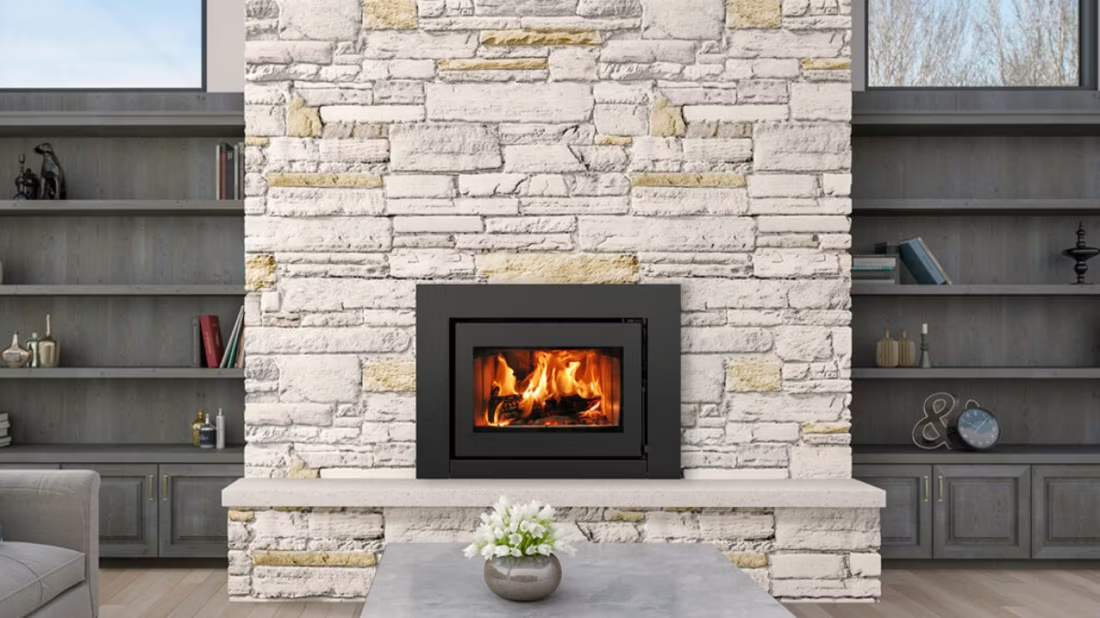
A wood stove is a freestanding unit installed on a hearth pad with its own chimney—it works in a home with no existing fireplace and can go almost anywhere with proper clearances. A wood-burning insert is built to slide into an existing masonry fireplace opening, using the chimney you already have while sealing up the firebox for dramatically better efficiency than an open hearth. For Fairburn's older homes with a fireplace already built in, an insert is usually the simpler and less invasive path—it keeps the existing look while turning a decorative, heat-losing fireplace into something that can genuinely warm a room. New construction or additions without an existing chimney are better suited to a freestanding stove.
What's the difference between an insert and a zero-clearance fireplace?
An insert is a fireplace that slides into a pre-existing wood-burning fireplace—if you don't have one, there's nothing to insert it into. A zero-clearance fireplace is built into a framed wall, which makes it the answer for remodels and new construction. Simple test: existing masonry fireplace means insert; blank or framed wall means zero-clearance.
Why won't my new wood stove get going like my old one?
New wood stoves are 70%+ efficient, so far less heat goes up the flue—which also means less draft to get a fire established. The rule: build a genuinely hot fire for about 45 minutes before you choke it down. Skip that and you get smoke in the room, creosote in the chimney, and a fire that never takes off. Most performance complaints trace straight back to this.
Can I install a fireplace myself?
If you're putting a fire in your house on purpose, it's best to work with an expert. Unless you're genuinely experienced in framing, gas line, vent pipe, and the national code on clearances to combustibles, have a professional do it—and ideally the same company that sells you the fireplace, so warranty, service, and liability all live under one roof.
What is an in-home preview and do I need one?
It's a visit where a hearth professional measures your space, confirms the model you picked actually works in your home, and walks the specs—framing, gas line, venting, finish work—before anything is ordered. Some details you just can't know until you see the house. Never make a down payment without one; it's the single most-skipped step that burns buyers.
Nearby Dealers
Hearth shops serving Fairburn and the surrounding area. Every listing shows whether it is a WhyFire partner, a dealer we have verified as authorized for the brands we recommend, or a local business carrying hearth products. No manufacturer pays for placement. How we verify dealers →
Blossman Gas And Appliance
L&W Insulation And Fireplaces
Cr Design Center - Westside
Authenteak
Atlanta Chimney Worx
Construction Resources - Decatur
Fireplace Depot
EarthCore Industries
The Mad Hatter
Find your wood fireplace in Fairburn.
Tell us a bit about your home and whether you're after ambiance, backup heat, or a fireplace restoration—we'll match you with a trusted local dealer and send over a free Project Guide & Parts List for your Fairburn wood project.
Find Your Fireplace →