
Instant warmth for Effingham County's mild winters.
With only about 1,675 heating degree days a year and winter lows averaging near 40°F, Effingham County doesn't need a furnace-grade fire—it needs a gas fireplace that lights instantly on the handful of cold nights that matter, and keeps working when a storm knocks the power out. We'll match you with a trusted local dealer who installs it right.
Every Project Starts From One of These Five Situations
Ambiance first, backup heat second, in a mild coastal climate.
Effingham County sits in climate zone 2A, one of the mildest heating climates in the country—winter lows average around 40°F, and a hard freeze is the exception, not the rule. That means a wood stove or pellet stove, common in northern climates, just doesn't pencil out here: there's no real cutting-permit culture on private land, and the county's abundant oak, pine, and hickory get used far more often for fire pits and smokers than for daily home heat. A gas fireplace fits the local climate the way a wood stove fits Vermont or Minnesota—it's the fuel that actually matches how people here use a fire.
Most Effingham County homeowners use a gas fireplace for ambiance and for the two or three cold snaps a winter when overnight temps dip into the 20s and 30s—not as a primary heat source. Natural gas service tends to be more available in the county's more developed pockets around Rincon and Springfield, while rural areas toward Guyton, Clyo, and Meldrim typically run on propane. Either fuel works well in a direct-vent unit, and given how often coastal Georgia sees tropical storms and hurricane-season outages, a gas fireplace with battery-backup ignition is genuinely useful—not just decorative—when the grid goes down for a few days.
Three steps. No salesperson until you're ready.
Tell us about your project
Your zip code, your situation, and the fuel you're leaning toward—or let the answers point you to one.
See what's actually available
The brands dealers within 100 miles genuinely carry—real options, never a catalog mirage.
Get your dealer & Project Guide
A trusted local dealer, plus the free Project Guide & Parts List that names every component of the job.
Frequently Asked Questions
How much does a gas fireplace installation cost in Effingham County?
Most gas fireplace and insert installations in Effingham County run roughly $3,000 to $8,000, depending on the unit, whether a gas line is already run to the room, and whether you're on natural gas or need a propane tank set. A direct-vent insert going into an existing masonry fireplace with gas already nearby sits toward the lower end. New construction, a fresh gas line run, or a propane tank installation from scratch will push toward the higher end. A local dealer will give you a firm number after seeing the space in person.
Do I need a permit to install a gas fireplace in Effingham County?
Yes—new gas fireplace installations typically require both a building permit and a gas line permit through the county building department, and the gas line itself has to be run by a licensed gas-fitter. Most local dealers handle the permitting as part of the install, so you're not left coordinating separate trades. It's one of the reasons to work with an established local hearth retailer rather than a general handyman for this kind of project.
Should I install a natural gas or propane fireplace in Effingham County?
It depends on where in the county you live. Homes in and around Rincon and Springfield are more likely to have natural gas service already running to the house, which makes adding a fireplace straightforward. Out toward Guyton, Clyo, Meldrim, or the more rural stretches of the county, propane is the more common fuel—either from an existing tank or a new tank set by a local propane supplier. Nearly every gas fireplace on the market can be configured for either fuel; your installer sets the correct orifice and regulator for whichever you have.
Will my gas fireplace still work if the power goes out?
Most modern gas fireplaces will, which matters in a hurricane-prone coastal county like Effingham. Units with intermittent pilot ignition (IPI) run on a battery backup that kicks in the moment the power drops, so the fireplace still lights on demand. Valor fireplaces take it a step further—their pilot generates its own electricity through the thermocouple, so there are no batteries to remember or replace at all. If storm-season reliability is a priority for you, ask your local dealer specifically about the ignition system on any unit you're considering.
What's the difference between a gas fireplace, gas insert, and gas stove?
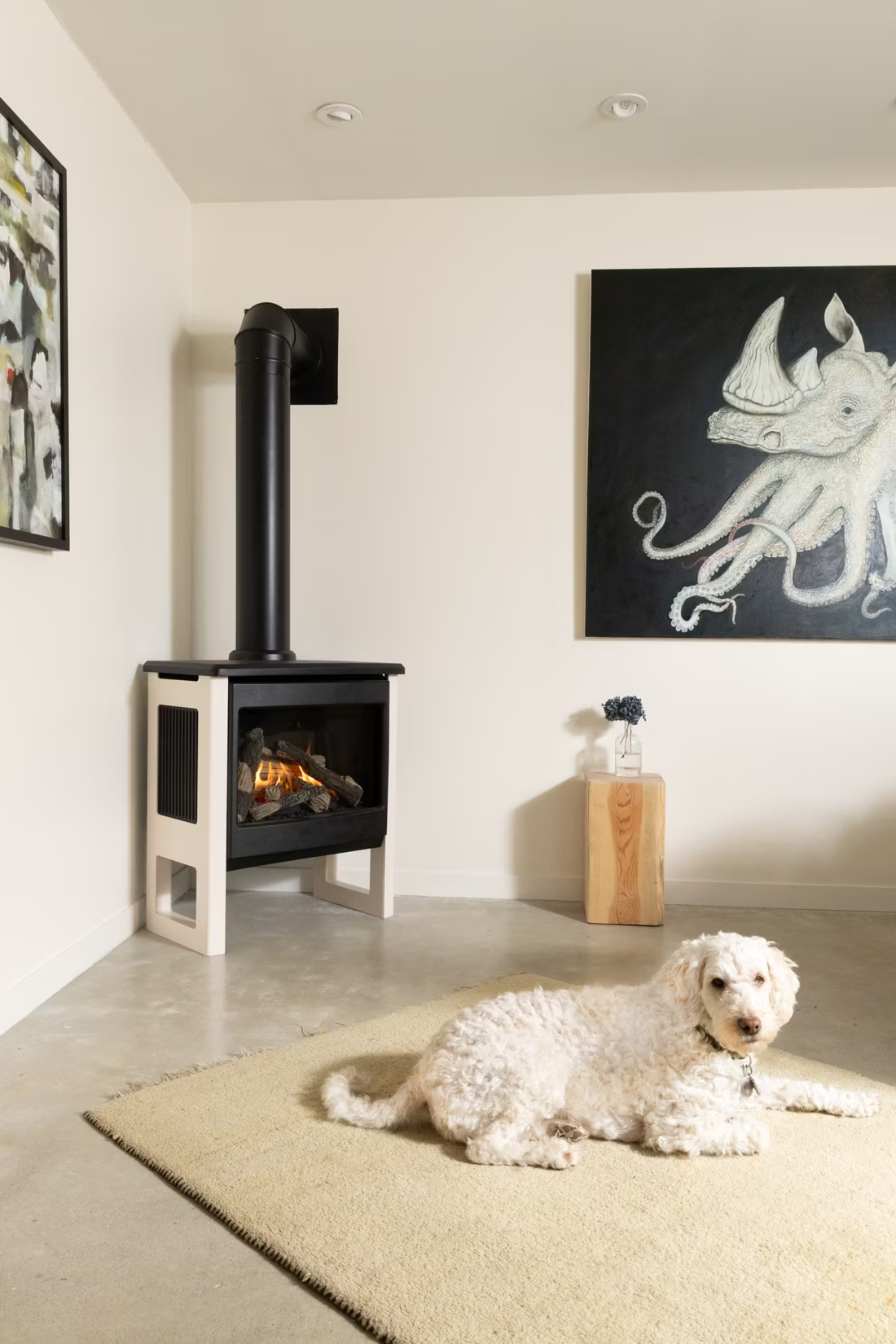
A gas fireplace is a built-in unit framed into a wall—the right call for new construction or a remodel. A gas insert drops into an existing masonry fireplace and uses the existing chimney as its vent path, which is the more common project for older Effingham County homes with a fireplace they never really use. A gas stove is a freestanding unit that sits out in the room like a wood stove but runs on gas—a good option when you want supplemental heat in a room without an existing fireplace opening.
Vented or vent-free—which gas fireplace is right for Effingham County?
Vented (direct-vent) gas fireplaces draw combustion air from outside and exhaust it back outside through sealed venting—they're the more universally recommended option and the one most local dealers install by default. Vent-free units burn directly into the room and are legal in Georgia within room-size and ventilation limits, and some homeowners choose them for a quick supplemental unit in a small den or bonus room. But given how mild Effingham County winters already are, most homeowners get better results—and better indoor air quality—from a properly vented unit rather than leaning on a vent-free model to stretch further than it should.
How often should a gas fireplace be serviced?
An annual inspection is the standard recommendation, even in a mild climate where the unit might only run a few dozen hours a year. A technician checks the burner, pilot assembly, venting, and gas connections, and cleans the glass and interior. Expect to pay around $150 to $250 for a routine service call—light use doesn't eliminate the need for it, since dust and insects can still affect the pilot and venting between seasons.
Does wood or pellet heat make sense anywhere in Effingham County?
Realistically, not for daily heat. With no significant air quality restrictions and plenty of oak, pine, and hickory around, wood-burning isn't off the table entirely—some homeowners keep a wood stove or fireplace for the occasional cold-front evening, camp-style ambiance, or a rural property with a woodlot. But at 1,675 heating degree days and winter lows averaging near 40°F, there isn't the sustained cold that makes wood or pellet heat worth the ash, chimney maintenance, and hopper-loading in most of the county. Gas delivers the same instant fire experience without the upkeep, which is why it's the standard choice here.
Gas vs. electric fireplace—which is the better fit here?
Both work well in Effingham County's mild climate, and the choice usually comes down to venting and backup power. Electric fireplaces install almost anywhere—no gas line, no venting, just a plug—and they're a good fit for a bedroom, apartment, or rental where a permanent gas hookup isn't practical. But electric units go dark the moment the power fails, which matters here given hurricane-season outages. A vented gas fireplace with battery-backup ignition gives you the same convenience most of the year plus real heat and light during a storm, which is why gas tends to be the preferred choice for a primary living space.
Is my gas fireplace wasting gas?
If it was installed more than 15 years ago, probably. Older gas fireplaces keep a standing pilot light burning all the time, and that little flame can cost a couple hundred dollars a year. Newer models use pilot-on-demand ignition—the pilot lights only when you use the fireplace and goes out when you turn it off.
Can I put a TV above my fireplace?
Yes—with an asterisk. Fireplaces are hot and TVs don't like heat. Either put a mantel between them to deflect rising warmth, or choose a fireplace with heat-management technology that creates a cool zone on the wall above—the wall stays around 125 degrees, barely warm, while the room still gets full heat. If you like clean lines and don't want a mantel, heat management is the answer.
Can a fireplace actually lower my heating bill?
Yes—by creating a comfort zone. A furnace heats every square foot of the house just to warm the one room you're in; a gas fireplace on low burns roughly a sixth of the gas a typical furnace does. Set the furnace around 55–60 degrees as a baseline, then heat the rooms your family actually uses. Families who heat this way commonly save $20–$60 a month.
Can I install a fireplace myself?
If you're putting a fire in your house on purpose, it's best to work with an expert. Unless you're genuinely experienced in framing, gas line, vent pipe, and the national code on clearances to combustibles, have a professional do it—and ideally the same company that sells you the fireplace, so warranty, service, and liability all live under one roof.
Stove and Fireplace Dealers in Effingham County
Find your gas fireplace in Effingham County.
Tell us a bit about your home and we'll match you with a trusted local Effingham County dealer and send over your free Project Guide & Parts List—the exact parts, including the vent kit, for your gas fireplace project.
Find Your Fireplace →