
Fireplaces for Effingham County's mild winters.
With winter lows averaging near 40°F and only about 1,675 heating degree days a year, Effingham County doesn't need a stove running around the clock. Fireplaces cover almost every home here—from Springfield to Rincon, Guyton, and Clyo. Connect with a trusted local dealer who knows what actually fits a Coastal Plain home.
Every Project Starts From One of These Five Situations
Mild winters, low heating demand across Effingham County, Georgia.
Effingham County sits on the Georgia Coastal Plain just northwest of Savannah, in climate zone 2A—hot, humid summers and short, mild winters. The average winter low here is around 40°F, and the county logs roughly 1,675 heating degree days a year. For comparison, a place like Duluth, Minnesota racks up more than 9,000 HDD in a typical winter; Effingham County's heating season is a fraction of that, often just a handful of genuinely cold weeks between December and February. Oak, pine, and hickory are the common local hardwoods, and plenty of homeowners still enjoy an occasional wood fire in a firepit or outdoor setup, but as a whole-home heating strategy, wood doesn't carry the same weight here that it does further north or at higher elevation.
That's why this hub leans heavily on gas and electric—the two fuels that actually make sense for most Effingham County homes, whether you're in Springfield, Rincon, Guyton, Clyo, or one of the unincorporated communities like Egypt or Meldrim. Wood and pellet appliances are covered too, mostly for homeowners who want a fireplace for ambiance, hurricane-season power-outage backup, or a vacation property elsewhere with a colder climate. Pick your fuel below to see local retailers, install costs, and the dealers who actually stock and service what works in this part of the state.
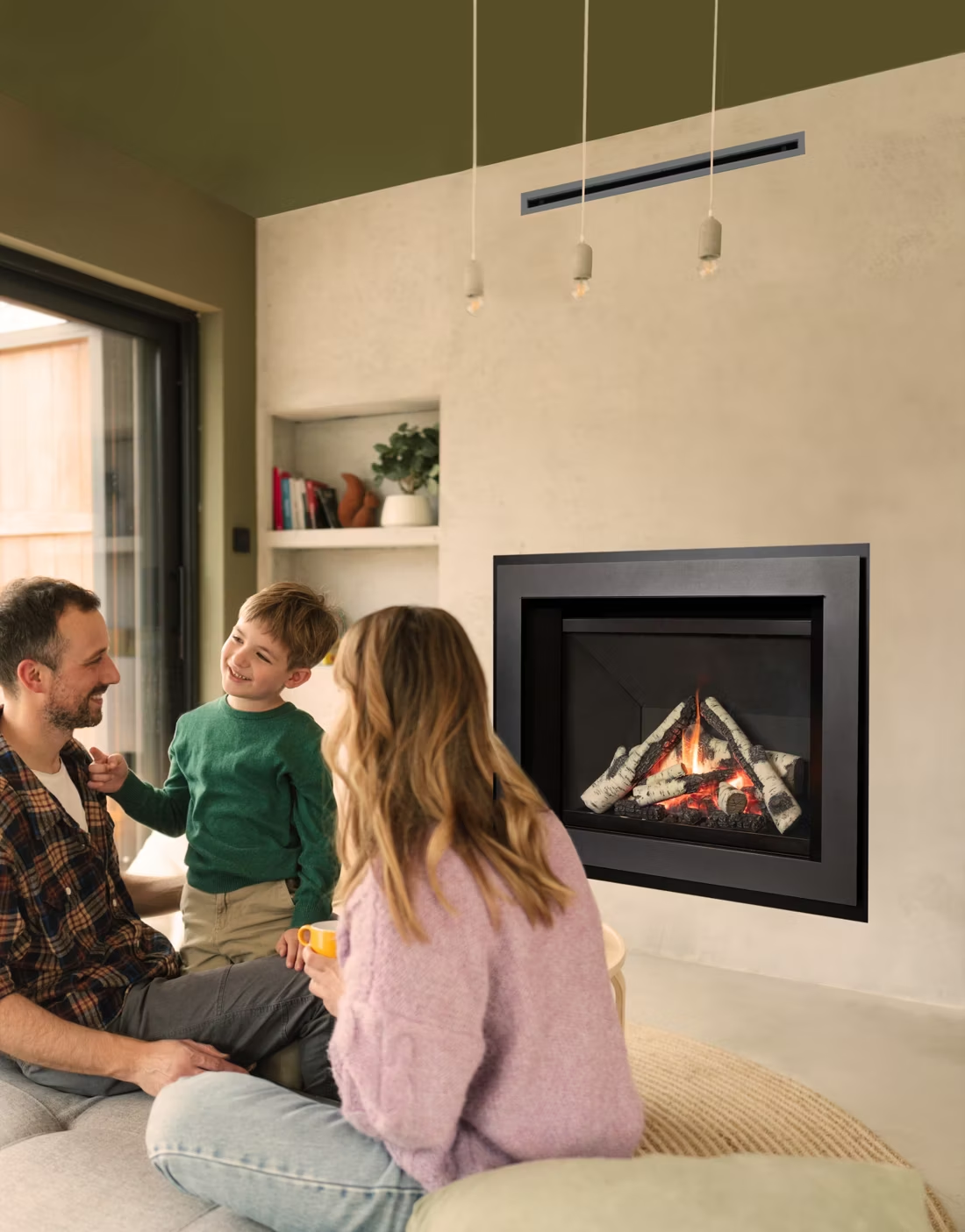
Four fuels. One honest answer for Effingham County.
Three steps. No salesperson until you're ready.
Tell us about your project
Your zip code, your situation, and the fuel you're leaning toward—or let the answers point you to one.
See what's actually available
The brands dealers within 100 miles genuinely carry—real options, never a catalog mirage.
Get your dealer & Project Guide
A trusted local dealer, plus the free Project Guide & Parts List that names every component of the job.
Frequently Asked Questions
Which fuel works best in Effingham County?
For most Effingham County homes, it comes down to gas or electric. With winter lows averaging around 40°F and only about 1,675 heating degree days a year, the county simply doesn't have the sustained cold that makes wood or pellet heat worth the labor and upkeep for most households. Gas fireplaces and inserts give you instant ambiance and supplemental warmth on the county's genuinely cold nights without any wood handling. Electric fireplaces are even simpler—plug-and-play units work fine for bedrooms, dens, and rental properties in Rincon or Springfield where a full gas line isn't practical. Wood and pellet stoves aren't common here, but a few homeowners still install them—often for hurricane-season backup heat when the power's out, or for a rustic look using local oak or hickory.
Do I need a permit to install a gas or electric fireplace in Effingham County?
Generally yes for gas, and it depends for electric. Gas fireplace, insert, and stove installations in Effingham County require a building permit through the county's building inspections department, plus a separate gas connection handled by a licensed gas-fitter—that's true whether you're running natural gas or propane. Electric fireplaces are usually permit-free if they're plug-in units, but a built-in electric fireplace that requires new wiring or a dedicated circuit typically needs an electrical permit. Most local hearth retailers pull these permits as part of the installation, so homeowners rarely have to navigate it directly.
Are wood stoves ever installed in Effingham County despite the mild climate?
Occasionally, yes, but it's the exception rather than the rule. Effingham County has no wood-smoke air quality restrictions, so there's no regulatory barrier—it's simply a matter of need. With winters this mild, most homeowners who install a wood stove or fireplace insert here are doing it for hurricane-season backup heat during grid outages, for the look and feel of a real fire using local oak, pine, or hickory, or because they split time between Effingham County and a colder-climate property. If you're set on wood, a handful of retailers in the Savannah-Rincon corridor still carry EPA-certified stoves and inserts, but expect a smaller selection than you'd find in a place like Bozeman, Montana, where wood heat is a daily necessity rather than an occasional choice.
Can I buy a pellet stove in Effingham County?
You can, but it takes a bit more searching. Pellet fuel itself is available locally—brands like Lignetics, Hamer Pellet Fuel, and Greenway Renewable Energy show up at farm and hardware suppliers in the region—but very few Effingham County hearth retailers keep pellet stoves in showrooms, since the demand for a wood-pellet heating appliance in a 1,675-HDD climate is low. If a pellet stove is genuinely what you want—for a workshop, a detached space, or backup heat—a local dealer can usually special-order one and walk you through venting requirements, even if it's not something they stock on the floor.
How does fireplace service work in the more rural parts of Effingham County, like Guyton or Clyo?
Most gas and electric service technicians covering Effingham County are based near Rincon or the Savannah side of the county and drive out to Guyton, Clyo, and the more rural stretches as needed. Expect a modest travel fee for calls further from the I-95/Highway 21 corridor. Because most homes here rely on gas or electric rather than wood, annual service is typically a quick gas valve and igniter check rather than a full chimney sweep—scheduling before the first cold snap in November or December tends to be easier than waiting until a cold front actually hits.
What's the typical cost range for a fireplace project across fuel types in Effingham County?
Costs skew toward gas and electric here. Gas fireplace, insert, or stove installation typically runs $4,000–$9,500, depending on whether you're extending a gas line or converting an existing hearth. Electric fireplace installation ranges from about $200–$2,500 for the unit itself, plus $300–$1,000 in labor for anything beyond a simple plug-in—most wall-mount and insert electric units fall in that range. Wood stove or insert installs, when a homeowner does want one, run $4,500–$9,000, similar to colder-climate counties, since the equipment and venting costs don't change with climate. Pellet stove installs are less common but generally land around $4,000–$7,000 when a dealer special-orders one. See the county + fuel pages above for retailer-specific pricing.
Does a fireplace add value to my home?
On average, a fireplace adds back to the home about the same amount you spent installing it. Add the monthly savings from heating the rooms you actually use instead of the whole house—often hundreds of dollars a year—and the value case is strong before you even count what a fire does for how your family uses the room.
How much should I budget for a fireplace?
For an average home—covering the fireplace, the vent pipe, and basic installation—a budget between $3,900 and $5,500 gives you a lot of options across wood, gas, and pellet. By the time you add finish work, gas line, and electrical, the average complete installation lands between $5,000 and $12,000 all-in. In a remodel or new build, a good rule is to put about 2.5% of the total project cost toward the fireplace.
What is an in-home preview and do I need one?
It's a visit where a hearth professional measures your space, confirms the model you picked actually works in your home, and walks the specs—framing, gas line, venting, finish work—before anything is ordered. Some details you just can't know until you see the house. Never make a down payment without one; it's the single most-skipped step that burns buyers.
Wood, gas, pellet, or electric—how do I choose?
Match the fuel to your life, not the other way around. Wood: lowest fuel cost and total power-outage independence, but you're hauling and stacking. Gas: press a button, set a thermostat, no maintenance to speak of. Pellet: wood economics with automatic feeding, in exchange for weekly cleaning and a need for electricity. Electric: plugs in anywhere with honest supplemental heat. Nobody regrets the fuel that fits how they actually live.
Stove and Fireplace Dealers in Effingham County
Listings include WhyFire partner dealers, dealers we have verified as authorized for the brands we recommend, and established local businesses that carry hearth products. Every listing shows which one it is. The ones marked Preferred run on WhyFire's software, so they can show you real pricing and book your appointment right here. No manufacturer pays for placement. How we verify dealers →
Thompson Gas - Springfield
Strickland Oil Co
Gaslog Solutions Plus
Find your fireplace in Effingham County.
Tell us your fuel and your city—Springfield, Rincon, Guyton, or elsewhere in the county—and we'll match you with a trusted local dealer and send a free Project Guide & Parts List: the exact parts, including the vent kit, and the dealer we recommend for your home.
Find Your Fireplace →