
Convenient warmth for Crawford County's short, mild winters.
With a fairly short, mild heating season and winter lows that hover near 33°F, Crawford County doesn't need a furnace-grade wood burner—it needs a clean, thermostat-controlled pellet stove that kicks on during the cold snaps and shuts off when they pass. We'll match you with a trusted local dealer who can size and install one correctly.
Every Project Starts From One of These Five Situations
Set it, forget it—heat sized for a Piedmont winter.
Crawford County sits in Georgia's Piedmont, a quiet stretch of pine and hardwood timberland between Macon and Columbus with a population just under 1,700. Climate zone 3A means humid, moderate winters—nothing like the long, brutal heating season piling up in a place like Duluth, MN. Most Crawford County homes run a central heat pump as their primary system, but a pellet stove in the living room or den handles the handful of genuinely cold weeks each winter far more efficiently, and it keeps producing heat if an ice storm knocks the power grid down, provided the household has a battery backup or generator to run the auger and blower.
The county's oak, pine, and hickory forests are part of local heating tradition, but pellets solve a problem cordwood doesn't: dry, consistent storage in Georgia's humid climate. Bagged pellets from regional producers like Lignetics, Hamer Pellet Fuel, and Greenway Renewable Energy stay dense and low-moisture on a shelf in the garage, no seasoning or splitting required. With no non-attainment air quality restrictions in Crawford County, homeowners also have flexibility that some Georgia counties don't—pellet appliances here are a lifestyle choice as much as a heating necessity.
Three steps. No salesperson until you're ready.
Tell us about your project
Your zip code, your situation, and the fuel you're leaning toward—or let the answers point you to one.
See what's actually available
The brands dealers within 100 miles genuinely carry—real options, never a catalog mirage.
Get your dealer & Project Guide
A trusted local dealer, plus the free Project Guide & Parts List that names every component of the job.
Frequently Asked Questions
How much does a pellet stove installation cost in Crawford County?
A freestanding pellet stove installation in Crawford County typically runs $3,000 to $6,500, depending on the unit, whether venting has to be run through an exterior wall, and whether a hearth pad is needed for clearance compliance. A pellet insert into an existing masonry fireplace—common in some of the county's older farmhouses—usually lands toward the lower half of that range since the chimney chase is already in place. Homes without an existing fireplace or hearth will need new wall penetration and venting, which pushes the estimate toward the higher end. A local dealer will give you a firm number after seeing the room.
Pellet stove or pellet insert—which fits my Crawford County home?
If you have an existing wood-burning fireplace, a pellet insert slides into that opening and uses the same chimney chase, which keeps the installation simpler and the cost lower. If your home doesn't have a masonry fireplace—common in newer construction around Roberta—a freestanding pellet stove with its own through-wall vent kit is the more practical option. Either way, given the county's mild winters, most households size for supplemental heat in one or two rooms rather than trying to heat the whole house off a single unit.
Where can I buy pellets locally in Crawford County?
Regional producers including Lignetics, Hamer Pellet Fuel, and Greenway Renewable Energy supply the middle Georgia market, and their bagged pellets show up at farm supply and hardware stores in and around the county. Because Crawford County is small and rural, some homeowners make a short trip toward Macon for the widest in-stock selection, especially heading into the first cold stretch of the season. A ton of pellets (about 50 forty-pound bags) is a reasonable amount to stock for a typical supplemental-heat season in this climate; heavier users running the stove daily through a full winter may go through more.
Will my pellet stove work during a power outage?
Not without backup power. Pellet stoves rely on an electric auger to feed fuel and a blower to circulate heat, so a grid outage stops the stove. This matters more in Crawford County than the mild winter numbers suggest—Georgia's occasional winter ice storms have knocked out power across middle Georgia for days at a time. A small battery backup or portable generator sized for the stove's low wattage draw is a common and inexpensive fix. If uninterrupted heat during outages is a priority, a wood stove is worth discussing with your dealer as a complement to a pellet unit rather than a replacement.
Do I need a permit to install a pellet stove in Crawford County?
Yes—new pellet stove and insert installations require a building permit through Crawford County's building and code enforcement office, primarily to confirm hearth clearances and proper through-wall or through-roof venting. Most established local dealers handle the permit paperwork as part of the installation, so you generally aren't filing anything yourself. Given the county's small size, expect a straightforward review compared to counties with heavier development pressure.
What size pellet stove do I need for a Crawford County home?
With winter lows averaging around 33°F and a fairly short, mild heating season, most Crawford County homes don't need a large-capacity pellet stove running around the clock. A small to mid-size unit (rated for 1,000 to 1,800 square feet) is usually enough to supplement a heat pump during the coldest weeks of January and February, keeping the main living area comfortable without overheating the house. Larger units make more sense for households planning to use the pellet stove as a true backup heat source during extended outages rather than daily supplemental warmth.
How much maintenance does a pellet stove need?
Pellet stoves need daily-use attention rather than an annual chimney sweep like a wood stove. Plan on emptying the ash pan every few days of regular burning, wiping the glass, and vacuuming the hopper and burn pot weekly during heavy use. An annual professional service—checking the auger motor, blower, gaskets, and venting—is still worth scheduling before the season starts, similar to servicing any HVAC appliance. Because Crawford County's burn season is short, most owners find seasonal cleanout at the start and end of winter is enough on top of routine ash removal.
Pellet stove or wood stove—which makes more sense in Crawford County?
Wood is deeply practical here—oak, pine, and hickory are abundant across the county's timberland, and a wood stove works without electricity, which matters during ice storm outages. But Georgia's humidity makes seasoning and storing firewood properly more of a chore than in drier climates, and wood requires more hands-on tending for a heat need that's often just a few cold weeks a year. Pellet stoves trade that self-sufficiency for convenience: load the hopper, set the thermostat, and walk away, with cleaner burns and less ash. For most Crawford County households using supplemental heat rather than depending on wood as a primary system, pellet is the lower-effort choice—those prioritizing outage-proof heat may still want wood in the mix.
What pellet stove brands are available near Crawford County?
Local dealers serving the county typically carry appliances compatible with regional pellet supply from producers like Lignetics, Hamer Pellet Fuel, and Greenway Renewable Energy, so fuel availability isn't a concern regardless of which stove brand you choose. Given Crawford County's mild heating needs, most homeowners don't need the largest or most heavily catalytic-rated units on the market—a mid-tier stove with reliable auger feed and a simple thermostat is usually the right fit. A local dealer can walk you through which models they service directly, which matters more than brand name once you're a few years into ownership.
How often does a pellet stove need cleaning?
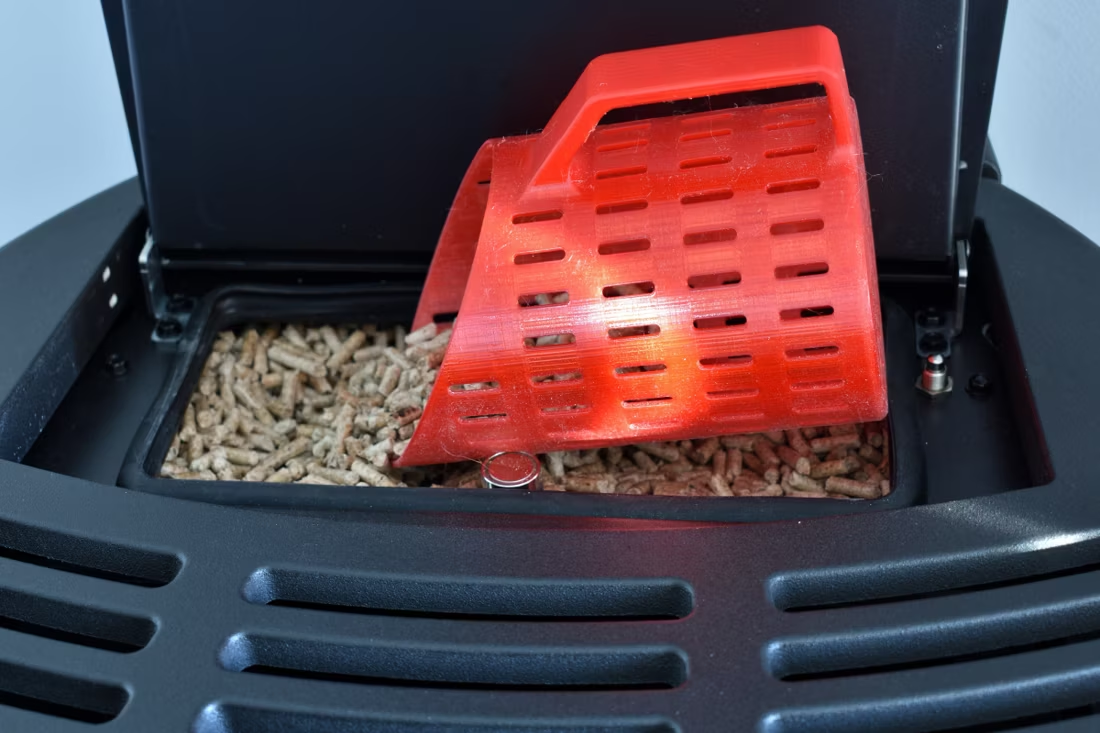
A clean pellet stove is a happy pellet stove. Plan on cleaning the burn pot about once a week when you're burning regularly—ash and clinkers gum up the air holes just like a pellet barbecue. Most pellet stove problems trace back to skipped cleaning that nobody explained up front. Some designs make it easy with a trapdoor burn pot: pull a lever and the gunk drops into the ash pan.
What do I measure to size a fireplace insert?
Four numbers tell you what fits: the front width, the front height, the back width, and the overall depth of your existing fireplace opening. Grab a tape measure, jot those down, and snap a photo of the wall—those two things do more to move your project forward than anything else you can do today.
Can a fireplace actually lower my heating bill?
Yes—by creating a comfort zone. A furnace heats every square foot of the house just to warm the one room you're in; a gas fireplace on low burns roughly a sixth of the gas a typical furnace does. Set the furnace around 55–60 degrees as a baseline, then heat the rooms your family actually uses. Families who heat this way commonly save $20–$60 a month.
How much should I budget for a fireplace?
For an average home—covering the fireplace, the vent pipe, and basic installation—a budget between $3,900 and $5,500 gives you a lot of options across wood, gas, and pellet. By the time you add finish work, gas line, and electrical, the average complete installation lands between $5,000 and $12,000 all-in. In a remodel or new build, a good rule is to put about 2.5% of the total project cost toward the fireplace.
Pellet Brands Stocked Around Crawford County
Manufacturers will point you to the nearest stocking dealer.
Find your pellet stove in Crawford County.
Tell us about your home and heating goals, and we'll match you with a trusted local dealer plus a free Project Guide & Parts List—the exact parts, vent kit, and install plan for your Crawford County pellet project.
Find Your Fireplace →