
Efficient, low-maintenance heat for Coweta County homes.
Pellet stoves and inserts bring thermostat-controlled warmth to Newnan, Senoia, Sharpsburg, and every community across Coweta County—without the wood-splitting or chimney upkeep. Find the right unit and connect with a trusted local dealer.
Every Project Starts From One of These Five Situations
Consistent warmth without the wood-splitting.
Coweta County sits in Georgia's upper Piedmont, just southwest of the Atlanta metro, anchored by Newnan and stretching through Senoia, Sharpsburg, Moreland, and Grantville. At climate zone 3A, winters here are short and mild—the average low sits around 31°F, and the county logs roughly 2,965 heating degree days a year, a fraction of what a place like Bismarck, ND or Minneapolis, MN racks up in a single season. That means most Coweta County homes aren't fighting for survival heat; they're looking for efficient, low-fuss warmth to take the edge off cool mornings and the occasional hard freeze.
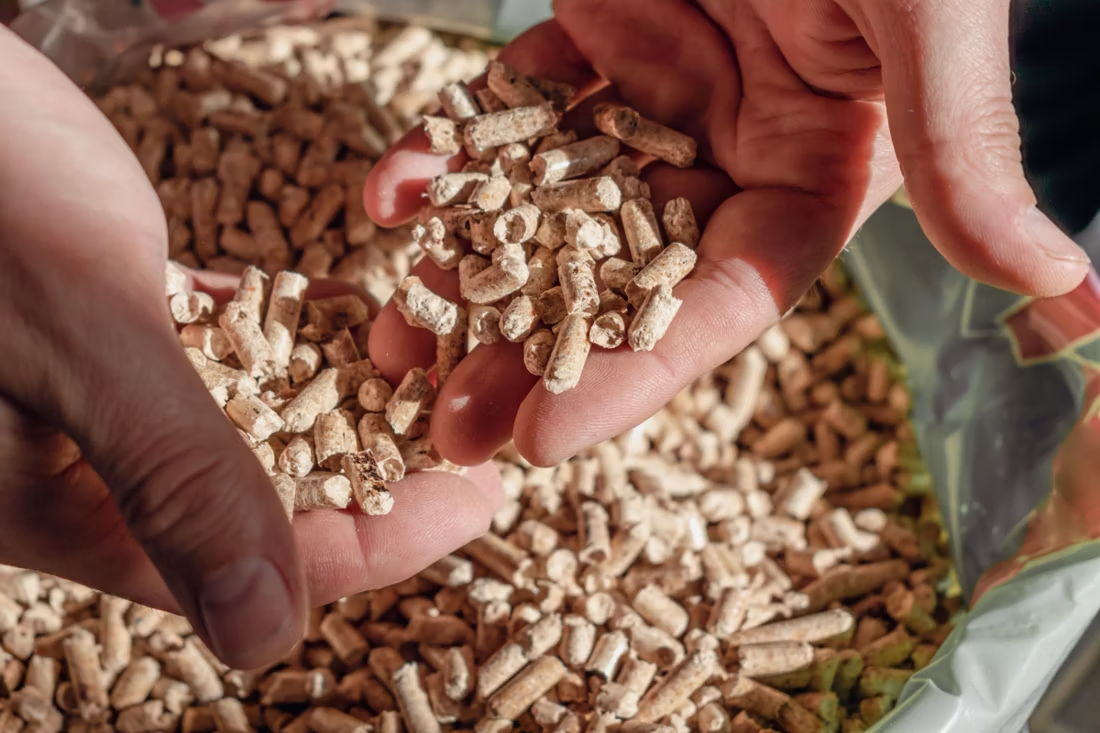
That's exactly where pellet stoves and inserts earn their keep. With no regional air quality restrictions or burn bans to navigate, and clean-burning pellet appliances that skip the wood-splitting, seasoning, and chimney upkeep of a cordwood setup, pellet heat fits well in the newer subdivisions and larger, open-plan homes that have grown up around Newnan and Senoia in recent years. Regional suppliers like Lignetics, Hamer Pellet Fuel, and Greenway Renewable Energy keep bagged pellets—often milled from Southern yellow pine—within reach across the county, so fuel supply isn't the hurdle it can be in less agricultural regions.
Three steps. No salesperson until you're ready.
Tell us about your project
Your zip code, your situation, and the fuel you're leaning toward—or let the answers point you to one.
See what's actually available
The brands dealers within 100 miles genuinely carry—real options, never a catalog mirage.
Get your dealer & Project Guide
A trusted local dealer, plus the free Project Guide & Parts List that names every component of the job.
Frequently Asked Questions
How much does a pellet stove installation cost in Coweta County?
Most pellet stove and insert installations in Coweta County run in the $3,000 to $6,500 range, with the spread driven by whether you're installing a freestanding stove versus a fireplace insert, whether the vent kit needs to run through an exterior wall or an existing masonry chimney, and whether electrical work is needed to power the hopper's auger and blower. Because Coweta's mild winters (2,965 heating degree days) mean most households are running a pellet stove as supplemental or zone heat rather than a whole-home primary system, many homeowners here choose a mid-size unit rather than the largest, most expensive models, which keeps costs toward the lower end of that range. A local dealer will give you a firm number after seeing your fireplace or install location in person.
What size pellet stove do I need for my home?
Sizing depends on square footage, ceiling height, and how open your floor plan is—but Coweta County's mild climate zone (3A) works in your favor. With winter lows averaging around 31°F and a heating season that's short compared to colder states, a smaller or mid-size pellet stove (rated for 1,000 to 1,800 square feet) is usually enough to comfortably heat a living area or supplement central HVAC, even in some of the larger newer homes going up around Senoia and Sharpsburg. Homeowners using a pellet stove as their only heat source, or heating an older, drafty farmhouse near Moreland or Grantville, may want to size up. A local retailer can walk your space and recommend hopper capacity along with stove size—larger hoppers mean less frequent refilling, which matters more than raw BTU output for a lot of Coweta County homes.
Where can I find certified pellet stove installers near me?
Look for NFI (National Fireplace Institute)-certified technicians, which most established hearth retailers serving Coweta County employ. Because pellet stoves need a vent kit run through a wall or existing chimney and often a dedicated electrical outlet for the hopper motor and igniter, installation isn't a DIY-friendly project even though pellet units are simpler than wood stoves in some ways. Retailers serving Newnan and the surrounding county typically handle the vent routing, electrical tie-in, and any permitting in one visit, which is worth the premium over a big-box purchase with no install support.
What's the difference between a pellet stove and a pellet insert?
A pellet stove is a freestanding appliance that sits on a hearth pad and vents out through a wall or existing chimney—it can go almost anywhere in a room with the right clearances. A pellet insert is built to slide into an existing masonry fireplace opening, converting an old wood-burning fireplace into an efficient, thermostatically controlled heat source. For Coweta County homes with an existing fireplace—common in older homes around Newnan's historic districts—an insert is often the cleaner option since it uses the opening you already have. Homes without an existing fireplace, or newer construction throughout the county's growing subdivisions, are usually better suited to a freestanding stove.
Do I need a permit to install a pellet stove in Coweta County?
In most cases, yes—a building permit is typically required for a new pellet stove or insert installation through the Coweta County Building Department, or the relevant city department if you're inside Newnan or another incorporated area, largely because of the vent penetration through a wall or roof and any electrical work involved. Most local hearth dealers include permitting as part of the installation process, so you generally won't need to pull it yourself. Unlike wood-burning appliances in parts of the country with winter inversion issues, Coweta County has no air quality non-attainment status or seasonal burn curtailment periods to work around, so once the unit is installed and permitted, you're free to run it whenever you want heat.
What's the best pellet stove for Coweta County's climate?
Because Coweta County's winters are relatively mild—2,965 heating degree days is a fraction of what a colder-climate city like Duluth, MN sees in a single season—most homeowners here don't need the largest, most aggressive continuous-burn units. Mid-size pellet stoves and inserts with a moderate hopper capacity (40 to 60 lbs) tend to be the sweet spot: enough output for supplemental heat or cool-morning use without oversizing for a climate that rarely sees extended hard freezes. If you're planning to run the stove as your primary heat source in an older, less-insulated home, a local dealer can step you up to a larger unit and walk through hopper size versus refill frequency.
How often does a pellet stove need to be cleaned and serviced?
Pellet stoves need more frequent—but far less involved—attention than wood stoves. Plan on emptying and vacuuming the ash pan every few days to a week during regular use, a deeper cleaning of the burn pot and heat exchanger tubes monthly, and a full professional inspection and vent cleaning once a year, ideally before the start of the heating season in the fall. Because pellet appliances vent through a smaller-diameter pipe rather than a full masonry chimney, there's no annual chimney sweep needed the way there is with wood—but the exhaust vent still needs to be checked for pellet ash buildup and blockage.
Where can I buy pellet fuel in Coweta County?
Regional brands including Lignetics, Hamer Pellet Fuel, and Greenway Renewable Energy supply hardware stores, farm supply retailers, and hearth dealers throughout the county, typically sold in 40-lb bags by the pallet (usually around 50 bags to a ton). Southern yellow pine, abundant in this part of Georgia, is a common feedstock for pellets sold regionally, and premium hardwood blends are also available from some suppliers. Buying a season's supply by pallet in late summer or early fall, before demand picks up, is the most common way local homeowners avoid running short mid-winter.
Pellet stove vs. wood stove—which is right for my Coweta County home?
Wood stoves burn cordwood—oak, pine, and hickory are all common species locally—and work without electricity, which matters if you want heat during a power outage from a summer storm or ice event. They also tend to have a lower fuel cost if you have access to your own wood. Pellet stoves are more convenient: load the hopper, set the thermostat, and let the auger and igniter do the rest, with a cleaner, more consistent burn and far less ash. The tradeoff is that pellet stoves need electricity to run the auger and blower, so they won't function during an outage without a battery backup or generator. For most Coweta County homeowners who want simple, thermostatically controlled supplemental heat without the wood-splitting and stacking, pellet wins. For those on rural acreage with easy access to hardwood and a priority on off-grid backup heat, wood is still the better fit.
Why is my open fireplace making my house colder?
Open fireplaces suck—literally. As the fire burns, it consumes air your furnace already paid to heat and pulls it out through the chimney, so the house is actually colder after the fire goes out than before you lit it. An insert fixes this: it seals the chimney, puts fixed glass across the front, and turns that hole in your house into a real heat source.
How often does a pellet stove need cleaning?
A clean pellet stove is a happy pellet stove. Plan on cleaning the burn pot about once a week when you're burning regularly—ash and clinkers gum up the air holes just like a pellet barbecue. Most pellet stove problems trace back to skipped cleaning that nobody explained up front. Some designs make it easy with a trapdoor burn pot: pull a lever and the gunk drops into the ash pan.
Should the dealer who sells my fireplace also install it?
Ideally, yes. A fireplace project involves vent pipe, gas line, electrical, and often tile or stone. Hire three or four separate trades and you own the liability and the game of telephone between them. One company selling and installing means one accountable party, start to finish—ask about factory training, on-time completion records, and what happens if an inspection fails.
Can a fireplace actually lower my heating bill?
Yes—by creating a comfort zone. A furnace heats every square foot of the house just to warm the one room you're in; a gas fireplace on low burns roughly a sixth of the gas a typical furnace does. Set the furnace around 55–60 degrees as a baseline, then heat the rooms your family actually uses. Families who heat this way commonly save $20–$60 a month.
Stove and Fireplace Dealers in Coweta County
Pellet Brands Stocked Around Coweta County
Manufacturers will point you to the nearest stocking dealer.
Find your pellet stove in Coweta County.
Tell us a bit about your home and we'll match you with a trusted local dealer who can put together your free Project Guide & Parts List—a full plan for your pellet project in Coweta County, down to the vent kit.
Find Your Fireplace →