
Real fire ambiance for Colquitt County's mild winters.
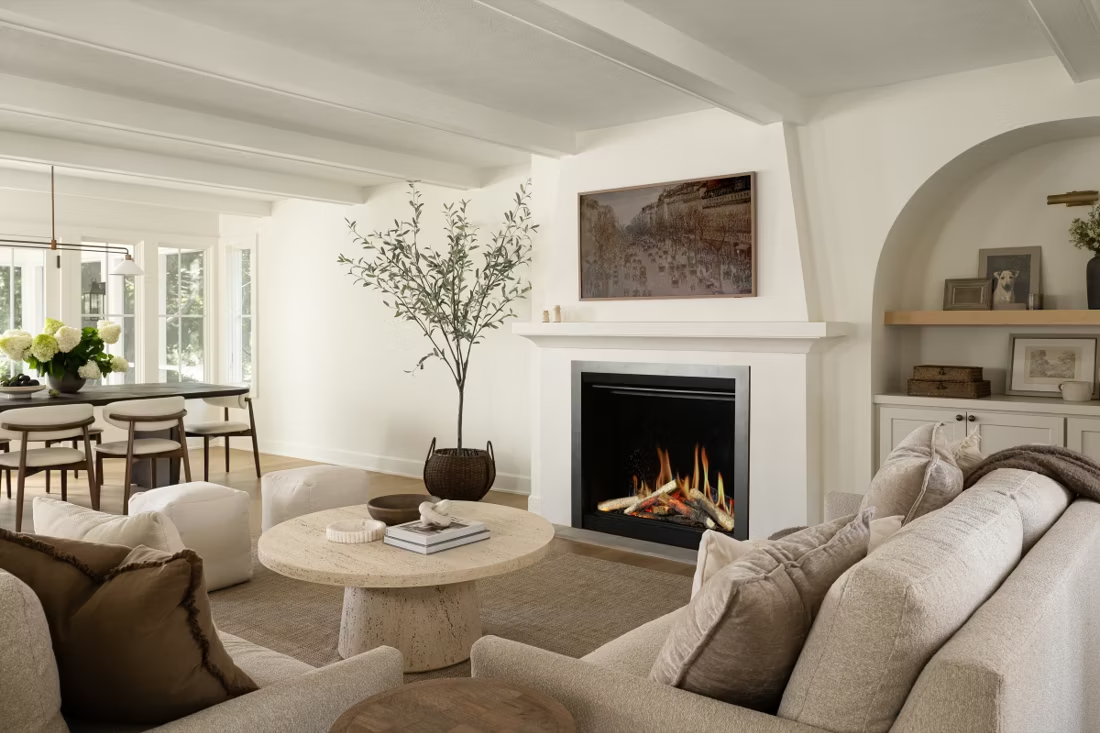
With just a short, mild winter season and winter lows averaging 39°F, Colquitt County rarely needs a furnace-replacing heat source—but homeowners from Moultrie to Doerun still want a fireplace. Electric delivers the look and the occasional warmth, with no chimney and no gas line required.
Every Project Starts From One of These Five Situations
Colquitt County winters rarely demand real heat—electric delivers the ambiance anyway.
Colquitt County sits in Georgia's Zone 2A climate zone, one of the mildest heating climates in the country—a short, mild winter season compared to a place like Duluth, Minnesota, which faces a winter heating load several times as long. Winter lows average 39°F, with real freezes the exception rather than the rule. The county's oak, pine, and hickory woodlots have supplied firewood for generations of Moultrie-area farms, and a handful of older rural homes still keep a wood fireplace going on the coldest nights. But for most of the county's roughly 18,450 residents, running a wood or pellet system to heat a home built around window units and central air doesn't make practical sense—which is why wood and pellet appliances see very little demand here, while electric fireplaces have become the default way to add a fire feature to a living room, primary bedroom, or the sunroom off the back porch.
An electric fireplace makes sense in Colquitt County for reasons that have nothing to do with cold: no chimney to maintain in a humid climate, no combustion byproducts added to already-humid Georgia air, and no gas line to run in homes that are all-electric to begin with. Colquitt Electric Membership Corporation (Colquitt EMC), the co-op that serves most of the county, keeps the grid reliable enough that homeowners don't think twice about plugging in a supplemental heater during the occasional hard freeze or ice event. A trusted local dealer can match you with a plug-in insert for a rental or starter home, or a hardwired built-in unit for a remodel—and pull whatever electrical permit the install actually requires, which for most units is none at all.
Three steps. No salesperson until you're ready.
Tell us about your project
Your zip code, your situation, and the fuel you're leaning toward—or let the answers point you to one.
See what's actually available
The brands dealers within 100 miles genuinely carry—real options, never a catalog mirage.
Get your dealer & Project Guide
A trusted local dealer, plus the free Project Guide & Parts List that names every component of the job.
Frequently Asked Questions
How much does an electric fireplace installation cost in Colquitt County?
Most electric fireplace projects in Colquitt County fall into one of two categories. A plug-in insert or mantel package that uses a standard household outlet typically runs $300 to $900 installed, since there's no wiring involved beyond setting the unit and mounting a mantel if you choose one. A built-in or wall-recessed unit that needs a dedicated 20-amp circuit run by a licensed electrician runs closer to $1,200 to $2,500, depending on how far the new circuit has to travel and whether drywall or trim work is needed to finish the opening. Neither option requires the chimney, hearth pad, or venting work that drives up cost with wood or gas installs.
Why don't more homes in Colquitt County use wood or pellet stoves?
The math doesn't favor them here. With a short, mild winter season and winter lows averaging 39°F, Colquitt County's heating season is short and mild compared to places like Bozeman, Montana or Fargo, North Dakota, where a wood stove can be the primary heat source for half the year. The oak, pine, and hickory that grow throughout the county make for good firewood if you already have a wood fireplace, and a few older rural homes still burn wood on the rare hard-freeze night. But installing a new wood or pellet system to heat a home that needs real supplemental heat maybe a dozen nights a year rarely pencils out, which is why local dealer inventory leans toward electric and gas rather than wood or pellet appliances.
Do I need a permit to install an electric fireplace in Colquitt County?
Usually not. A plug-in insert or freestanding electric fireplace that runs off an existing wall outlet doesn't trigger a permit because no new wiring is involved. If you're installing a built-in or wall-recessed unit that requires a new dedicated circuit, the electrical work itself needs to be done—or at least signed off—by a licensed electrician, and larger jobs may need a standard electrical permit through the county. Most local dealers can tell you within a few minutes of seeing your wall and breaker panel whether your specific install needs one.
What's the difference between an electric insert, a wall-mount, and a mantel package?
An electric insert is built to drop into an existing masonry or wood-framed fireplace opening, giving an old or unused fireplace a working flame effect and some heat without touching the chimney. A wall-mount unit hangs flush or recessed into a wall, more like a piece of art or a TV, and works well in newer Colquitt County homes without an existing fireplace. A mantel package pairs a freestanding or built-in unit with a surrounding mantel and hearth surface, which is the most popular option for homeowners who want a fireplace to be the visual focal point of a living room in a home that never had one.
Will an electric fireplace actually heat a room in Colquitt County?
Most units put out around 5,000 BTU on the heat setting, which is enough to noticeably warm a single room—a bedroom, a den, a sunroom—especially on the kind of nights Colquitt County actually gets cold, when temperatures dip into the 20s or 30s. It won't replace your central heat pump as a whole-home system, and it isn't meant to. Think of it as zone heat for the room you're actually sitting in during the handful of genuinely cold weeks each winter, with the flame effect running year-round for ambiance whether the heater is on or not.
Which electric fireplace brands and styles work best for Colquitt County homes?
Because heating demand is light here, most homeowners prioritize flame realism and finish over raw BTU output—brands like Dimplex, Napoleon, and Real Flame all make well-regarded units with realistic LED flame beds that look convincing even with the heater switched off, which matters in a climate where the flame runs more often than the heat. For a sunroom or screened porch addition, a smaller wall-mount unit is usually the right call; for a living room remodel in a Moultrie or Norman Park home, a full mantel package tends to get chosen more often. A local dealer can walk you through options in person rather than off a spec sheet.
Does an electric fireplace add humidity or affect indoor air quality in a Zone 2A climate?
No—and that's one of the real advantages of electric in a climate as humid as south Georgia's. Electric fireplaces produce zero combustion byproducts, no moisture, and no particulate matter, unlike wood or vent-free gas units. In a county with no air quality non-attainment concerns to begin with, that's less of a factor here than in some regions, but it still means one less source of indoor moisture for a home already fighting Colquitt County's humid summers.
Will an electric fireplace spike my power bill?
Not meaningfully. Most electric fireplace heaters draw around 1,500 watts on the highest heat setting—comparable to a hair dryer or a space heater—and Colquitt Electric Membership Corporation (Colquitt EMC) rates mean running one for a few hours on a cold evening adds only a modest amount to a monthly bill. Since Colquitt County only sees real cold on a handful of nights each winter, most homeowners run the flame effect alone—which uses only a few watts—far more often than the heater itself.
Electric vs. gas fireplace—which is right for my Colquitt County home?
Gas fireplaces are common here too and make sense for homeowners who want a stronger, more consistent heat source and already have or want a propane tank or natural gas line—gas units also tend to look more like a traditional fire. Electric wins on installation simplicity: no gas line, no venting, and often no permit at all, which makes it the easier and cheaper choice for a rental, a room addition, or a homeowner who mainly wants the ambiance rather than a serious heat source. Given how mild Colquitt County winters run, most homeowners here choose electric for secondary rooms and reserve gas for a primary living space if they want real backup heat.
Can I put a TV above my fireplace?
Yes—with an asterisk. Fireplaces are hot and TVs don't like heat. Either put a mantel between them to deflect rising warmth, or choose a fireplace with heat-management technology that creates a cool zone on the wall above—the wall stays around 125 degrees, barely warm, while the room still gets full heat. If you like clean lines and don't want a mantel, heat management is the answer.
Does an electric fireplace need a vent or chimney?
No—that's its superpower. An electric fireplace needs a wall and an outlet, period. No vent pipe, no gas line, no clearances to design around, which is why it works in bedrooms, offices, apartments, and walls where venting a gas or wood unit would be impractical or impossible. Installation is typically the simplest and least expensive of any fireplace type.
Can a fireplace actually lower my heating bill?
Yes—by creating a comfort zone. A furnace heats every square foot of the house just to warm the one room you're in; a gas fireplace on low burns roughly a sixth of the gas a typical furnace does. Set the furnace around 55–60 degrees as a baseline, then heat the rooms your family actually uses. Families who heat this way commonly save $20–$60 a month.
What is an in-home preview and do I need one?
It's a visit where a hearth professional measures your space, confirms the model you picked actually works in your home, and walks the specs—framing, gas line, venting, finish work—before anything is ordered. Some details you just can't know until you see the house. Never make a down payment without one; it's the single most-skipped step that burns buyers.
Find your electric fireplace in Colquitt County.
Tell us about your home and we'll match you with a trusted local dealer and send over your free Project Guide & Parts List—a plan for your Colquitt County electric fireplace project with the exact parts and your recommended installer.
Find Your Fireplace →