
Find your fireplace in Colquitt County.
Resources for every fuel type across the county—from Moultrie out to Norman Park, Doerun, and Ellenton. Get matched with a local dealer who knows what actually fits a South Georgia winter.
Every Project Starts From One of These Five Situations
Mild winters, 1,779 heating degree days, and a hearth market built around comfort, not survival heat.
Colquitt County sits in South Georgia's coastal-plain farm belt, anchored by Moultrie and surrounded by peanut, cotton, and timber operations. Winters here average a low of 39°F, and the county logs just 1,779 heating degree days a year—a fraction of the load a place like Madison, Wisconsin sees in a single hard winter. Oak, pine, and hickory grow all over the county and plenty of landowners cut their own firewood for outdoor pits and hunting camps, but the climate simply doesn't demand the kind of daily wood-fired heat you'd find further north.
That's why wood stoves and pellet stoves are both flagged as not-applicable here—not because the fuel doesn't exist locally, but because Colquitt's short, mild heating season rarely justifies one as a primary system. Interestingly, the county is actually home to pellet manufacturing through Hamer Pellet Fuel and Greenway Renewable Energy, alongside regional distribution from Lignetics, but most of that production serves colder markets rather than local homes. Gas and electric are the two fuels that make practical sense in Colquitt County—gas for a real flame and genuine supplemental warmth on the occasional cold snap, electric for ambiance and zone heat without any venting at all. This hub rolls up retailers, technicians, and suppliers across the whole county, from Moultrie down through Norman Park, Doerun, and Ellenton. Pick your fuel below for local dealers and pricing specific to your town.
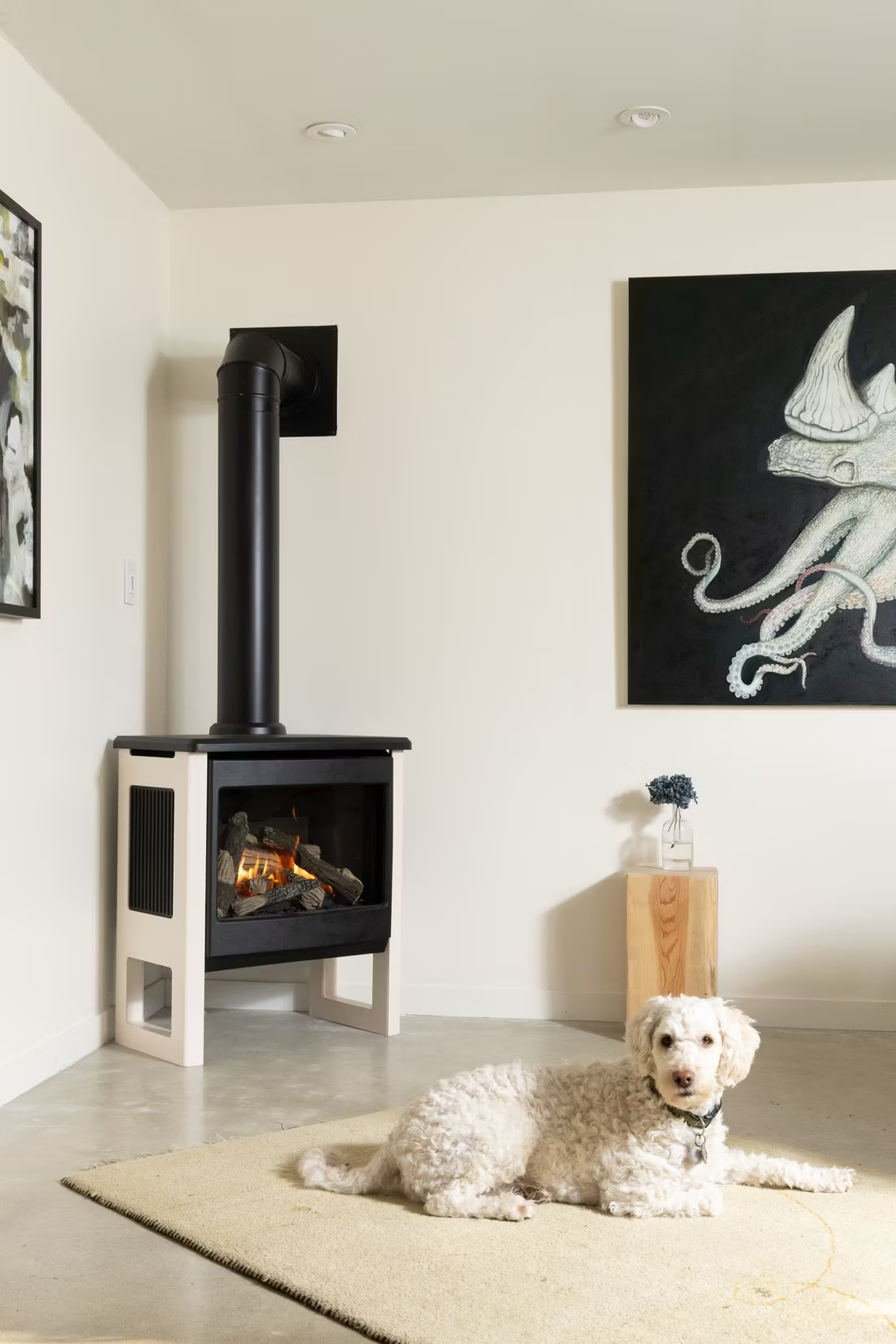
Four fuels. One honest answer for Colquitt County.
Three steps. No salesperson until you're ready.
Tell us about your project
Your zip code, your situation, and the fuel you're leaning toward—or let the answers point you to one.
See what's actually available
The brands dealers within 100 miles genuinely carry—real options, never a catalog mirage.
Get your dealer & Project Guide
A trusted local dealer, plus the free Project Guide & Parts List that names every component of the job.
Frequently Asked Questions
Which fireplace fuel actually makes sense in Colquitt County's mild climate?
With winter lows averaging 39°F and only 1,779 heating degree days a year, Colquitt County never sees the kind of sustained cold that drives daily wood or pellet heating in places like Duluth, Minnesota. Gas fireplaces and inserts are the most practical choice for genuine supplemental warmth and a real flame, whether you're on natural gas in Moultrie or running propane further out in the county. Electric fireplaces work well for ambiance and zone heat in bedrooms, sunrooms, or additions where running venting doesn't make sense. Wood stoves and pellet stoves are both uncommon here—the climate simply doesn't create enough heating load to justify one as a primary system, though a small number of rural landowners still use wood stoves for backup heat or hunting-camp ambiance.
Are wood stoves worth installing in Colquitt County?
For most homes, no—not because oak, pine, and hickory aren't available locally, but because a 39°F average winter low and a short heating season don't create the daily demand that makes a wood stove pay for itself. The handful of installs we do see in the county are on rural properties near the timberland south of Moultrie, usually for power-outage backup or ambiance at a hunting camp rather than as the home's main heat source. If you're one of those exceptions, expect to still go through the Colquitt County Building Department for a permit and clearance inspection.
Colquitt County has pellet manufacturers—so are pellet stoves common here?
It's a fair question, since Hamer Pellet Fuel and Greenway Renewable Energy both operate locally and Lignetics distributes into the region too. But that production is aimed mostly at colder markets and industrial heating accounts, not South Georgia living rooms. With only 1,779 heating degree days a year, a residential pellet stove here would sit unused most of the winter. A specialty dealer can still source one if you want it, but it's a rare choice driven by climate, not by a lack of local pellet supply.
Do I need a permit for a gas fireplace in Moultrie or elsewhere in Colquitt County?
Yes. Any new gas line or gas-log conversion needs a licensed gas fitter and a permit through the Colquitt County Building Department, or the City of Moultrie's building inspection office if you're inside city limits. That applies whether you're installing a vented gas insert, a vent-free log set, or extending a gas line from the street. Electric fireplace installs usually skip the permit process entirely, unless you're hardwiring a built-in unit that requires a new dedicated circuit.
What does a gas or electric fireplace installation cost in Colquitt County?
Gas fireplaces, inserts, and log sets typically run $3,500–$8,000 installed, with the higher end covering a new gas line run from the street or a propane tank setup for homes outside Moultrie's natural gas service area. Electric fireplaces are far less expensive—$200–$2,500 for the unit itself, plus $300–$900 in labor if a built-in needs a new circuit rather than a simple plug-in placement. The county + fuel pages above break these numbers down further with local retailer pricing.
How does installation and service work for towns like Norman Park, Doerun, and Ellenton?
Retailers and technicians are concentrated in Moultrie but regularly travel to Norman Park, Doerun, Ellenton, and the smaller farm communities around them—propane delivery routes already cover most of this ground for tank refills, and gas and electric installers typically fold in a trip charge for the farthest addresses. Because the heating season here is short, scheduling isn't the crunch it is further north, but booking an install or inspection before the first cold snap in December still means you're not waiting on a crew during the county's one or two genuinely cold weeks.
Does a fireplace add value to my home?
On average, a fireplace adds back to the home about the same amount you spent installing it. Add the monthly savings from heating the rooms you actually use instead of the whole house—often hundreds of dollars a year—and the value case is strong before you even count what a fire does for how your family uses the room.
How much should I budget for a fireplace?
For an average home—covering the fireplace, the vent pipe, and basic installation—a budget between $3,900 and $5,500 gives you a lot of options across wood, gas, and pellet. By the time you add finish work, gas line, and electrical, the average complete installation lands between $5,000 and $12,000 all-in. In a remodel or new build, a good rule is to put about 2.5% of the total project cost toward the fireplace.
Can a fireplace actually lower my heating bill?
Yes—by creating a comfort zone. A furnace heats every square foot of the house just to warm the one room you're in; a gas fireplace on low burns roughly a sixth of the gas a typical furnace does. Set the furnace around 55–60 degrees as a baseline, then heat the rooms your family actually uses. Families who heat this way commonly save $20–$60 a month.
Wood, gas, pellet, or electric—how do I choose?
Match the fuel to your life, not the other way around. Wood: lowest fuel cost and total power-outage independence, but you're hauling and stacking. Gas: press a button, set a thermostat, no maintenance to speak of. Pellet: wood economics with automatic feeding, in exchange for weekly cleaning and a need for electricity. Electric: plugs in anywhere with honest supplemental heat. Nobody regrets the fuel that fits how they actually live.
Get matched with a local Colquitt County dealer.
Pick your fuel below and we'll put together a free Project Guide & Parts List—the right unit, the vent kit or wiring it needs, and the local dealer we recommend for your project.
Find Your Fireplace →