
Pellet Stoves Are Rare in College Park—Here's When They Still Make Sense.
With winter lows averaging 36°F and just a light overall heating load each year, most College Park homes run on gas or electric heat. Pellet stoves aren't the norm here—but for the right household, one can still earn its keep.
Every Project Starts From One of These Five Situations
A mild Piedmont winter doesn't ask much of a heating hopper.
College Park sits at about 1,034 feet in Fulton County, just south of Atlanta near Hartsfield-Jackson, in climate zone 3A. Winters here are short and mild—the average winter low is 36°F, and the whole season adds up to only a light overall heating load. Compare that to a place like Duluth, Minnesota, which racks up a heating load nearly four times as heavy most years, and it's easy to see why pellet stoves never became a fixture of local home heating. Georgia Power's electric grid and natural gas service handle the vast majority of heating loads in this part of Fulton County without much strain.
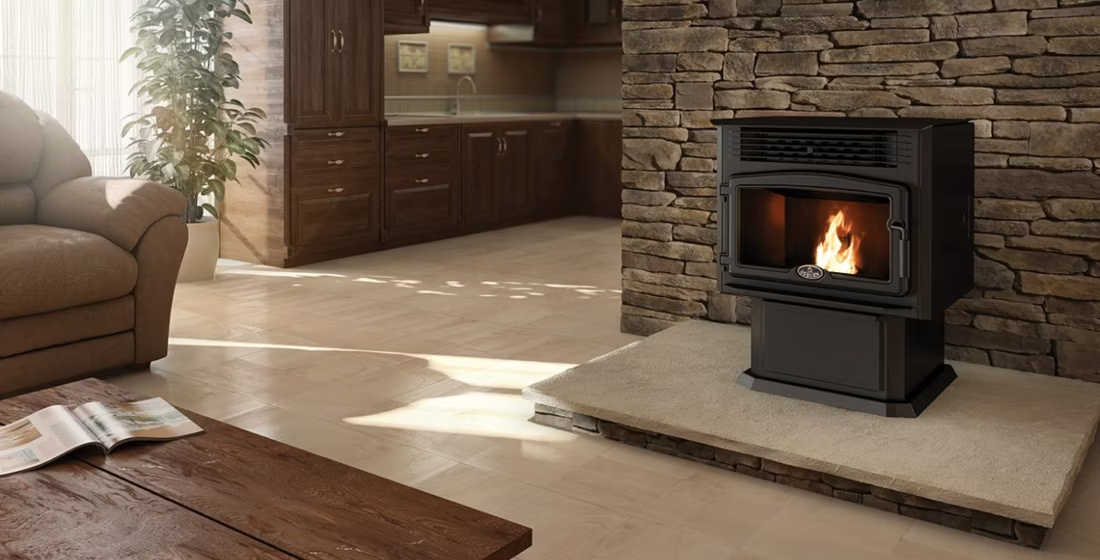
That's why pellet fuel is flagged not-applicable for College Park in our data—it's not that pellets are unavailable (Lignetics, Hamer Pellet Fuel, and Greenway Renewable Energy all serve the broader Georgia market), it's that the demand simply isn't here the way it is in the Upper Midwest or Mountain West. Still, a small number of College Park homeowners do install pellet stoves: for ambiance in a den or basement, as backup heat during the ice storms that occasionally knock out Georgia Power service for days, or because they split time with a second home in a colder climate and already know the appliance. If that's you, it's worth going in with clear eyes about what a pellet stove offers here versus what it costs to maintain for a handful of cold nights a year.
Three steps. No salesperson until you're ready.
Tell us about your project
Your zip code, your situation, and the fuel you're leaning toward—or let the answers point you to one.
See what's actually available
The brands dealers within 100 miles genuinely carry—real options, never a catalog mirage.
Get your dealer & Project Guide
A trusted local dealer, plus the free Project Guide & Parts List that names every component of the job.
Frequently Asked Questions
Are pellet stoves actually used in College Park, GA?
Not commonly. College Park's climate zone 3A winters average a low of 36°F and add up to a light overall heating load per season—mild enough that gas and electric heat cover nearly every home's needs without supplemental wood or pellet appliances. For comparison, a pellet-heavy market like Duluth, Minnesota sees roughly four times the winter heating load. Pellet stoves show up occasionally in College Park, but they're the exception, not the rule.
If pellet stoves aren't common here, why would anyone install one?
The homeowners who do usually have a specific reason: backup heat for the ice storms that periodically take down Georgia Power lines across metro Atlanta, ambiance in a den or finished basement, or familiarity from a second home in a colder region. A pellet stove in College Park is rarely meant to be a primary heat source—it's a supplemental or occasional-use appliance, and most local installers will tell you that upfront.
What does a pellet stove installation cost in College Park?
There isn't a deep local cost history here the way there is in pellet-heavy markets, since so few get installed. Nationally, a typical pellet stove installation—unit, venting, and hearth pad—runs roughly $3,000 to $6,500 depending on the model and whether a masonry chimney needs to be adapted for pellet venting. In College Park, expect installers to be based out of the greater Atlanta metro rather than College Park proper, which can add a small trip charge but shouldn't otherwise change the pricing much.
Where can I buy pellet fuel near College Park?
Regional brands like Lignetics, Hamer Pellet Fuel, and Greenway Renewable Energy all distribute in Georgia, but because local demand is thin, don't expect to find bags stacked at every hardware store in Fulton County the way you would in the Northeast. Most College Park owners order through Atlanta-area hearth retailers or have pellets shipped ahead of storm season rather than relying on walk-in stock. If you're planning to use a pellet stove for winter-storm backup, it's worth keeping several bags on hand year-round rather than trying to source them the week a freeze is forecast.
Do I need a permit to install a pellet stove in College Park?
Yes—Fulton County requires a building permit for any new venting appliance, pellet stoves included, even though gas fireplace permits are the more familiar request at the counter. A licensed installer will typically pull the permit as part of the job and make sure the vent termination clearances meet code, which matters even for a modest side-wall pellet vent run.
Pellet stove vs. gas fireplace—which makes more sense in College Park?
For most College Park homes, gas wins by a wide margin. Gas fireplaces and inserts are the standard hearth appliance here, offer instant on-demand heat, and don't require homeowners to store or feed fuel. A pellet stove needs a hopper refilled every day or two during use and an electrical outlet to run the auger and blower—extra upkeep for a climate that only asks for supplemental heat a handful of nights each winter. Pellet only tends to make sense if you specifically want the look and feel of a real fire and are less concerned with convenience.
Will a pellet stove keep my house warm if the power goes out?
Not on its own. Pellet stoves rely on an electric auger and blower to feed fuel and circulate heat, so a power outage shuts them down just like your furnace—a real consideration given how ice storms periodically knock out Georgia Power service in the Atlanta metro. Some owners pair a pellet stove with a small battery backup or generator specifically to keep it running through outages; without one, a pellet stove won't help you if the storm that concerns you also takes down the grid.
If I still want a pellet stove, what size should I get?
Given College Park's mild heating load—a light overall winter heating load and winter lows that rarely stay below freezing for long—most homeowners are better served by a smaller pellet stove sized for a single room or finished basement rather than a whole-home unit built for sustained subzero performance. A compact hopper (40-60 lb capacity) is usually plenty since you're heating occasionally, not running the stove around the clock all winter the way a household in a harsher climate would.
Pellet stove vs. electric fireplace—which is the better fit here?
It depends on what you want out of it. An electric fireplace from a Georgia Power-served home is simple, inexpensive to install (often under $1,200), and produces real supplemental heat with zero fuel handling—a good match for College Park's mild winters. A pellet stove costs more to install and requires ongoing fuel purchases and hopper maintenance, but delivers a real wood fire and genuine radiant heat that some homeowners prefer for ambiance or backup use. If low-maintenance convenience is the goal, electric usually wins here; if you want an actual fire, pellet is the tradeoff.
What's the difference between an insert and a zero-clearance fireplace?
An insert is a fireplace that slides into a pre-existing wood-burning fireplace—if you don't have one, there's nothing to insert it into. A zero-clearance fireplace is built into a framed wall, which makes it the answer for remodels and new construction. Simple test: existing masonry fireplace means insert; blank or framed wall means zero-clearance.
Why is my open fireplace making my house colder?
Open fireplaces suck—literally. As the fire burns, it consumes air your furnace already paid to heat and pulls it out through the chimney, so the house is actually colder after the fire goes out than before you lit it. An insert fixes this: it seals the chimney, puts fixed glass across the front, and turns that hole in your house into a real heat source.
Can a fireplace actually lower my heating bill?
Yes—by creating a comfort zone. A furnace heats every square foot of the house just to warm the one room you're in; a gas fireplace on low burns roughly a sixth of the gas a typical furnace does. Set the furnace around 55–60 degrees as a baseline, then heat the rooms your family actually uses. Families who heat this way commonly save $20–$60 a month.
Does a fireplace add value to my home?
On average, a fireplace adds back to the home about the same amount you spent installing it. Add the monthly savings from heating the rooms you actually use instead of the whole house—often hundreds of dollars a year—and the value case is strong before you even count what a fire does for how your family uses the room.
Nearby Dealers
Hearth shops serving College Park and the surrounding area. Every listing shows whether it is a WhyFire partner, a dealer we have verified as authorized for the brands we recommend, or a local business carrying hearth products. No manufacturer pays for placement. How we verify dealers →
Cr Design Center - Westside
Authenteak
Atlanta Chimney Worx
Construction Resources - Decatur
L&W Insulation And Fireplaces
Blossman Gas And Appliance
The Man Cave Store
Builder Specialties, Inc.
Fireplace Depot
EarthCore Industries
The Mad Hatter
Pellet Brands Stocked Around College Park
Manufacturers will point you to the nearest stocking dealer.
Find your pellet stove in College Park.
Tell us a bit about your home and how you'd use a pellet stove in College Park's mild winters—we'll send a free Project Guide & Parts List with the exact venting and parts needed, and match you with a trusted local dealer who actually installs them in this market.
Find Your Fireplace →