
Steady, Efficient Heat for Coffee County's Short Winters.
With a mild, short winter season and winter lows that average near 38°F, Coffee County doesn't need a furnace-grade wood stove—it needs efficient, thermostatically controlled heat for the cool stretches from December through February. Find the right pellet stove and connect with a trusted local dealer around Douglas and the rest of the county.
Every Project Starts From One of These Five Situations
Efficient heat built for a coastal plain climate.
Coffee County sits in Georgia's coastal plain, a Zone 3A climate where cold snaps are real but brief—the county has a mild, short winter season, a fraction of what a place like Duluth, MN or Burlington, VT racks up in a single hard winter. That means most Coffee County households aren't heating around the clock; they're looking for something that can knock the chill off a farmhouse near Broxton or a home outside Douglas on the handful of nights each winter when the temperature actually drops into the 30s. A pellet stove is built for exactly that kind of use—dial in a thermostat, let the hopper feed itself, and get consistent heat without babysitting a fire.
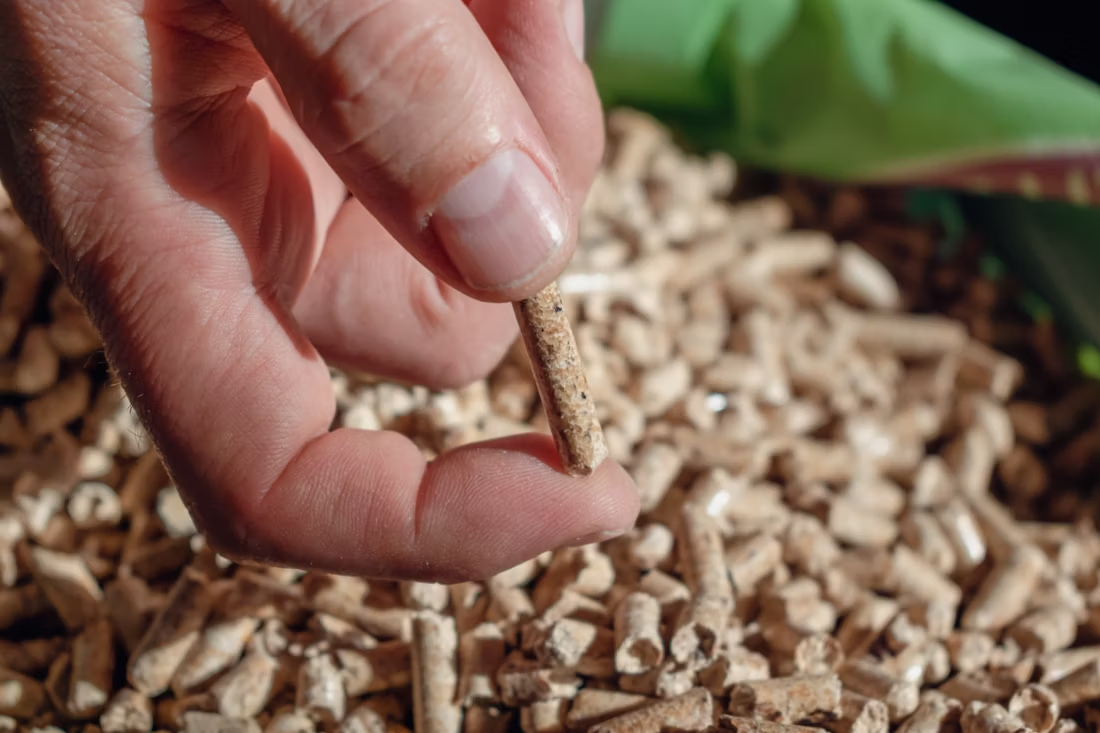
Coffee County also happens to sit inside one of the country's major wood pellet production corridors. South Georgia's dense pine timberland—the same oak, pine, and hickory forests that have supplied local firewood for generations—feeds regional pellet manufacturers like Lignetics, Hamer Pellet Fuel, and Greenway Renewable Energy. That proximity matters: pellets sold through local hearth dealers here are often produced within the region rather than trucked in from out of state, which tends to mean steadier supply and less price volatility than in parts of the country that rely on pellets shipped long distances. With no air quality non-attainment issues or wood-burning curtailment periods in the county, pellet stoves here operate free of the burn-ban restrictions that homeowners in some western states have to plan around.
Three steps. No salesperson until you're ready.
Tell us about your project
Your zip code, your situation, and the fuel you're leaning toward—or let the answers point you to one.
See what's actually available
The brands dealers within 100 miles genuinely carry—real options, never a catalog mirage.
Get your dealer & Project Guide
A trusted local dealer, plus the free Project Guide & Parts List that names every component of the job.
Frequently Asked Questions
How much does a pellet stove installation cost in Coffee County?
Costs vary based on whether you're installing a freestanding pellet stove that vents through an exterior wall, or a pellet insert into an existing masonry fireplace. A wall-vent freestanding unit is typically the more affordable path since it doesn't require chimney work—hearth pad, wall thimble, and vent pipe are the main components. An insert into an existing fireplace runs a bit higher once a stainless liner and surround kit are factored in. Because Coffee County is a smaller, mostly unincorporated county, expect quotes to vary between the handful of local hearth dealers serving the Douglas area—get two or three in-home estimates before deciding, since travel distance to rural parts of the county can affect labor pricing.
What size pellet stove do I need for my home?
Because Coffee County's heating season is short and mild—average winter lows sit around 38°F rather than the single digits you'd see in a place like Fargo, ND—most homes here don't need a maxed-out, whole-house-rated unit. A small to mid-size pellet stove (rated for roughly 1,000–1,800 square feet) comfortably handles supplemental heat for a typical home outside Douglas or in the smaller communities around the county. If you're planning to run the stove as your primary heat source in an older, less-insulated farmhouse, size up slightly and ask your dealer about hopper capacity—a larger hopper means fewer refills during the coldest nights of the year, which in this climate are the exception rather than the rule.
Pellet stove vs. wood stove—which makes more sense in Coffee County?
Coffee County has deep roots in wood heat—oak, pine, and hickory are all common locally, and plenty of longtime residents still burn cordwood. But given the county's mild 1,862-degree-day heating season, a lot of homeowners are choosing pellet stoves instead: no splitting or stacking wood, a cleaner burn, and thermostatic control that lets the stove run itself on a cool December evening rather than requiring constant tending. The tradeoff is that pellet stoves need electricity to run the auger and blower, so they're not a stand-alone backup during a power outage the way a wood stove is—though outages here also tend to be shorter and less frequent than in colder, storm-prone regions. For most Coffee County households prioritizing convenience over off-grid backup heat, pellet is the more practical everyday choice.
Where do pellet stove owners in Coffee County buy their fuel?
Because south Georgia is home to several regional pellet manufacturers, Coffee County homeowners generally aren't dependent on fuel shipped in from out of state. Brands like Lignetics, Hamer Pellet Fuel, and Greenway Renewable Energy are all produced within the broader region and are commonly stocked by local hearth dealers and farm supply retailers. Buying early in the fall—before the first real cold snap drives up regional demand—is the usual advice from local dealers, and buying by the pallet (roughly a ton) rather than individual bags typically saves money if you have dry storage space in a garage or shed.
Do I need a permit to install a pellet stove in Coffee County?
Yes—a new pellet stove installation typically requires a building permit through the Coffee County building department for homes in unincorporated areas, or through the City of Douglas if the home falls within city limits. The permit process mainly confirms proper venting clearances and hearth pad specifications. Most local hearth dealers handle the permitting as part of the installation, so homeowners rarely have to navigate it themselves. Since Coffee County has no air quality non-attainment designation, there are no burn curtailment periods to work around—once the stove is installed and inspected, you're free to run it whenever the weather calls for it.
What's the best pellet stove for Coffee County's climate?
Given the county's short, mild heating season, most homeowners here do well with a mid-size, non-catalytic pellet stove that prioritizes ease of use over marathon burn times—automatic ignition, a thermostat-driven feed rate, and a hopper that doesn't need refilling more than once every day or two during a cold stretch are the features that matter most in a Zone 3A climate. Because winters in Coffee County rarely demand 24-hour heat output the way a Bozeman, MT or Bismarck, ND winter would, homeowners here can generally prioritize convenience and lower running cost over sheer maximum BTU output. A local dealer can match a specific model to your square footage and how you plan to use it—daily supplemental heat versus occasional cold-snap backup.
How much maintenance does a pellet stove need?
Pellet stoves require less hands-on maintenance than a wood stove, but they're not maintenance-free. Ash needs to be emptied from the burn pot every few days during regular use, and the glass and hopper should be checked weekly. An annual professional service—checking the auger motor, exhaust blower, gaskets, and venting—is recommended before each heating season, similar to how a wood-burning appliance gets an annual chimney inspection. Given Coffee County's short burn season, many owners find a single fall service visit, right before the first cold nights arrive, is enough to keep the stove running reliably all winter.
Can a pellet stove run during a power outage?
Not without backup power. Pellet stoves rely on an electric auger to feed fuel and a blower to distribute heat and exhaust combustion gases, so they shut down when the power goes out—unlike a wood stove, which needs no electricity at all. In Coffee County, this is a smaller concern than it would be in a storm-heavy northern climate, since the county's mild winters mean extended outages during cold weather are less common. Homeowners who want outage-proof backup heat alongside a pellet stove sometimes pair it with a small battery backup for the stove itself, or simply keep a wood-burning option in reserve for the rare multi-day outage.
Pellet stove vs. electric fireplace—which is more cost-effective in Coffee County?
A pellet stove generally produces more heat per dollar than an electric resistance heater or electric fireplace, since it's burning a relatively low-cost, regionally produced fuel rather than pulling straight electricity at retail rates. Electric units are simpler to install, don't require fuel storage, and work anywhere there's an outlet—a real advantage for a secondary room or a rental property. For a primary living space where you want genuine heat output during Coffee County's cooler months without running up the power bill, a pellet stove is usually the better long-term value, provided you have room to store pellets and don't mind the periodic hopper refills.
Why is my open fireplace making my house colder?
Open fireplaces suck—literally. As the fire burns, it consumes air your furnace already paid to heat and pulls it out through the chimney, so the house is actually colder after the fire goes out than before you lit it. An insert fixes this: it seals the chimney, puts fixed glass across the front, and turns that hole in your house into a real heat source.
How often does a pellet stove need cleaning?
A clean pellet stove is a happy pellet stove. Plan on cleaning the burn pot about once a week when you're burning regularly—ash and clinkers gum up the air holes just like a pellet barbecue. Most pellet stove problems trace back to skipped cleaning that nobody explained up front. Some designs make it easy with a trapdoor burn pot: pull a lever and the gunk drops into the ash pan.
How much should I budget for a fireplace?
For an average home—covering the fireplace, the vent pipe, and basic installation—a budget between $3,900 and $5,500 gives you a lot of options across wood, gas, and pellet. By the time you add finish work, gas line, and electrical, the average complete installation lands between $5,000 and $12,000 all-in. In a remodel or new build, a good rule is to put about 2.5% of the total project cost toward the fireplace.
Can a fireplace actually lower my heating bill?
Yes—by creating a comfort zone. A furnace heats every square foot of the house just to warm the one room you're in; a gas fireplace on low burns roughly a sixth of the gas a typical furnace does. Set the furnace around 55–60 degrees as a baseline, then heat the rooms your family actually uses. Families who heat this way commonly save $20–$60 a month.
Pellet Brands Stocked Around Coffee County
Manufacturers will point you to the nearest stocking dealer.
Find your pellet stove in Coffee County.
Tell us a bit about your home and we'll put together a free Project Guide & Parts List—the right pellet stove or insert for your space, the vent kit it needs, and a trusted local dealer near Douglas ready to install it.
Find Your Fireplace →