
Electric heat that fits Clayton County's mild winters.
With winter lows averaging 36 degrees and a short heating season, Clayton County homes rarely need a furnace substitute—they need ambiance and a little supplemental warmth. Find the right electric fireplace or insert, no venting or chimney required, and connect with a trusted local dealer.
Every Project Starts From One of These Five Situations
A short heating season makes electric an easy fit.
Clayton County sits in climate zone 3A just south of Atlanta, home to Jonesboro, Riverdale, Forest Park, Morrow, and Lovejoy, plus a slice of Hartsfield-Jackson's flight paths. Winters here are short and mild—the average low sits around 36 degrees, and the county has a light overall winter heating load, a fraction of what a genuinely cold-climate place like Duluth MN or Bozeman MT racks up in a single season. That's exactly why wood and pellet stoves are largely off the table here: with central HVAC easily covering the handful of truly cold nights, there's little reason for most homeowners to stack cordwood or keep a hopper filled with pellets from brands like Lignetics or Hamer Pellet Fuel.
Electric fireplaces fill a different role than a cold-climate stove would. Most units plug into a standard outlet or a dedicated circuit, need no chimney, gas line, or exterior venting, which makes them a simple retrofit into an existing masonry fireplace opening in an older Jonesboro or Forest Park home, or a clean built-in for a Morrow or Riverdale remodel. Georgia Power supplies electric service throughout the county, and because the grid here is established suburban infrastructure rather than a stretched rural co-op, adding a dedicated circuit for a built-in unit is typically a straightforward job for a local electrician.
Three steps. No salesperson until you're ready.
Tell us about your project
Your zip code, your situation, and the fuel you're leaning toward—or let the answers point you to one.
See what's actually available
The brands dealers within 100 miles genuinely carry—real options, never a catalog mirage.
Get your dealer & Project Guide
A trusted local dealer, plus the free Project Guide & Parts List that names every component of the job.
Frequently Asked Questions
How much does an electric fireplace installation cost in Clayton County?
Plug-in freestanding or mantel-style electric fireplaces run roughly $200 to $800 for the unit and generally need no installation beyond placement near an outlet. Built-in wall units and inserts that slide into an existing fireplace opening cost more once labor is added—expect $1,500 to $4,000 installed, depending on whether the space needs framing, a new dedicated 20-amp circuit, or trim work to finish the surround. Because electric units produce no combustion byproducts, there's no venting or chimney work to budget for, which keeps these installs well below typical wood or gas project costs.
Do I need a permit to install an electric fireplace in Clayton County?
A plug-in unit using an existing outlet generally doesn't require a permit. If your installer needs to run new wiring or add a dedicated circuit—common with built-in wall units and larger inserts—that electrical work requires a permit through whichever jurisdiction you're in: the City of Jonesboro, Riverdale, Forest Park, or Morrow inside city limits, or the Clayton County Building Department for unincorporated areas. A licensed electrician typically pulls this permit as part of the job, so it's rarely something you have to manage yourself.
Will an electric fireplace actually heat my Clayton County home?
Most electric fireplaces are built around a 1,500-watt heater, enough to comfortably warm a single room—a reasonable match for Clayton County, where the average winter low sits around 36 degrees and the county has only a light overall winter heating load. That's a fraction of what a truly cold-climate county deals with, so most local homeowners are using electric fireplaces as a supplement to central HVAC on the occasional cold night, or purely for the flame effect, rather than as a whole-house heat source.
What about wood stoves or pellet stoves in Clayton County?
They're not a practical heating option here, and it isn't an air quality issue—Clayton County has no non-attainment or inversion concerns. It's climate: with average winter lows around 36 degrees and a heating season a fraction the length of a place like Burlington VT or Fargo ND, there simply isn't enough cold weather to justify loading cordwood cut from local oak, pine, or hickory, or feeding a hopper with pellets from Lignetics, Hamer Pellet Fuel, or Greenway Renewable Energy. A handful of homeowners still install wood-burning fireplaces for the look or resale value, but as an actual heating strategy, electric and gas are the practical choices in this county.
What's the difference between an electric fireplace, insert, and mantel?
An electric insert is built to slide into an existing masonry fireplace opening, giving an older Jonesboro or Forest Park fireplace a working flame effect without touching the chimney. A mantel or media-console style unit is freestanding furniture with a built-in heater and flame effect—no fireplace opening required, which suits newer Morrow or Riverdale homes without a hearth. A built-in wall unit is recessed into new framing, often used in a remodel or new construction where there's no existing fireplace at all. All three run on standard household power.
How do I size an electric fireplace for my room?
Electric fireplace heaters are rated for a specific footprint—most 1,500-watt units are sized for a single room up to roughly 400 square feet with average insulation. If you want a noticeable temperature difference in a larger open-concept living area, common in newer Clayton County construction, look for a wider unit with a higher-BTU heater, or plan to treat it primarily as a visual feature and let central HVAC handle the actual heating load.
Electric vs. gas fireplace—which is right for my Clayton County home?
Gas fireplaces produce real heat output—enough to warm a room on their own—and a genuine flame, but they need a gas line and, for most models, venting, which raises the installed cost. Electric fireplaces cost less to install, need no venting or gas line, and can go almost anywhere there's an outlet, but the heat output is limited to supplemental warmth. Given Clayton County's mild climate and short heating season, plenty of homeowners choose electric simply for the ambiance and lower cost, while those wanting a fireplace that can meaningfully take the chill off a larger room often lean gas.
Can I put an electric fireplace anywhere in my house?
Close to it. With no venting, chimney, or gas line required, electric fireplaces can go in bedrooms, basements, apartments, and rooms with no existing hearth—flexibility wood and gas units don't have. The main constraint is electrical: a mantel unit just needs a nearby outlet, while a built-in wall unit may need a new circuit run to the location, which is where a local installer or electrician comes in.
Who provides electric service in Clayton County?
Georgia Power serves the large majority of Clayton County, including Jonesboro, Riverdale, Forest Park, Morrow, and Lovejoy. Because the grid infrastructure here is established suburban service rather than a stretched rural co-op, adding a dedicated circuit for a built-in electric fireplace is typically a routine job for a local electrician, without the capacity concerns you sometimes see in less-developed counties.
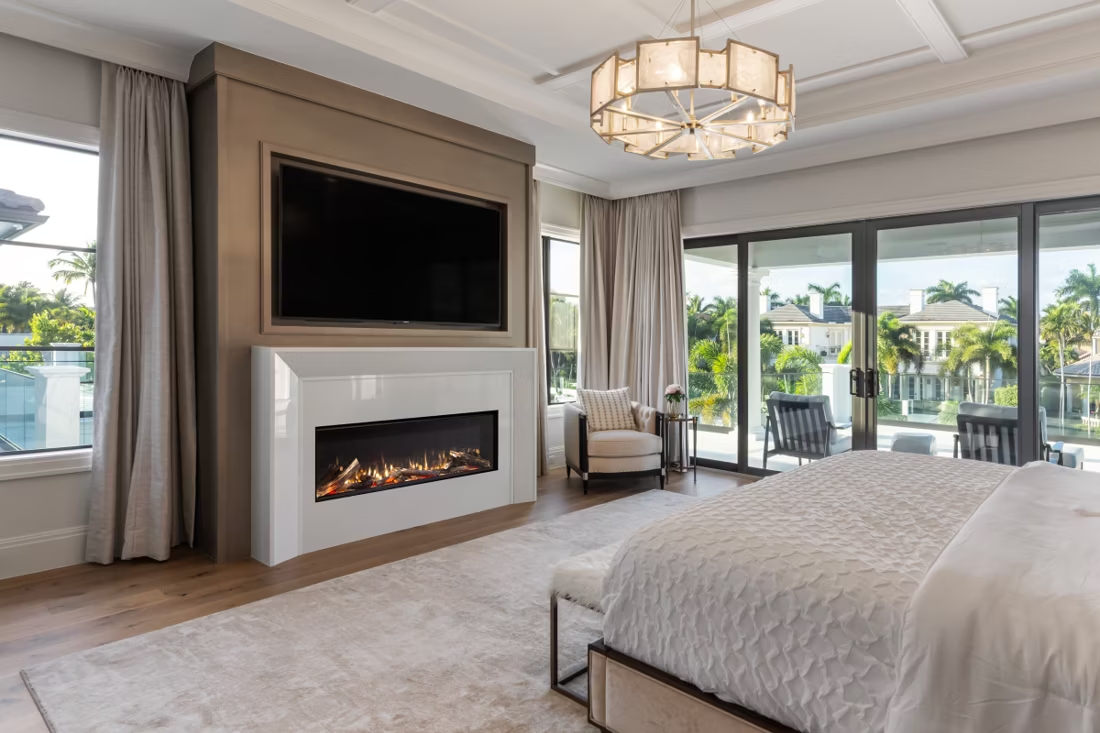
Can I put a TV above my fireplace?
Yes—with an asterisk. Fireplaces are hot and TVs don't like heat. Either put a mantel between them to deflect rising warmth, or choose a fireplace with heat-management technology that creates a cool zone on the wall above—the wall stays around 125 degrees, barely warm, while the room still gets full heat. If you like clean lines and don't want a mantel, heat management is the answer.
Do electric fireplaces actually produce heat?
Yes—most put out around 4,800–5,000 BTUs from a standard outlet, which comfortably warms a bedroom, office, or den as a comfort-zone heater. What they won't do is carry a whole house the way wood, gas, or pellet can. Think of electric as ambiance-first with honest supplemental heat: flames on with no heat in July, flames plus warmth in January.
Can I install a fireplace myself?
If you're putting a fire in your house on purpose, it's best to work with an expert. Unless you're genuinely experienced in framing, gas line, vent pipe, and the national code on clearances to combustibles, have a professional do it—and ideally the same company that sells you the fireplace, so warranty, service, and liability all live under one roof.
Does a fireplace add value to my home?
On average, a fireplace adds back to the home about the same amount you spent installing it. Add the monthly savings from heating the rooms you actually use instead of the whole house—often hundreds of dollars a year—and the value case is strong before you even count what a fire does for how your family uses the room.
Find your electric fireplace in Clayton County.
Tell us a bit about your home and we'll match you with a trusted local dealer and send over a free Project Guide & Parts List—the right electric fireplace or insert, the exact parts, and a plan for getting it installed in your Clayton County home.
Find Your Fireplace →