
Find your fireplace in Clayton County.
From Jonesboro to Forest Park to Riverdale, get matched with a trusted local dealer who installs what actually makes sense for a mild-winter county built around Hartsfield-Jackson and metro Atlanta living.
Every Project Starts From One of These Five Situations
Mild winters, 2,531 heating degree days, and a county where gas and electric do the heavy lifting.
Clayton County sits just south of downtown Atlanta and is home to Hartsfield-Jackson International Airport, with cities like Jonesboro, Forest Park, Riverdale, Morrow, Lovejoy, and Lake City covering roughly 76,710 residents. Winters here are short and mild—average lows hover around 36°F and the county logs about 2,531 heating degree days a year, less than a third of what a place like Duluth, Minnesota sees in a typical winter. Oak, pine, and hickory are the wood species you'd still find in older Jonesboro fireplaces, mostly legacy masonry from the county's Civil War-era housing stock rather than anything driving new stove sales.
That climate reality shapes which fuels actually get installed here. Gas fireplaces and inserts are the standard upgrade for homeowners who want real supplemental heat and ambiance without hauling fuel, and Atlanta Gas Light's infrastructure runs through most of the county's neighborhoods. Electric fireplaces are just as common, especially in the townhomes and newer construction near the airport corridor, since they need no venting and no gas line. Wood-burning inserts and stoves are genuinely rare—the mild climate doesn't create the overnight heating demand that makes a catalytic wood stove worth the investment—and pellet stoves are close to nonexistent as home-heating appliances, even though regional brands like Lignetics, Hamer Pellet Fuel, and Greenway Renewable Energy do sell pellets locally for other uses. This hub rolls up hearth retailers, service techs, and fuel suppliers across the county so you can find the fuel that actually fits your address.
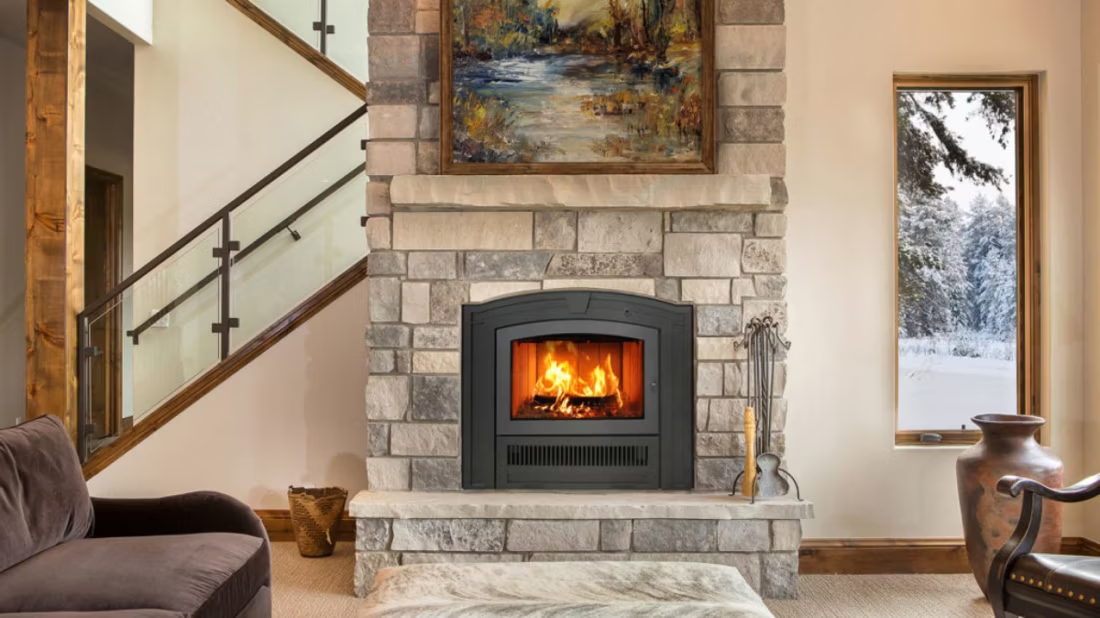
Four fuels. One honest answer for Clayton County.
Three steps. No salesperson until you're ready.
Tell us about your project
Your zip code, your situation, and the fuel you're leaning toward—or let the answers point you to one.
See what's actually available
The brands dealers within 100 miles genuinely carry—real options, never a catalog mirage.
Get your dealer & Project Guide
A trusted local dealer, plus the free Project Guide & Parts List that names every component of the job.
Frequently Asked Questions
Which fireplace fuel actually makes sense in Clayton County?
Gas and electric are the two fuels that fit how this county actually heats its homes. With average winter lows around 36°F and only about 2,531 heating degree days a year, there's simply not enough sustained cold to justify a wood stove as a real heat source the way there would be in a place like Burlington, Vermont. Gas fireplaces and inserts are popular because Atlanta Gas Light's lines run through most Clayton County neighborhoods, and a gas unit gives you instant heat and ambiance without hauling or storing fuel. Electric fireplaces are just as common, especially in the townhomes and newer builds near Hartsfield-Jackson, since they skip venting entirely and work in almost any room. If you're deciding between the two, it usually comes down to whether you want a unit that can meaningfully supplement your furnace on a cold snap (gas) or one that's mainly for ambiance and zone heating in a single room (electric).
Do people still install wood-burning fireplaces in Clayton County?
Rarely, and it's worth being upfront about that. Older homes in Jonesboro's historic district often still have working masonry fireplaces built with oak, pine, or hickory in mind as the local firewood, and plenty of homeowners keep those for occasional ambiance on the handful of genuinely cold nights each winter. But new wood stove or insert installations are uncommon here, because the mild climate doesn't generate the overnight heating load that makes a wood stove practical or cost-effective compared to Duluth, Minnesota or similar northern climates where a stove might run 20 hours a day for months. If you do have an existing masonry fireplace, the more common project is a gas log insert conversion rather than a new wood-burning unit.
What about pellet stoves—are those an option here?
Not really, at least not as a home heating appliance. Pellet stoves make the most economic sense in climates with a long, cold heating season where the fuel savings over propane or electric resistance heat add up quickly—that's not Clayton County's situation with only 2,531 heating degree days a year. Regional pellet brands like Lignetics, Hamer Pellet Fuel, and Greenway Renewable Energy do have distribution in the metro Atlanta area, but the demand here is mostly for pellet grills and outdoor cooking rather than indoor heating stoves. If you're set on a pellet appliance for a specific reason, it's worth talking to a local dealer about realistic run-time expectations given how mild the winters actually are.
Do I need a permit for a gas or electric fireplace install in Clayton County?
Almost always for gas, and it depends for electric. Any new gas line extension or gas fireplace/insert installation needs a permit through your city's building department if you're inside Jonesboro, Forest Park, Riverdale, Morrow, or Lovejoy city limits, or through the county's permitting office if you're in an unincorporated area, plus a licensed gas fitter to make the connection to Atlanta Gas Light's system. Electric fireplaces usually skip the permit process if it's a plug-in unit, but a built-in electric fireplace that needs a new dedicated circuit typically does require an electrical permit. Most retailers we match homeowners with handle this paperwork as part of the install, so it's rarely something you're navigating alone.
What does a fireplace installation typically cost in Clayton County?
Gas fireplace, insert, or stove installs generally run $3,500–$8,500 here, with the range driven mostly by how far the gas line has to run and whether you're converting an existing masonry fireplace or building out a new one. Electric fireplaces are the more affordable option—$200–$2,500 for the unit itself, plus $300–$800 in labor if it's a built-in that needs its own circuit rather than a simple plug-and-place model. Because wood and pellet installs are so uncommon in this county, most local retailers don't stock a deep wood-stove lineup, so pricing on those units tends to run higher due to special ordering.
I have an old brick fireplace in my Jonesboro home—what are my options?
You've got a few paths, and none of them require keeping it as a wood-burning fireplace if you'd rather not deal with ash and chimney maintenance. The most common route for these older masonry fireplaces is a gas log or gas insert conversion, which keeps the historic look of the opening while giving you real heat output and a simple on/off switch. Some homeowners opt for an electric insert instead, especially if the flue itself needs repair work, since an electric unit doesn't need a working chimney at all. Either way, it's worth having a local technician inspect the existing masonry and flue condition before any conversion—older Clayton County chimneys sometimes need liner work regardless of which fuel you choose.
Can I install a fireplace myself?
If you're putting a fire in your house on purpose, it's best to work with an expert. Unless you're genuinely experienced in framing, gas line, vent pipe, and the national code on clearances to combustibles, have a professional do it—and ideally the same company that sells you the fireplace, so warranty, service, and liability all live under one roof.
Can a fireplace actually lower my heating bill?
Yes—by creating a comfort zone. A furnace heats every square foot of the house just to warm the one room you're in; a gas fireplace on low burns roughly a sixth of the gas a typical furnace does. Set the furnace around 55–60 degrees as a baseline, then heat the rooms your family actually uses. Families who heat this way commonly save $20–$60 a month.
Does a fireplace add value to my home?
On average, a fireplace adds back to the home about the same amount you spent installing it. Add the monthly savings from heating the rooms you actually use instead of the whole house—often hundreds of dollars a year—and the value case is strong before you even count what a fire does for how your family uses the room.
Should the dealer who sells my fireplace also install it?
Ideally, yes. A fireplace project involves vent pipe, gas line, electrical, and often tile or stone. Hire three or four separate trades and you own the liability and the game of telephone between them. One company selling and installing means one accountable party, start to finish—ask about factory training, on-time completion records, and what happens if an inspection fails.
Stove and Fireplace Dealers in Clayton County
Listings include WhyFire partner dealers, dealers we have verified as authorized for the brands we recommend, and established local businesses that carry hearth products. Every listing shows which one it is. The ones marked Preferred run on WhyFire's software, so they can show you real pricing and book your appointment right here. No manufacturer pays for placement. How we verify dealers →
Atlanta Chimney Worx
Cr Design Center - Westside
Construction Resources - Decatur
Authenteak
Fireplaces By Mike
Get matched with a local Clayton County dealer.
Tell us about your home and we'll put together a free Project Guide & Parts List—the right unit for a mild-winter county, the parts it needs, and the local dealer we recommend for your project.
Find Your Fireplace →