
Keep Your Family Warm and Safe—No Matter What
With an average winter low of 33°F and a winter heating season that's roughly half as demanding as colder climates, Chamblee doesn't need wood heat to get through winter. For the homeowners who still want it—for ambiance, backup power resilience, or a cabin up in the North Georgia mountains—I'll match you with a trusted local dealer who installs it right.
Every Project Starts From One of These Five Situations
Wood heat in Chamblee is about ambiance, not survival.
Chamblee sits in the Georgia Piedmont at just under 1,000 feet, in climate zone 3A, where winters are short and mild by national standards—an average low of 33°F and a winter heating season that adds up to roughly half the heating load of a place like Burlington, Vermont. A furnace or heat pump does essentially all the work here, and a wood stove was never going to be the backbone of anyone's heating plan the way it is in colder parts of the country.
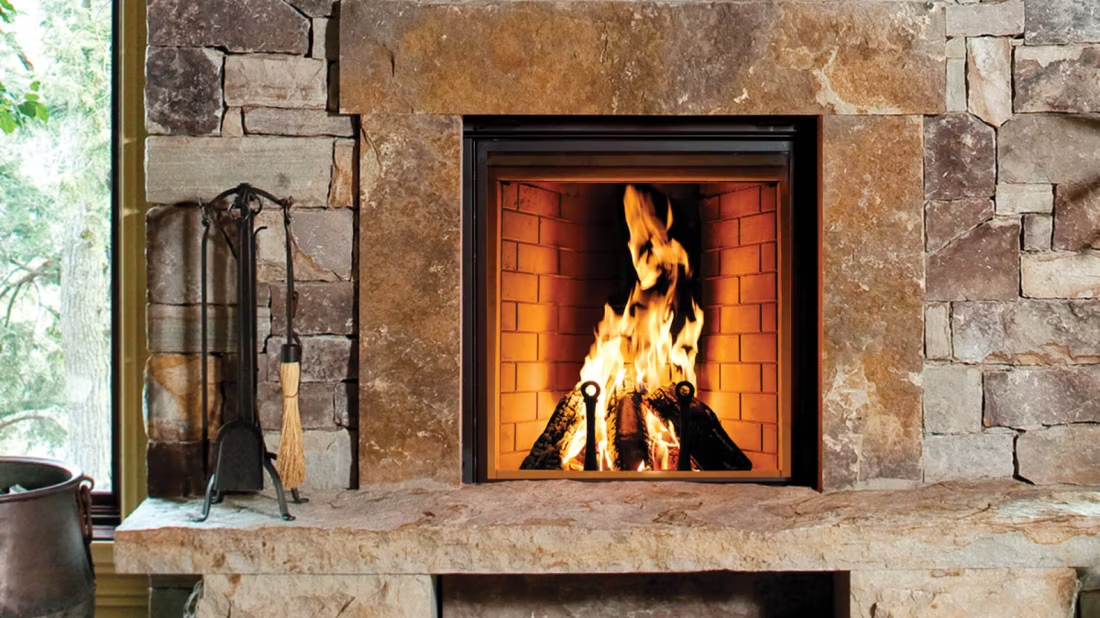
That said, wood isn't absent from the picture. Older homes around Keswick Village and Huntley Hills were often built with traditional masonry fireplaces, and some owners still use them, or convert them to an insert, mostly for atmosphere on the handful of nights that dip near freezing. Others want a stove as backup heat for the ice storms that occasionally knock out Georgia Power service for days at a time even though winters here stay mild overall. Oak, pine, and hickory are the species most commonly available through local firewood suppliers, and with no air-quality non-attainment designation on the books for the area, occasional burning here doesn't carry the smoke-advisory concerns you'd find in a Western inversion-prone city.
Three steps. No salesperson until you're ready.
Tell us about your project
Your zip code, your situation, and the fuel you're leaning toward—or let the answers point you to one.
See what's actually available
The brands dealers within 100 miles genuinely carry—real options, never a catalog mirage.
Get your dealer & Project Guide
A trusted local dealer, plus the free Project Guide & Parts List that names every component of the job.
Frequently Asked Questions
Does a wood stove actually make sense for a home in Chamblee?
For most Chamblee homes, no—not as a primary heat source. With a winter heating load that's roughly half what colder climates see and a 33°F average winter low, a heat pump or gas furnace comfortably covers the season, and that's exactly what most houses here already run. Where a wood stove or insert does make sense is as a secondary feature: homeowners who like the look and feel of a real fire, who want backup heat for the ice storms that periodically take out Georgia Power service, or who split time between Chamblee and a cabin in the North Georgia mountains where wood heat is far more common.
How much does a wood stove or insert installation cost in Chamblee?
Because wood installs are a less frequent request here than in colder climates, pricing varies more project to project than it would in a market with high install volume. A straightforward insert into an existing masonry firebox—common in the older homes near Huntley Hills and Keswick Village—typically runs on the lower end of what you'd see nationally, while a freestanding stove requiring new Class A chimney pipe through a roof costs more. Your best move is getting a specific quote from a local installer who can look at your existing chimney or lack of one, rather than relying on a generic number.
Do I need a permit to install a wood stove in Chamblee?
Yes. Any new wood-burning appliance install needs a building permit, which in Chamblee runs through DeKalb County's permitting process. The stove itself needs to meet current EPA New Source Performance Standards, and most installers who work in this area handle the permit application and final inspection as part of the job—which is worth confirming up front, since this isn't a high-volume install category for local contractors the way it is in colder states.
What kind of firewood is available locally in Chamblee?
Oak, pine, and hickory are the species most readily available from firewood dealers serving the Chamblee and broader DeKalb County area. Unlike cities near national forest land out West, there's no cutting-permit system here—residents buy seasoned or green firewood by the cord or rick from local suppliers rather than cutting their own. Oak and hickory are the better choices for a slow, hot burn if you're running a stove through an ice-storm outage; pine is more common for occasional open-fireplace use given it burns faster and sootier.
Can I convert my existing masonry fireplace to a wood-burning insert?
Often, yes—this is actually the more common wood project in Chamblee compared to a full new stove install. A lot of homes built a few decades ago around Huntley Hills and the Chamblee-Tucker Road corridor have open masonry fireboxes that were never especially efficient. Dropping in an insert with a stainless liner run through the existing chimney improves efficiency and heat output significantly, and because the chimney structure is already there, it's generally a more contained project than building new venting from scratch.
Is a wood stove useful for power outages in Chamblee?
It can be a real asset, even in a mild climate like this one. Georgia Power service around DeKalb County occasionally goes down for multiple days after an ice storm, which happens every few winters even though the area has a fairly short, mild winter heating season overall. A wood stove or insert keeps working with zero electricity, which is more than you can say for most gas or electric options—a detail that matters more for outage resilience here than for day-to-day heating load.
Wood, gas, or electric—what's the better fit for a Chamblee home?
For most Chamblee homes, gas or electric wins on convenience and matches how the climate actually behaves—natural gas service and Georgia Power's electric grid cover the vast majority of the city's heating needs without anyone splitting a log. Wood's advantage is narrower but real: it doesn't need a gas line or functioning power grid, which is valuable during an ice-storm outage. Most homeowners who add wood here are supplementing an existing gas or electric setup rather than replacing it.
How often should I have my chimney swept if I only burn occasionally?
Even light, occasional use—a handful of fires a winter, which is typical for Chamblee given how few genuinely cold days the area sees—still warrants an annual inspection, ideally in the fall before the first cold snap. Creosote buildup is slower with infrequent burning, but animals nesting in an unused flue over the warm months, or debris from a chimney that's sat capped most of the year, are common enough issues in this climate that skipping the yearly check isn't worth the risk.
Are there rebates or incentives for installing a wood stove in Chamblee?
Unlike some Western states dealing with wood-smoke non-attainment, Georgia doesn't have a comparable statewide wood-stove rebate program, and Chamblee has no local air-quality restrictions on wood burning to drive one. That said, choosing an EPA-certified stove is still worth doing on efficiency and safety grounds alone, even without a rebate attached. A local dealer can tell you if anything changes year to year, but budget your project as a straight install cost rather than expecting an incentive to offset it.
Why is my open fireplace making my house colder?
Open fireplaces suck—literally. As the fire burns, it consumes air your furnace already paid to heat and pulls it out through the chimney, so the house is actually colder after the fire goes out than before you lit it. An insert fixes this: it seals the chimney, puts fixed glass across the front, and turns that hole in your house into a real heat source.
Do I have to leave the stove door cracked open to start a fire?
On many stoves, yes—a new fire needs extra air, and cracking the door a couple inches is how most stoves get it. But some modern stoves offer an automatic startup air system: engage it when you light, and timed air jets feed the fire for the first 20 minutes with the door fully shut, then close automatically. It's mechanical—like an egg timer, no electricity—and it means you can load it, light it, and walk away.
What is an in-home preview and do I need one?
It's a visit where a hearth professional measures your space, confirms the model you picked actually works in your home, and walks the specs—framing, gas line, venting, finish work—before anything is ordered. Some details you just can't know until you see the house. Never make a down payment without one; it's the single most-skipped step that burns buyers.
How much should I budget for a fireplace?
For an average home—covering the fireplace, the vent pipe, and basic installation—a budget between $3,900 and $5,500 gives you a lot of options across wood, gas, and pellet. By the time you add finish work, gas line, and electrical, the average complete installation lands between $5,000 and $12,000 all-in. In a remodel or new build, a good rule is to put about 2.5% of the total project cost toward the fireplace.
Nearby Dealers
Hearth shops serving Chamblee and the surrounding area. Every listing shows whether it is a WhyFire partner, a dealer we have verified as authorized for the brands we recommend, or a local business carrying hearth products. No manufacturer pays for placement. How we verify dealers →
North Atlanta Fireplace Grill & Patio
Builder Specialties, Inc.
The Man Cave Store
Construction Resources - Decatur
Atlanta Chimney Worx
Authenteak
Cr Design Center - Westside
Fireplace Depot
EarthCore Industries
Tara Residential
Old Hat Chimney
Bolton Fireplace
The Mad Hatter
Fireplaces By Mike
Get your free Project Guide & Parts List for a Chamblee wood install.
Tell me a bit about your home—whether it's a masonry fireplace conversion, a new stove, or a backup-heat project—and I'll match you with a trusted local dealer and send a free Project Guide & Parts List with the exact vent kit and parts your project needs.
Find Your Fireplace →