
Steady, low-mess heat for Catoosa County's real (if moderate) winters.
With roughly 3,481 heating degree days and winter lows averaging 29°F, Catoosa County homes need reliable supplemental heat without the wood-splitting commitment. Find the right pellet stove or insert and connect with a trusted local dealer.
Every Project Starts From One of These Five Situations
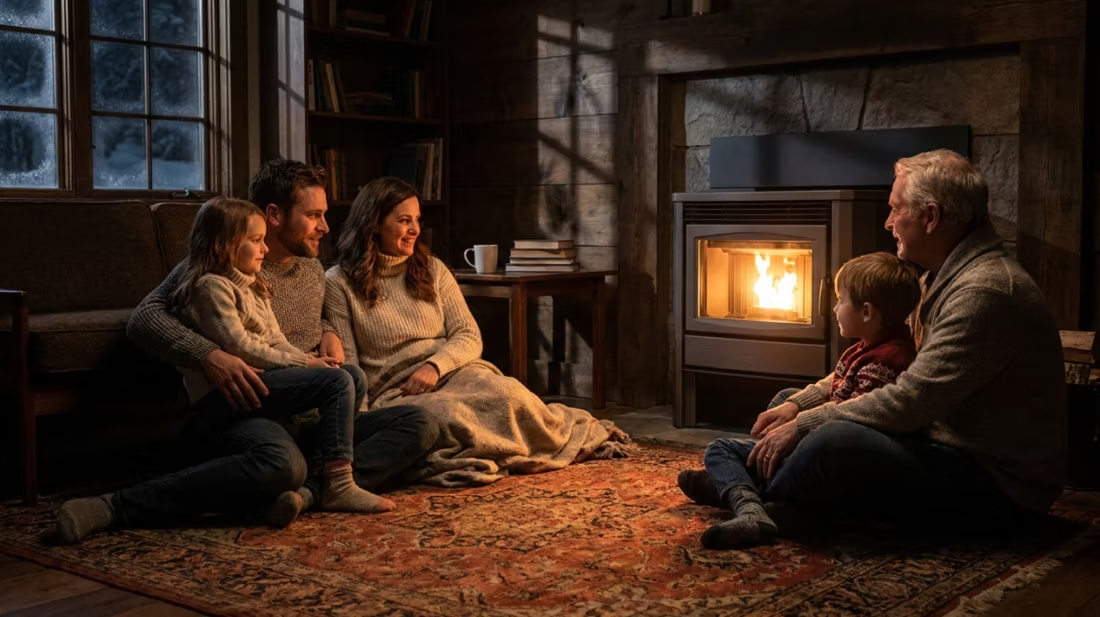
Consistent warmth without the woodpile.
Catoosa County sits in the foothills of northwest Georgia, tucked against the Tennessee line near Chattanooga, with a climate zone 4A profile that brings real winter chill—average lows around 29°F—without the extreme cold of the upper Midwest. Around 3,481 heating degree days a year means Ringgold, Fort Oglethorpe, and the surrounding rural stretches need dependable heat for a genuine but not brutal season, which is exactly the niche pellet stoves fill well.
Local hardwoods here run heavy to oak, pine, and hickory, and residents who burn wood can still get cutting permits through Cherokee National Forest for about $20 per cord during the May-through-October season. Pellet stoves sidestep that whole process—no splitting, no seasoning, no forest permit trip—while still delivering steady, thermostat-controlled radiant heat from bagged fuel available regionally through brands like Lignetics, Hamer Pellet Fuel, and Greenway Renewable Energy. With no air quality non-attainment issues in the county, pellet appliances burn clean here without the curtailment concerns some Western counties face.
Three steps. No salesperson until you're ready.
Tell us about your project
Your zip code, your situation, and the fuel you're leaning toward—or let the answers point you to one.
See what's actually available
The brands dealers within 100 miles genuinely carry—real options, never a catalog mirage.
Get your dealer & Project Guide
A trusted local dealer, plus the free Project Guide & Parts List that names every component of the job.
Frequently Asked Questions
How much does a pellet stove installation cost in Catoosa County?
Most pellet stove and insert installations in Catoosa County run in the neighborhood of $3,000 to $6,500, depending on the unit, whether it's a freestanding stove or an insert going into an existing fireplace, and the venting path required. Inserts going into a masonry fireplace that already has a usable flue tend to land on the lower end since the existing chimney can often accommodate the vent liner. New freestanding stoves in a room without an existing fireplace cost more once wall penetration and exterior venting termination are factored in. A local dealer will give you a firm number after seeing your home.
What size pellet stove do I need for my Catoosa County home?
Given the county's climate zone 4A conditions—moderate but genuine winter chill, average lows near 29°F—most homes here do fine with a mid-size pellet stove rated for 1,200 to 2,000 square feet as a primary zone-heat source, or a smaller unit if you're supplementing central heat rather than replacing it. Homes are less likely to need the largest catalytic-class units common in colder Northern markets, since Catoosa County's roughly 3,481 heating degree days is a fraction of what places like Bozeman, MT see in a season. A local dealer will size based on your actual square footage, insulation, and ceiling height during an in-home visit.
Where can I find certified pellet stove installers near me?
Look for installers with NFI (National Fireplace Institute) pellet-specific certification, which confirms training on hopper systems, auger feed mechanisms, and the exhaust blower venting unique to pellet appliances—different skills than wood stove chimney work. Trusted local dealers serving Ringgold, Fort Oglethorpe, and the rest of Catoosa County typically handle both the sale and the install as a package, which keeps warranty coverage intact. Avoid general handyman installs for pellet units; improper venting slope or undersized exhaust runs are the most common source of callbacks.
What's the difference between a pellet stove and a pellet insert?
A pellet stove is a freestanding appliance that sits on its own hearth pad and vents through a wall or existing chimney—it can go almost anywhere in the house with the right clearances. A pellet insert is built to slide into an existing masonry fireplace opening, using a vent liner run up the old flue, and is the more common choice for Catoosa County homes with an existing but underused wood fireplace they want converted to something lower-maintenance. If you don't have an existing fireplace, a freestanding stove is the simpler path.
Do I need a permit to install a pellet stove in Catoosa County?
Yes—a building permit is generally required for a new pellet stove or insert installation through the Catoosa County building department, covering the appliance clearance, hearth pad, and vent termination. Most local dealers handle this paperwork as part of the installation so you don't have to navigate it yourself. Since Catoosa County has no non-attainment air quality designation, there's no seasonal burning curtailment to worry about—pellet appliances here run on their own schedule year-round without the Yellow Curtailment-type restrictions you'd find in some Western counties.
What's the best pellet stove for Catoosa County's climate?
Given the county's moderate winter profile—average lows around 29°F rather than sustained sub-zero cold—most homeowners here don't need the largest-capacity catalytic units. A mid-size, EPA-certified pellet stove or insert with a reliable auger feed and a modest hopper (40-60 lb capacity) covers most Catoosa County homes comfortably, including overnight burns without a refill. Fuel sourced from regional producers like Lignetics or Hamer Pellet Fuel burns consistently in this humidity range. Talk to a local dealer about your square footage and whether you want primary or supplemental heat before settling on a model.
How often does a pellet stove need to be cleaned and serviced?
Pellet stoves need more frequent attention than gas but less than wood—plan on emptying the ash pan every few days during regular use and a full burn-pot and exhaust vent cleaning every 2-3 weeks in heavy-use months. An annual professional service, including the exhaust blower, hopper, and auger motor, is recommended before the season starts each fall. Local hearth dealers in the Ringgold and Fort Oglethorpe area typically offer this service, and it's worth scheduling ahead of the first cold snap rather than waiting until the stove is already in daily use.
Where can I buy pellet fuel in Catoosa County?
Regional pellet brands including Lignetics, Hamer Pellet Fuel, and Greenway Renewable Energy are commonly stocked at hearth retailers and farm supply stores throughout northwest Georgia, with pricing typically running in the $250-$320 per ton range depending on brand and hardwood-versus-softwood blend. Buying a full season's supply (roughly 2-3 tons for an average Catoosa County home) in late summer or early fall, before demand picks up, is the usual way to avoid the tighter availability that can hit in January during cold stretches.
Pellet stove vs. wood stove—which is right for my home?
Wood stoves burn local oak, pine, and hickory—cuttable through Cherokee National Forest permits for about $20 per cord during the May-through-October season—and work without electricity, which matters if you want backup heat during an outage. Pellet stoves need power to run the auger and blower, so they're not an off-grid option, but they offer thermostat-set convenience, less ash, no splitting or seasoning, and a cleaner, more consistent burn. For Catoosa County's moderate 3,481-HDD winters, where extended power outages are less common than in harsher Northern climates, pellet is often the easier day-to-day choice for homeowners who want heat without the wood-handling routine. Homes that want emergency backup heat sometimes keep a small wood-burning option in addition to a pellet stove for daily use.
What's the difference between an insert and a zero-clearance fireplace?
An insert is a fireplace that slides into a pre-existing wood-burning fireplace—if you don't have one, there's nothing to insert it into. A zero-clearance fireplace is built into a framed wall, which makes it the answer for remodels and new construction. Simple test: existing masonry fireplace means insert; blank or framed wall means zero-clearance.
Why is a fireplace insert so efficient?
An insert does two things: it seals the chimney completely, so you stop losing air you already paid to heat, and it radiates warmth into the room through the firebox and glass. Most add a heat-exchange fan that pulls cool room air underneath, wraps it around the hot firebox, and pushes it back out warm. Your home is more efficient before you've even lit the first fire.
Does a fireplace add value to my home?
On average, a fireplace adds back to the home about the same amount you spent installing it. Add the monthly savings from heating the rooms you actually use instead of the whole house—often hundreds of dollars a year—and the value case is strong before you even count what a fire does for how your family uses the room.
What is an in-home preview and do I need one?
It's a visit where a hearth professional measures your space, confirms the model you picked actually works in your home, and walks the specs—framing, gas line, venting, finish work—before anything is ordered. Some details you just can't know until you see the house. Never make a down payment without one; it's the single most-skipped step that burns buyers.
Stove and Fireplace Dealers in Catoosa County
Pellet Brands Stocked Around Catoosa County
Manufacturers will point you to the nearest stocking dealer.
Find your pellet stove in Catoosa County.
Tell us a bit about your home and we'll match you with the right pellet stove or insert, plus a free Project Guide & Parts List—the exact parts, including the vent kit, and our recommended local dealer for your Catoosa County installation.
Find Your Fireplace →