
Consistent heat, without the wood pile.
Butts County's mild middle-Georgia winters don't demand the heat load of a Duluth or a Fargo—which is exactly why so many homeowners here choose pellet heat for its clean, low-fuss convenience. Find the right stove or insert, and connect with a trusted local dealer serving Jackson, Flovilla, and the county's rural pockets.
Every Project Starts From One of These Five Situations
A clean, low-maintenance fit for a mild climate.
Butts County sits in climate zone 3A, with an average winter low around 32°F and a mild, short heating season—a fraction of what colder markets like Bozeman or Burlington see. Around 6,965 people live across the county's mix of small-town Jackson, Flovilla, and the rural land surrounding Indian Springs and High Falls State Parks. For most homes here, a heat pump or central system handles the bulk of winter heating, and a hearth appliance is chosen for supplemental warmth, ambiance, and the reassurance of heat that doesn't depend entirely on the grid.
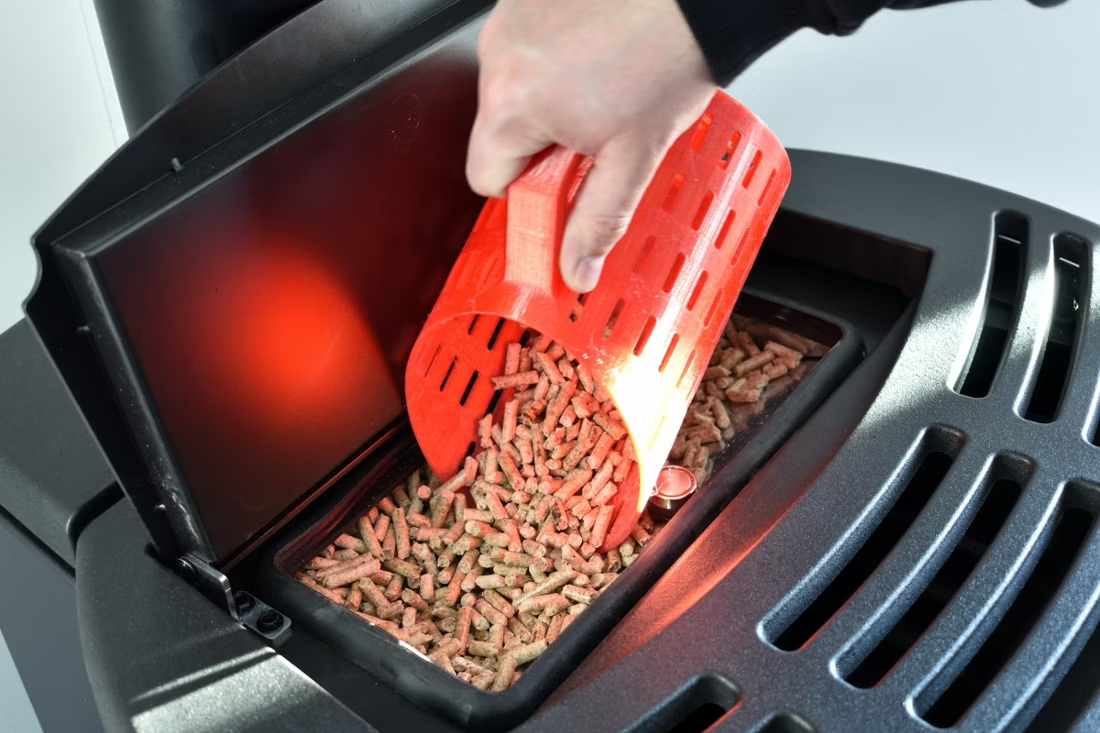
That's where pellet stoves earn their keep. With no air quality non-attainment issues or winter inversion advisories in Butts County—unlike some Western basins—there's no curtailment schedule to plan around, and pellet units burn clean enough that neighbors rarely notice. Local dealers stock pellets from regional producers including Lignetics, Hamer Pellet Fuel, and Greenway Renewable Energy, all sourced from Southeastern pine and hardwood byproducts—the same oak, pine, and hickory that fills the county's woodlots. For homeowners who want predictable, thermostat-controlled heat without splitting and stacking cordwood, a pellet stove or insert is often the simplest upgrade to an underused fireplace or a chilly back room.
Three steps. No salesperson until you're ready.
Tell us about your project
Your zip code, your situation, and the fuel you're leaning toward—or let the answers point you to one.
See what's actually available
The brands dealers within 100 miles genuinely carry—real options, never a catalog mirage.
Get your dealer & Project Guide
A trusted local dealer, plus the free Project Guide & Parts List that names every component of the job.
Frequently Asked Questions
How much does a pellet stove installation cost in Butts County?
A freestanding pellet stove installation in Butts County typically runs $3,000 to $6,000, depending on the unit, hearth pad requirements, and venting distance through an exterior wall. A pellet insert into an existing masonry fireplace usually falls in a similar range, often on the lower end since it reuses the existing chimney chase for the vent pipe. Because Butts County's mild winters mean most owners are installing supplemental rather than whole-home heat, many choose a mid-size unit rather than the largest hopper capacity on the market, which can also trim cost. A local dealer will give you a firm number after seeing your fireplace or install location in person.
What size pellet stove do I need for my Butts County home?
With only a mild, short heating season, Butts County's heating load is light compared to colder parts of the country, so most homes don't need a stove sized for round-the-clock, whole-house output. A small to mid-size unit is usually enough to comfortably heat a main living area, den, or open-plan downstairs, with central heat or a heat pump covering the rest of the house. If you're aiming for true supplemental heat in a larger farmhouse-style home near Flovilla or out toward High Falls, a mid-size stove with a larger hopper still makes sense for longer unattended burns. A local dealer can walk your space and recommend a size based on square footage and how open your floor plan is.
Where can I find pellet stove dealers near me in Butts County?
Look for dealers with NFI (National Fireplace Institute) certified staff, since proper hopper, auger, and vent-pipe setup matters for a pellet unit to run reliably over a full season. Dealers serving Butts County typically cover Jackson, Flovilla, and the rural roads out toward Indian Springs and Berry College's Jackson Lake area, sometimes with a small travel charge for installs well outside town. Because Butts County is a smaller, more rural market than nearby Atlanta or Macon suburbs, it's worth confirming a dealer regularly services pellet appliances specifically—some hearth shops lean heavily toward wood or gas and treat pellet as a secondary line.
What's the difference between a pellet stove and a pellet insert?
A pellet stove is a freestanding unit that sits on a hearth pad and vents through a wall or existing chimney—it can go almost anywhere in the house with the right clearances. A pellet insert is built to slide into an existing masonry fireplace opening, turning an old open hearth into a sealed, thermostat-controlled heat source while venting through the original chimney. For Butts County's older farmhouses and ranch homes with existing fireplaces, an insert is often the more natural fit since it reuses infrastructure that's already there. Newer homes or rooms without a fireplace usually go with a freestanding stove instead.
Do I need a permit to install a pellet stove in Butts County?
Yes—a permanent pellet stove or insert installation generally requires a building permit through the Butts County building department in Jackson, covering the venting, electrical connection for the hopper motor and blower, and hearth clearance requirements. Most local installers pull the permit as part of the job, so it's rarely something homeowners handle themselves. Unlike Western counties with winter inversion advisories, Butts County has no air quality curtailment periods to work around—pellet stoves here are simply a clean, permit-and-install-once appliance without ongoing burn-day restrictions.
What's the best pellet stove for Butts County's climate?
Because winter lows in Butts County average around 32°F rather than the sub-zero nights of a Northern climate, you don't need the largest hopper or the most aggressive BTU output on the market. Mid-size units from mainstream pellet stove manufacturers tend to be the sweet spot—enough output to genuinely heat a living area, with a hopper that lasts through an evening without constant refilling. Since local pellet supply runs through Lignetics, Hamer Pellet Fuel, and Greenway Renewable Energy, any stove that burns standard 40-pound bagged pellets will have reliable local fuel availability. A dealer can match a specific model to your room size and how you plan to use it—daily supplemental heat versus occasional cool-evening use.
How much maintenance does a pellet stove need?
Pellet stoves need more routine attention than a gas unit but far less than a wood-burning chimney system. Plan on emptying the ash pan every few days during regular use, cleaning the burn pot and glass weekly, and vacuuming the hopper and auger area periodically to keep pellet dust from building up. An annual professional service—checking the exhaust blower, gaskets, and venting—is recommended before each heating season, similar to a furnace tune-up. Because Butts County's mild climate means most pellet stoves aren't running as many total hours per winter as they would further north, wear on components tends to be lighter, but the annual check is still worth scheduling before cool weather sets in.
Where can I buy wood pellets in Butts County?
Bagged pellets from regional producers like Lignetics, Hamer Pellet Fuel, and Greenway Renewable Energy are typically available through local hearth dealers and area hardware or feed stores serving Jackson and Flovilla. Because Butts County sits within reasonable trucking distance of Southeastern pellet mills that process pine and hardwood byproducts, pellet costs here tend to run somewhat below what homeowners pay in markets farther from manufacturing. Buying a season's supply in the fall—before demand picks up during the coldest stretch—is the usual strategy for regular users.
Pellet stove vs. wood stove—which is right for my Butts County home?
Wood stoves burn cordwood cut from the oak, pine, and hickory common throughout the county, work without electricity, and appeal to homeowners who value self-sufficiency or already have access to a woodlot. Pellet stoves trade some of that independence—they need power to run the auger and blower—for real convenience: no splitting or stacking, a thermostat that holds a steady temperature, and a cleaner burn with far less ash. Given Butts County's mild heating season, where most stoves are running as supplemental rather than primary heat, the lower-maintenance pellet option often wins out for owners who want warmth without a wood-handling routine. For a rural property with reliable firewood access and interest in an off-grid backup, wood still makes sense.
Why is a fireplace insert so efficient?
An insert does two things: it seals the chimney completely, so you stop losing air you already paid to heat, and it radiates warmth into the room through the firebox and glass. Most add a heat-exchange fan that pulls cool room air underneath, wraps it around the hot firebox, and pushes it back out warm. Your home is more efficient before you've even lit the first fire.
Why is my open fireplace making my house colder?
Open fireplaces suck—literally. As the fire burns, it consumes air your furnace already paid to heat and pulls it out through the chimney, so the house is actually colder after the fire goes out than before you lit it. An insert fixes this: it seals the chimney, puts fixed glass across the front, and turns that hole in your house into a real heat source.
How much should I budget for a fireplace?
For an average home—covering the fireplace, the vent pipe, and basic installation—a budget between $3,900 and $5,500 gives you a lot of options across wood, gas, and pellet. By the time you add finish work, gas line, and electrical, the average complete installation lands between $5,000 and $12,000 all-in. In a remodel or new build, a good rule is to put about 2.5% of the total project cost toward the fireplace.
Does a fireplace add value to my home?
On average, a fireplace adds back to the home about the same amount you spent installing it. Add the monthly savings from heating the rooms you actually use instead of the whole house—often hundreds of dollars a year—and the value case is strong before you even count what a fire does for how your family uses the room.
Pellet Brands Stocked Around Butts County
Manufacturers will point you to the nearest stocking dealer.
Find your pellet stove in Butts County.
Tell us a bit about your home and we'll match you with a trusted local dealer and put together a free Project Guide & Parts List—sized venting, the right unit, and a plan built for your Butts County pellet project.
Find Your Fireplace →