
Steady, clean heat for Brooks County's mild Georgia winters.
Quitman and the rest of Brooks County see short, mild winters—but the occasional hard freeze still calls for real heat. Find the right pellet stove or insert, and get matched with a trusted local dealer who can size and install it correctly.
Every Project Starts From One of These Five Situations
Convenient heat for a county that only needs it sometimes.
Brooks County sits in the Coastal Plain of deep south Georgia, just north of the Florida line, in climate zone 2A. With a very mild, short winter heating season and winter lows averaging 37°F, most homes here don't need a heating system running around the clock—they need something for the handful of nights each winter when temperatures drop toward freezing and threaten the county's pecan orchards and row crops. Pellet stoves fit that pattern well: load the hopper, set the thermostat, and get consistent heat on the nights that actually call for it, without keeping a woodpile stacked year-round.
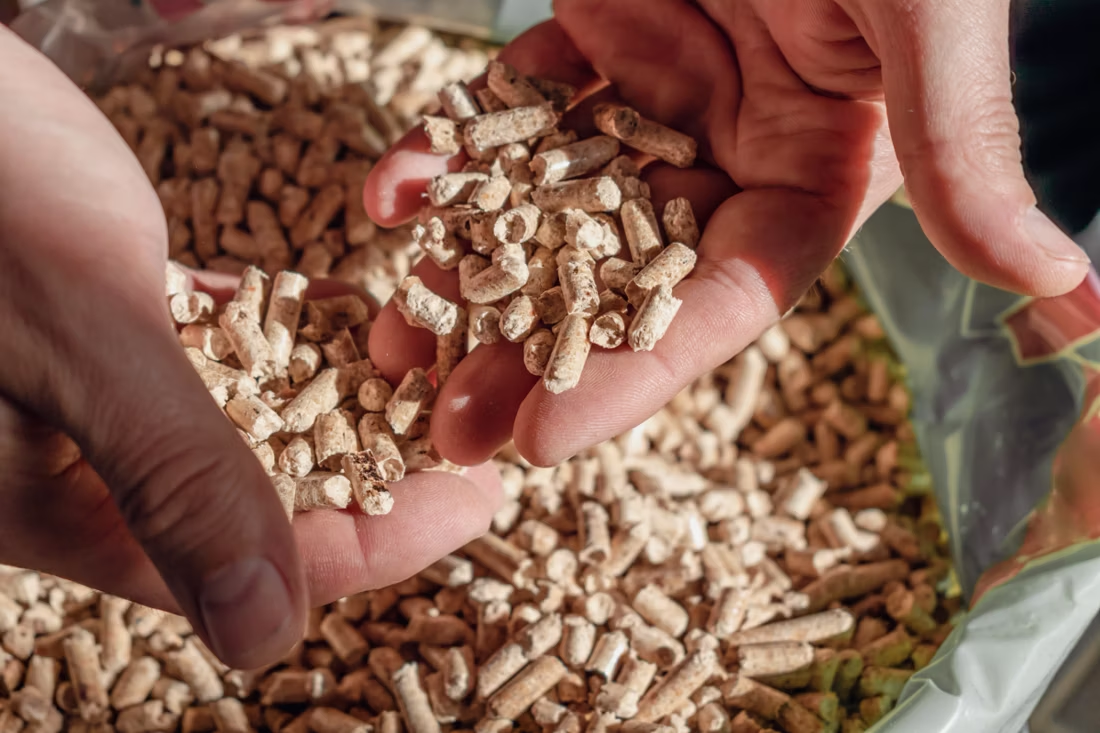
The timber economy around Quitman and the rest of Brooks County—pine, oak, and hickory—feeds directly into the regional pellet supply chain. Brands like Lignetics, Hamer Pellet Fuel, and Greenway Renewable Energy all draw on Southeast timber byproduct, so bagged pellets are generally easy to find at farm supply and hardware stores in and around the county rather than something you have to drive to Valdosta or Tallahassee for. The tradeoff worth knowing: pellet stoves run on electricity for the auger and blower fan, so during the power outages that sometimes follow tropical storm remnants moving up from the Gulf, a pellet stove won't run without a backup power source—something to weigh against a wood-burning option if outage resilience matters to your household.
Three steps. No salesperson until you're ready.
Tell us about your project
Your zip code, your situation, and the fuel you're leaning toward—or let the answers point you to one.
See what's actually available
The brands dealers within 100 miles genuinely carry—real options, never a catalog mirage.
Get your dealer & Project Guide
A trusted local dealer, plus the free Project Guide & Parts List that names every component of the job.
Frequently Asked Questions
How much does a pellet stove installation cost in Brooks County?
Most pellet stove installations run in the range of $3,000 to $6,000 in this part of Georgia, depending on the model, whether you're installing a freestanding stove or a pellet insert into an existing fireplace, and whether new venting is needed. Because Brooks County's mild climate means many households want a smaller-capacity stove for supplemental heat rather than a whole-house unit, installs on the lower end of that range are common. A local dealer can give you a firm number after seeing your hearth, wall, or fireplace opening in person.
What size pellet stove do I need in a climate this mild?
With winter lows averaging around 37°F and only a light winter heating load most years, most Brooks County homes don't need a large-capacity pellet stove built for sub-zero cold-climate use. A smaller or mid-size unit—often in the 40,000 to 60,000 BTU range—is usually plenty to heat a main living area or an open floor plan on the coldest nights of the year, and many households run it as supplemental heat alongside a central system rather than as the sole heat source. A local dealer can size it against your square footage and how the room is used.
Where can I buy pellet fuel in or near Brooks County?
Bagged pellets from regional brands like Lignetics, Hamer Pellet Fuel, and Greenway Renewable Energy are typically stocked at farm supply stores and hardware retailers throughout south Georgia, since these mills run on pine, oak, and hickory byproduct sourced from the same timberland that surrounds Quitman. Buying a season's supply—usually 1 to 2 tons for a home using a pellet stove as supplemental heat here—in late summer or early fall, before cold fronts start moving through, is a common practice locally and can help avoid picked-over shelves in December.
Do I need a permit to install a pellet stove in Brooks County?
In most cases, yes—a new pellet stove installation, especially one requiring new venting through a wall or roof, needs a building permit through the Brooks County building department. If you're installing a pellet insert into an existing masonry fireplace, the process is usually simpler since you're using an existing chimney opening, but permitting requirements can still apply depending on the venting configuration. A local installer will typically handle the permit application as part of the job.
What's the difference between a pellet stove and a pellet insert?
A pellet stove is a freestanding unit that sits on a hearth pad and vents through a wall or existing chimney—it can go almost anywhere in the home with the right clearances. A pellet insert is built to slide into an existing masonry fireplace opening, which is common in older homes around Brooks County that already have a wood-burning fireplace they'd like to convert to something more efficient and less labor-intensive than tending a wood fire. For homes without an existing fireplace, a freestanding stove is generally the simpler option.
Will my pellet stove work during a power outage?
Not without a backup power source. Pellet stoves rely on electricity to run the auger that feeds fuel and the blower that distributes heat, so when the power goes out, the stove stops working. This matters in Brooks County because south Georgia occasionally sees power outages from tropical storm remnants moving up from the Gulf during hurricane season. If outage resilience is a priority for your household, a battery backup or small generator sized for the stove's electrical draw is worth discussing with your dealer, or you may want to compare a wood-burning stove, which doesn't depend on grid power.
How often does a pellet stove need to be cleaned or serviced?
Pellet stoves need more frequent attention than gas units but less than wood stoves. Plan on emptying and cleaning the ash pan every few days during regular use, a deeper burn-pot and heat-exchanger cleaning every one to two weeks, and a full annual inspection and cleaning by a technician before the season starts. Because Brooks County's heating season is short, many households find their stove needs less overall maintenance across the year than it would in a colder climate—but the annual pre-season service is still worth keeping on the calendar.
Pellet stove vs. wood stove—which makes more sense in Brooks County?
Wood is abundant locally—oak, pine, and hickory are all common in the timberland around Quitman and the rest of the county—and a wood stove keeps working through a power outage, which matters during hurricane season. A pellet stove trades that off for real convenience: no splitting or stacking wood, more consistent and controllable heat, and less ash and creosote to manage. Given how mild Brooks County winters are, with only a light winter heating load most years, many households find the lower-maintenance, load-and-forget nature of a pellet stove better suited to occasional use than tending a wood fire for just a handful of cold nights a season.
Pellet stove vs. electric heat—which is better for supplemental heat here?
Electric heaters and electric fireplace inserts are simple to install and require no fuel storage, but they cost more to run per BTU than a pellet stove, especially if you're heating a single room heavily on cold nights. A pellet stove costs more upfront and needs venting and a fuel supply, but the fuel itself is generally cheaper to run for the same heat output, and many Brooks County homeowners like having a stove that visually reads as a real fire rather than a heater. For a home that only needs supplemental heat a few weeks a year, either can work—it often comes down to whether you want the ambiance and lower running cost of a pellet stove or the simplicity of a plug-in electric unit.
What's the difference between an insert and a zero-clearance fireplace?
An insert is a fireplace that slides into a pre-existing wood-burning fireplace—if you don't have one, there's nothing to insert it into. A zero-clearance fireplace is built into a framed wall, which makes it the answer for remodels and new construction. Simple test: existing masonry fireplace means insert; blank or framed wall means zero-clearance.
Why is a fireplace insert so efficient?
An insert does two things: it seals the chimney completely, so you stop losing air you already paid to heat, and it radiates warmth into the room through the firebox and glass. Most add a heat-exchange fan that pulls cool room air underneath, wraps it around the hot firebox, and pushes it back out warm. Your home is more efficient before you've even lit the first fire.
Can I install a fireplace myself?
If you're putting a fire in your house on purpose, it's best to work with an expert. Unless you're genuinely experienced in framing, gas line, vent pipe, and the national code on clearances to combustibles, have a professional do it—and ideally the same company that sells you the fireplace, so warranty, service, and liability all live under one roof.
Can a fireplace actually lower my heating bill?
Yes—by creating a comfort zone. A furnace heats every square foot of the house just to warm the one room you're in; a gas fireplace on low burns roughly a sixth of the gas a typical furnace does. Set the furnace around 55–60 degrees as a baseline, then heat the rooms your family actually uses. Families who heat this way commonly save $20–$60 a month.
Stove and Fireplace Dealers in Brooks County
Pellet Brands Stocked Around Brooks County
Manufacturers will point you to the nearest stocking dealer.
Find your pellet stove in Brooks County.
Tell us about your home and we'll match you with a trusted local dealer and send over a free Project Guide & Parts List—sized for Brooks County's mild winters, with the right stove or insert and the vent kit you'll actually need.
Find Your Fireplace →