
Find the right pellet stove for Brantley County's short, mild winters.
Efficient, hopper-fed heat for the pine flatwoods around Nahunta and the Okefenokee—sized right for a heating season that's short but real. Find the right unit and connect with a trusted local dealer.
Every Project Starts From One of These Five Situations
Clean, efficient heat built for Brantley County's short heating season.
Brantley County sits in the pine flatwoods of southeast Georgia, halfway between Waycross and the coast at Brunswick, with the Okefenokee Swamp National Wildlife Refuge running along much of its western edge. It's a small county—just over 3,500 residents spread across Nahunta and the surrounding unincorporated communities—and a mild one. Climate zone 2A puts Brantley squarely in hot-humid territory, and with a light winter heating load and winter lows averaging 37°F, the real heating season here is a handful of weeks from December into February, with hard freezes into the 20s on the coldest nights rather than sustained cold like you'd see in Duluth or Fargo.
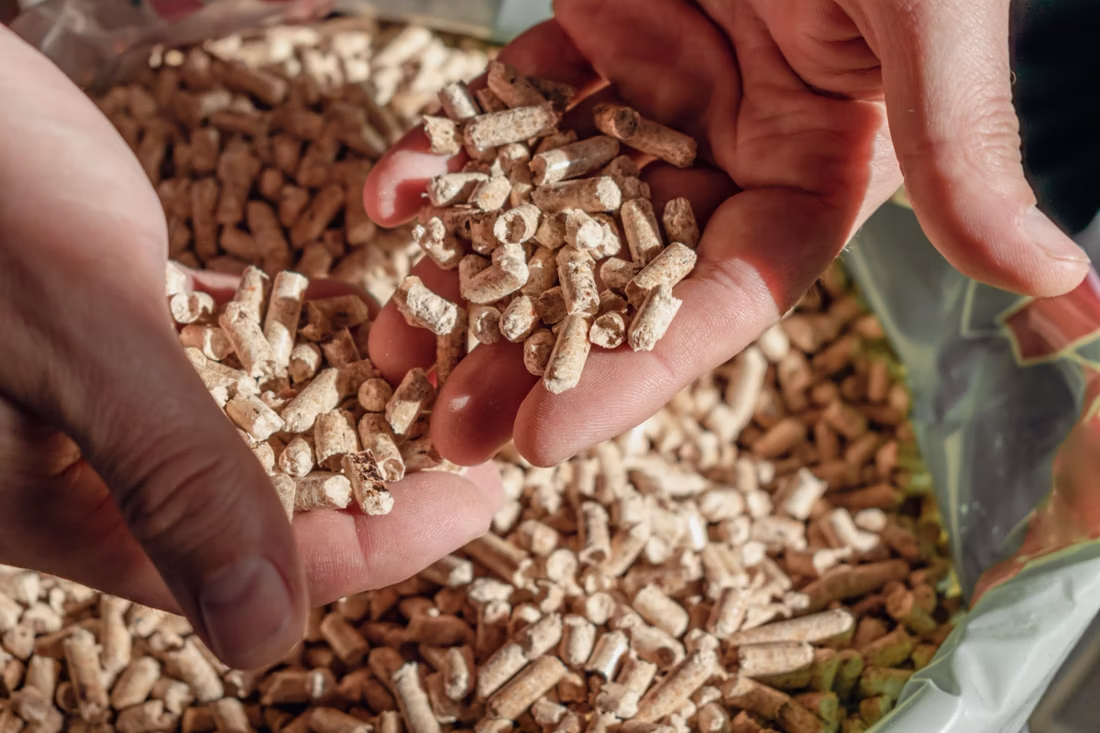
That's exactly the kind of climate where a pellet stove earns its keep as supplemental heat rather than a full-time furnace replacement. A hopper-fed pellet stove or insert lights at the push of a button, runs on bagged fuel instead of a woodpile, and vents through a small wall or roof pipe rather than a full masonry chimney—a simpler installation for the manufactured and site-built homes common throughout the county. Georgia's timber industry keeps pellet supply local and steady: Hamer Pellet Fuel manufactures in-state, and Lignetics and Greenway Renewable Energy both distribute across the Southeast, so bagged pellets made largely from Southern yellow pine and other regional wood byproduct are easy to find without the cutting permits or seasoning time cordwood requires. Brantley County has no air quality non-attainment issues or burn restrictions, so the choice between pellet and wood heat here comes down to convenience and backup power rather than smoke rules.
Three steps. No salesperson until you're ready.
Tell us about your project
Your zip code, your situation, and the fuel you're leaning toward—or let the answers point you to one.
See what's actually available
The brands dealers within 100 miles genuinely carry—real options, never a catalog mirage.
Get your dealer & Project Guide
A trusted local dealer, plus the free Project Guide & Parts List that names every component of the job.
Frequently Asked Questions
How much does a pellet stove installation cost in Brantley County?
A typical pellet stove or insert installation in Brantley County runs roughly $3,000 to $6,000, depending on whether you're installing a freestanding stove with a simple through-wall pellet vent or a full insert into an existing fireplace opening. Because the county's heating season is short—just a light winter heating load overall—many homeowners size down and spend toward the lower end, choosing a unit meant to warm a living room or den rather than the whole house. Your matched local dealer can give a firm number once they've looked at your venting path and hearth setup.
What size pellet stove do I need for my home in Brantley County?
With winter lows averaging 37°F and only a handful of truly cold weeks each year, most Brantley County homes don't need a large, whole-house-rated pellet stove—a small to mid-size unit rated for 1,000 to 1,800 square feet is plenty for supplemental heat in a den, living room, or open-concept main space. Homes further from town, including manufactured and modular homes common in the county, sometimes size up slightly if the unit is meant to carry more of the heating load during cold snaps. A local dealer can walk through your square footage and insulation to land on the right model rather than guessing off a size chart alone.
Where can I find pellet stove dealers near Brantley County?
With a population under 4,000, Brantley County itself doesn't support a large hearth retail presence, so many homeowners end up working with dealers based in nearby Waycross, Brunswick, or Jesup who service the county regularly. Look for NFI (National Fireplace Institute) certification when comparing installers—it signals real training on venting, clearances, and appliance-specific installation rather than a generalist handyman job. Find My Fireplace matches you with a trusted dealer who actually covers Brantley County, whether their shop is inside the county line or just outside it.
What's the difference between a pellet stove and a pellet insert?
A pellet stove is a freestanding unit that sits on a hearth pad and vents through a wall or the roof—it can go almost anywhere in the house with the right clearances. A pellet insert is built to slide into an existing masonry fireplace opening, converting an old wood-burning fireplace into a hopper-fed, thermostatically controlled heat source using the existing chimney chase for venting. For Brantley County homes with an existing fireplace they rarely use, an insert is often the simpler upgrade. Homes without a fireplace, including many of the county's manufactured and site-built homes, are usually better suited to a freestanding stove.
Do I need a permit to install a pellet stove in Brantley County?
Most pellet stove and insert installations require a building permit through the county building department, mainly to verify hearth clearances and the venting path meet code—the same review any solid-fuel appliance goes through. Because Brantley County has no listed air quality non-attainment issues, there are no burn curtailment periods or smoke restrictions to work around, unlike some parts of the country where wood and pellet burning gets limited during inversions. Most local installers handle the permitting as part of the job, so it's rarely something you have to manage yourself.
What's the best pellet stove for Brantley County's climate?
Given the mild climate here, most homeowners don't need the biggest catalytic-style unit on the market—a mid-size pellet stove or insert compatible with regional pellet brands like Lignetics, Hamer Pellet Fuel, or Greenway Renewable Energy will comfortably handle supplemental heat through Brantley County's short cold stretch. One thing worth planning for regardless of size: pellet stoves need electricity to run the auger and combustion blower, and coastal Georgia's hurricane season brings real risk of multi-day power outages. Ask your local dealer about models with battery-backup options, or plan for a small generator, so the stove isn't dead weight during the exact kind of storm that makes backup heat useful.
How often does a pellet stove need to be cleaned and serviced?
Pellet stoves need far less maintenance than a wood-burning chimney system, but they're not maintenance-free. Plan on emptying and vacuuming the ash pan every few days during regular use, cleaning the burn pot and glass weekly, and having the exhaust venting and combustion blower professionally inspected once a year—typically in early fall before the county's cold snaps arrive. Given how short the heating season is here, a single annual service ahead of winter is usually enough to keep a unit running clean through Brantley County's cold months.
Where can I buy pellet fuel in Brantley County?
Bagged pellets from regional producers like Lignetics, Hamer Pellet Fuel, and Greenway Renewable Energy are the most common options serving southeast Georgia, generally running in the $230 to $300 per ton range depending on the brand and how far you are from a distributor. Because Brantley County's cold season is short, most households don't burn through the volume that colder-climate homes do, but it's still worth buying a season's worth of bagged pellets early—before the first cold front—since local stock can run low once temperatures drop.
Pellet stove vs. wood stove—which is right for my home?
Wood is abundant in Brantley County—oak, pine, and hickory are all common locally—and a wood stove works without electricity, which matters here given how often hurricane season knocks out power for days at a time. Pellet stoves trade that off-grid resilience for convenience: load the hopper, set the thermostat, and get consistent heat with far less ash and no chimney creosote to manage, but they go dark in an outage unless you've got battery backup or a generator. For a county with a short, mild heating season, many homeowners choose pellet for its low-maintenance daily use and keep a backup plan for power loss; others lean on wood specifically because it keeps working when the grid doesn't. A local dealer can walk through both given your specific home and power situation.
How often does a pellet stove need cleaning?
A clean pellet stove is a happy pellet stove. Plan on cleaning the burn pot about once a week when you're burning regularly—ash and clinkers gum up the air holes just like a pellet barbecue. Most pellet stove problems trace back to skipped cleaning that nobody explained up front. Some designs make it easy with a trapdoor burn pot: pull a lever and the gunk drops into the ash pan.
Can a pellet stove heat a whole house?
It genuinely can. I burned a pellet stove as my only heat source for years after a furnace died, and it kept the entire house warm. Pellets feed automatically from a hopper, so you get wood-heat economics with thermostat-style control. Two honest caveats: it needs weekly cleaning during the season, and most models need electricity to run—ask about battery backup if outages are a concern.
Can I install a fireplace myself?
If you're putting a fire in your house on purpose, it's best to work with an expert. Unless you're genuinely experienced in framing, gas line, vent pipe, and the national code on clearances to combustibles, have a professional do it—and ideally the same company that sells you the fireplace, so warranty, service, and liability all live under one roof.
Can a fireplace actually lower my heating bill?
Yes—by creating a comfort zone. A furnace heats every square foot of the house just to warm the one room you're in; a gas fireplace on low burns roughly a sixth of the gas a typical furnace does. Set the furnace around 55–60 degrees as a baseline, then heat the rooms your family actually uses. Families who heat this way commonly save $20–$60 a month.
Pellet Brands Stocked Around Brantley County
Manufacturers will point you to the nearest stocking dealer.
Find your pellet stove in Brantley County.
Tell us a bit about your home and we'll match you with the right pellet stove or insert, plus a free Project Guide & Parts List—the exact parts, including the vent kit, and a recommended local dealer to install it.
Find Your Fireplace →