
A real flame for Bloomingdale's short, mild winters.
With winter lows averaging just 40°F and only a short, light heating season each year, Bloomingdale doesn't need a furnace replacement—it needs instant, reliable warmth on the handful of genuinely cold nights, plus battery-backup heat when a coastal storm knocks out power.
Every Project Starts From One of These Five Situations
Built for ambiance first, backup heat second.
Bloomingdale sits at just 21 feet of elevation in Chatham County, a few miles west of Savannah, squarely in climate zone 2A—hot, humid summers and short, mild winters where the average low is 40°F. Wood-burning fireplaces are largely a non-factor here; there's rarely enough sustained cold to justify tending a fire, and most local building departments see very few new wood-stove permit requests compared to inland Georgia. What Bloomingdale homeowners actually want is a gas fireplace they can flip on for a January cold snap, a hurricane-season power outage, or simply the ambiance of a real flame on a 45-degree evening.
Bloomingdale is a small town of under 3,000 residents, and natural gas mains don't reach every street. In Georgia's deregulated gas market, Atlanta Gas Light owns much of the underground pipeline infrastructure across coastal Chatham County, but plenty of homes here—especially newer construction outside the older grid—run on propane instead, with a tank installed on the property. Either fuel works fine for a modern direct-vent fireplace or insert; a local hearth dealer will tell you which one your address actually supports before you buy anything.
Three steps. No salesperson until you're ready.
Tell us about your project
Your zip code, your situation, and the fuel you're leaning toward—or let the answers point you to one.
See what's actually available
The brands dealers within 100 miles genuinely carry—real options, never a catalog mirage.
Get your dealer & Project Guide
A trusted local dealer, plus the free Project Guide & Parts List that names every component of the job.
Frequently Asked Questions
How much does a gas fireplace installation cost in Bloomingdale?
Most gas fireplace and insert installations in the Bloomingdale area run somewhere between $3,500 and $8,500, depending on the unit, whether you're tying into an existing gas line or running a new one, and whether you need a propane tank set. A direct-vent insert into an existing masonry fireplace with gas already at the house sits toward the lower end. New construction, a first-time propane tank installation, or a fireplace going into a wall with no existing chimney or gas service pushes toward the higher end. Given Chatham County's coastal humidity, ask about corrosion-resistant stainless venting components—standard galvanized parts don't hold up as well this close to the marsh.
Can I convert an existing wood fireplace to gas?
Some of the older homes around Bloomingdale and neighboring Pooler and Savannah were built with a traditional masonry fireplace, even though the climate rarely calls for real heat output from it. If yours is one of them, a gas log set or a sealed gas insert is a common upgrade—it uses your existing chimney as the vent path (with a liner added) and turns a fireplace that mostly collected dust into something you'll actually use during cold snaps or outages. Expect $2,500 to $6,000 for the conversion depending on whether you go with a simple vented log set or a full high-efficiency insert.
Should I plan for natural gas or propane?
It depends on exactly where in Bloomingdale you're located. Natural gas service follows specific corridors in this part of Chatham County, and not every street has a main nearby. If your home already has natural gas for a water heater or range, extending a line to a fireplace is usually straightforward and cheaper than adding propane. If you're outside the gas footprint—common in newer subdivisions on the edges of town—propane is the standard fallback, delivered and stored in an above-ground tank. A local dealer can check your address against the gas utility's service map before you commit to either.
Will a gas fireplace work if the power goes out during a hurricane?
Yes, and this is one of the biggest reasons coastal Georgia homeowners install one. Units with intermittent pilot ignition (IPI) run on AA batteries for ignition and control, so they light and operate normally even with the grid down—a real advantage in Chatham County, where tropical storms and hurricane-season outages can stretch for days. Valor fireplaces take a different approach: their pilot assembly generates its own electricity through a thermocouple, so there are no batteries to remember at all. Either way, keep in mind a gas fireplace still needs a live gas or propane supply—a tank on your property gives you more outage resilience than relying solely on the utility main.
Gas fireplace, insert, or stove—what's the difference?
A gas fireplace is a fully built-in unit framed into a wall, typically chosen for new construction or a remodel where there's no existing hearth. A gas insert is sized to slide into an existing masonry firebox, using the current chimney as its vent path—the more common choice for the older homes scattered through Bloomingdale and nearby Savannah neighborhoods. A gas stove is a freestanding cast-iron or steel unit that sits out on the floor, often used when there's no chimney at all and running a direct-vent pipe through an exterior wall is simpler than building a chase.
Do I need a permit to install a gas fireplace in Bloomingdale?
Yes. New gas fireplace installations require both a building permit and a gas line permit, typically pulled through the City of Bloomingdale or Chatham County's Building Safety & Regulatory Services, depending on your exact address. The gas line connection has to be run or inspected by a licensed gas fitter—this is one of the reasons it's worth using an established local hearth dealer rather than a handyman, since they coordinate the gas work, venting, and inspection sign-off as one job instead of leaving you to manage separate trades.
Vented or vent-free—which makes sense for a coastal Georgia home?
Vented (direct-vent) gas fireplaces pull outside air for combustion and exhaust everything, including moisture, back outdoors through a sealed pipe. Vent-free units burn directly into the room, releasing water vapor and trace combustion byproducts indoors instead. Vent-free is legal in Georgia and technically more fuel-efficient, but Bloomingdale's marsh-adjacent, already-humid climate is exactly the situation where adding indoor moisture from a vent-free unit is worth thinking twice about—it can aggravate condensation and mildew issues that coastal homes already contend with. Most local dealers steer customers here toward direct-vent units for that reason alone.
How often does a gas fireplace need to be serviced?
Plan on an annual inspection, ideally in early fall before the fireplace gets its heaviest use during Chatham County's brief cold stretch. A technician checks the burner, pilot or ignition system, venting, and gas connections, and cleans the glass—usually $150 to $250. Because most Bloomingdale fireplaces run only a few dozen hours a season rather than all winter long, wear is minor, but the annual check still matters for carbon monoxide safety and keeping the manufacturer's warranty intact.
Gas or electric fireplace—which is the better fit here?
Given how mild Bloomingdale's winters actually are—average lows only in the 40s and just a short, light heating season each year—both options are reasonable, and the choice often comes down to venting and budget rather than heat output. A gas fireplace or insert gives you a real flame, more authentic heat, and battery-backup operation during hurricane-season outages, but requires gas or propane service and venting. An electric fireplace needs no venting or gas line at all, plugs into a standard outlet, and runs on Georgia Power's residential rate of about 15.5 cents per kWh—cheap to operate for occasional ambiance use, though it won't provide meaningful backup heat if the power itself is out. For a primary living space where you want real fire and outage resilience, gas wins; for a bedroom, sunroom, or rental property, electric is often the simpler, cheaper install.
Can I put a TV above my fireplace?
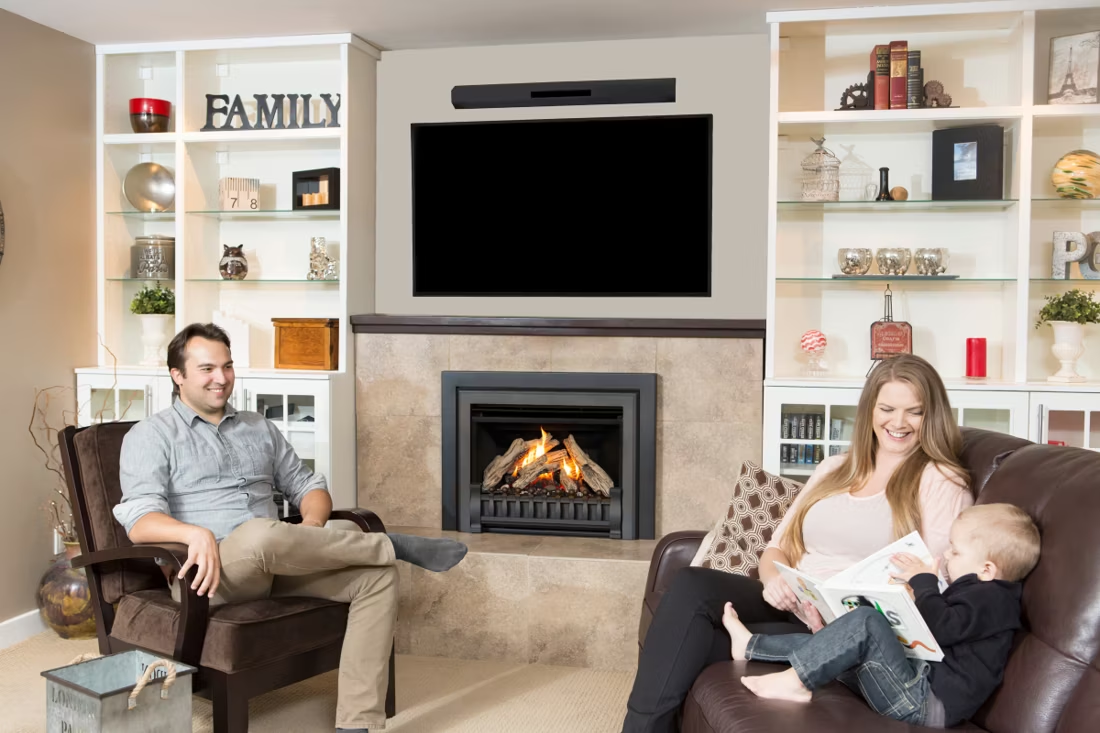
Yes—with an asterisk. Fireplaces are hot and TVs don't like heat. Either put a mantel between them to deflect rising warmth, or choose a fireplace with heat-management technology that creates a cool zone on the wall above—the wall stays around 125 degrees, barely warm, while the room still gets full heat. If you like clean lines and don't want a mantel, heat management is the answer.
What's the difference between an insert and a zero-clearance fireplace?
An insert is a fireplace that slides into a pre-existing wood-burning fireplace—if you don't have one, there's nothing to insert it into. A zero-clearance fireplace is built into a framed wall, which makes it the answer for remodels and new construction. Simple test: existing masonry fireplace means insert; blank or framed wall means zero-clearance.
Can I install a fireplace myself?
If you're putting a fire in your house on purpose, it's best to work with an expert. Unless you're genuinely experienced in framing, gas line, vent pipe, and the national code on clearances to combustibles, have a professional do it—and ideally the same company that sells you the fireplace, so warranty, service, and liability all live under one roof.
Can a fireplace actually lower my heating bill?
Yes—by creating a comfort zone. A furnace heats every square foot of the house just to warm the one room you're in; a gas fireplace on low burns roughly a sixth of the gas a typical furnace does. Set the furnace around 55–60 degrees as a baseline, then heat the rooms your family actually uses. Families who heat this way commonly save $20–$60 a month.
Nearby Dealers
Hearth shops serving Bloomingdale and the surrounding area. Every listing shows whether it is a WhyFire partner, a dealer we have verified as authorized for the brands we recommend, or a local business carrying hearth products. No manufacturer pays for placement. How we verify dealers →
Strickland Oil Co
Thompson Gas - Springfield
Gaslog Solutions Plus
Liberty Propane
Find your gas fireplace in Bloomingdale.
Tell us a bit about your home and we'll match you with a trusted local dealer who knows Chatham County's gas and propane realities, plus a free Project Guide & Parts List spelling out the exact fireplace, vent kit, and install plan for your address.
Find Your Fireplace →