
Keep Your Family Warm and Safe—No Matter What
With winter lows averaging 37°F and just over 2,000 heating degree days a year, wood heat here is more about a cozy fire and storm-season backup than survival. We'll match you with a local dealer who knows what actually makes sense on rural Berrien County acreage.
Every Project Starts From One of These Five Situations
A warm-climate county where fireplaces are more about ambiance than survival.
Berrien County sits in USDA climate zone 2A—hot, humid South Georgia, with an average winter low of 37°F and only about 2,080 heating degree days a year. Compare that to Duluth, MN, where winters routinely bring 8,000-plus heating degree days and sub-zero nights, and it's clear why wood stoves aren't a household necessity in a county of roughly 7,800 people. Most homes here rely on central heat pumps or gas for the handful of genuinely cold nights each winter, not a stove running around the clock.
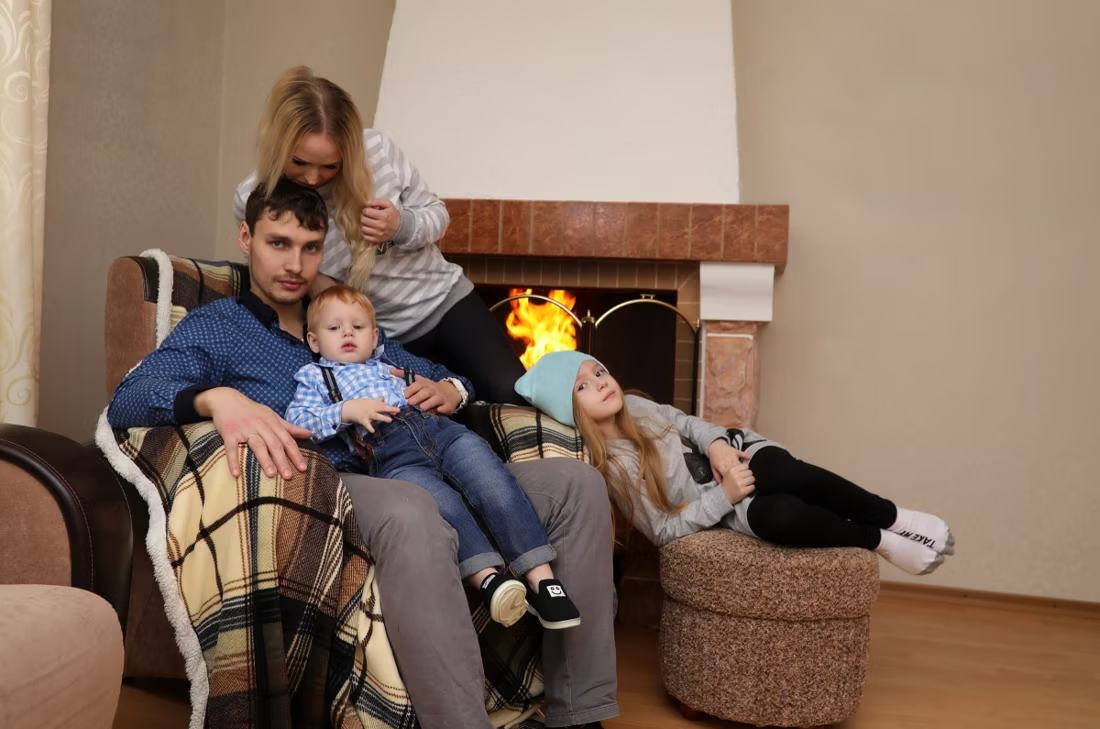
That said, wood heat hasn't disappeared from Berrien County—it's just shifted purpose. Rural properties with mature oak, pine, and hickory timber sometimes install a stove or insert for ambiance, for a hunting camp or workshop, or as backup heat when ice storms or the remnants of a Gulf hurricane knock out power for a few days. There are no air quality non-attainment issues or burn restrictions in the county, so anyone who does want a wood-burning appliance faces no local smoke ordinances—just a smaller pool of installers than you'd find in a colder region, which makes finding an experienced local dealer worth the extra step.
Three steps. No salesperson until you're ready.
Tell us about your project
Your zip code, your situation, and the fuel you're leaning toward—or let the answers point you to one.
See what's actually available
The brands dealers within 100 miles genuinely carry—real options, never a catalog mirage.
Get your dealer & Project Guide
A trusted local dealer, plus the free Project Guide & Parts List that names every component of the job.
Frequently Asked Questions
How much does a wood stove installation cost in Berrien County?
Because wood heat is a niche purchase in a county this size, you won't find the dense network of hearth dealers that exists in colder parts of the country, so published price lists are scarce locally. Across similar South Georgia counties, a straightforward freestanding stove with new Class A chimney venting typically runs in the $3,500 to $7,500 range, with the low end covering simpler installs into an existing masonry chimney and the higher end covering new venting through a roof. Get a firm quote from a trusted dealer rather than assuming national averages apply—rural delivery and travel time can shift the number either direction here.
Does wood heat actually make sense in Berrien County's climate?
For most homes, no—not as a primary heat source. With an average winter low of 37°F and roughly 2,080 heating degree days a year, Berrien County's heating season is short and mild compared to almost anywhere else in the country. A wood stove sized for a place like Duluth, MN would be badly oversized here and would smolder rather than burn clean. Where wood heat does make sense is as a secondary or occasional-use appliance: a small stove or fireplace insert for the handful of genuinely cold nights, a hunting camp that isn't tied to the grid, or a family that simply wants a real fire on a December evening.
Is a wood stove worth it for power outages during storms?
It's one of the more legitimate reasons to install one here. South Georgia sees occasional ice storms and the remnants of Gulf tropical systems that can knock out power for several days at a time, and a wood stove is one of the few heat sources that keeps working with no electricity at all. If backup heat during outages is the main driver, a mid-size non-catalytic stove that doesn't depend on a blower fan is usually the more practical choice than a stove that needs electric-powered combustion air.
What firewood is available locally in Berrien County?
Oak, pine, and hickory are the common species on rural Berrien County land. Hickory burns hot and dense and is a good choice if you want real heat output rather than just ambiance. Oak is the reliable middle-ground firewood—split it and season it for at least six to nine months before burning. Pine is abundant and easy to source but resinous and fast-burning, better suited to kindling or shoulder-season fires than to long overnight burns. Given the mild climate, most households burning wood here use far less than a cord or two a season, so sourcing is rarely a limiting factor.
Do I need a permit to install a wood stove in Berrien County?
New wood-burning installations generally require a building permit through the county's building department, covering the appliance clearances, hearth pad, and chimney or vent penetration. Because installs are infrequent here, it's worth confirming current requirements directly with the county before starting work rather than assuming a code that applies elsewhere. A local dealer who handles the occasional wood installation in the area will typically manage the permit paperwork as part of the job.
What's the best wood stove for a home in Berrien County?
Given the short, mild heating season, most Berrien County homes don't need a large-capacity, long-burn catalytic stove built for sub-zero nights. A smaller EPA-certified non-catalytic stove, or a wood-burning fireplace insert if you already have a masonry chimney, is usually the right fit—enough heat output for the occasional cold snap without overheating the room on a 45-degree evening. If you're prioritizing power-outage resilience over daily use, ask a local dealer about models that don't rely on an electric blower to move heat.
How often should a wood stove or chimney be inspected here?
The Chimney Safety Institute of America recommends an annual inspection for any wood-burning appliance, regardless of how lightly it's used. In Berrien County, where most wood stoves see occasional rather than daily use through the winter, it's tempting to skip a year—but infrequent use doesn't reduce fire risk, and a chimney that sits unused for months can develop blockages from nesting insects or debris. Schedule a sweep and inspection before the first fire of the season each year.
Are pellet stoves a better fit than wood in Berrien County?
Pellet stoves are also uncommon here for the same reason wood stoves are—the heating season is short and mild, so the convenience pellets offer isn't as valuable as it would be in a colder climate. Regional pellet brands like Lignetics, Hamer Pellet Fuel, and Greenway Renewable Energy do supply the wider region, so pellets aren't hard to find if you go that route. But pellet stoves require electricity to run the auger and blower, which makes them a poor choice if your main goal is backup heat during a storm-related outage—a scenario where a wood stove has a real advantage.
Wood vs. gas or electric—which is right for a Berrien County home?
For everyday heating, gas and electric heat pumps are the standard, practical choice in Berrien County's climate, and both are widely serviced locally. Wood makes sense as a deliberate secondary choice: for the ambiance of a real fire, for a workshop or hunting camp off the grid, or specifically as storm-outage backup heat that doesn't depend on electricity. If your primary concern is efficient day-to-day heating, start with a gas or electric option and consider wood, if at all, as a supplemental system rather than your main source.
Why is a fireplace insert so efficient?
An insert does two things: it seals the chimney completely, so you stop losing air you already paid to heat, and it radiates warmth into the room through the firebox and glass. Most add a heat-exchange fan that pulls cool room air underneath, wraps it around the hot firebox, and pushes it back out warm. Your home is more efficient before you've even lit the first fire.
What's the difference between an insert and a zero-clearance fireplace?
An insert is a fireplace that slides into a pre-existing wood-burning fireplace—if you don't have one, there's nothing to insert it into. A zero-clearance fireplace is built into a framed wall, which makes it the answer for remodels and new construction. Simple test: existing masonry fireplace means insert; blank or framed wall means zero-clearance.
What is an in-home preview and do I need one?
It's a visit where a hearth professional measures your space, confirms the model you picked actually works in your home, and walks the specs—framing, gas line, venting, finish work—before anything is ordered. Some details you just can't know until you see the house. Never make a down payment without one; it's the single most-skipped step that burns buyers.
Can a fireplace actually lower my heating bill?
Yes—by creating a comfort zone. A furnace heats every square foot of the house just to warm the one room you're in; a gas fireplace on low burns roughly a sixth of the gas a typical furnace does. Set the furnace around 55–60 degrees as a baseline, then heat the rooms your family actually uses. Families who heat this way commonly save $20–$60 a month.
Find your wood stove in Berrien County.
Tell us a bit about your home and how you plan to use a wood stove—ambiance, backup heat, or a hunting camp—and we'll match you with a trusted local dealer and a free Project Guide & Parts List, including the exact vent kit your installation needs.
Find Your Fireplace →