
Efficient, clean-burning heat built for Ben Hill County's mild winters.
From Fitzgerald out to the farms and pine flats of the county, a pellet stove delivers steady, low-maintenance warmth without the smoke or the woodpile. Find the right unit and connect with a trusted local dealer.
Every Project Starts From One of These Five Situations
Convenient warmth suited to short South Georgia winters.
Ben Hill County sits in climate zone 3A, with an average winter low around 39°F and a short, mild heating season—a fraction of what a place like Duluth, Minnesota logs in a single winter. That means most homes here don't need a heating appliance running around the clock; they need something that takes the chill off cold mornings and holds steady through the occasional dip into the 20s. Ben Hill County has no wildfire smoke, non-attainment status, or winter inversion concerns, so there's no burn-ban season or curtailment schedule to plan around—unlike a lot of the country where wood and pellet burning gets restricted on bad-air days.
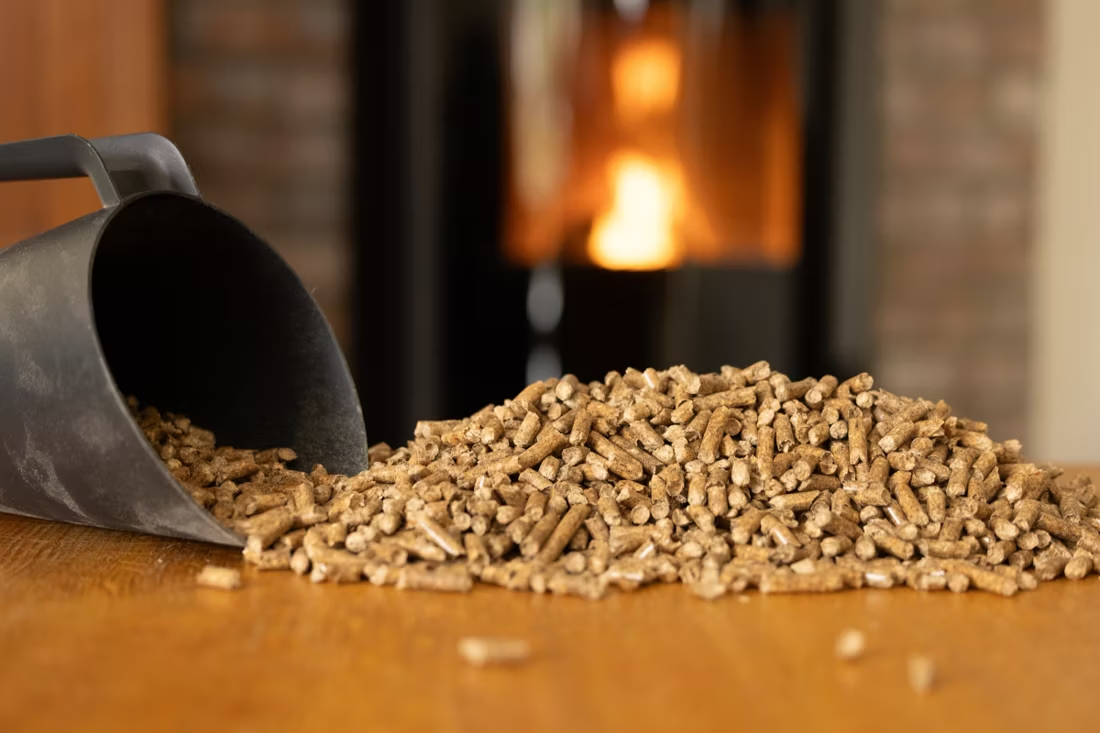
That's exactly the kind of climate where a pellet stove earns its keep. Fitzgerald and the rest of the county are well within reach of regional pellet suppliers—Lignetics, Hamer Pellet Fuel, and Greenway Renewable Energy all distribute into South Georgia—so bagged fuel is easy to find at hardware and farm supply stores rather than something you have to special-order. A pellet stove gives you a clean, thermostatically controlled flame with none of the splitting, stacking, or ash-hauling that comes with cordwood, and it's a natural fit for a county where oak, pine, and hickory are the common local species but a full-time wood-heating setup is more than most homes need.
Three steps. No salesperson until you're ready.
Tell us about your project
Your zip code, your situation, and the fuel you're leaning toward—or let the answers point you to one.
See what's actually available
The brands dealers within 100 miles genuinely carry—real options, never a catalog mirage.
Get your dealer & Project Guide
A trusted local dealer, plus the free Project Guide & Parts List that names every component of the job.
Frequently Asked Questions
How much does a pellet stove installation cost in Ben Hill County?
Most pellet stove installations in this part of Georgia run roughly $3,000 to $6,500, depending on the unit, whether you're venting through an existing masonry fireplace or cutting a new wall penetration, and whether a dedicated electrical outlet needs to be added for the auger and blower. Because Ben Hill County's mild climate means most installs are supplemental or zone heating rather than a whole-house primary system, homeowners here often land on the lower end of that range with a mid-size freestanding stove or insert. A local dealer will confirm the exact number after looking at your home.
Pellet stove vs. wood stove—which makes more sense in Ben Hill County?
With oak, pine, and hickory all common locally, cordwood is cheap and easy to come by here, which is a point in wood's favor. But a wood stove sized for Ben Hill County's mild winters is often more capacity than you actually need, and it comes with splitting, stacking, and ash cleanup. A pellet stove trades that labor for a bag of fuel you pour into a hopper and a thermostat you set and forget—a better fit for homeowners who want reliable warmth on a chilly night without committing to a full wood-heating routine. If you already have a wood supply and enjoy tending a fire, wood still has a place; if convenience matters more, pellet is usually the better call in a climate this mild.
Where can I buy pellet fuel near Fitzgerald and Ben Hill County?
Bagged hardwood and softwood pellets from regional producers like Lignetics, Hamer Pellet Fuel, and Greenway Renewable Energy are distributed through hardware stores and farm supply retailers across South Georgia, and most local hearth dealers stock or special-order them as well. Pricing typically runs in the neighborhood of $5 to $6 per 40-pound bag, or roughly $250 to $300 a ton if you buy by the pallet—buying pallets ahead of the winter usually saves money over picking up bags one at a time.
Do I need a permit to install a pellet stove in Ben Hill County?
Yes—a new pellet stove installation typically requires a building permit through the Ben Hill County Building Department, since it involves a wall or roof vent penetration and, in many cases, a new electrical circuit. Most local dealers handle the permit application as part of the installation. Because Ben Hill County has no air quality non-attainment designation or winter inversion issues, there's no curtailment schedule or burn-ban season to work around once the stove is installed—you're free to run it whenever you want heat.
Will my pellet stove still work if the power goes out?
No—unlike a wood stove, a pellet stove depends on electricity to run its auger, igniter, and combustion blower, so it will shut down in an outage. South Georgia sees the occasional ice storm that can knock out power for a day or more, which is worth planning for. A small battery backup unit or portable generator sized to run the stove's low-wattage components is the usual workaround, and it's worth asking your dealer whether the specific model you're considering is generator-compatible before you buy.
What size pellet stove do I need for my home?
Given Ben Hill County's mild winter lows—averaging around 39°F—most homes don't need a large-capacity unit. A small to mid-size pellet stove rated for 1,000 to 1,800 square feet is enough to comfortably heat a main living area or supplement central heat during cold snaps in a typical Fitzgerald-area home. Larger, open-concept homes or households planning to use the stove as a primary heat source should size up, but oversizing for this climate usually just means running the stove on its lowest setting most of the season. A local dealer can size it correctly based on your square footage and insulation.
How much maintenance does a pellet stove need?
Pellet stoves need the burn pot and ash pan emptied every few days during regular use, plus a deeper cleaning of the hopper, auger, and venting once a season—typically before cold weather sets in each fall. Because Ben Hill County's winters are short, most local homeowners find that a single annual service visit, timed for early fall, covers everything. This is considerably less upkeep than sweeping a wood-burning chimney, since pellet stoves vent through a smaller-diameter pipe with far less creosote buildup.
Which pellet brand burns best in a Ben Hill County home?
Lignetics, Hamer Pellet Fuel, and Greenway Renewable Energy all distribute into South Georgia and are widely available locally. Premium hardwood pellet blends—often oak- and hickory-heavy, which lines up with the wood species common in this part of Georgia—tend to burn hotter with less ash than softwood-only pellets, though softwood pellets from the same brands are usually a few dollars cheaper per bag. Most stoves run fine on either grade; the difference shows up mainly in ash volume and how often you're emptying the burn pot.
Pellet stove vs. propane or gas heater—which is right for my home?
Propane and gas units give you instant on-off heat with no fuel to load, but you're paying for tank rental or refills and you're tied to a supplier's pricing. A pellet stove costs more upfront to install but runs on fuel that's cheaper per BTU and widely stocked locally through brands like Lignetics and Hamer Pellet Fuel, with no tank contract involved. For a Ben Hill County home used to occasional cold snaps rather than a long heating season, either option works well—the choice usually comes down to whether you want the lowest possible operating cost (pellet) or the simplest possible operation (gas).
How often does a pellet stove need cleaning?
A clean pellet stove is a happy pellet stove. Plan on cleaning the burn pot about once a week when you're burning regularly—ash and clinkers gum up the air holes just like a pellet barbecue. Most pellet stove problems trace back to skipped cleaning that nobody explained up front. Some designs make it easy with a trapdoor burn pot: pull a lever and the gunk drops into the ash pan.
What's the difference between an insert and a zero-clearance fireplace?
An insert is a fireplace that slides into a pre-existing wood-burning fireplace—if you don't have one, there's nothing to insert it into. A zero-clearance fireplace is built into a framed wall, which makes it the answer for remodels and new construction. Simple test: existing masonry fireplace means insert; blank or framed wall means zero-clearance.
Can a fireplace actually lower my heating bill?
Yes—by creating a comfort zone. A furnace heats every square foot of the house just to warm the one room you're in; a gas fireplace on low burns roughly a sixth of the gas a typical furnace does. Set the furnace around 55–60 degrees as a baseline, then heat the rooms your family actually uses. Families who heat this way commonly save $20–$60 a month.
Can I install a fireplace myself?
If you're putting a fire in your house on purpose, it's best to work with an expert. Unless you're genuinely experienced in framing, gas line, vent pipe, and the national code on clearances to combustibles, have a professional do it—and ideally the same company that sells you the fireplace, so warranty, service, and liability all live under one roof.
Pellet Brands Stocked Around Ben Hill County
Manufacturers will point you to the nearest stocking dealer.
Find your pellet stove in Ben Hill County.
Tell us a bit about your home and we'll match you with the right pellet stove or insert for Ben Hill County's climate, plus a free Project Guide & Parts List—the exact parts, including the vent kit, and a recommended local dealer to install it.
Find Your Fireplace →