
Keep Your Family Warm and Safe—No Matter What
Augusta winters are mild, but ice storms still take out the grid for days at a time. Find the right wood stove or insert, and connect with a trusted local dealer.
Every Project Starts From One of These Five Situations
A backup plan, not a necessity—until it is.
Augusta sits in climate zone 3A along the Savannah River, where winter lows average a mild 35 degrees and the region logs a short, mild winter heating season—a fraction of what a place like Burlington, VT sees in a single season. Central heat pumps handle the vast majority of Augusta winters without complaint. But this corner of Georgia is no stranger to ice: the 2014 ice storm left tens of thousands of Georgia Power and Jefferson Electric Membership Corporation customers without power for days, and it's storms like that—not sustained cold—that drive most Augusta wood stove and insert purchases.
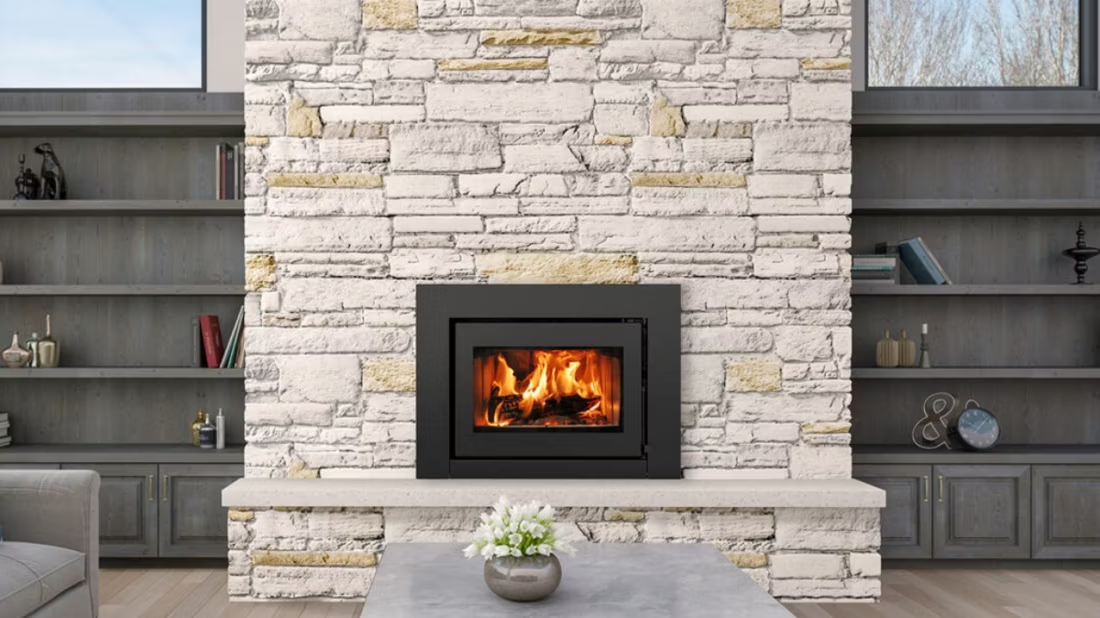
Augusta's older neighborhoods—Summerville, Olde Town, and the historic districts near downtown—are full of homes built with working masonry fireplaces designed for wood long before central air arrived. Converting one of those to a modern wood-burning insert turns an inefficient, drafty opening into a real heat source, using local oak, pine, and hickory that's easy to source from area tree services and firewood dealers even without nearby National Forest land to cut on. For most Augusta homeowners, the appeal isn't primary heat—it's the ambiance of a real fire on the handful of genuinely cold nights each winter, plus the security of heat that keeps working when the grid doesn't.
Three steps. No salesperson until you're ready.
Tell us about your project
Your zip code, your situation, and the fuel you're leaning toward—or let the answers point you to one.
See what's actually available
The brands dealers within 100 miles genuinely carry—real options, never a catalog mirage.
Get your dealer & Project Guide
A trusted local dealer, plus the free Project Guide & Parts List that names every component of the job.
Frequently Asked Questions
How much does it cost to install a wood stove or insert in Augusta?
Because Augusta's climate is mild—average winter lows sit around 35 degrees—most local installs are smaller-scale than what you'd see in colder regions like the Upper Midwest or New England. A freestanding wood stove with new Class A chimney typically runs $3,500 to $7,000 installed, while converting an existing masonry fireplace (common in Summerville and Olde Town homes) to a wood-burning insert with a stainless liner usually costs less, often $2,500 to $5,500, since the chimney structure already exists. Ask any local hearth dealer for a firm quote after an in-home look at your existing chimney or hearth.
Do I need a big wood stove to heat my Augusta home?
No—and oversizing is actually the most common mistake we see in mild-climate markets like Augusta. With such a short, mild winter heating season, most homes only need supplemental heat for a handful of genuinely cold weeks in December and January. A small to mid-size stove rated for roughly 1,000-1,800 square feet is plenty for most Augusta living rooms or dens, and it's easier to keep a small load burning cleanly than to choke down a stove sized for a Minnesota winter. A local dealer can size the unit to your specific room, not just your total square footage.
Is a wood stove worth it in Augusta if winters are mild?
For most Augusta households, the honest case for a wood stove isn't day-to-day heating—Georgia Power and Jefferson Electric Membership Corporation-served homes here run mostly on heat pumps. It's outage insurance. Augusta has been hit by ice storms that knocked out power to tens of thousands of homes for several days at a stretch, and a wood stove is one of the only heat sources that keeps working when the grid doesn't. If that scenario matters to you—or you just want the ambiance of a real fire in a Summerville or Olde Town fireplace on a cold January night—a wood stove or insert makes sense even in a climate this mild.
Where can I get firewood in Augusta?
Unlike mountain or Western markets with National Forest cutting permits, the Augusta area doesn't have large public timberland where homeowners self-cut firewood. Instead, most local wood comes from tree services, land-clearing operations, and dedicated firewood dealers around Richmond and Columbia counties, who season and sell oak, pine, and hickory by the rick or truckload. Oak and hickory are the better choice for heat output and longer burn times; pine is more common for kindling or shoulder-season fires since it burns faster and produces more creosote if it isn't well-seasoned. Expect to pay somewhat less than firewood prices in colder states, since demand is lower and supply stays steady from year-round land-clearing work.
Do I need a permit to install a wood stove in Augusta?
Yes. New wood-burning appliance installations fall under the Augusta-Richmond County consolidated government's building permitting process, which covers both the appliance installation and any chimney or venting work. Most established local hearth dealers pull this permit as part of the install and coordinate the required inspection, so you generally don't have to navigate it yourself. Because Augusta has no air quality non-attainment designation, there are no wood-burning curtailment periods or advisory-day restrictions to plan around like homeowners in some Western cities face.
I have an old fireplace in my Summerville home—insert or new stove?
If your fireplace is original to the home, an insert is almost always the better call. Augusta's historic neighborhoods—Summerville, Olde Town, Harrisburg—are full of masonry fireplaces built decades before central heating, and most of them draw poorly and lose more heat up the flue than they produce. A modern wood insert with a stainless steel liner uses that existing masonry chase and firebox opening, dramatically improves efficiency, and keeps the original mantel and surround intact. A freestanding stove only makes sense if you don't have an existing masonry fireplace, or if you're placing wood heat somewhere new, like a converted garage or workshop.
How often should I get my chimney inspected in Augusta?
Once a year, ideally in late summer or early fall before the handful of cold nights Augusta gets each winter. Since most Augusta wood stoves and inserts see light seasonal use rather than daily all-winter burning, creosote buildup is generally slower here than in a heavy-use climate—but an annual Level 1 inspection is still the standard recommendation from the Chimney Safety Institute of America, and it's especially important for older masonry chimneys in Augusta's historic housing stock, where mortar and flue tile condition can vary a lot depending on when the chimney was last relined.
Does my wood stove need to be EPA certified in Augusta?
Any new wood stove sold and installed in Augusta will be EPA-certified as a matter of course—retailers only carry current EPA 2020 NSPS-compliant models. Georgia doesn't layer on additional state-level emissions restrictions the way Oregon or Washington do, and Richmond County has no air quality non-attainment designation, so there's no local curtailment program to worry about. That said, a certified stove still burns dramatically cleaner and more efficiently than an old pre-EPA unit, using less wood per BTU of heat—worth factoring in even without a regulatory requirement pushing you there.
Wood stove vs. gas fireplace—which makes more sense in Augusta's climate?
Given how mild Augusta winters are, gas fireplaces are often the more convenient everyday choice—instant on, no wood handling, and a clean look that suits a lot of Augusta living rooms. But most gas fireplaces still need electricity to run their blower and ignition, aside from a few battery-backup models, so they don't solve for the ice-storm power outages that hit this region every few years. A wood stove or insert is the one option that keeps producing real heat with zero electricity, which is the main reason Augusta homeowners choose wood over gas even in a climate this mild. Some households end up with both: gas for daily convenience, wood as the backup plan.
Why is my open fireplace making my house colder?
Open fireplaces suck—literally. As the fire burns, it consumes air your furnace already paid to heat and pulls it out through the chimney, so the house is actually colder after the fire goes out than before you lit it. An insert fixes this: it seals the chimney, puts fixed glass across the front, and turns that hole in your house into a real heat source.
What's the difference between an insert and a zero-clearance fireplace?
An insert is a fireplace that slides into a pre-existing wood-burning fireplace—if you don't have one, there's nothing to insert it into. A zero-clearance fireplace is built into a framed wall, which makes it the answer for remodels and new construction. Simple test: existing masonry fireplace means insert; blank or framed wall means zero-clearance.
Can I install a fireplace myself?
If you're putting a fire in your house on purpose, it's best to work with an expert. Unless you're genuinely experienced in framing, gas line, vent pipe, and the national code on clearances to combustibles, have a professional do it—and ideally the same company that sells you the fireplace, so warranty, service, and liability all live under one roof.
What is an in-home preview and do I need one?
It's a visit where a hearth professional measures your space, confirms the model you picked actually works in your home, and walks the specs—framing, gas line, venting, finish work—before anything is ordered. Some details you just can't know until you see the house. Never make a down payment without one; it's the single most-skipped step that burns buyers.
Nearby Dealers
Hearth shops serving Augusta and the surrounding area. Every listing shows whether it is a WhyFire partner, a dealer we have verified as authorized for the brands we recommend, or a local business carrying hearth products. No manufacturer pays for placement. How we verify dealers →
Thompson Gas
Augusta Overhead
Fireside Outdoor Kitchens
Thompson Gas - Waynesboro
Holley Heating & Air
Find your wood fireplace in Augusta.
Tell us about your home and we'll put together a free Project Guide & Parts List—the right stove or insert, the vent kit it needs, and a trusted local Augusta dealer to install it.
Find Your Fireplace →