
Pellet Stoves in Atkinson County: A Niche Fit, Done Right.
With only a short, light heating season and lows around 38°F, Atkinson County rarely needs a pellet stove for primary heat—but for cabins, workshops, and homeowners who want the look, we'll help you find the right unit and a trusted local dealer.
Every Project Starts From One of These Five Situations
Why pellet stoves are the exception, not the rule, in Atkinson County.
Atkinson County sits in Georgia's coastal plain, just north of the Okefenokee Swamp, with a population of roughly 3,659 spread mostly around Pearson and Willacoochee. The climate here is Zone 2A—hot, humid summers and winters so mild the county sees only a short, light heating season, with average winter lows sitting around 38°F. Compare that to a genuinely cold-climate town like Duluth, Minnesota, which faces a long, brutal heating season nearly all year round, and the picture is clear: Atkinson County simply doesn't need sustained space heating the way northern counties do. Oak, pine, and hickory grow throughout the county, and there are no local air quality restrictions on burning—but the demand driver for a wood-pellet appliance, long cold winters, just isn't present here.
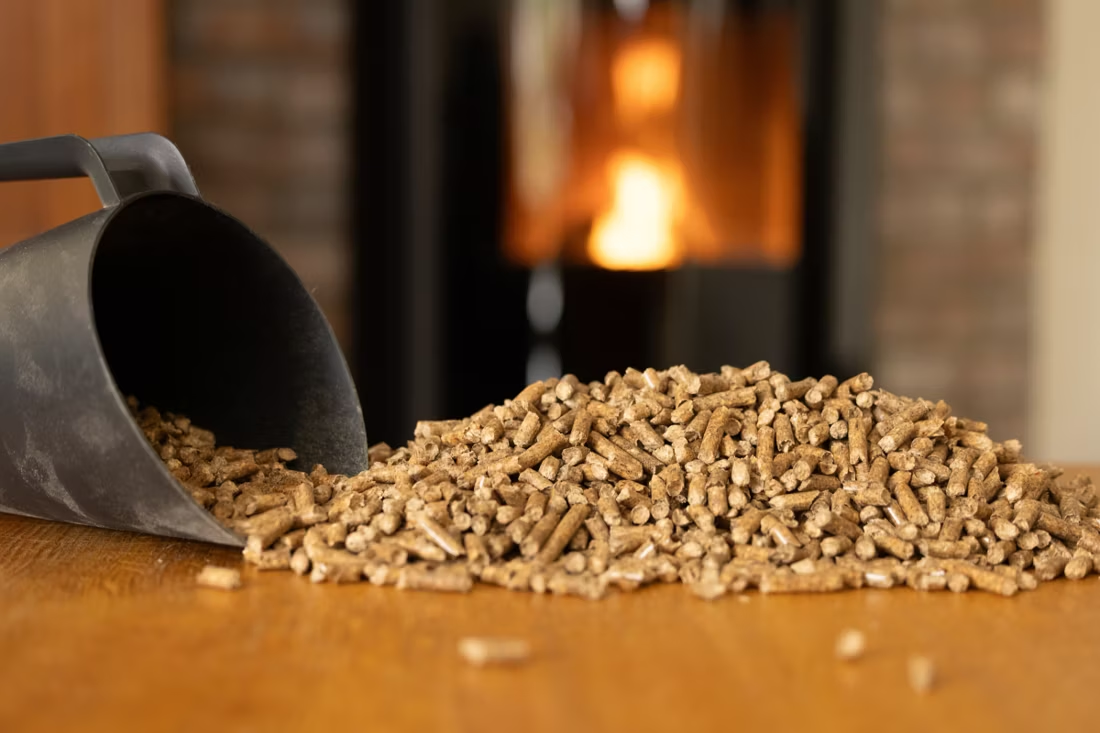
That's why pellet fuel relevance is rated not-applicable for Atkinson County—pellet stoves aren't a mainstream heating choice, and we're not going to pretend otherwise. Where we do still see them: hunting camps and cabins near the swamp that want supplemental heat on the occasional 30-degree night, mobile homes looking for a contained heat source, and a handful of homeowners who like the look and lower ash output of a pellet appliance over open wood burning. If you fall into one of those categories, pellet fuel itself is easy to source—Lignetics, Hamer Pellet Fuel, and Greenway Renewable Energy all distribute pellets throughout the Southeast, so running a pellet stove here isn't a supply problem, it's a demand problem, and that's worth knowing before you spend money on equipment you may only fire up a handful of nights a year. For most Atkinson County homes, propane and electric heat pumps (both standard fuel choices locally) carry the bulk of winter heating, with a pellet stove serving as a supplemental or lifestyle choice rather than a primary system.
Three steps. No salesperson until you're ready.
Tell us about your project
Your zip code, your situation, and the fuel you're leaning toward—or let the answers point you to one.
See what's actually available
The brands dealers within 100 miles genuinely carry—real options, never a catalog mirage.
Get your dealer & Project Guide
A trusted local dealer, plus the free Project Guide & Parts List that names every component of the job.
Frequently Asked Questions
Does a pellet stove make sense in Atkinson County's climate?
For most homes, no—not as a primary heat source. Atkinson County has only a short, light heating season and winter lows around 38°F, which is mild even by Georgia standards. A pellet stove earns its keep in places with long, cold winters—think Bismarck, North Dakota or International Falls, Minnesota—where a hopper full of pellets needs to carry a home through weeks of sub-freezing weather. In Atkinson County, most winters don't produce more than a handful of nights near freezing. Where a pellet stove can still make sense: a hunting cabin near the Okefenokee Swamp, a workshop or detached space you want to heat on demand, or a homeowner who simply prefers the look and lower ash output of a pellet appliance over an open wood fire. Just don't expect the same return on investment you'd see farther north.
What does it cost to install a pellet stove in Atkinson County?
Because pellet stoves are uncommon here, there isn't a well-established local price history the way there is for propane or electric heat. As a general benchmark, pellet stove units typically run $2,000 to $4,000 before installation, with total installed cost—venting, hearth pad, and any electrical work for the auger and blower—often landing in the $4,000 to $7,000 range nationally. Your actual number will depend on the specific model, whether you're venting through an existing chimney or a fresh wall penetration, and whether your home's electrical panel needs any updates. A trusted local dealer can walk your home and give you a firm number, which is exactly what the free Project Guide & Parts List is built to set up.
Can I actually buy pellet fuel locally in Atkinson County?
Yes, even though pellet stoves themselves are rare here, pellet fuel isn't hard to get. Lignetics, Hamer Pellet Fuel, and Greenway Renewable Energy all produce and distribute bagged pellets across the Southeast, and farm and feed supply stores in south Georgia routinely stock pellet bags during the fall and winter months. Given the low local demand, you may need to plan ahead or order a season's worth at once rather than expecting a big-box store to keep pallets on hand year-round.
Will a pellet stove work as backup heat during a hurricane or storm-related power outage?
This is the biggest thing to understand before buying one for storm backup: pellet stoves need electricity to run the auger that feeds pellets into the burn pot and the blower that circulates heat. If Atkinson County loses power during a tropical storm or hurricane—which happens periodically this far south—a standard pellet stove goes dark right along with the rest of the house, unless you pair it with a battery backup or generator. If backup heat during outages is your main goal, a vented propane heater or a wood-burning appliance, which doesn't need electricity to produce heat, is a more dependable choice.
What size pellet stove do I need for an Atkinson County home?
Given how mild the winters run here, most Atkinson County homes that install a pellet stove are looking for supplemental or zone heat rather than whole-house coverage—a small to mid-size unit rated for 1,000 to 1,500 sq ft is usually plenty for a living room, cabin, or workshop. Because true cold-weather demand is rare, oversizing is more of a risk here than undersizing: a stove sized for a northern winter will run at low idle most of the time in south Georgia, which is inefficient and can shorten the life of the auger motor. A local dealer can size the unit to the specific space rather than the square footage of the whole house.
Pellet stove vs. propane heater—which fits Atkinson County better?
For most homes here, propane wins on practicality. Gas fuel relevance is rated standard for Atkinson County, propane suppliers are well established across south Georgia, and a propane heater or fireplace gives instant, thermostat-controlled heat without needing pellets delivered or stored. A pellet stove offers a real flame and a wood-heat aesthetic that propane can't match, plus it burns a renewable fuel—but it also means storing bags of pellets, keeping the hopper fed, and dealing with ash cleanup, all for a heating need that only shows up a few weeks a year. If ambiance and the pellet-fire look matter to you, go pellet. If you just want reliable heat with minimal upkeep, propane is the more common local choice.
Do I need a permit to install a pellet stove in Atkinson County?
Most new hearth appliance installations require a building permit through the county, along with an electrical permit if the auger and blower circuit needs new wiring. Because pellet stoves are installed infrequently here, it's worth confirming directly with Atkinson County's building department before work begins rather than assuming the process mirrors a propane or electric install. A local hearth dealer who has pulled permits in the county before can usually handle this step for you.
What's the difference between a pellet stove and a wood stove, and does it matter here?
A wood stove burns cordwood and needs no electricity to produce heat, while a pellet stove burns compressed wood pellets and relies on an electric auger and blower to operate. In most of the country, wood wins on off-grid reliability and pellet wins on convenience. In Atkinson County, both are rated not-applicable for whole-house heating simply because the mild climate—a short, light heating season, winter lows around 38°F—doesn't create the sustained demand either fuel is built for. Oak, pine, and hickory are abundant locally if you want a wood-burning setup for a cabin or workshop, and pellets are available through regional suppliers if you prefer the pellet stove's convenience and lower ash output.
Pellet vs. electric heat—which is right for my Atkinson County home?
For year-round, whole-house heating, electric wins here—heat pumps are the standard, most efficient choice for Atkinson County's mild Zone 2A climate, handling both heating and cooling with a single system. A pellet stove is really a supplemental or lifestyle option: nice for the visual warmth of a real flame in a den or cabin, but not something built to replace your central system. If you're deciding between the two for your main heat source, an electric heat pump is the practical answer; if you want a secondary heat source with some ambiance for the handful of genuinely cold nights, a pellet stove can fill that role.
How often does a pellet stove need cleaning?
A clean pellet stove is a happy pellet stove. Plan on cleaning the burn pot about once a week when you're burning regularly—ash and clinkers gum up the air holes just like a pellet barbecue. Most pellet stove problems trace back to skipped cleaning that nobody explained up front. Some designs make it easy with a trapdoor burn pot: pull a lever and the gunk drops into the ash pan.
Why is a fireplace insert so efficient?
An insert does two things: it seals the chimney completely, so you stop losing air you already paid to heat, and it radiates warmth into the room through the firebox and glass. Most add a heat-exchange fan that pulls cool room air underneath, wraps it around the hot firebox, and pushes it back out warm. Your home is more efficient before you've even lit the first fire.
Can a fireplace actually lower my heating bill?
Yes—by creating a comfort zone. A furnace heats every square foot of the house just to warm the one room you're in; a gas fireplace on low burns roughly a sixth of the gas a typical furnace does. Set the furnace around 55–60 degrees as a baseline, then heat the rooms your family actually uses. Families who heat this way commonly save $20–$60 a month.
How much should I budget for a fireplace?
For an average home—covering the fireplace, the vent pipe, and basic installation—a budget between $3,900 and $5,500 gives you a lot of options across wood, gas, and pellet. By the time you add finish work, gas line, and electrical, the average complete installation lands between $5,000 and $12,000 all-in. In a remodel or new build, a good rule is to put about 2.5% of the total project cost toward the fireplace.
Pellet Brands Stocked Around Atkinson County
Manufacturers will point you to the nearest stocking dealer.
See if a pellet stove is right for your Atkinson County home.
Tell us about your space and how you plan to use it, and we'll give you an honest read on whether a pellet stove fits—plus a free Project Guide & Parts List with the exact parts and a trusted local dealer if it does.
Find Your Fireplace →