
Keep Your Family Warm and Safe—No Matter What
Winter Haven rarely needs heat at all—but a small number of homeowners still want the look and ritual of a real wood fire. Here's how that actually works, and who can install one right.
Every Project Starts From One of These Five Situations
Central Florida doesn't need wood heat—but some homeowners still want it.
Winter Haven sits at just 139 feet elevation in Polk County's lake district, squarely in climate zone 2A—hot and humid nearly year-round. The average winter low here is 52°F, and the city logs only about 368 heating degree days a year. For comparison, a place like Duluth, Minnesota racks up close to 9,800 HDD annually. Practically no home in Winter Haven needs a wood stove to get through winter, and there are no air quality non-attainment concerns or wintertime inversions here to complicate the picture either way.
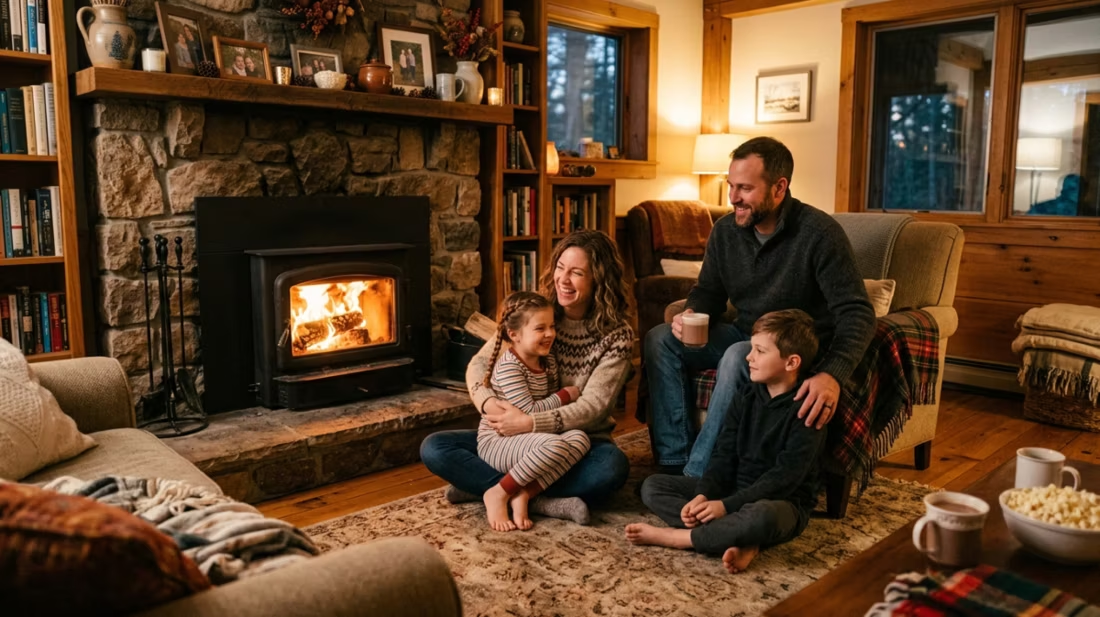
Even so, wood-burning fireplaces show up in a meaningful minority of Winter Haven and Lakeland-area homes—usually as a decorative masonry or factory-built fireplace in a formal living room, an ambiance feature for the handful of nights each January when temps dip into the 30s, or a nod to a homeowner who grew up with wood heat elsewhere. Local hearth dealers around Polk County can still install and service these units properly, sourcing regionally available oak and pine for anyone who wants the real thing rather than a switch-flip flame.
Three steps. No salesperson until you're ready.
Tell us about your project
Your zip code, your situation, and the fuel you're leaning toward—or let the answers point you to one.
See what's actually available
The brands dealers within 100 miles genuinely carry—real options, never a catalog mirage.
Get your dealer & Project Guide
A trusted local dealer, plus the free Project Guide & Parts List that names every component of the job.
Frequently Asked Questions
Does a wood-burning fireplace actually make sense in Winter Haven?
For heating purposes, not really—with only 368 heating degree days a year and an average winter low of 52°F, Winter Haven homes simply don't carry the heating load that makes wood stoves practical the way they are in the upper Midwest or mountain West. That said, wood fireplaces still get installed here for ambiance: a real flame and crackle in a formal living room, a feature for the occasional cold snap, or a fireplace in a lake house meant to feel traditional. If you're chasing supplemental heat and lower utility bills, gas or an electric insert will do more for less. If you want the authentic experience of a wood fire on the rare cold night, it's still a legitimate, if uncommon, choice here.
How much does a wood-burning fireplace installation cost in Winter Haven?
Because wood installs are uncommon locally, pricing tends to be quoted case by case rather than off a standard local price sheet the way gas or electric inserts are. As a general range, a factory-built, zero-clearance wood fireplace with proper Class A chimney and roof penetration typically runs $3,500 to $8,000 installed, depending on the unit and how much new chimney and framing work is required. Retrofitting an existing masonry fireplace with a wood insert usually costs less if the flue is already sound. Expect fewer local dealers to stock wood units on the floor compared to gas—most will special-order based on your home's layout.
What kind of firewood is available around Winter Haven?
Oak—especially live oak, which is abundant across central Florida—is the most common firewood locally, prized for burning long and hot with relatively little resin. Pine is also widely available and easy to source but burns faster and leaves more creosote, so it's better mixed with oak or used for kindling. Mahogany shows up occasionally from tree removal services but is more often kept for woodworking than burned, given its value. Because firewood demand here is driven by occasional use rather than winter heating, expect to buy in smaller quantities—half cords or bundles—rather than the multi-cord deliveries common in colder states.
Do I need a permit to install a wood-burning fireplace in Winter Haven?
Yes—any new wood-burning fireplace, whether factory-built or masonry, requires a building permit through the Polk County Building Division (or the City of Winter Haven's permitting office if you're inside city limits), the same as any structural addition. Inspectors will check clearances to combustibles, hearth extension, and roof penetration details, with extra attention to flashing and wind-uplift resistance given Florida's hurricane exposure. Most established local hearth dealers handle this permitting as part of the installation, which is one good reason to avoid a DIY chimney project here.
Are there wood-burning restrictions or air quality rules in Winter Haven?
No—Polk County has no listed air quality non-attainment issues, winter inversions, or wildfire smoke concerns, which puts Winter Haven in a very different position than wood-heavy markets in the West or Pacific Northwest. There are no seasonal burn curtailment periods here. That said, choosing an EPA-certified stove or fireplace insert is still worth doing for cleaner, more efficient burns and lower creosote buildup, even without a regulatory requirement pushing you toward it.
Why do most Winter Haven homes use gas or electric instead of wood?
Both gas and electric are considered standard fuel choices for Winter Haven fireplaces, while wood is genuinely uncommon given the climate. Electric fireplace inserts are especially popular because Winter Haven's mild winters mean minimal actual heat is needed—residents served by Tampa Electric and Duke Energy Florida pay roughly 14.7 to 16.6 cents per kWh, making a small electric insert cheap to run for the handful of chilly evenings each year. Gas fireplaces (natural gas or propane) appeal to homeowners who want real flame without firewood storage, chimney sweeping, or ash cleanup. Wood remains the choice mainly for people who specifically want the ritual and smell of a real wood fire, cost and convenience aside.
How does Florida's humidity affect firewood storage and a wood-burning fireplace?
Central Florida's humidity is a real factor. Firewood left on the ground or uncovered can mold, rot, or attract termites faster than it would in a drier climate—plan on an elevated, covered rack with good airflow, and season wood under cover for at least six months before burning. Inside the home, chimneys and dampers should be checked for moisture intrusion and insect activity even during the long stretches when the fireplace isn't in use, since a wood fireplace here might sit idle for ten or eleven months a year. A quick pre-season inspection before the one or two months you'll actually use it is a smart habit.
Will my HOA or homeowners insurance restrict a wood-burning fireplace in Winter Haven?
It's worth checking before you commit. A number of Winter Haven's planned communities and lake-front developments have HOA architectural guidelines that limit or prohibit exterior chimneys, and some restrict solid-fuel burning appliances outright in favor of gas or electric. Separately, some homeowners insurance carriers in Florida ask about wood-burning appliances on the application and may require proof of a recent chimney inspection or a certified installation, partly due to hurricane-related wind and water exposure on exterior chimney structures. A local hearth dealer who's done installs in your specific neighborhood can usually tell you quickly whether it's an issue.
Wood vs. gas vs. electric—which fireplace fuel actually fits a Winter Haven home?
Given 368 heating degree days and winter lows that rarely dip below the 40s, none of these fuels are solving a real heating problem here—it comes down to what experience you want. Electric fireplace inserts are the lowest-maintenance option and cost very little to run at Tampa Electric and Duke Energy Florida's rates, making them a popular choice for ambiance without commitment. Gas delivers real flame on demand without firewood, ash, or chimney sweeping. Wood is the choice for homeowners who specifically want a real fire—the smell of oak burning, the sound of it—and are willing to deal with firewood storage in a humid climate and a chimney that may only see use a few weeks a year. All three are installable through local Polk County dealers; which one is right depends entirely on what you're after, not on genuine heating need.
What's the difference between an insert and a zero-clearance fireplace?
An insert is a fireplace that slides into a pre-existing wood-burning fireplace—if you don't have one, there's nothing to insert it into. A zero-clearance fireplace is built into a framed wall, which makes it the answer for remodels and new construction. Simple test: existing masonry fireplace means insert; blank or framed wall means zero-clearance.
Why won't my new wood stove get going like my old one?
New wood stoves are 70%+ efficient, so far less heat goes up the flue—which also means less draft to get a fire established. The rule: build a genuinely hot fire for about 45 minutes before you choke it down. Skip that and you get smoke in the room, creosote in the chimney, and a fire that never takes off. Most performance complaints trace straight back to this.
Does a fireplace add value to my home?
On average, a fireplace adds back to the home about the same amount you spent installing it. Add the monthly savings from heating the rooms you actually use instead of the whole house—often hundreds of dollars a year—and the value case is strong before you even count what a fire does for how your family uses the room.
Can a fireplace actually lower my heating bill?
Yes—by creating a comfort zone. A furnace heats every square foot of the house just to warm the one room you're in; a gas fireplace on low burns roughly a sixth of the gas a typical furnace does. Set the furnace around 55–60 degrees as a baseline, then heat the rooms your family actually uses. Families who heat this way commonly save $20–$60 a month.
Nearby Dealers
Hearth shops serving Winter Haven and the surrounding area.
Find your wood fireplace in Winter Haven.
Tell us about your home and how you plan to use a wood fireplace, and we'll match you with a local Polk County dealer plus a free Project Guide & Parts List—the exact parts, including the vent kit, for your wood project in Winter Haven.
Find Your Fireplace →