
Add real fireplace ambiance to your Westchase home.
You don't need Bozeman winters to want a fireplace. Find the right gas unit for your Westchase living room, and get matched with a local dealer who can actually install it.
Every Project Starts From One of These Five Situations
Warmth on demand, not warmth you need.
Westchase sits in climate zone 2A at just 18 feet of elevation, with an average winter low around 53°F and a winter heating load so light it's a fraction of what a place like Duluth or Fargo racks up in a single month. This isn't a heating market in the traditional sense. It's an ambiance market. A gas fireplace here is about the flip of a switch on a rare 40-degree January night, the glow behind the sofa during a dinner party, and the finished look a builder-grade great room is missing without one.
Westchase was built out as a master-planned community starting in the mid-1990s, and a lot of its great-room and formal-living-room floor plans were designed with a fireplace as a focal point from day one—many with the gas line or log-lighter already roughed in. Because natural gas infrastructure varies block by block in unincorporated Hillsborough County, plenty of homeowners here run their fireplace off a propane tank instead, serviced by a regional propane supplier rather than a gas utility. Either way, the right direct-vent gas insert or fireplace gives you real flame, real heat for that occasional cold snap, and—with the right ignition system—a source of light and warmth if a summer storm knocks out Tampa Electric or Duke Energy service.
Three steps. No salesperson until you're ready.
Tell us about your project
Your zip code, your situation, and the fuel you're leaning toward—or let the answers point you to one.
See what's actually available
The brands dealers within 100 miles genuinely carry—real options, never a catalog mirage.
Get your dealer & Project Guide
A trusted local dealer, plus the free Project Guide & Parts List that names every component of the job.
Frequently Asked Questions
How much does a gas fireplace installation cost in Westchase?
For a Tampa Bay-area home like the ones in Westchase, a direct-vent gas fireplace or insert installation typically runs $3,000 to $7,500, depending on the unit, whether you're retrofitting an existing masonry fireplace or building out a new great-room wall, and whether a propane tank or new gas line needs to be installed. A simple vent-free gas log set into an existing wood-burning fireplace can run as little as $1,500 to $3,000. Given how many Westchase homes have an existing masonry fireplace that's rarely used, a gas log conversion is often the fastest and least expensive route to a working fireplace.
Does wood heat make sense in Westchase, or should I just go gas?
Realistically, wood-burning appliances are a poor fit here. With an average winter low around 53°F and almost no sustained cold, a wood stove or insert in Westchase would sit unused most of the year and would be overkill for the handful of chilly evenings you actually get. Local landscape trees like oak, mahogany, and pine aren't sold as seasoned firewood the way they are in colder markets, and there's no cutting-permit infrastructure because there's no meaningful demand. Gas—or a decorative log set in an existing masonry fireplace—gets you the same visual payoff without the upkeep or the mismatch with the climate.
Do I need natural gas, or should I plan on propane?
It depends on your specific street. Natural gas service isn't uniform across unincorporated Hillsborough County, so some Westchase sections have it and others don't. If your home already has a gas range, tankless water heater, or gas dryer, you likely have a natural gas line you can tap for a fireplace. If not, the more common path in this area is a propane tank—either a small above-ground tank near the house or a buried tank for larger installations—filled by a regional propane company. Most gas fireplace models can be set up for either fuel; your installer sets the orifice and regulator to match whichever line you actually have.
Will my gas fireplace work if a storm knocks out the power?
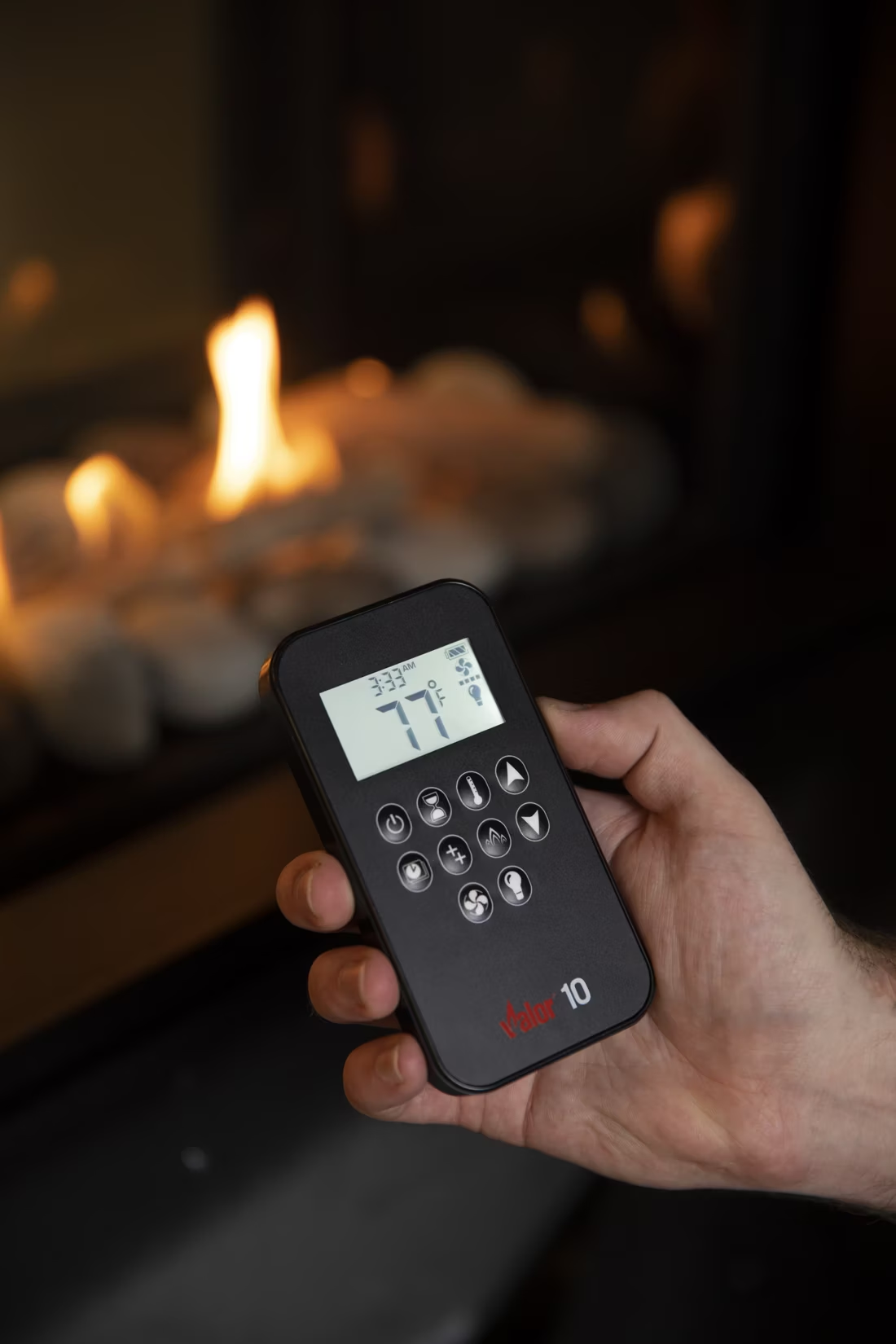
It can, if you choose the right ignition system—and that's worth thinking about in a hurricane-exposed market like Tampa Bay. Units with IPI (intermittent pilot ignition) run on a battery backup that kicks in automatically when Tampa Electric or Duke Energy service drops, so the fireplace still lights on demand. Valor's gas fireplaces go a step further: their pilot assembly generates its own electricity through the thermocouple, so there's no battery to remember to replace. For a Westchase home that's lost power for days after a tropical system, either option beats a standing pilot model with no ignition backup at all. Ask your local dealer about the ignition system on any unit you're considering.
Gas fireplace, gas insert, or gas stove—what's the difference?
A gas fireplace is a fully built-in unit framed into a wall—the standard choice for new construction or a great-room remodel. A gas insert drops into an existing masonry fireplace opening, which describes a lot of Westchase's original builder-grade fireplaces that have sat unused for years. A gas stove is a freestanding cabinet unit, less common in this market but sometimes used in a den or bonus room without an existing chimney. For most Westchase homeowners, the existing masonry opening makes a gas insert or a vented log set the simplest and least invasive upgrade.
Do I need a permit to install a gas fireplace in Westchase?
Yes. Because Westchase is unincorporated, permitting runs through the Hillsborough County Development Services Department rather than a city building office. Both a building permit and a gas permit are typically required for a new gas fireplace or insert, and any propane tank installation is inspected separately. A licensed gas-fitter has to handle the line work regardless of fuel source. Reputable local hearth dealers coordinate all of this as part of the installation, so you're not stuck managing multiple trades and inspections yourself.
Should I get a vented or vent-free gas fireplace?
Vented (direct-vent) units pull combustion air from outside and exhaust it back outside, which keeps combustion byproducts out of your living space entirely. Vent-free units burn directly into the room and are legal in Florida, subject to room-size and ventilation rules, which makes them a workable option for a smaller den or bonus room without existing venting. Given how mild Westchase winters are, some homeowners lean toward a compact vent-free log set purely for the visual—but if you want a unit that also throws real, usable heat on the rare cold snap, a direct-vent fireplace or insert is the more capable choice. A local dealer can walk you through both for your specific room.
How often does a gas fireplace need servicing in a place like Westchase?
Plan on an annual inspection, same as anywhere—but the Gulf Coast's humidity and salt-tinged air can accelerate wear on igniters, valves, and glass seals faster than it would in a drier climate. A certified technician will check the burner, pilot or IPI system, venting, and gas connections, and clean the glass, typically for $150 to $250. Because many Westchase units sit unused for long stretches between the occasional cool evening, an annual check before the winter months is also the best way to catch a stuck valve or dead igniter before you actually want to use it.
Gas fireplace vs. electric fireplace—which makes more sense here?
With winters as mild as Westchase's, this is a genuinely close call. Electric fireplaces need no venting or gas line at all, cost very little to run at Tampa Electric or Duke Energy's residential rates (roughly $0.15 to $0.17 per kWh), and can go almost anywhere, including an interior wall or condo unit. What they can't do is throw real radiant heat or produce an actual flame—it's a realistic LED effect, not combustion. A gas fireplace costs more to install and needs a fuel line, but delivers genuine heat on a cold snap and keeps working with a battery-backup ignition system if a storm takes out the grid. For a primary living space where the fireplace is a focal point, gas usually wins on presence; for a secondary room or rental unit, electric is often the more practical call.
Why is my open fireplace making my house colder?
Open fireplaces suck—literally. As the fire burns, it consumes air your furnace already paid to heat and pulls it out through the chimney, so the house is actually colder after the fire goes out than before you lit it. An insert fixes this: it seals the chimney, puts fixed glass across the front, and turns that hole in your house into a real heat source.
What's the difference between an insert and a zero-clearance fireplace?
An insert is a fireplace that slides into a pre-existing wood-burning fireplace—if you don't have one, there's nothing to insert it into. A zero-clearance fireplace is built into a framed wall, which makes it the answer for remodels and new construction. Simple test: existing masonry fireplace means insert; blank or framed wall means zero-clearance.
Can I install a fireplace myself?
If you're putting a fire in your house on purpose, it's best to work with an expert. Unless you're genuinely experienced in framing, gas line, vent pipe, and the national code on clearances to combustibles, have a professional do it—and ideally the same company that sells you the fireplace, so warranty, service, and liability all live under one roof.
Can a fireplace actually lower my heating bill?
Yes—by creating a comfort zone. A furnace heats every square foot of the house just to warm the one room you're in; a gas fireplace on low burns roughly a sixth of the gas a typical furnace does. Set the furnace around 55–60 degrees as a baseline, then heat the rooms your family actually uses. Families who heat this way commonly save $20–$60 a month.
Nearby Dealers
Hearth shops serving Westchase and the surrounding area.
Find your gas fireplace in Westchase.
Tell us about your home and we'll match you with a trusted local dealer and send over a free Project Guide & Parts List—the right gas fireplace or insert, the vent kit it needs, and who to call to install it.
Find Your Fireplace →