
Keep Your Family Warm and Safe—No Matter What
With winter lows averaging 52°F and only a brief, mild heating season each year, almost no West Melbourne home needs wood heat to survive winter. If you still want the look and feel of a real wood fire, we'll help you find a local dealer who can tell you honestly what's realistic.
Every Project Starts From One of These Five Situations
West Melbourne's climate makes wood heating the exception, not the rule.
West Melbourne sits at 26 feet above sea level on Florida's Space Coast, in climate zone 2A, where the average winter low hovers around 52°F and the whole heating season is just a brief, mild stretch. For comparison, a city like Duluth, Minnesota faces a long, brutal winter with nearly seven months of hard heating demand—Duluth homes need wood heat to survive; West Melbourne homes almost never do. A handful of nights below 40°F each year is about as cold as it gets, and that's not enough demand to justify a chimney, a wood supply, or the upkeep a solid-fuel appliance requires.
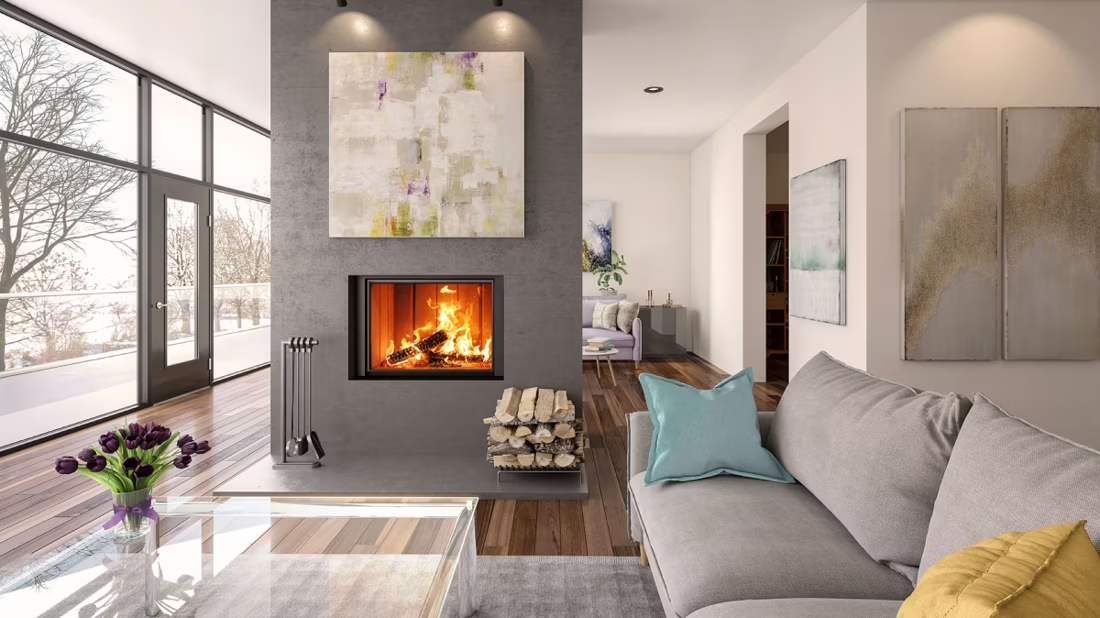
That said, a small number of Brevard County homeowners still install a wood-burning fireplace or stove—usually for the look of a real hearth, for ambiance during the rare cold front, or because they split time between West Melbourne and a colder property up north where wood heat actually matters. Local firewood options exist if you go this route: oak and southern pine are common (often available after storm cleanup following hurricanes), with mahogany occasionally available from ornamental trees. If wood heat isn't the fit, gas and electric fireplaces are far more common here and are worth exploring on their own pages—but if you're set on real wood, we can still match you with a dealer who installs it correctly for this climate.
Three steps. No salesperson until you're ready.
Tell us about your project
Your zip code, your situation, and the fuel you're leaning toward—or let the answers point you to one.
See what's actually available
The brands dealers within 100 miles genuinely carry—real options, never a catalog mirage.
Get your dealer & Project Guide
A trusted local dealer, plus the free Project Guide & Parts List that names every component of the job.
Frequently Asked Questions
Why is wood heat so uncommon in West Melbourne?
The math just doesn't favor it. West Melbourne sees only a brief, mild heating season each year and a winter low average around 52°F—that's a fraction of what a genuinely cold climate sees. Most local homes never run a furnace hard enough to need backup heat, let alone a dedicated wood-burning system. Where wood fireplaces do show up here, it's almost always for aesthetics or occasional ambiance rather than actual heating need, which changes how you should think about sizing, venting, and budget compared to a cold-climate install.
If I still want a wood-burning fireplace, what should I expect to pay?
Because the goal in West Melbourne is usually ambiance rather than serious heat output, installs tend to be simpler than in cold-climate markets—often a smaller masonry or prefabricated wood-burning fireplace with straightforward venting rather than a high-output catalytic stove built for overnight burns. Expect a range roughly in the $3,000-$8,000 territory depending on whether you're adding a chimney to a home that doesn't have one, retrofitting into an existing masonry opening, or going with a factory-built zero-clearance unit. A local dealer can give you a firm number once they've seen your home and your existing chimney situation, if any.
Do I need a permit to install a wood-burning fireplace in West Melbourne?
Yes. Any new solid-fuel appliance—wood stove, wood insert, or wood-burning fireplace—requires a building permit through the City of West Melbourne Building Division, or the Brevard County Building Department if your project falls under county jurisdiction. Inspectors will check clearances, hearth pad dimensions, and venting to make sure the install meets current fire code. Most hearth retailers who handle wood installs in this area will pull the permit and coordinate the inspection as part of the job, since it's not a common enough project for a general contractor to know the details cold.
What firewood is actually available locally if I go this route?
Oak and southern pine are the most common options around Brevard County, and oak in particular often becomes available after storm cleanup, since fallen oak limbs and trees are a routine byproduct of hurricane season. Mahogany shows up occasionally from ornamental trees but isn't a reliable firewood supply. The bigger issue in this climate isn't availability—it's moisture. Florida's humidity means firewood needs longer seasoning time and dry, covered, off-ground storage to avoid mold and pests; wood that looks seasoned up north can still be too wet to burn cleanly here.
Are there any local air quality restrictions on wood burning?
No—West Melbourne has no listed air quality concerns and isn't in a non-attainment area, so there are no local wood-smoke curtailment periods or burn bans tied to winter inversions like you'd see in a mountain valley or high-desert town. That's good news if you do install a wood-burning unit, but it doesn't remove the basic best practice: burn only dry, well-seasoned wood, since Florida's humidity makes green or wet wood more likely to smoke and smolder than to burn cleanly.
What's a more practical alternative to wood heat in West Melbourne?
For the vast majority of homes here, gas and electric fireplaces make more sense than wood. Electric fireplaces in particular are worth a look—they need no venting, no chimney, and no fuel storage, and installation is typically a fraction of the cost of a wood-burning unit. With Florida Power & Light and Duke Energy Florida serving Brevard County at residential rates around 13.7¢-16.6¢ per kWh, an electric unit is cheap to run for occasional ambiance and supplemental warmth on the rare chilly evening. Gas is the other common choice for homeowners who want real flame without the upkeep of wood.
Can a wood-burning fireplace actually help during Florida's cold snaps?
Not meaningfully. Even during the occasional freeze events that hit Central Florida—the kind that make headlines for citrus growers—a wood-burning fireplace is overkill for keeping a West Melbourne home warm. A space heater or the home's existing HVAC system will handle those nights just fine. If you install wood heat here, plan on it being a choice about atmosphere and character rather than a real backup heating strategy, and budget accordingly rather than sizing for BTU output the way you would in a cold climate.
Does having a wood-burning fireplace affect homeowners insurance in a warm climate like this?
It can, and insurers don't necessarily treat it more leniently just because the climate is mild—a solid-fuel appliance is still a fire risk in their eyes. Some carriers will ask about certified installation, request proof of permit and inspection, or adjust premiums slightly regardless of how often you'd realistically use it. Since wood-burning installs are uncommon in Brevard County, it's worth asking your insurer directly before committing, and keeping your permit and inspection paperwork on file in case they ask for it later.
Wood vs. gas vs. electric—which actually makes sense for a West Melbourne home?
For most homeowners here, electric wins on simplicity and cost—no venting, low install cost, and cheap to run occasionally at current FPL and Duke Energy rates. Gas is the step up if you want a more realistic flame with instant on-off convenience and don't mind a modest gas line or propane setup. Wood is the right call only if you specifically want the ritual and authenticity of a real wood fire, are comfortable managing seasoned firewood in a humid climate, and understand you're building this for atmosphere, not for heat. A local dealer can walk you through all three side by side before you commit to a direction.
What's the difference between an insert and a zero-clearance fireplace?
An insert is a fireplace that slides into a pre-existing wood-burning fireplace—if you don't have one, there's nothing to insert it into. A zero-clearance fireplace is built into a framed wall, which makes it the answer for remodels and new construction. Simple test: existing masonry fireplace means insert; blank or framed wall means zero-clearance.
Can a wood stove burn all night?
The right one can. If waking up to a warm house and live coals matters to you, say exactly that when you're shopping—firebox size and burn-rate control determine overnight performance far more than any number on a spec sheet. It's a much more useful question than asking about BTUs.
How much should I budget for a fireplace?
For an average home—covering the fireplace, the vent pipe, and basic installation—a budget between $3,900 and $5,500 gives you a lot of options across wood, gas, and pellet. By the time you add finish work, gas line, and electrical, the average complete installation lands between $5,000 and $12,000 all-in. In a remodel or new build, a good rule is to put about 2.5% of the total project cost toward the fireplace.
Can a fireplace actually lower my heating bill?
Yes—by creating a comfort zone. A furnace heats every square foot of the house just to warm the one room you're in; a gas fireplace on low burns roughly a sixth of the gas a typical furnace does. Set the furnace around 55–60 degrees as a baseline, then heat the rooms your family actually uses. Families who heat this way commonly save $20–$60 a month.
Nearby Dealers
Hearth shops serving West Melbourne and the surrounding area.
Flame Tech Fireplace And Grill
See what's actually possible for a wood fireplace in West Melbourne.
Tell us a bit about your home and your goals—ambiance, a second-home connection up north, or something else—and we'll match you with a trusted local dealer and send over a free Project Guide & Parts List for your project, including the exact parts and vent kit you'd need.
Find Your Fireplace →