
Bring fireside ambiance to Wellington's mild winters.
Wellington doesn't need a furnace, but a well-placed gas fireplace still earns its keep during cool fronts and polo season evenings. Find the right unit and get matched with a trusted local dealer.
Every Project Starts From One of These Five Situations
Warmth for a season, ambiance for the rest of the year.
Wellington sits at 15 feet of elevation in climate zone 2A, with an average winter low of 56°F and only a tiny sliver of a heating season each year—for comparison, a place like Minneapolis has a heating season more than thirty times as long. That means almost no home here is heated primarily by a fireplace. But cold fronts do roll through most winters, occasionally pushing overnight lows into the high 30s and low 40s, and those snaps tend to land right in the middle of the Winter Equestrian Festival season, when Wellington's polo and show-jumping crowd is in residence and entertaining.
Because Wellington's neighborhoods—Palm Beach Point, Grand Prix Village, Saddle Trail Park—are largely low-density and equestrian-zoned, most homes here run on propane rather than municipal natural gas; Florida Power & Light serves the area for electric, but there's no citywide gas utility. A gas fireplace in Wellington is typically a direct-vent or vent-free propane unit, chosen for its architectural presence and instant-on convenience during the handful of weeks a year it actually gets used, and for the storm-season backup heat it provides when hurricanes knock out power.
Three steps. No salesperson until you're ready.
Tell us about your project
Your zip code, your situation, and the fuel you're leaning toward—or let the answers point you to one.
See what's actually available
The brands dealers within 100 miles genuinely carry—real options, never a catalog mirage.
Get your dealer & Project Guide
A trusted local dealer, plus the free Project Guide & Parts List that names every component of the job.
Frequently Asked Questions
How much does a gas fireplace installation cost in Wellington?
Most Wellington installations run $3,500 to $8,000, with the spread driven by whether the home already has a propane tank and line in place. A vent-free or direct-vent unit added to an existing propane system—common in the equestrian estate communities—lands on the lower end. New construction or a remodel that requires a fresh propane tank, buried line run, and venting through a stucco or tile exterior wall pushes toward the higher end. A local propane-certified installer will give you a firm number after walking the site.
Do I need natural gas, or does everyone here run on propane?
Propane. Wellington doesn't have a citywide natural gas utility—Florida Power & Light serves electric only—so nearly every gas fireplace, range, and pool heater in the village runs on propane, either from a buried residential tank or, in some newer developments, a small community distribution system. Your installer will size the appliance's orifice and regulator for propane, and if you don't already have a tank, they'll coordinate with a local propane supplier as part of the install.
Will my gas fireplace still work if the power goes out during a storm?
For most units, yes, and that's a real selling point in a hurricane-exposed area like Palm Beach County. Fireplaces with IPI (intermittent pilot ignition) run their ignition off small onboard batteries, so they'll still light on demand when FPL power drops. Valor's gas fireplaces go a step further—the pilot's thermocouple generates its own electricity, so there's no battery to remember or replace. If backup heat and light during storm season matters to you, ask your installer specifically about the ignition system on the models you're considering.
Vented vs. vent-free gas fireplace—which makes sense in Wellington?
Vented (direct-vent) units draw combustion air from outside and exhaust it back outside, which makes them the safer, more universally code-friendly choice, especially in a well-sealed, air-conditioned Florida home where you don't want extra humidity or combustion byproducts trapped indoors. Vent-free propane units are legal in Florida and popular here because they don't require exterior venting through stucco or tile roofs, but they do require correct room-sizing and an oxygen depletion sensor, and they add moisture to the room—a real consideration in a humid climate. Given how few days a year the fireplace actually runs, most Wellington homeowners lean toward vent-free for the simpler install, but a direct-vent unit is worth the extra step if you want daily-use performance.
Do I need a permit to install a gas fireplace in Wellington?
Yes. New gas fireplace installations go through the Village of Wellington Building Department (or Palm Beach County's Building Division for unincorporated pockets near the 33470 zip), and because propane line work is involved, it requires a licensed gas contractor in addition to the building permit. A certified hearth dealer will typically pull both permits and schedule inspections as part of the install, which is one of the main reasons to avoid a handyman-style DIY job on the gas line itself.
What's the best gas fireplace for a Wellington estate home?
For the larger, open great rooms common in Wellington's equestrian estates, a linear direct-vent gas fireplace gives a wide, modern flame presentation that reads well in a big room without overheating it—heat output is rarely the priority here, appearance is. For a more traditional look in a den or study, a smaller direct-vent or vent-free insert with a realistic log set does the job. Because these units run only a handful of weeks a year, homeowners here often prioritize glass clarity, remote/smart controls, and flame realism over BTU output—worth flagging to your dealer up front.
How often should a gas fireplace be serviced in a climate like Wellington's?
An annual check before the cool season (roughly October or November) is the standard recommendation, even though usage here is light. A technician will inspect the burner, pilot assembly, propane connections, and glass seals, and check for humidity-related corrosion, which is a bigger concern in South Florida than in drier climates—even fireplaces that see little use can develop pilot or igniter issues from sitting idle in a humid house most of the year. Expect to pay $150–$250 for a standard annual inspection from a local propane appliance technician.
Can I convert an existing wood-burning fireplace to gas?
If your Wellington home has an existing masonry wood-burning fireplace—less common here than in colder markets, but present in some of the older CBS-construction homes near town center—yes, a gas insert can usually be fitted into that opening, using a stainless liner run up the existing chimney or, more often in South Florida, a direct-vent conversion through the rear or side wall. Since propane rather than natural gas will be the fuel source, your installer will also need to route a new line to a tank if one isn't already on the property.
Gas vs. wood—does wood heat make sense in Wellington at all?
Not really, and it's worth saying plainly: with only a tiny sliver of a heating season each year and winter lows averaging 56°F, wood-burning fireplaces are uncommon in Wellington. A small number of estate homes install a wood-burning unit purely for architectural character or occasional ambiance during a cold snap, and local species like oak and pine are available through regional suppliers if someone wants that. But for anyone actually weighing the two, gas is the practical choice here—instant on, no ash or storage, and it matches how infrequently a fireplace actually gets used in this climate.
Is my gas fireplace wasting gas?
If it was installed more than 15 years ago, probably. Older gas fireplaces keep a standing pilot light burning all the time, and that little flame can cost a couple hundred dollars a year. Newer models use pilot-on-demand ignition—the pilot lights only when you use the fireplace and goes out when you turn it off.
Can I put a TV above my fireplace?
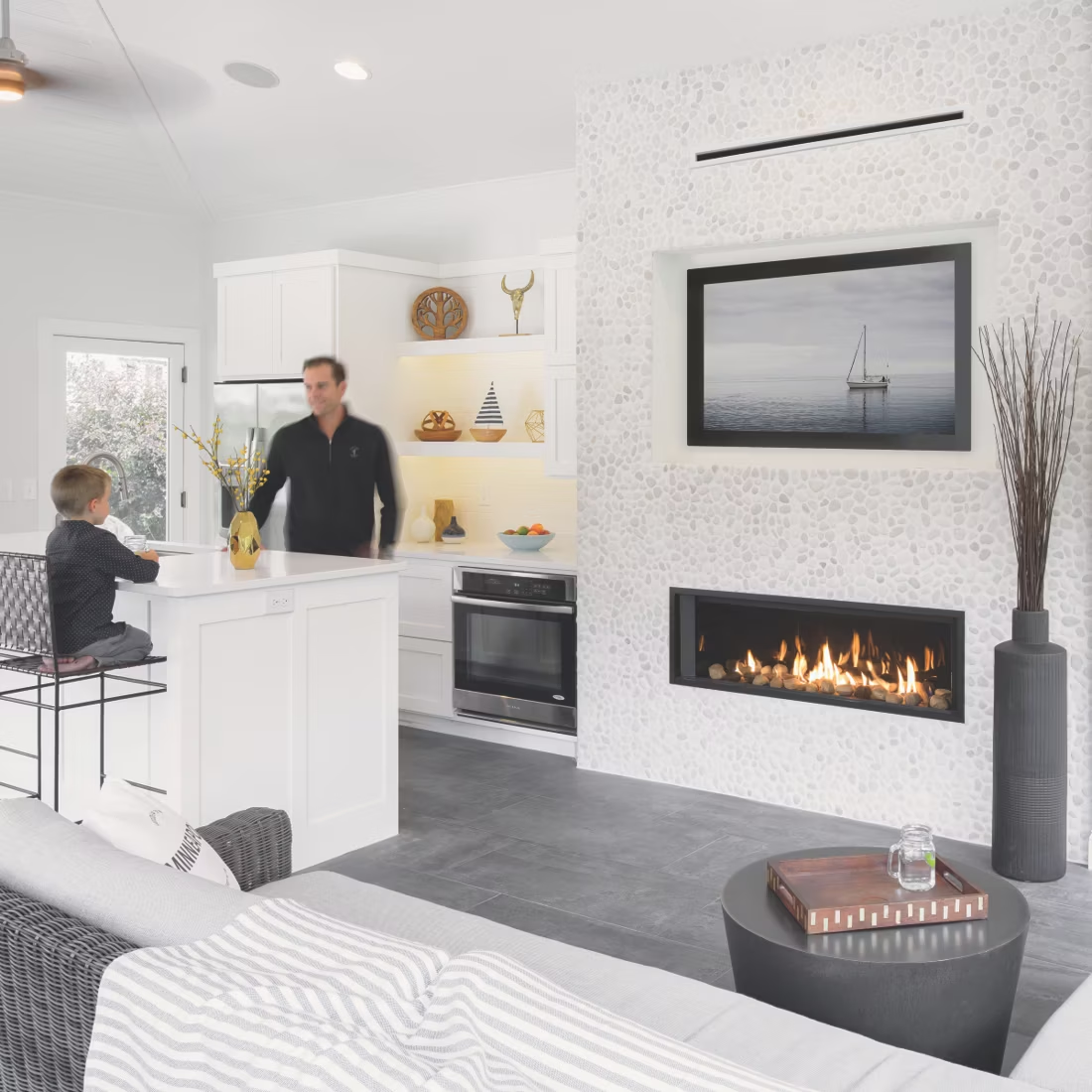
Yes—with an asterisk. Fireplaces are hot and TVs don't like heat. Either put a mantel between them to deflect rising warmth, or choose a fireplace with heat-management technology that creates a cool zone on the wall above—the wall stays around 125 degrees, barely warm, while the room still gets full heat. If you like clean lines and don't want a mantel, heat management is the answer.
Can a fireplace actually lower my heating bill?
Yes—by creating a comfort zone. A furnace heats every square foot of the house just to warm the one room you're in; a gas fireplace on low burns roughly a sixth of the gas a typical furnace does. Set the furnace around 55–60 degrees as a baseline, then heat the rooms your family actually uses. Families who heat this way commonly save $20–$60 a month.
Does a fireplace add value to my home?
On average, a fireplace adds back to the home about the same amount you spent installing it. Add the monthly savings from heating the rooms you actually use instead of the whole house—often hundreds of dollars a year—and the value case is strong before you even count what a fire does for how your family uses the room.
Nearby Dealers
Hearth shops serving Wellington and the surrounding area.
Gas Fire Distributors
Gas Utility Service
Find your gas fireplace in Wellington.
Tell us a bit about your home and we'll put together a free Project Guide & Parts List—the right gas fireplace or insert, the propane and venting parts you'll need, and a trusted local dealer in Wellington to install it.
Find Your Fireplace →