
Pellet heat is rare here—here's when it still makes sense.
Washington Park sees only a brief, mild heating season each year, so a pellet stove isn't a heating necessity. For the homeowners who still want one—ambiance, a cool front, or a second property up north—we'll connect you with a dealer who actually stocks them.
Every Project Starts From One of These Five Situations
Washington Park rarely gets cold enough to need one.
Washington Park sits at 6 feet of elevation in Broward County, inside climate zone 1A, where the average winter low is 58°F and the entire heating season is just a brief, mild stretch—a fraction of what a city like Duluth, MN or Burlington, VT racks up in a single January. In that kind of climate, a pellet stove isn't functioning as a furnace backup; at most it's covering the handful of nights a winter cold front pushes lows into the 40s.
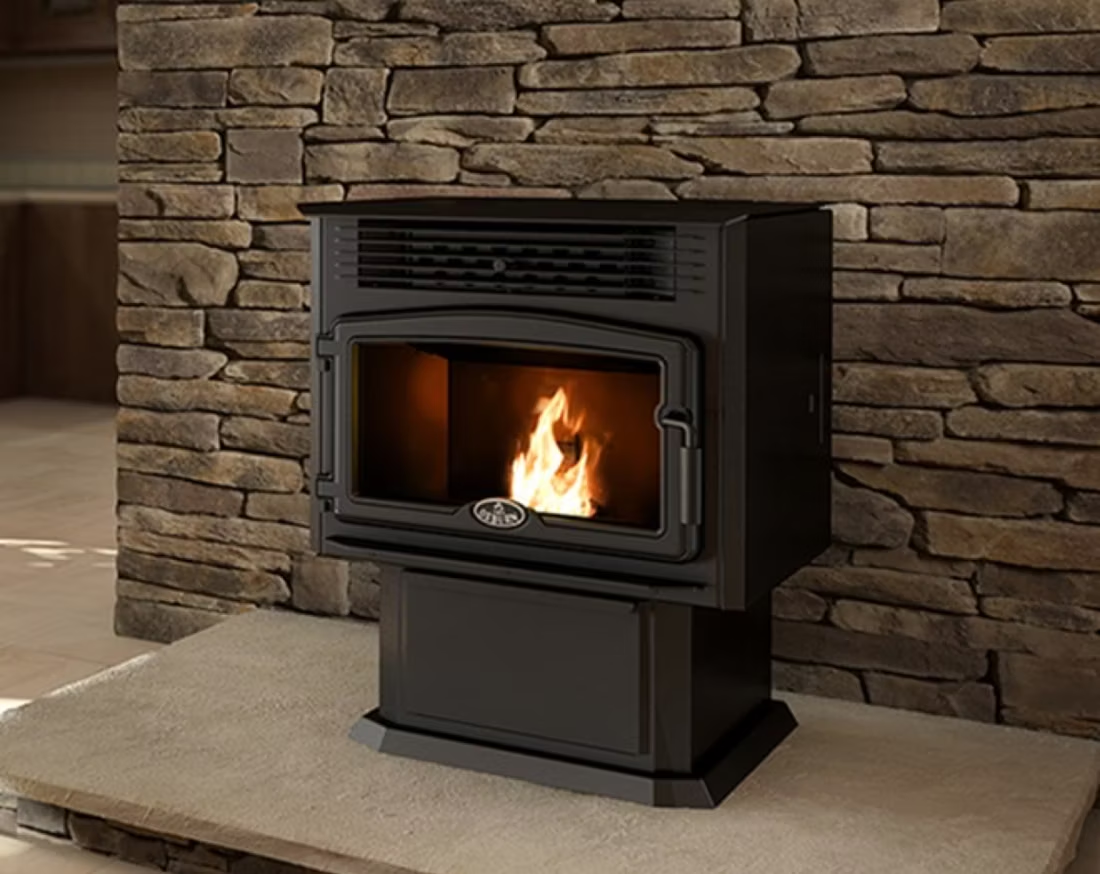
That's why most Washington Park households looking for supplemental warmth lean on electric options instead—Florida Power & Light serves the area at a residential rate around 13.7 cents per kWh, and an electric fireplace or heater insert requires no fuel storage, no venting, and no combustion permit. Pellet stoves still show up occasionally here, usually for ambiance, for a vacation or rental cabin the owner keeps up north, or simply because someone likes the look of a real flame. Regional pellet brands like Lignetics, Hamer Pellet Fuel, and Greenway Renewable Energy are distributed through the Southeast, but South Florida dealer stock is thin, so sourcing fuel locally takes more legwork than it would in a heating-dependent market.
Three steps. No salesperson until you're ready.
Tell us about your project
Your zip code, your situation, and the fuel you're leaning toward—or let the answers point you to one.
See what's actually available
The brands dealers within 100 miles genuinely carry—real options, never a catalog mirage.
Get your dealer & Project Guide
A trusted local dealer, plus the free Project Guide & Parts List that names every component of the job.
Frequently Asked Questions
Does a pellet stove actually make sense for heating a home in Washington Park?
Not as a primary heat source. With only a brief, mild heating season and an average winter low of 58°F, Washington Park homes don't carry the kind of sustained cold load that pellet stoves are designed to offset. Most owners who install one here are after the visual of a real flame, a backup for the rare 40-degree night, or a unit for a second property in a colder state. If your goal is simply taking the edge off an occasional cool evening, an electric fireplace insert is usually the more practical and far cheaper option.
What does a pellet stove or insert cost to install if I still want one?
Nationally, a pellet stove or insert installation typically runs $3,500 to $7,500 depending on the unit, venting, and any hearth work required—but because so few Broward County installers stock pellet appliances regularly, pricing here is quoted case by case rather than off a standard rate sheet. Expect a longer lead time for parts and venting components than you'd see in a market where pellet heat is common, and confirm with any dealer that they actually carry pellet units before assuming it's a routine job.
Are pellet stoves even sold in the Broward County area?
They exist, but they're a niche product locally. Most South Florida hearth retailers stock gas and electric fireplaces almost exclusively, since that's what the climate and buyer demand support. If you want a pellet stove or insert in Washington Park, plan on working with a dealer who special-orders the unit and venting kit rather than pulling one off a showroom floor—it's doable, just not a same-week purchase.
What's a better alternative to a pellet stove for occasional chilly nights?
For most Washington Park homes, an electric fireplace or electric insert is the better fit. Florida Power & Light serves the area at roughly 13.7 cents per kWh, there's no fuel to store, no venting to install, and no combustion appliance permit to pull. Installation costs are also far lower than a pellet stove—often a few hundred dollars for a plug-in insert versus thousands for a vented pellet appliance you'll rarely fire up.
Do I need a permit to install a pellet stove in Washington Park?
Yes—any vented, fuel-burning appliance, pellet stoves included, requires a building permit through Broward County's permitting process (Washington Park is unincorporated and falls under county jurisdiction). Because installers here handle so few pellet projects, it's worth confirming upfront that whoever you hire is familiar with the county's inspection process for combustion appliances rather than just gas or electric units, which they'll have pulled permits for far more often.
Are there special venting concerns for a pellet stove in a humid coastal climate?
Yes. South Florida's humidity and salt air accelerate corrosion on vent pipe and stove components faster than they would in a drier, colder market. Any installer working on a pellet unit here should be using stainless steel venting components rated for coastal exposure, and pellets themselves need to be stored in a sealed, climate-controlled space—Broward County humidity will turn exposed pellets to mush and clog the auger faster than in a dry climate like the interior West.
Can I still buy pellet fuel locally, or do I need to bring it in from elsewhere?
Regional brands like Lignetics, Hamer Pellet Fuel, and Greenway Renewable Energy do distribute into the Southeast, so pellets aren't impossible to find, but South Florida stocking is thin compared to a heating market. Most owners either order by the pallet through a farm-supply or hearth retailer that special-orders it, or stock up when they're near a supplier during a trip. If you're maintaining a pellet stove for a vacation cabin up north as well, it's often easier to buy fuel there and keep the Washington Park unit's usage light.
Are there air quality restrictions on burning a pellet stove in Washington Park?
No—Broward County has no listed air quality non-attainment concerns or burn restrictions tied to residential wood or pellet appliances, unlike wildfire-prone or inversion-prone regions out West. That said, given how little the climate calls for supplemental heat, most of the smoke and ash management concerns that shape burning rules elsewhere simply don't come up much here.
Pellet stove vs. electric fireplace—which is right for my Washington Park home?
For nearly all Washington Park homes, electric wins on cost, simplicity, and fit for the climate—no venting, no fuel storage, no humidity-related maintenance, and a lower install cost through Florida Power & Light's grid. A pellet stove makes sense in a narrower set of cases: you specifically want the look and feel of a real flame, you're outfitting a property you also use somewhere colder, or you already have pellets and a hopper system you like from another home. If ambiance and a real fire matter more to you than efficiency, a pellet unit can still be sourced and installed here—just expect more lead time and a smaller pool of dealers than you'd find for electric.
Why is a fireplace insert so efficient?
An insert does two things: it seals the chimney completely, so you stop losing air you already paid to heat, and it radiates warmth into the room through the firebox and glass. Most add a heat-exchange fan that pulls cool room air underneath, wraps it around the hot firebox, and pushes it back out warm. Your home is more efficient before you've even lit the first fire.
What's the difference between an insert and a zero-clearance fireplace?
An insert is a fireplace that slides into a pre-existing wood-burning fireplace—if you don't have one, there's nothing to insert it into. A zero-clearance fireplace is built into a framed wall, which makes it the answer for remodels and new construction. Simple test: existing masonry fireplace means insert; blank or framed wall means zero-clearance.
Does a fireplace add value to my home?
On average, a fireplace adds back to the home about the same amount you spent installing it. Add the monthly savings from heating the rooms you actually use instead of the whole house—often hundreds of dollars a year—and the value case is strong before you even count what a fire does for how your family uses the room.
Can a fireplace actually lower my heating bill?
Yes—by creating a comfort zone. A furnace heats every square foot of the house just to warm the one room you're in; a gas fireplace on low burns roughly a sixth of the gas a typical furnace does. Set the furnace around 55–60 degrees as a baseline, then heat the rooms your family actually uses. Families who heat this way commonly save $20–$60 a month.
Nearby Dealers
Hearth shops serving Washington Park and the surrounding area. Every listing shows whether it is a WhyFire partner, a dealer we have verified as authorized for the brands we recommend, or a local business carrying hearth products. No manufacturer pays for placement. How we verify dealers →
The Kitchenworks
Brandel Masonry
Lifestyle Barn LLC
A&S Reclaimed Wood
Atlantic Purchasing
Outdoor Kitchen & Grill
Impel America Appliance
Pellet Brands Stocked Around Washington Park
Manufacturers will point you to the nearest stocking dealer.
Find your pellet option in Washington Park.
Given how mild Washington Park winters run, we'll also point you toward electric alternatives worth comparing. Tell us about your home and we'll match you with a trusted local dealer and send a free Project Guide & Parts List—the exact components, venting, and recommended installer for your project.
Find Your Fireplace →