
Keep Your Family Warm and Safe—No Matter What
With average winter lows around 39°F and just 1,638 heating degree days, Washington County doesn't need wood heat to survive January the way Duluth or Fargo does. But between real cold snaps, abundant local oak and pine, and the hurricane season outages that hit this stretch of the Panhandle hard, a wood stove earns its place here. Find the right one and connect with a trusted local dealer.
Every Project Starts From One of These Five Situations
A short heating season, but real reasons to burn.
Washington County sits in Florida's hot-humid Climate Zone 2A, and with only 1,638 heating degree days a year, it's a fraction of the cold-climate demand you'd see in a place like Burlington, VT or Bismarck, ND. Winters here are short, and the county seat of Chipley—along with Vernon and Wausau—sees its coldest nights average around 39°F rather than the sustained sub-zero stretches that make wood heat a necessity further north. That said, the pine flatwoods and hardwood bottomlands along Econfina Creek and the Choctawhatchee River still deliver plenty of oak and pine for anyone who wants a real fire, and cold fronts do occasionally push overnight temperatures into the 20s.
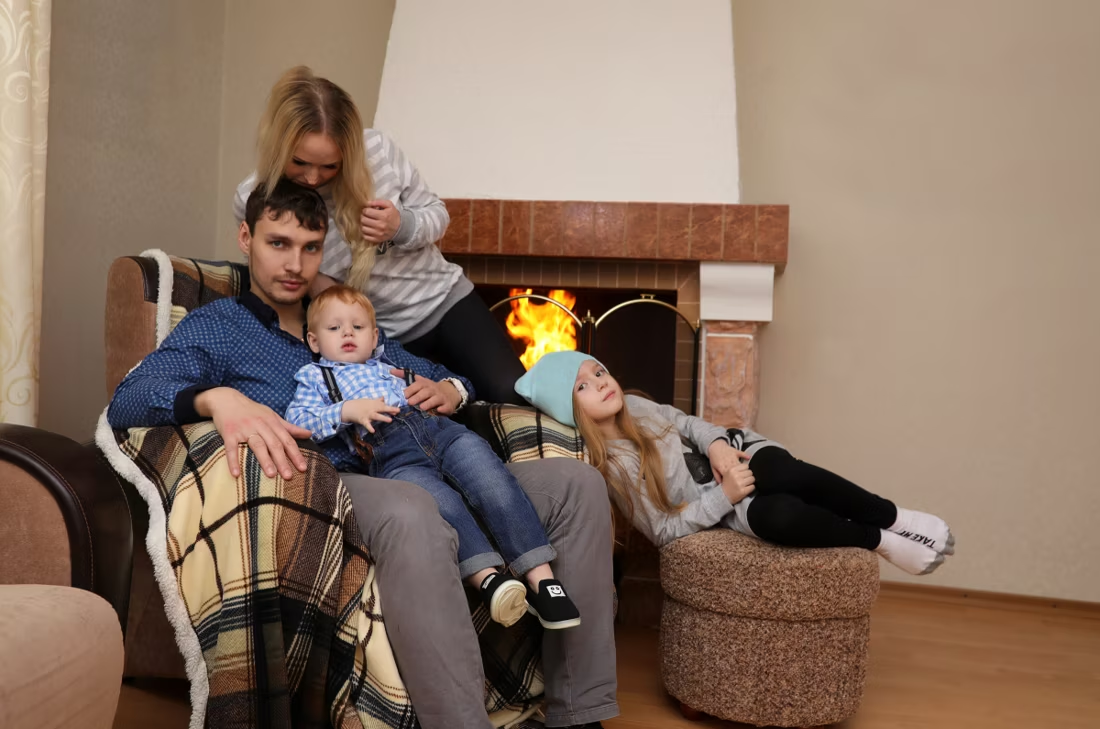
The bigger driver for wood heat in Washington County isn't the thermostat—it's resilience. This part of the Panhandle sits squarely in hurricane territory, and storms like Hurricane Michael left rural Washington County homes without grid power for days at a time. A wood stove or fireplace insert doesn't care whether the lines are down; it burns whether Duke Energy is running or not, and it can double as a way to boil water or take the chill off a house in the days after a storm. With no winter air quality advisories or wood-smoke curtailment periods to worry about here, unlike the inversion-prone valleys out West, burning wood in Washington County is mostly a matter of choice rather than restriction—chosen for ambiance, backup heat, and a little independence from the grid.
Three steps. No salesperson until you're ready.
Tell us about your project
Your zip code, your situation, and the fuel you're leaning toward—or let the answers point you to one.
See what's actually available
The brands dealers within 100 miles genuinely carry—real options, never a catalog mirage.
Get your dealer & Project Guide
A trusted local dealer, plus the free Project Guide & Parts List that names every component of the job.
Frequently Asked Questions
How much does a wood stove installation cost in Washington County?
A typical wood stove or insert installation in Washington County runs roughly $3,500 to $7,500, depending on the unit, whether you're venting through an existing masonry chimney or running new Class A pipe, and whether a hearth pad upgrade is needed for clearance compliance. Because Washington County is rural and sparsely populated, some installers are based out of Panama City or Dothan, Alabama, so it's worth asking whether a travel charge applies to installs around Chipley, Vernon, or Wausau. Homes without an existing chimney—common in newer single-story construction here—tend to land toward the higher end once full venting is factored in.
What size wood stove do I need for my home?
With only 1,638 heating degree days a year, most Washington County homes don't need a stove sized to carry the whole house through winter the way a home in Helena, MT would. A small to mid-size stove (rated for 1,000–1,500 sq ft) is usually plenty for supplemental heat in a den or main living area, and it'll comfortably outrun the county's mild cold fronts. The exception is anyone planning for extended hurricane-season outages who wants the stove to genuinely heat multiple rooms—in that case, sizing up slightly and choosing a model with a cooktop surface makes sense. A local dealer can size your space correctly during an in-home visit rather than guessing off square footage alone.
Where can I find certified wood stove installers near me?
Look for NFI (National Fireplace Institute) or CSIA (Chimney Safety Institute of America) certification—these credentials confirm proper training in wood-burning clearances and venting, which matters more than brand loyalty. Because Washington County's population is small and spread across Chipley, Vernon, and Wausau, some of the certified installers who service the area are based in nearby Panama City or just across the Alabama line in Dothan. Confirm certification and ask about travel fees before booking, and avoid handyman-style installs—improper clearance around wood-framed walls is the leading cause of house fires tied to wood stoves.
What's the difference between a wood stove and a wood insert?
A wood stove is a freestanding unit on its own hearth pad, vented through a chimney, and can go almost anywhere with the right clearances. A wood insert slides into an existing masonry fireplace opening and uses that chimney as its vent, turning a decorative fireplace into a real heat source. Many older farmhouses around Washington County were built with open masonry fireplaces meant more for ambiance than heat—for those homes, an insert is usually the better upgrade since it uses the chimney you've already got and adds real efficiency. Newer homes without an existing fireplace are better candidates for a freestanding stove.
Do I need a permit to install a wood stove in Washington County?
Yes—new wood stove and insert installations require a building permit through the Washington County Building Department, and the unit itself needs to meet current EPA emissions standards. Most local installers handle the permitting paperwork as part of the job. Unlike wildfire-prone Western counties or valleys with winter inversion problems, Washington County has no air quality non-attainment issues or wood-smoke curtailment periods, so there's no seasonal burn-ban schedule to track once the stove is installed and permitted.
What's the best wood stove for Washington County's climate?
Because winter lows here average around 39°F rather than the sub-zero nights that push people toward 20-hour catalytic burn times, most Washington County homes do fine with a mid-size non-catalytic stove from a brand like Drolet or Vermont Castings—easier to load for occasional use rather than round-the-clock burning. If backup heat during hurricane-season outages is a priority, ask a local dealer about models with a flat cooktop surface, which lets you heat water or warm food on the stove itself when the power's out. Oak and pine, both common locally, burn well in either style of stove.
How often should my chimney be inspected and cleaned?
The CSIA recommends an annual inspection for any wood-burning appliance, and that holds in Washington County even with a shorter burn season. The county's humid subtropical climate (Zone 2A) means masonry chimneys retain moisture longer between uses, which can accelerate mortar deterioration and creosote buildup even in a stove that only sees occasional winter use. Plan on a sweep and inspection each fall before the first cold front comes through, and have any chimney that sat unused over a hot, humid summer checked before lighting it again.
Where can I get firewood in Washington County?
Oak and pine are both abundant locally, and given the county's timber heritage, plenty of rural homeowners around Chipley, Vernon, and Wausau either cut their own from their own land or buy from neighbors by the truckload rather than a formal dealer network. If you're buying, expect $150 to $250 per cord for oak, less for pine. One local wrinkle worth knowing: Washington County's humidity slows down seasoning time significantly compared to drier climates, so wood cut in spring may not be dry enough (under 20% moisture) to burn cleanly until the following winter—plan ahead rather than cutting and burning the same season.
Wood stove vs. pellet stove—which is right for me?
Wood stoves burn cordwood, work without electricity, and pair naturally with the oak and pine already growing on a lot of Washington County properties—which matters a great deal here given how often hurricane season knocks out power for days. Pellet stoves, using brands like Lignetics or Hamer Pellet Fuel that are available regionally, are more convenient day-to-day and burn cleaner, but they depend on an electric auger and blower to run, so they go dark exactly when a storm-related outage makes heat most useful. For most homes in this county, that tradeoff tips the decision toward wood for anyone thinking about resilience, and toward pellet for anyone who mainly wants easy ambiance on reliable grid power.
Why is my open fireplace making my house colder?
Open fireplaces suck—literally. As the fire burns, it consumes air your furnace already paid to heat and pulls it out through the chimney, so the house is actually colder after the fire goes out than before you lit it. An insert fixes this: it seals the chimney, puts fixed glass across the front, and turns that hole in your house into a real heat source.
Can a wood stove burn all night?
The right one can. If waking up to a warm house and live coals matters to you, say exactly that when you're shopping—firebox size and burn-rate control determine overnight performance far more than any number on a spec sheet. It's a much more useful question than asking about BTUs.
Does a fireplace add value to my home?
On average, a fireplace adds back to the home about the same amount you spent installing it. Add the monthly savings from heating the rooms you actually use instead of the whole house—often hundreds of dollars a year—and the value case is strong before you even count what a fire does for how your family uses the room.
Can I install a fireplace myself?
If you're putting a fire in your house on purpose, it's best to work with an expert. Unless you're genuinely experienced in framing, gas line, vent pipe, and the national code on clearances to combustibles, have a professional do it—and ideally the same company that sells you the fireplace, so warranty, service, and liability all live under one roof.
Find your wood stove in Washington County, Florida.
Tell us a bit about your home and we'll match you with a trusted local dealer and send over your free Project Guide & Parts List—a plan for your wood stove project in Washington County with the exact parts, including the vent kit, and a dealer who can actually install it.
Find Your Fireplace →