
Keep Your Family Warm and Safe—No Matter What
With winter lows averaging 50°F and only a short, mild heating season, Valrico homes don't need wood heat to get through winter. For homeowners who still want the real thing, we'll connect you with a local dealer who'll tell you straight whether it's a good fit.
Every Project Starts From One of These Five Situations
Valrico's climate doesn't call for a wood stove—but that doesn't stop plenty of homeowners from wanting one.
Valrico sits in climate zone 2A, just east of Tampa, where the average winter low hovers around 50°F and the county has a very short, mild heating season—a fraction of what a place like Duluth, MN or Burlington, VT sees in a single hard month. Central air-source heat pumps handle the handful of chilly nights just fine, and Hillsborough County has no wildfire-smoke or wood-smoke air quality restrictions to worry about, because almost nobody in the area is burning wood as a primary heat source.
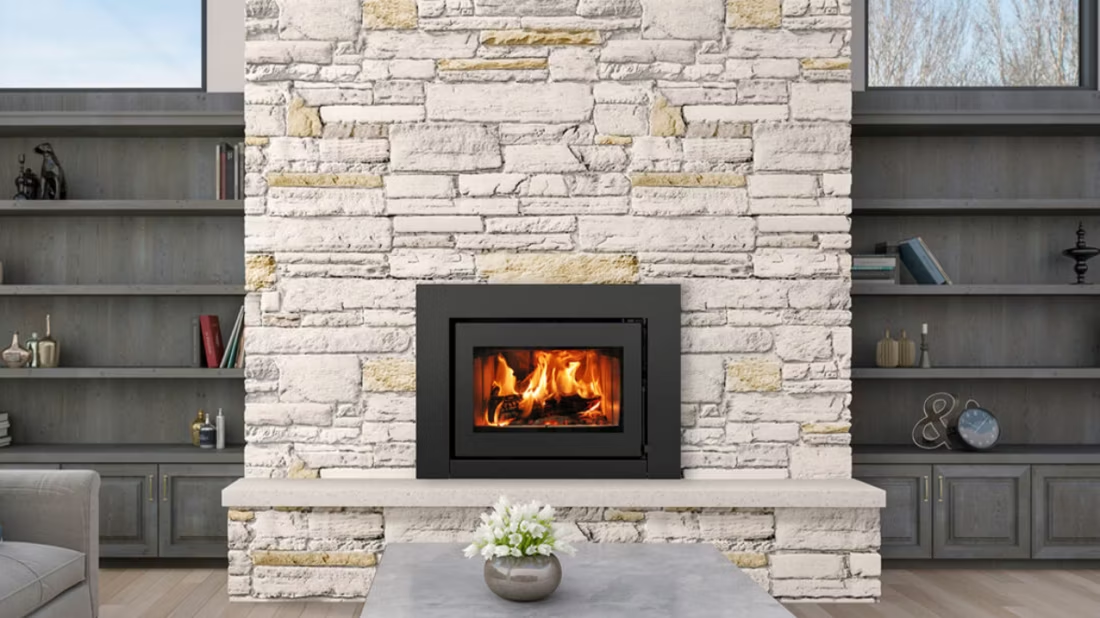
That said, wood-burning fireplaces still show up in Valrico—usually as a design centerpiece in a new custom build, a masonry fireplace someone wants to actually use during a January cold snap, or a nod to a fireplace tradition from somewhere colder. Local firewood tends to be oak, pine, or the occasional mahogany from a tree-removal job rather than anything harvested off public land—Hillsborough County isn't national forest country, so there's no cutting-permit system here the way there is out West. If you're set on wood, a local hearth dealer can tell you honestly whether your home, budget, and use case make sense for it, or whether a gas or electric option would serve you better.
Three steps. No salesperson until you're ready.
Tell us about your project
Your zip code, your situation, and the fuel you're leaning toward—or let the answers point you to one.
See what's actually available
The brands dealers within 100 miles genuinely carry—real options, never a catalog mirage.
Get your dealer & Project Guide
A trusted local dealer, plus the free Project Guide & Parts List that names every component of the job.
Frequently Asked Questions
How much does it cost to install a wood-burning fireplace in Valrico?
Because wood-burning installs are uncommon in this part of Florida, pricing tends to run on the higher end of the national range—expect somewhere in the neighborhood of $4,000 to $9,000 for a factory-built zero-clearance wood fireplace with proper Class A chimney venting through the roof, more if you're building a true masonry fireplace and chimney from scratch. Fewer local installers specialize in wood-burning work than in gas or electric, so it's worth getting quotes from two or three hearth dealers rather than assuming the first bid is representative.
Does a wood-burning fireplace actually make sense in Valrico's climate?
For most homes, no—not as a heat source. With an average winter low around 50°F and a heating season that's short and mild, a wood stove or fireplace here won't pay for itself in heating savings the way it would in a place like Bismarck, ND or Helena, MT. Where it does make sense is ambiance: a real fire on the handful of nights a year that dip into the 30s or 40s, or as a design feature homeowners want regardless of heating math. Being clear-eyed about that upfront saves people from buying more stove than they'll ever need.
What kind of firewood is available locally, and where do I get it?
Oak, pine, and mahogany are the woods you'll most commonly find for sale or free through Valrico-area tree services, since there's no national forest cutting-permit system in Hillsborough County the way there is in mountain states. Oak burns hot and long and is the preferred choice for anyone actually running a fire regularly; pine is more common as kindling or occasional-use wood because it burns faster and leaves more resin buildup in the flue. Given Florida's humidity, plan on stacking wood off the ground on a raised rack under cover—wet, ground-contact firewood here draws termites fast.
Do I need a permit to install a wood-burning fireplace in Valrico?
Yes. New wood-burning fireplace or stove installations require a building permit through the Hillsborough County Building Services Division (or the applicable municipal office if you're inside city limits), and the installation has to meet Florida Building Code requirements for clearances, hearth extension, and chimney height above the roofline. Most hearth dealers that install wood-burning units in this area handle the permit paperwork as part of the job, since these installs are less routine here than in colder states and inspectors will want to see it done to code.
Wood vs. gas vs. electric—which fireplace actually fits a Valrico home?
For most Valrico homeowners, gas or electric is the more practical choice. Natural gas fireplaces give you instant, thermostat-controlled heat with none of the wood handling or chimney maintenance, and electric fireplaces need no venting at all and run off Tampa Electric or Duke Energy Florida service at roughly 14.7¢ to 16.6¢ per kWh—cheap to operate for the occasional evening ambiance most people actually want. Wood makes sense mainly if you want the specific experience of a real fire—the crackle, the smell, the ritual—and are fine with the extra maintenance that comes with infrequent use in a humid climate. Pellet stoves, for what it's worth, are just as rare here as wood for the same reason: there's no heating need driving demand.
Will a wood-burning fireplace affect my homeowners insurance in Florida?
Some Florida insurers ask about wood-burning appliances during underwriting and may require proof of a code-compliant installation, a recent chimney inspection, or a working smoke detector near the unit before binding or renewing a policy. Because wood stoves are uncommon in Valrico, don't assume your agent has handled one before—call and ask directly once you know what you're installing, and keep your permit and inspection paperwork on hand in case it's requested.
How do I keep firewood dry and pest-free in a humid climate like Valrico's?
Tampa Bay humidity is hard on stacked firewood. Keep your supply off the ground on a raised rack, cover the top while leaving the sides open for airflow, and season wood for at least six months before burning—green or damp wood in this climate smokes heavily and builds creosote fast. Termites and other wood-boring insects are the bigger local concern; storing wood away from your home's foundation and off bare soil cuts down on the risk of an infestation migrating from the woodpile to your house.
How often does a wood-burning fireplace need chimney service if I only use it a few times a year?
Even light, occasional use warrants an annual inspection—the Chimney Safety Institute of America's Level 1 inspection standard doesn't have an exception for low-use fireplaces. In Valrico's climate, infrequently used chimneys are actually more prone to moisture intrusion, mildew, and animal nesting between uses than they are to heavy creosote buildup, so an annual check catches problems that have nothing to do with burn frequency. Plan on a sweep and inspection each fall before the first cool snap, even if you only lit three fires the previous winter.
What's the best type of wood-burning unit for occasional use in a warm climate?
A factory-built, zero-clearance wood-burning fireplace is usually the better fit than a full masonry build for Valrico homeowners, since it costs less to install and vents cleanly through a Class A chimney without the footprint of a masonry chase. If you're mainly after the visual and occasional ambiance rather than heat output, some homeowners in mild climates like this one also consider a gas log set retrofit into a wood-style firebox—you get the look of a fire without the wood storage, humidity, and pest concerns that come with true wood burning here. A local dealer can walk you through both and let you decide based on how you'll actually use it.
Why won't my new wood stove get going like my old one?
New wood stoves are 70%+ efficient, so far less heat goes up the flue—which also means less draft to get a fire established. The rule: build a genuinely hot fire for about 45 minutes before you choke it down. Skip that and you get smoke in the room, creosote in the chimney, and a fire that never takes off. Most performance complaints trace straight back to this.
Why is my open fireplace making my house colder?
Open fireplaces suck—literally. As the fire burns, it consumes air your furnace already paid to heat and pulls it out through the chimney, so the house is actually colder after the fire goes out than before you lit it. An insert fixes this: it seals the chimney, puts fixed glass across the front, and turns that hole in your house into a real heat source.
Does a fireplace add value to my home?
On average, a fireplace adds back to the home about the same amount you spent installing it. Add the monthly savings from heating the rooms you actually use instead of the whole house—often hundreds of dollars a year—and the value case is strong before you even count what a fire does for how your family uses the room.
What is an in-home preview and do I need one?
It's a visit where a hearth professional measures your space, confirms the model you picked actually works in your home, and walks the specs—framing, gas line, venting, finish work—before anything is ordered. Some details you just can't know until you see the house. Never make a down payment without one; it's the single most-skipped step that burns buyers.
Nearby Dealers
Hearth shops serving Valrico and the surrounding area.
Find your wood fireplace in Valrico.
Tell us about your home and how you'd actually use it, and we'll connect you with a local Valrico hearth dealer plus a free Project Guide & Parts List—including the vent kit and code details specific to your project—so you know exactly what a wood-burning install involves before you commit.
Find Your Fireplace →