
Ambiance and Backup Heat, Without a Chimney.
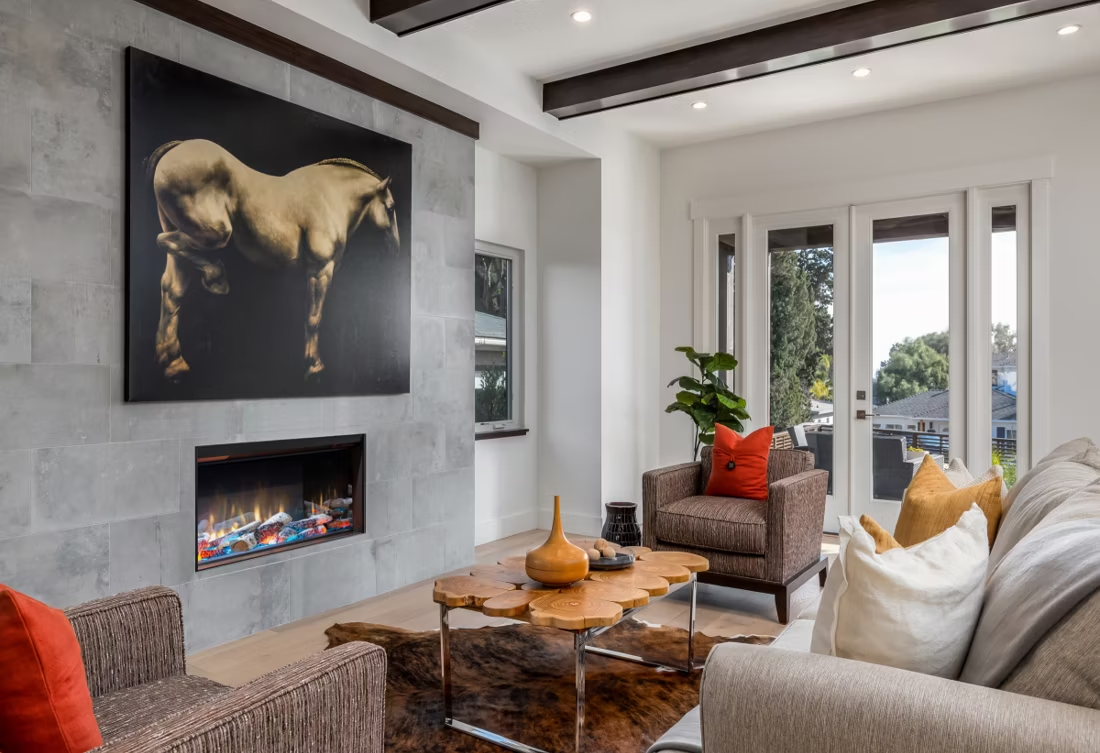
No masonry, no venting, no gas line—just plug-in or hardwired warmth for the handful of cool nights Town 'n' Country actually gets. Find the right unit and connect with a trusted local dealer.
Every Project Starts From One of These Five Situations
Built for Florida's mild winters and no-chimney homes.
Town 'n' Country sits at just 9 feet of elevation on the flat Gulf coast shelf west of Tampa, in climate zone 2A. With a winter low average of 53°F and only a light, mild winter heating load each year, this isn't a place that needs a serious heat source—it's a place where a real fire is more about ambiance and the occasional cold-snap night than survival heating. Compare that to a place like Duluth, MN, which racks up a winter heating load more than twenty times as heavy in a normal year, and you can see why nobody here is sizing a stove to hold overnight lows.
Most homes across the 33635, 33634, 33615, and 33685 zip codes are single-story ranch or newer construction without a masonry chimney, which makes electric the path of least resistance—no venting, no gas line, and in most cases no structural work. Power comes from Tampa Electric Co. (TECO) across most of the area, with Duke Energy Florida serving pockets nearer the county line. At TECO's residential rate of about 14.67¢/kWh or Duke's 16.63¢/kWh, running a fireplace on a chilly January evening costs pocket change—this is heat and ambiance sized for a subtropical climate, not the Panhandle or points north.
Three steps. No salesperson until you're ready.
Tell us about your project
Your zip code, your situation, and the fuel you're leaning toward—or let the answers point you to one.
See what's actually available
The brands dealers within 100 miles genuinely carry—real options, never a catalog mirage.
Get your dealer & Project Guide
A trusted local dealer, plus the free Project Guide & Parts List that names every component of the job.
Frequently Asked Questions
How much does an electric fireplace installation cost in Town 'n' Country?
A plug-in electric fireplace or freestanding unit needs no installation beyond finding an outlet—units themselves typically run $300 to $1,500. A built-in wall unit or insert into an existing fireplace opening, which requires a dedicated 20-amp circuit and some carpentry or trim work, usually runs $800 to $2,500 installed. Because there's no gas line, no venting, and no chimney to build, electric is consistently the least expensive fireplace option for Town 'n' Country homeowners—a fraction of what gas or wood installations run in colder parts of the country.
Do I need a permit to install an electric fireplace?
A freestanding, plug-in unit doesn't require a permit—it's treated like any other appliance. A built-in electric fireplace that requires a new dedicated circuit does typically need an electrical permit through Hillsborough County Building Services, since it involves wiring work by a licensed electrician. Most local hearth dealers or electricians handle that paperwork as part of the installation, so it's rarely something you have to manage yourself.
What should I look for in an electric fireplace for Florida's humidity?
Zone 2A humidity is hard on electronics, so look for units with sealed control boards and LED (not older halogen) flame technology—LED units run cooler and hold up better over years of humid Tampa Bay summers when the fireplace sits unused. If you're installing near a lanai, pool enclosure, or any space with heavy moisture exposure, ask your local dealer about models rated for higher humidity tolerance rather than a bargain big-box unit not built for coastal Florida conditions.
Electric vs. gas fireplace—which makes more sense in Town 'n' Country?
Gas is a standard, common option here too, and it has one real advantage: a gas fireplace with a battery-backup ignition can still produce heat during a power outage, which matters during hurricane season when Tampa Electric and Duke Energy Florida crews are working restoration for days at a time. Electric fireplaces are cheaper to install, need no gas line or venting, and cost pennies to run given how few genuinely cold nights this area sees—but they go dark the moment the power does. For most Town 'n' Country homes where the fireplace is about ambiance and light supplemental warmth, electric wins on cost and simplicity. For homes that want a heat source that survives storm outages, gas is worth the extra investment.
How much does it actually cost to run an electric fireplace here?
A typical 1,500-watt electric fireplace on its heat setting draws 1.5 kWh per hour. Run it for a three-hour evening and you'll use about 4.5 kWh—roughly $0.66 at Tampa Electric's 14.67¢/kWh rate, or about $0.75 at Duke Energy Florida's 16.63¢/kWh rate. With only a light, mild winter heating load each year, most Town 'n' Country households run their fireplace on the flame-only (no heat) setting most of the time anyway, which draws under 100 watts and costs almost nothing to operate.
Which utility serves my home—Tampa Electric or Duke Energy Florida?
Most of Town 'n' Country, including the bulk of the 33635, 33634, and 33615 zip codes, is served by Tampa Electric Co. (TECO). Pockets nearer the Hillsborough County line, including parts of 33685, fall under Duke Energy Florida instead. The two providers' rates differ by about 2 cents per kWh, which matters more for whole-home electric heating than for an occasional-use fireplace, but it's worth checking your bill before comparing running costs.
Should I get a wall-mount, an insert, or a freestanding electric fireplace?
Wall-mount units are popular in Town 'n' Country's newer construction and condos because they hang like a large TV and need only a nearby outlet—no framing required. Inserts make sense if your home has an existing wood-burning fireplace shell (common in some of the area's older 1970s and 80s ranch homes) that you want to convert without the upkeep of real wood. Freestanding stove-style units work well as a movable secondary heat source in a bonus room or Florida room. A local dealer can walk your space and tell you which fits your framing and outlet layout.
Why don't I see wood stoves or pellet stoves for sale locally?
Wood and pellet heat aren't a realistic fit for Town 'n' Country, and it would be misleading to suggest otherwise. With a winter low average of 53°F and virtually no heating season, there's no functional need for a cordwood-burning stove—even though oak, mahogany, and pine grow throughout the area, they're landscape trees here, not firewood stock. Pellet brands like Lignetics, Hamer, and Greenway distribute mainly to North Florida and Panhandle markets where real winter heating demand exists; you won't find them stocked by Tampa-area hearth dealers. Homeowners set on a wood-burning look almost always end up choosing an electric or gas unit with a realistic log-set flame effect instead.
Will my electric fireplace still work if the power goes out during a storm?
No—and this is the one real tradeoff worth knowing before you buy. Electric fireplaces run entirely on household power, so if Tampa Electric or Duke Energy Florida crews are still working restoration after a tropical storm or hurricane, your fireplace won't produce heat or flame effect until service is back. That's rarely a hardship in Town 'n' Country's climate since a lost heat source for a day or two isn't dangerous the way it would be in a northern winter, but if backup heat during outages matters to you, a battery-backup gas unit is the better choice for that specific need.
Can I put a TV above my fireplace?
Yes—with an asterisk. Fireplaces are hot and TVs don't like heat. Either put a mantel between them to deflect rising warmth, or choose a fireplace with heat-management technology that creates a cool zone on the wall above—the wall stays around 125 degrees, barely warm, while the room still gets full heat. If you like clean lines and don't want a mantel, heat management is the answer.
Does an electric fireplace need a vent or chimney?
No—that's its superpower. An electric fireplace needs a wall and an outlet, period. No vent pipe, no gas line, no clearances to design around, which is why it works in bedrooms, offices, apartments, and walls where venting a gas or wood unit would be impractical or impossible. Installation is typically the simplest and least expensive of any fireplace type.
Does a fireplace add value to my home?
On average, a fireplace adds back to the home about the same amount you spent installing it. Add the monthly savings from heating the rooms you actually use instead of the whole house—often hundreds of dollars a year—and the value case is strong before you even count what a fire does for how your family uses the room.
Can a fireplace actually lower my heating bill?
Yes—by creating a comfort zone. A furnace heats every square foot of the house just to warm the one room you're in; a gas fireplace on low burns roughly a sixth of the gas a typical furnace does. Set the furnace around 55–60 degrees as a baseline, then heat the rooms your family actually uses. Families who heat this way commonly save $20–$60 a month.
Nearby Dealers
Hearth shops serving Town 'n' Country and the surrounding area.
Electric Service in Town 'n' Country
An electric fireplace's heater draws about 1,500 watts—pennies per hour at local rates.
Tampa Electric Co
Duke Energy Florida, LLC
Find your electric fireplace in Town 'n' Country.
Tell us a bit about your home and we'll put together a free Project Guide & Parts List—the right unit, the exact parts, and a trusted local dealer near Town 'n' Country to install it.
Find Your Fireplace →