
Keep Your Family Warm and Safe—No Matter What
With just a short, mild heating season and winter lows averaging 40°F, Tallahassee rarely needs wood heat to survive winter—but for the right home, an occasional-use stove or a fireplace insert still makes sense. We'll connect you with a local dealer who understands the difference.
Every Project Starts From One of These Five Situations
A niche fit for North Florida's mild winters.
Tallahassee sits in climate zone 2A at just 125 feet of elevation, with an average winter low of 40°F and a short, mild heating season. For comparison, a city like Duluth, MN faces a winter heating season nearly seven times as long—Tallahassee homes simply don't face the sustained cold that makes wood heat a practical necessity. Central HVAC, heat pumps, and the occasional gas unit handle the region's short, mild cool season without much trouble.
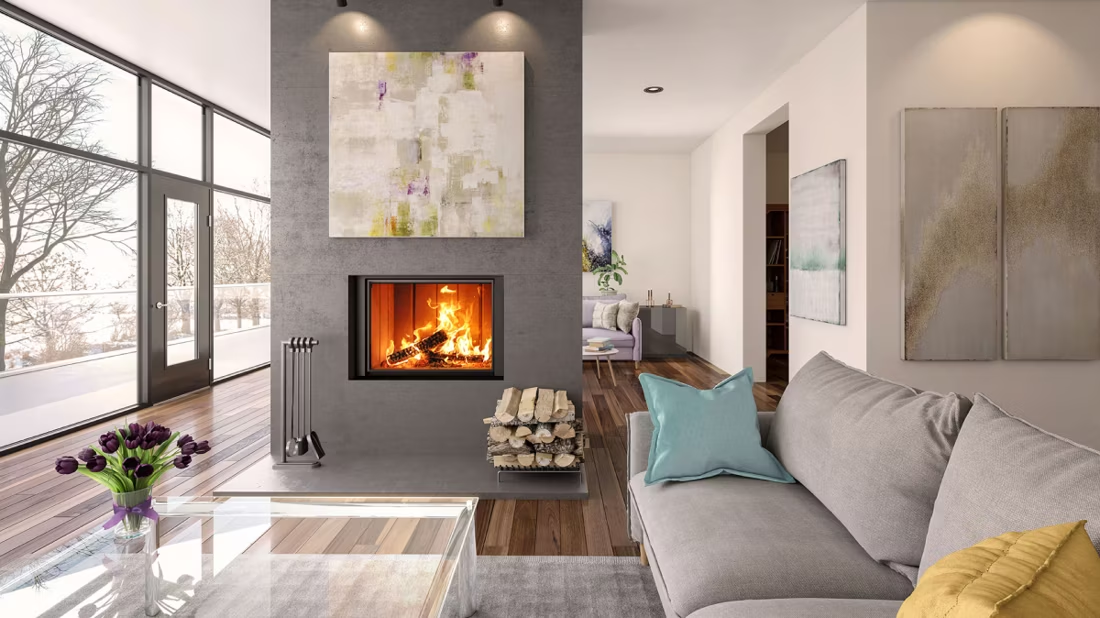
That said, wood-burning fireplaces haven't disappeared from Tallahassee entirely. Many of the historic homes around Midtown, Betton Hills, and the older Leon County neighborhoods were built with masonry fireplaces, and some homeowners still enjoy an occasional fire on the handful of nights each winter when temperatures dip into the 20s and 30s. Oak, pine, and even mahogany trimmings show up as regional firewood, mostly for ambiance rather than primary heat. If you're one of the homeowners who wants a real wood fire despite the climate, a local dealer can tell you honestly whether it makes sense for your house—and if not, what does.
Three steps. No salesperson until you're ready.
Tell us about your project
Your zip code, your situation, and the fuel you're leaning toward—or let the answers point you to one.
See what's actually available
The brands dealers within 100 miles genuinely carry—real options, never a catalog mirage.
Get your dealer & Project Guide
A trusted local dealer, plus the free Project Guide & Parts List that names every component of the job.
Frequently Asked Questions
Are wood stoves actually installed in Tallahassee homes?
Not often, and that's worth saying plainly. With winter lows averaging 40°F and only a short, mild heating season each year, most Tallahassee homeowners don't need a wood stove to stay warm—a heat pump or gas unit covers the handful of genuinely cold nights each winter. That said, some owners of older homes with existing masonry fireplaces, or people with a second property farther north or in the Apalachicola area, still install a stove or insert for the experience of a real fire rather than out of necessity.
How much does a wood stove or insert cost to install in Tallahassee?
There isn't a deep bench of wood-burning specialists in Tallahassee the way there is in colder markets, so pricing tends to run on the higher side of national averages once you factor in labor. A stove installed where a full Class A chimney has to be built from scratch—common here since many newer homes were never built with a masonry flue—typically costs more than an insert dropped into an existing fireplace opening in an older home. A local hearth dealer can give you a firm number once they've seen your chimney situation, but expect the estimate to hinge heavily on whether venting already exists.
What firewood species are available locally?
Oak is the standard workhorse firewood around Leon County—it's dense, burns long, and is widely available from local tree services and landscaping suppliers as a byproduct of storm cleanup and lot clearing. Pine is common too, though it's usually reserved for kindling or shoulder-season fires rather than an all-night burn since it's resinous and burns fast. Mahogany shows up occasionally from ornamental trees removed around older properties, but it's not a primary firewood source—most people burning wood in Tallahassee are working with oak.
Do I need a permit to install a wood stove in Tallahassee?
Yes, any new wood-burning appliance requires a building permit through the City of Tallahassee or Leon County, depending on where the property sits, and the installation has to meet current clearance and venting code. Because wood stoves are installed infrequently here compared to gas or electric units, it's worth specifically confirming with your contractor that they've pulled a solid-fuel appliance permit before, not just a general remodel permit—the inspection requirements around chimney clearances differ from what a typical Tallahassee inspector reviews day to day.
Are there burn bans or air quality restrictions in Tallahassee?
No—Tallahassee and Leon County don't have the winter temperature inversions or non-attainment status that trigger burn curtailment days in places like the Pacific Northwest or the Rockies. There's no local equivalent of a Yellow or Red burn advisory here. That's one advantage of the climate: if you do install a wood stove, you won't be checking an air quality board before lighting it.
What's the best use case for a wood stove in Tallahassee?
The strongest case for wood heat here is a home with an existing masonry fireplace that the owner wants to make more functional—an insert can turn a drafty, inefficient open hearth into a unit that actually throws heat on the coldest nights of the year. The other common scenario is a vacation or hunting property somewhere in the Apalachicola area or farther north, where the owner wants a wood stove for a rustic, off-grid feel rather than daily heating duty. Neither case treats wood as primary heat—that's simply not how Tallahassee's climate works.
Wood vs. gas or electric—what makes more sense in Tallahassee?
For nearly all Tallahassee homes, gas or electric wins on practicality. Duke Energy Florida and the City of Tallahassee utility both serve the area with residential electric rates around 13.6 to 16.6 cents per kWh, and a heat pump or electric unit handles the region's mild, short cool season without any wood handling, ash cleanup, or chimney maintenance. Wood only makes sense if you specifically want the ambiance and ritual of a real fire, have an existing fireplace to use, or own a second property in a colder area. If you're deciding based on heating performance alone, wood is not the efficient answer here.
Wood stove vs. wood insert—which fits an older Tallahassee home better?
If your home already has a masonry fireplace—common in the older neighborhoods around Midtown and Betton Hills—an insert is almost always the better choice. It uses the chimney you already have, seals up the drafty opening that's currently losing more heat than it provides, and turns an ornamental fireplace into something that can actually warm a room. A freestanding stove only makes sense if you don't have an existing chimney and are willing to take on the cost of building one from scratch, which is a bigger project than most Tallahassee homeowners are looking to take on for occasional use.
Where can I buy firewood in Tallahassee?
Most Tallahassee wood burners buy split, seasoned firewood from local landscaping companies and tree services rather than cutting their own—there isn't the same public-land cutting-permit culture here that you'd find in a national forest state out West. Oak is the most widely available species locally, typically sold by the truckload or partial cord rather than the full 4x4x8 cord measurements used in colder markets. If you're near the Apalachicola National Forest, it's worth calling ahead to confirm current rules, since permit programs on public land change from year to year.
Why is a fireplace insert so efficient?
An insert does two things: it seals the chimney completely, so you stop losing air you already paid to heat, and it radiates warmth into the room through the firebox and glass. Most add a heat-exchange fan that pulls cool room air underneath, wraps it around the hot firebox, and pushes it back out warm. Your home is more efficient before you've even lit the first fire.
What's the difference between an insert and a zero-clearance fireplace?
An insert is a fireplace that slides into a pre-existing wood-burning fireplace—if you don't have one, there's nothing to insert it into. A zero-clearance fireplace is built into a framed wall, which makes it the answer for remodels and new construction. Simple test: existing masonry fireplace means insert; blank or framed wall means zero-clearance.
Does a fireplace add value to my home?
On average, a fireplace adds back to the home about the same amount you spent installing it. Add the monthly savings from heating the rooms you actually use instead of the whole house—often hundreds of dollars a year—and the value case is strong before you even count what a fire does for how your family uses the room.
How much should I budget for a fireplace?
For an average home—covering the fireplace, the vent pipe, and basic installation—a budget between $3,900 and $5,500 gives you a lot of options across wood, gas, and pellet. By the time you add finish work, gas line, and electrical, the average complete installation lands between $5,000 and $12,000 all-in. In a remodel or new build, a good rule is to put about 2.5% of the total project cost toward the fireplace.
Nearby Dealers
Hearth shops serving Tallahassee and the surrounding area.
Capital City Fireplace & Grill
Find your wood fireplace in Tallahassee.
Tell us about your home and whether you're working with an existing fireplace or starting from scratch—we'll match you with a local dealer who can tell you honestly whether wood makes sense, and hand you a free Project Guide & Parts List with the exact parts and vent kit for your project.'
Find Your Fireplace →