
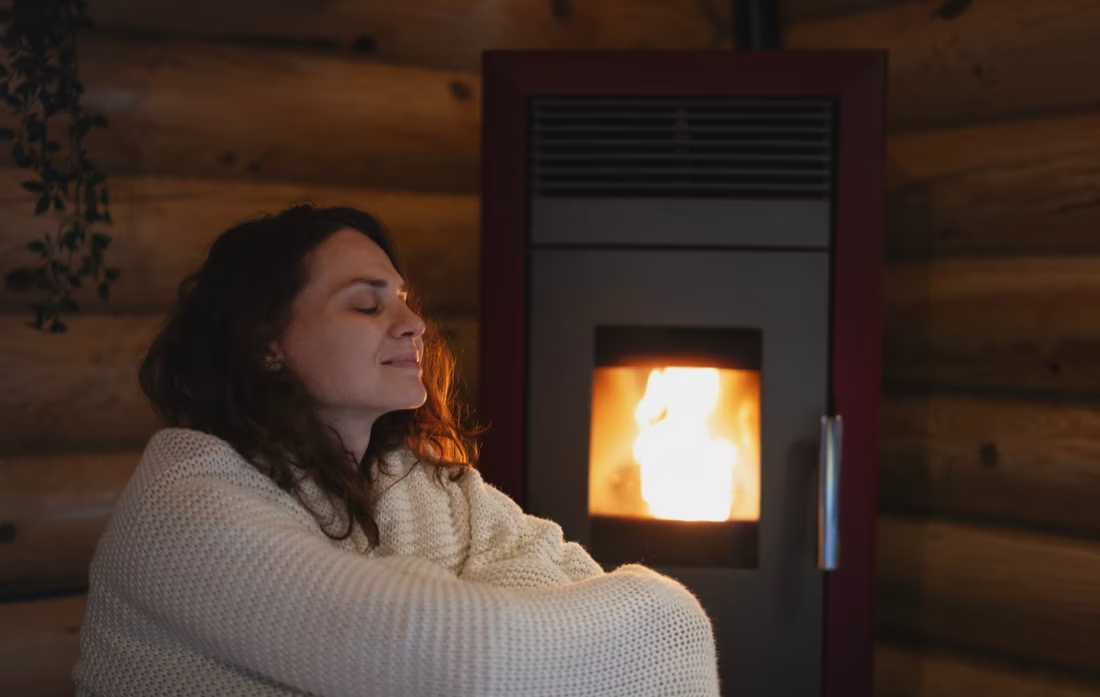
A pellet stove for Suwannee County's rare cold nights.
With winter lows averaging 45°F and only 957 heating degree days a year, most Suwannee County homes never need supplemental heat—but for river cabins near White Springs, hunting camps outside Branford, and the occasional hard freeze in Live Oak, a well-chosen pellet stove and a trusted local dealer make the difference between a nice idea and a working heat source.
Every Project Starts From One of These Five Situations
Warm winters mean pellet stoves are the exception, not the rule.
Suwannee County sits in Florida's Climate Zone 2A, where the Suwannee River winds past Live Oak, White Springs, and Branford through a landscape of oak and pine hammocks, dairy farms, and river cabins. Winter lows average 45°F, and the county logs roughly 957 heating degree days a year—a fraction of what a place like Duluth, Minnesota racks up in a single cold month. That's the honest starting point for anyone searching for a pellet stove here: this is not a climate built around wood-pellet heat, and it never has been.
That said, pellet stoves aren't unheard of in Suwannee County. A small number of homeowners install them in river cabins and hunting camps around Dowling Park and the Suwannee River corridor, in manufactured homes that get genuinely cold on the rare January night in the 20s, and among transplants who grew up burning pellets up north and want the ambiance without the wood-splitting. Regional brands like Lignetics, Hamer Pellet Fuel, and Greenway Renewable Energy do supply this part of north Florida, but bags typically come through dealers in nearby Lake City or Gainesville rather than off a shelf in town—demand here just isn't high enough to justify local stocking. Suwannee County also carries no air-quality non-attainment designations, so unlike pellet stoves in northern smoke-inversion zones, there's no curtailment schedule to work around—just a genuine question of whether the appliance fits the climate.
Three steps. No salesperson until you're ready.
Tell us about your project
Your zip code, your situation, and the fuel you're leaning toward—or let the answers point you to one.
See what's actually available
The brands dealers within 100 miles genuinely carry—real options, never a catalog mirage.
Get your dealer & Project Guide
A trusted local dealer, plus the free Project Guide & Parts List that names every component of the job.
Frequently Asked Questions
Does a pellet stove make sense in Suwannee County's climate?
For most homes, no—not as a primary heat source. With winter lows averaging 45°F and only about 957 heating degree days a year, Suwannee County's climate is closer to year-round mild than it is to anywhere pellet stoves are standard equipment, like Fargo, North Dakota or Duluth, Minnesota. Where a pellet stove does make sense here is supplemental or occasional-use heat: a river cabin near White Springs that gets cold overnight in January, a manufactured home outside Live Oak that loses its edge on the rare hard freeze, or a hunting camp near Branford where a homeowner wants controllable, thermostat-driven heat without stacking firewood. If that's your situation, a correctly sized pellet stove works fine—it's just not a mainstream local purchase.
How much does a pellet stove installation cost in Suwannee County?
Because installers rarely get pellet-stove calls in Suwannee County, most jobs are handled by hearth dealers based out of Lake City or Gainesville who travel in for the install, which adds a bit to the bottom line versus a market where pellet is common. Expect a comparable unit-and-labor cost to elsewhere in the Southeast, plus a modest travel charge for the trip out to Live Oak, Branford, or the more rural parts of the county. Homes with an existing masonry fireplace generally cost less to convert with a pellet insert than a freestanding stove install in a home with no chimney at all, since the venting path already exists.
Where can I buy a pellet stove or pellets in Suwannee County?
There's no dedicated hearth showroom in Suwannee County itself—the nearest dealers with real pellet-stove inventory are typically in Lake City or Gainesville. For fuel, regional brands like Lignetics, Hamer Pellet Fuel, and Greenway Renewable Energy supply north Florida and south Georgia, and a small number of feed stores or farm supply outlets in the Live Oak area will special-order bags for the handful of local pellet-stove owners. Because volume is low, it's worth asking a dealer to set you up with a standing order or a seasonal delivery rather than expecting to find pellets on a shelf when you need them.
Do I need a permit to install a pellet stove in Suwannee County?
Yes—a pellet stove installation is a fuel-burning appliance install, which typically requires a permit through the Suwannee County Building Department, covering the venting, hearth clearances, and any electrical work for the unit's auger and blower. Most dealers who install pellet stoves in this part of Florida are used to working with county building departments even when the appliance itself is uncommon locally, and they'll usually pull the permit as part of the job.
What size pellet stove do I need for a Suwannee County home?
Given the mild climate, most Suwannee County installs are on the small end of the sizing chart—a stove rated for a single room or a modest manufactured home is usually plenty, since the goal is supplemental warmth on the occasional cold front rather than carrying a whole house through a long winter. Manufactured and mobile homes, common throughout the county's rural areas, often do well with a compact freestanding pellet stove installed with the right zero-clearance package. A local dealer can size the unit correctly after seeing your square footage and insulation—oversizing is a real risk here, since a stove built for a Duluth winter will run far hotter than a Suwannee County living room needs.
Are there air quality restrictions on burning pellets in Suwannee County?
No—Suwannee County has no air-quality non-attainment designation and no winter inversion or wildfire-smoke concerns on record, so there's no curtailment schedule or burn-ban season to plan around, the kind that pellet and wood stove owners in places like the Pacific Northwest or interior California have to track every winter. That said, general Florida outdoor-burning rules still apply to yard debris and open burning—they just don't affect an indoor pellet appliance.
Pellet stove vs. wood stove—which fits better in Suwannee County?
Both are uncommon here, but for different reasons. Wood is technically available locally—oak, pine, and mahogany are common species around the county—but with only 957 heating degree days a year, few homeowners bother processing and storing firewood for the handful of cold nights that call for it. Pellet stoves solve the storage and mess problem with bagged fuel and thermostat control, which appeals to river-cabin and hunting-camp owners who want convenience over ritual. The one thing to weigh: pellet stoves need electricity to run the auger and combustion blower, while a wood stove will still throw heat during a power outage—a real consideration in a county that sees its share of hurricane-season outages. For backup heat during storms, wood has the edge; for easy, low-maintenance occasional warmth, pellet usually wins.
Pellet stove vs. gas fireplace—which is the more practical choice locally?
In Suwannee County, gas is the far more common choice of the two. Gas fireplaces and inserts are considered standard here, with straightforward propane service available throughout the county even where natural gas isn't, and they deliver instant heat with none of the fuel-storage questions that come with pellets. A pellet stove still has a niche appeal—for owners who like the visual of an actual flame fed by fuel, or who want a stove that doesn't depend on a propane delivery schedule—but for most homeowners simply looking for reliable supplemental heat on a cold January night, a local dealer will likely point you toward gas first.
How does Florida humidity affect a pellet stove long-term?
Humidity is the real maintenance issue for pellet stoves in a county like Suwannee, more than cold ever will be. Pellets absorb ambient moisture quickly, and Florida's humid subtropical air will turn a bag of pellets to sawdust and swollen clumps if it's stored in a garage or shed without a sealed container. Owners here should plan on airtight storage bins rather than the open bags common in drier northern climates, and should expect to clean the hopper and auger periodically to clear out any pellets that absorbed moisture before they were burned. Beyond that, annual servicing—checking the auger motor, exhaust blower, and gaskets—is the same as anywhere else.
Why is a fireplace insert so efficient?
An insert does two things: it seals the chimney completely, so you stop losing air you already paid to heat, and it radiates warmth into the room through the firebox and glass. Most add a heat-exchange fan that pulls cool room air underneath, wraps it around the hot firebox, and pushes it back out warm. Your home is more efficient before you've even lit the first fire.
Why is my open fireplace making my house colder?
Open fireplaces suck—literally. As the fire burns, it consumes air your furnace already paid to heat and pulls it out through the chimney, so the house is actually colder after the fire goes out than before you lit it. An insert fixes this: it seals the chimney, puts fixed glass across the front, and turns that hole in your house into a real heat source.
Can I install a fireplace myself?
If you're putting a fire in your house on purpose, it's best to work with an expert. Unless you're genuinely experienced in framing, gas line, vent pipe, and the national code on clearances to combustibles, have a professional do it—and ideally the same company that sells you the fireplace, so warranty, service, and liability all live under one roof.
Does a fireplace add value to my home?
On average, a fireplace adds back to the home about the same amount you spent installing it. Add the monthly savings from heating the rooms you actually use instead of the whole house—often hundreds of dollars a year—and the value case is strong before you even count what a fire does for how your family uses the room.
Pellet Brands Stocked Around Suwannee County
Manufacturers will point you to the nearest stocking dealer.
Find your pellet stove in Suwannee County.
Tell us about your home—cabin, manufactured home, or river property—and we'll match you with a trusted local dealer and a free Project Guide & Parts List for your pellet stove project, including the exact vent kit and parts you'll need.
Find Your Fireplace →