
Keep Your Family Warm and Safe—No Matter What
With a winter heating need of just 171 on the standard annual scale and winter lows averaging 58°F, real wood heat isn't a necessity here—but if you want the look and ritual of a wood-burning fire, we'll connect you with a local dealer who can build it right.
Every Project Starts From One of These Five Situations
Sunrise's climate just doesn't call for a wood stove.
Sunrise sits at just 8 feet of elevation in Broward County, squarely in ASHRAE climate zone 1A—the hottest, most humid zone recognized in the U.S. building code system. Winter lows here average 58°F, and on the standard annual scale used to measure a home's winter heating need, Sunrise comes in at just 171—barely enough to register. For comparison, a genuinely cold-climate city like Duluth, Minnesota tallies more than 9,000 on that same scale over the same period. There is essentially no functional need for a heat-producing fireplace or wood stove in a typical Sunrise home.
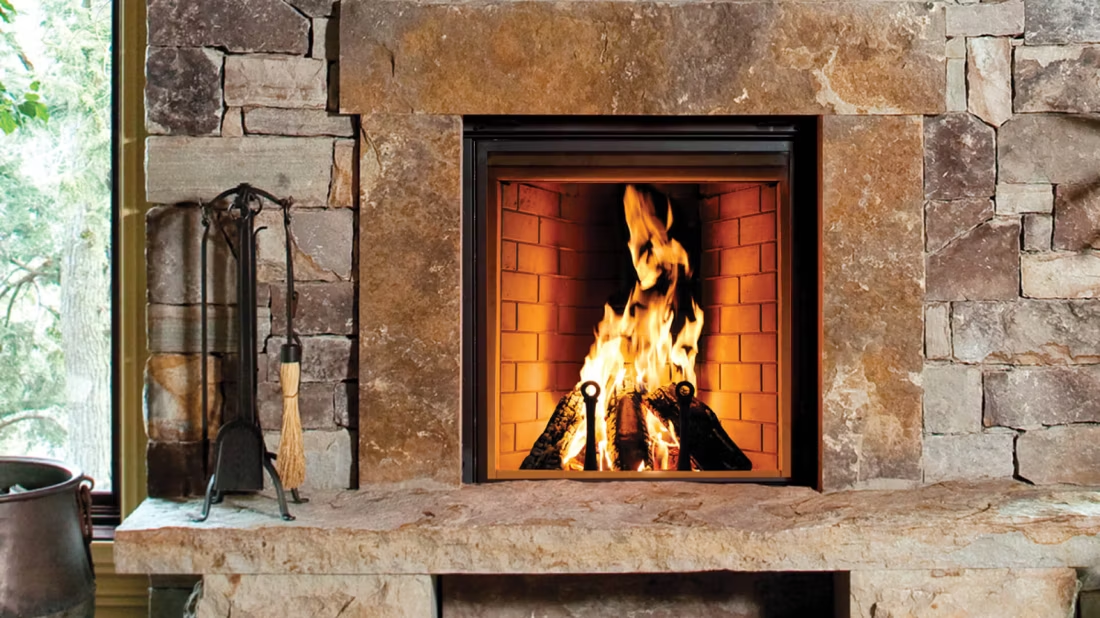
That doesn't mean wood-burning fireplaces never happen here—they're just rare, and usually driven by aesthetics rather than heat. A homeowner building a custom great room, a transplant from a colder state who wants the look and smell of a real fire, or an outdoor living space centered on a fire feature are the most common reasons we see a wood-burning request in this market. For everyone else, gas and electric fireplaces—both far more practical in a climate with almost no heating need—are what most local dealers around Broward County actually install. If a real wood fire is still what you want, Find My Fireplace can match you with a dealer who understands the Florida Building Code's hurricane-zone requirements for chimney construction.
Three steps. No salesperson until you're ready.
Tell us about your project
Your zip code, your situation, and the fuel you're leaning toward—or let the answers point you to one.
See what's actually available
The brands dealers within 100 miles genuinely carry—real options, never a catalog mirage.
Get your dealer & Project Guide
A trusted local dealer, plus the free Project Guide & Parts List that names every component of the job.
Frequently Asked Questions
Are wood-burning fireplaces actually installed in Sunrise, FL?
Rarely, and for a specific reason: Sunrise sits in ASHRAE climate zone 1A, the hottest zone in the U.S. classification system, with an average winter low around 58°F and a winter heating need of just about 171 on the standard annual scale—compare that to a true cold-climate city like Duluth, Minnesota, which tallies over 9,000 on that same scale. Homes here simply don't need supplemental heat. When we do see a wood-burning fireplace request in Sunrise, it's almost always for ambiance in a great room, a nod to a buyer who grew up somewhere colder, or a decorative build tied to an outdoor living space rather than a heating necessity.
How much does a wood-burning fireplace cost to install in Sunrise?
Because so few get built here, pricing isn't as standardized as it is in colder markets. A custom masonry wood-burning fireplace with a full chimney typically runs $8,000 to $18,000 in South Florida—higher than in northern states because there are fewer specialty masons doing this work regularly, and because Florida Building Code hurricane-zone wind and tie-down requirements add engineering and structural cost to any chimney that penetrates a roof. A local dealer matched through Find My Fireplace can give you a firm number after seeing your home.
Do I need a permit to build a wood-burning fireplace in Sunrise?
Yes. Any chimney or masonry fireplace addition requires a building permit through the City of Sunrise Development Services Department, and because Broward County falls under the state's High-Velocity Hurricane Zone provisions, plans typically need engineering sign-off for wind load and roof penetration details before permitting can move through Broward County Building Code Services. This adds time and cost compared to a straightforward gas or electric install, which is part of why wood-burning fireplaces stay rare here.
What wood species would I burn if I installed a wood fireplace in Sunrise?
Local firewood suppliers around Broward County typically stock oak, mahogany, and pine, sold by the bundle or rack rather than the cord—there's no national forest land nearby to cut your own, since Broward County has no public cutting permit program. Oak burns hottest and cleanest of the three; pine is more common for ambiance fires since it's inexpensive and widely available through local delivery services and seasonal retail stands.
Why is wood heat so uncommon in Sunrise compared to other parts of the country?
It comes down to how much winter heating a home actually needs. Sunrise's winter heating need averages just 171 on the standard annual scale—a fraction of what a northern city like Burlington, Vermont sees in a single cold month. With winter lows averaging 58°F and only occasional cold snaps into the 40s, there's no functional need for a heat-producing fireplace or wood stove. Air quality isn't a factor either way—Broward County has none of the winter inversion or non-attainment concerns that drive wood-burning restrictions in colder Western states.
What do most Sunrise homeowners install instead of a wood-burning fireplace?
Gas and electric fireplaces are both far more common locally. Electric units are the simplest—no venting, no gas line—and they run on Florida Power & Light service at the standard residential rate of about 13.7 cents per kWh, making them inexpensive to operate for the handful of cool evenings each winter. Gas fireplaces offer a more traditional flame look with instant on-off convenience and none of the ash, smoke, or chimney maintenance that come with wood.
Can I install a wood-burning stove instead of a traditional fireplace?
You can, though it's an even less common request in Sunrise than a masonry fireplace, since a freestanding stove still needs a Class A chimney running through the roof, and many HOA-governed communities in Broward County restrict exterior chimney additions. If you're set on real wood heat for ambiance or a specific room, a local dealer can walk you through clearance, venting, and homeowners' association approval, but most homeowners in this climate find a direct-vent gas stove delivers the same look without the structural changes.
Is firewood easy to find in Sunrise if I do install a wood fireplace?
Yes, though it's purchased rather than self-cut. Since Broward County has no national forest or public cutting land, all firewood here comes from local delivery services or retail bundles, most commonly oak, mahogany, and pine. Expect to pay noticeably more per equivalent volume than in a state with public timber access—firewood in South Florida functions more like a specialty landscaping product than a heating fuel, since almost nobody burns through a full cord each winter.
Wood vs. gas vs. electric—what actually makes sense in Sunrise?
For nearly every Sunrise home, gas or electric wins on practicality. Gas delivers real flame and instant heat without ash or a chimney to maintain; electric is the simplest and cheapest to install, running on FPL power with no venting at all. Wood-burning makes sense only if you specifically want the smell, sound, and ritual of a real fire and are willing to take on chimney construction, hurricane-code engineering, and specialty firewood sourcing for a handful of nights a year when temperatures actually dip into the 40s or 50s. Most homeowners who start out asking about wood end up happier with a gas or electric unit once they see the cost and maintenance difference—but if a real wood fire is the goal, we'll still match you with a dealer who can build it correctly.
Why is my open fireplace making my house colder?
Open fireplaces suck—literally. As the fire burns, it consumes air your furnace already paid to heat and pulls it out through the chimney, so the house is actually colder after the fire goes out than before you lit it. An insert fixes this: it seals the chimney, puts fixed glass across the front, and turns that hole in your house into a real heat source.
Why is a fireplace insert so efficient?
An insert does two things: it seals the chimney completely, so you stop losing air you already paid to heat, and it radiates warmth into the room through the firebox and glass. Most add a heat-exchange fan that pulls cool room air underneath, wraps it around the hot firebox, and pushes it back out warm. Your home is more efficient before you've even lit the first fire.
What is an in-home preview and do I need one?
It's a visit where a hearth professional measures your space, confirms the model you picked actually works in your home, and walks the specs—framing, gas line, venting, finish work—before anything is ordered. Some details you just can't know until you see the house. Never make a down payment without one; it's the single most-skipped step that burns buyers.
Does a fireplace add value to my home?
On average, a fireplace adds back to the home about the same amount you spent installing it. Add the monthly savings from heating the rooms you actually use instead of the whole house—often hundreds of dollars a year—and the value case is strong before you even count what a fire does for how your family uses the room.
Nearby Dealers
Hearth shops serving Sunrise and the surrounding area. Every listing shows whether it is a WhyFire partner, a dealer we have verified as authorized for the brands we recommend, or a local business carrying hearth products. No manufacturer pays for placement. How we verify dealers →
Brandel Masonry
The Kitchenworks
Lifestyle Barn LLC
A&S Reclaimed Wood
Atlantic Purchasing
Outdoor Kitchen & Grill
Impel America Appliance
Find your wood fireplace option in Sunrise.
Tell us about your home and what you're picturing, and we'll match you with a trusted local dealer plus a free Project Guide & Parts List—the exact parts, including the vent kit, and the dealer we recommend for your wood-burning project in Sunrise.
Find Your Fireplace →