
Pellet Stoves Find a Niche in St. Augustine.
With only about 800 heating degree days a year, pellet heat isn't mainstream here—but for historic homes, ambiance, and the rare cold snap, a handful of St. Augustine homeowners still make it work.
Every Project Starts From One of These Five Situations
Heat isn't the driver in St. Augustine—ambiance is.
St. Augustine sits at essentially sea level in climate zone 2A, with an average winter low around 48°F and roughly 803 heating degree days per year—compare that to a place like Duluth, Minnesota, which racks up over 9,000. Most winters here bring a handful of nights that dip into the 30s, occasionally the high 20s, and that's about it. For the vast majority of homes in the historic district, on Anastasia Island, or out toward the World Golf Village, a Florida Power & Light heat pump handles the rare chilly stretch without anyone thinking twice about it.
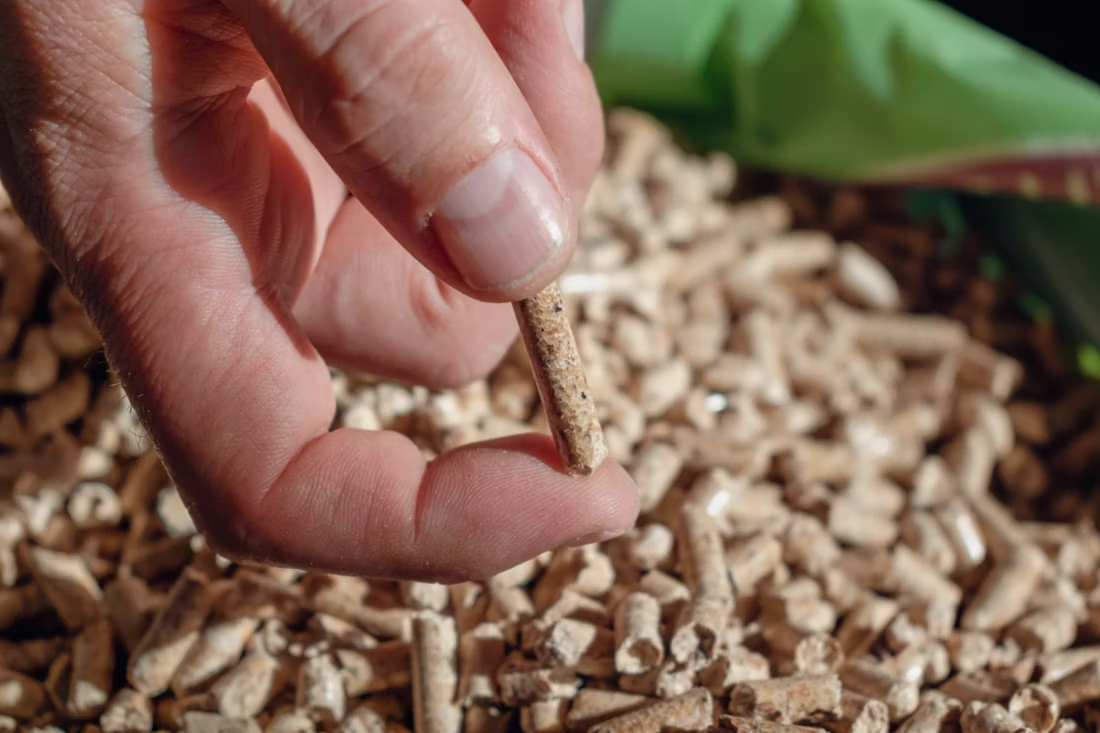
That's why pellet stoves are genuinely rare here—this isn't a market where hearth dealers stock rows of them the way they might in the Upper Midwest. When homeowners do install one, it's usually for a specific reason: a coquina or wood-frame home in Lincolnville with drafty single-pane windows and high ceilings that never quite feels warm on a January night, a desire for real flame ambiance without the smoke and creosote of cordwood, or a second home elsewhere in a colder state where the same owner already burns pellets. Regional suppliers like Lignetics, Hamer Pellet Fuel, and Greenway Renewable Energy do distribute into the North Florida market, so fuel is available—it's just not sold on every corner the way it is farther north.
Three steps. No salesperson until you're ready.
Tell us about your project
Your zip code, your situation, and the fuel you're leaning toward—or let the answers point you to one.
See what's actually available
The brands dealers within 100 miles genuinely carry—real options, never a catalog mirage.
Get your dealer & Project Guide
A trusted local dealer, plus the free Project Guide & Parts List that names every component of the job.
Frequently Asked Questions
Are pellet stoves actually available and installable in St. Augustine?
Yes, but the market is thin. St. Augustine's climate zone (2A) sees roughly 803 heating degree days annually, versus 6,000-plus in a place like Bozeman, Montana—so most local hearth dealers focus their inventory on gas fireplaces and electric units, which sell far more often. A handful of dealers serving St. Johns County will special-order pellet stoves or carry a display model, but you'll likely wait longer for parts, service, and pellet supply than you would in a colder market. That's exactly why matching with a dealer who genuinely knows the local pellet niche—rather than a big-box store that's never installed one—matters more here than most places.
What does a pellet stove installation cost in St. Augustine?
Nationally, a typical pellet stove installation runs $3,000 to $6,500 depending on the unit, venting path, and whether an existing masonry fireplace is being converted with an insert. In St. Augustine specifically, expect pricing toward the higher end of that range or with less price competition, simply because fewer local installers do this work regularly and there's less standardized pricing than you'd find for gas fireplace installs, which are far more common here. Get a firm in-home quote—don't assume a national average applies directly to a coastal Florida market this size.
Why would anyone install a pellet stove in a warm climate like St. Augustine?
The reasons are almost always about something other than pure heating need. Historic homes in the Lincolnville and Abbott Tract neighborhoods often have single-pane windows, high ceilings, and minimal insulation—a small pellet stove can genuinely take the edge off on the coldest nights of January and February. Others want the look and radiant feel of a real fire without cordwood storage or chimney sweeping. And some owners split time between a St. Augustine home and a colder-climate property where they already burn pellets and simply prefer consistency. It's a niche choice, but not an irrational one.
Will a pellet stove work as backup heat during a hurricane power outage?
Not reliably, and this is worth knowing before you buy. Pellet stoves depend on an electric auger to feed fuel and a blower to distribute heat—without power, most units simply won't run, even with fuel loaded in the hopper. Some manufacturers offer battery-backup kits that can run a unit for several hours, but that's a add-on, not a given. If backup heat during named-storm outages is your actual goal in St. Johns County, a vented gas fireplace with a battery-backup ignition system, or a generator paired with your existing HVAC, is a more dependable choice than pellet.
Where can I buy wood pellets in St. Augustine?
Supply is real but not everywhere. Regional producers and distributors—Lignetics, Hamer Pellet Fuel, and Greenway Renewable Energy—all move product into the North Florida market, and some are carried seasonally by farm supply or hardware stores in St. Johns and Duval counties. Because demand is low compared to the Northeast or Upper Midwest, don't expect big-box stores here to stock pellets year-round the way they do in colder states; plan to order ahead of the few cool weeks you'll actually burn.
Do I need a permit to install a pellet stove in St. Augustine?
Yes—pellet stove installations typically require a building permit through St. Johns County Building Services (or the City of St. Augustine's building department if you're within city limits), since the unit involves venting through an exterior wall or roof and, in most cases, a dedicated electrical circuit for the auger and blower. A qualified local installer will typically pull this permit as part of the job. Given how few pellet installs happen locally per year, it's worth confirming your installer has actually handled one before, not just gas or electric units.
Pellet stove vs. gas fireplace—which makes more sense in St. Augustine?
For most St. Augustine homeowners, gas wins by a wide margin—it's a standard, well-supported option locally, with plenty of dealers, service technicians, and parts availability, and it delivers the same instant ambiance without pellet storage or hopper refills. A pellet stove makes more sense only if you specifically want the look and radiant feel of a real wood-pellet flame, or you already have pellets and a stove from a previous home. If ambiance and low-maintenance convenience are the actual goals, ask your local dealer to show you both side by side before deciding.
What size pellet stove do I need for a St. Augustine home?
Smaller than you'd think. With winter lows averaging 48°F and only occasional dips into the 20s, most St. Augustine homes need a pellet stove sized for a single room or open living area—not whole-home heating. A small to mid-size unit (rated for 1,000 to 1,500 square feet) is typically more than enough supplemental heat for a historic bungalow or coastal cottage, and oversizing just means you'll rarely run it at a comfortable output. A local dealer familiar with older St. Augustine construction—coquina, heart pine framing, elevated coastal homes—can size it properly during an in-home visit.
Pellet stove vs. electric fireplace—which is the better fit here?
Electric is the far more common choice in St. Augustine, and for good reason: Florida Power & Light service is universal, the residential rate runs about 13.7 cents per kWh, and a zero-clearance electric fireplace can be installed in an afternoon with no venting, no fuel storage, and no chimney at all. A pellet stove offers real combustion heat and flame, which electric can't fully replicate, but it comes with hopper refills, ash cleanup, and a much smaller pool of local service technicians. If low-maintenance ambiance is the priority, electric usually makes more practical sense in this climate; if you want genuine radiant heat and don't mind the upkeep, pellet remains a legitimate—if uncommon—choice.
Why is my open fireplace making my house colder?
Open fireplaces suck—literally. As the fire burns, it consumes air your furnace already paid to heat and pulls it out through the chimney, so the house is actually colder after the fire goes out than before you lit it. An insert fixes this: it seals the chimney, puts fixed glass across the front, and turns that hole in your house into a real heat source.
Why is a fireplace insert so efficient?
An insert does two things: it seals the chimney completely, so you stop losing air you already paid to heat, and it radiates warmth into the room through the firebox and glass. Most add a heat-exchange fan that pulls cool room air underneath, wraps it around the hot firebox, and pushes it back out warm. Your home is more efficient before you've even lit the first fire.
Can I install a fireplace myself?
If you're putting a fire in your house on purpose, it's best to work with an expert. Unless you're genuinely experienced in framing, gas line, vent pipe, and the national code on clearances to combustibles, have a professional do it—and ideally the same company that sells you the fireplace, so warranty, service, and liability all live under one roof.
Can a fireplace actually lower my heating bill?
Yes—by creating a comfort zone. A furnace heats every square foot of the house just to warm the one room you're in; a gas fireplace on low burns roughly a sixth of the gas a typical furnace does. Set the furnace around 55–60 degrees as a baseline, then heat the rooms your family actually uses. Families who heat this way commonly save $20–$60 a month.
Nearby Dealers
Hearth shops serving St. Augustine and the surrounding area.
Courtesy Gas Co., Inc.
Pellet Brands Stocked Around St. Augustine
Manufacturers will point you to the nearest stocking dealer.
Find your pellet stove in St. Augustine.
Pellet heat is rare enough in St. Augustine that finding a dealer who's actually installed one matters. Tell us about your home and we'll match you with a trusted local dealer and send a free Project Guide & Parts List—the exact parts, including the vent kit, for your project.
Find Your Fireplace →