
Real flame, zero winter required.
South Miami Heights sees maybe a handful of nights below 50°F each year, so a gas fireplace here is about ambiance, design, and resale value—not survival heat. Find the right unit and get matched with a trusted local dealer.
Every Project Starts From One of These Five Situations
Fire as a design feature, not a necessity.
South Miami Heights sits at just 9 feet above sea level in Miami-Dade's Climate Zone 1A, where the average winter low hovers around 55°F and the entire heating season adds up to roughly 214 heating degree days—compare that to a place like Duluth, Minnesota, which racks up over 9,000 HDD in a single winter, and it's clear this isn't a heating market. A cold snap into the 40s might happen a few nights a year, and that's about the extent of it.
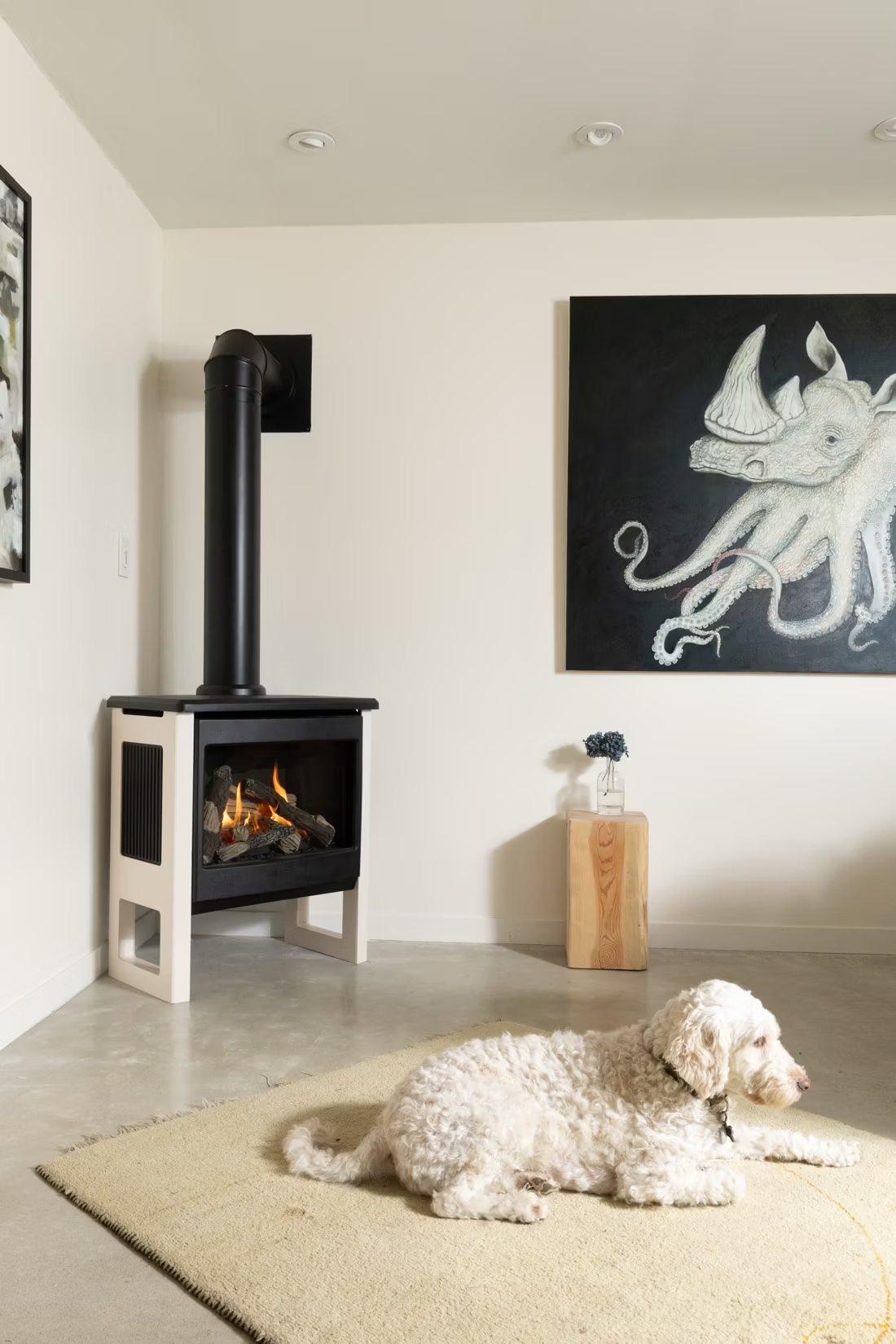
That doesn't mean gas fireplaces are rare here—they're just used differently. In South Florida, a gas fireplace or linear fire feature is a design statement: a focal point in a great room, a built-in on a screened lanai, or a feature wall next to a pool. Because South Miami Heights is unincorporated Miami-Dade County without extensive natural gas mains reaching every neighborhood, most gas fireplace installs here run on propane rather than piped natural gas—Florida Power & Light serves electricity, but gas service depends on your specific street. A trusted local dealer will confirm which fuel path makes sense for your address before recommending a unit.
Three steps. No salesperson until you're ready.
Tell us about your project
Your zip code, your situation, and the fuel you're leaning toward—or let the answers point you to one.
See what's actually available
The brands dealers within 100 miles genuinely carry—real options, never a catalog mirage.
Get your dealer & Project Guide
A trusted local dealer, plus the free Project Guide & Parts List that names every component of the job.
Frequently Asked Questions
How much does a gas fireplace installation cost in South Miami Heights?
Most installations here run $3,000 to $7,500, and where you land in that range depends heavily on whether propane tank installation is part of the job. A direct-vent gas fireplace or linear unit installed against an exterior wall with a straightforward vent run is on the lower end. Add a buried or above-ground propane tank, a longer gas line, or an outdoor lanai installation that needs to meet Miami-Dade's High-Velocity Hurricane Zone product approval (NOA) requirements, and costs climb toward the higher end. Because most South Miami Heights homes don't already have a gas fireplace or chimney to work with, installers are typically starting from scratch rather than converting an existing wood fireplace.
Does a gas fireplace even make sense in a climate this warm?
It's a fair question with only 214 heating degree days a year. The honest answer: almost nobody in South Miami Heights installs a gas fireplace to actually heat their house. Homeowners here choose gas fire features for the visual effect—a linear flame under a TV, a fire bowl on the lanai, a focal point in an open-concept great room—and for the resale bump a built-in fire feature adds in South Florida's design-driven real estate market. If you want it for the rare 40-degree evening, it'll do that job fine too, but that's a bonus, not the reason to buy.
Should I use propane or natural gas for my fireplace?
In South Miami Heights, propane is the more common answer. Natural gas mains don't reach every unincorporated Miami-Dade neighborhood the way they do in denser parts of the county, so unless your street already has natural gas service for a range or water heater, a local dealer will typically spec a propane setup—either a small tank tucked near the unit or a larger buried tank if you're also running a pool heater or outdoor kitchen off the same line. If your home already has a natural gas hookup, most fireplace models can be configured either way.
Vented or vent-free—what works in this climate?
Vent-free gas fireplaces are legal in Florida with the right room-size and ventilation rules, but they release water vapor into the living space, which is a real consideration in a climate as humid as South Miami Heights already is. Vented, direct-vent units draw combustion air from outside and exhaust it back outside, which keeps humidity and combustion byproducts out of the house entirely. For most homes here, direct-vent is the better call—it also opens up more design options, including linear see-through units between indoor and lanai spaces.
Can I install a gas fireplace on my lanai or pool deck?
Yes, and it's one of the more popular projects in this part of Miami-Dade—an outdoor linear fireplace or fire feature built into a pool deck or screened lanai wall. Outdoor installations need to meet Florida Building Code's High-Velocity Hurricane Zone requirements, which means the unit needs a Notice of Acceptance (NOA) for wind and impact resistance, and mounting has to account for hurricane wind loads. A local dealer familiar with Miami-Dade's permitting process will know which product lines already carry NOA approval, which saves a lot of back-and-forth with the building department.
Do I need a permit to install a gas fireplace in South Miami Heights?
Yes—as unincorporated territory, South Miami Heights falls under the Miami-Dade County Building Department for both the building permit and the gas or propane line work, which requires a licensed contractor. Outdoor installations get an extra layer of review for HVHZ wind compliance. Most established local dealers handle the permit application and inspections as part of the installation, which is worth asking about upfront since Miami-Dade's permitting process has more steps than most counties.
Gas fireplace or electric fireplace—which fits South Miami Heights better?
Electric fireplaces have a real case here: no gas line or propane tank to run, no venting, and installation costs as low as a few hundred dollars for a plug-in insert. At Florida Power & Light's residential rate of about 13.7 cents per kWh, running one for ambiance costs pennies an hour. The tradeoff is flame realism and heat output—electric units simulate fire rather than burn it. Gas fireplaces cost more upfront but deliver real flame and can double as a genuine heat source on the rare cold night. For condos or homes with HOA restrictions on exterior venting, electric is often the only option anyway.
How often does a gas fireplace need service in South Florida?
An annual inspection is still recommended even though these units see lighter use here than they would up north. Salt air and humidity along the Miami-Dade coast can accelerate corrosion on burner components and exterior venting hardware faster than in drier climates, so a yearly check of the pilot, gas connections, and venting is worth keeping on the calendar—especially for outdoor and lanai installations exposed to the elements year-round.
What style of gas fireplace is most popular in South Miami Heights?
Linear, direct-vent gas fireplaces are the dominant choice—long, low flame lines that read as modern rather than traditional, which fits the open-concept, indoor-outdoor architecture common in this part of Miami-Dade. Because most homes here were never built with a masonry chimney, freestanding wood-style stoves aren't part of the local vocabulary the way they are up north; instead, homeowners choose built-in direct-vent units framed into a wall or outdoor feature, sized more for visual impact than square footage of heat coverage.
Why is a fireplace insert so efficient?
An insert does two things: it seals the chimney completely, so you stop losing air you already paid to heat, and it radiates warmth into the room through the firebox and glass. Most add a heat-exchange fan that pulls cool room air underneath, wraps it around the hot firebox, and pushes it back out warm. Your home is more efficient before you've even lit the first fire.
Can I put a TV above my fireplace?
Yes—with an asterisk. Fireplaces are hot and TVs don't like heat. Either put a mantel between them to deflect rising warmth, or choose a fireplace with heat-management technology that creates a cool zone on the wall above—the wall stays around 125 degrees, barely warm, while the room still gets full heat. If you like clean lines and don't want a mantel, heat management is the answer.
How much should I budget for a fireplace?
For an average home—covering the fireplace, the vent pipe, and basic installation—a budget between $3,900 and $5,500 gives you a lot of options across wood, gas, and pellet. By the time you add finish work, gas line, and electrical, the average complete installation lands between $5,000 and $12,000 all-in. In a remodel or new build, a good rule is to put about 2.5% of the total project cost toward the fireplace.
Does a fireplace add value to my home?
On average, a fireplace adds back to the home about the same amount you spent installing it. Add the monthly savings from heating the rooms you actually use instead of the whole house—often hundreds of dollars a year—and the value case is strong before you even count what a fire does for how your family uses the room.
Nearby Dealers
Hearth shops serving South Miami Heights and the surrounding area.
Find your gas fireplace in South Miami Heights.
Tell us about your home and we'll match you with a trusted local dealer in South Miami Heights, plus a free Project Guide & Parts List—the exact parts, vent kit, and fuel setup for your project, no big-box guesswork.
Find Your Fireplace →