
Keep Your Family Warm and Safe—No Matter What
With only 417 heating degree days a year and winter lows that average 50°F, Sarasota County has almost no heating season—but a small number of homeowners still want a real wood fire for ambiance, historic character, or backup after a storm. We'll connect you with a dealer who actually does this work.
Every Project Starts From One of These Five Situations
Sarasota's climate barely asks for heat—but the fire itself still has fans.
Sarasota County sits in climate zone 2A on Florida's Gulf Coast, where the heating season is essentially theoretical: 417 heating degree days a year, compared to 6,000-plus in a place like Duluth, MN. Average winter lows hover around 50°F, and a hard freeze is a once-a-decade news event, not a planning assumption. There's no wood smoke problem here—the county lists no air quality concerns tied to burning—for the simple reason that almost nobody is burning enough to matter.
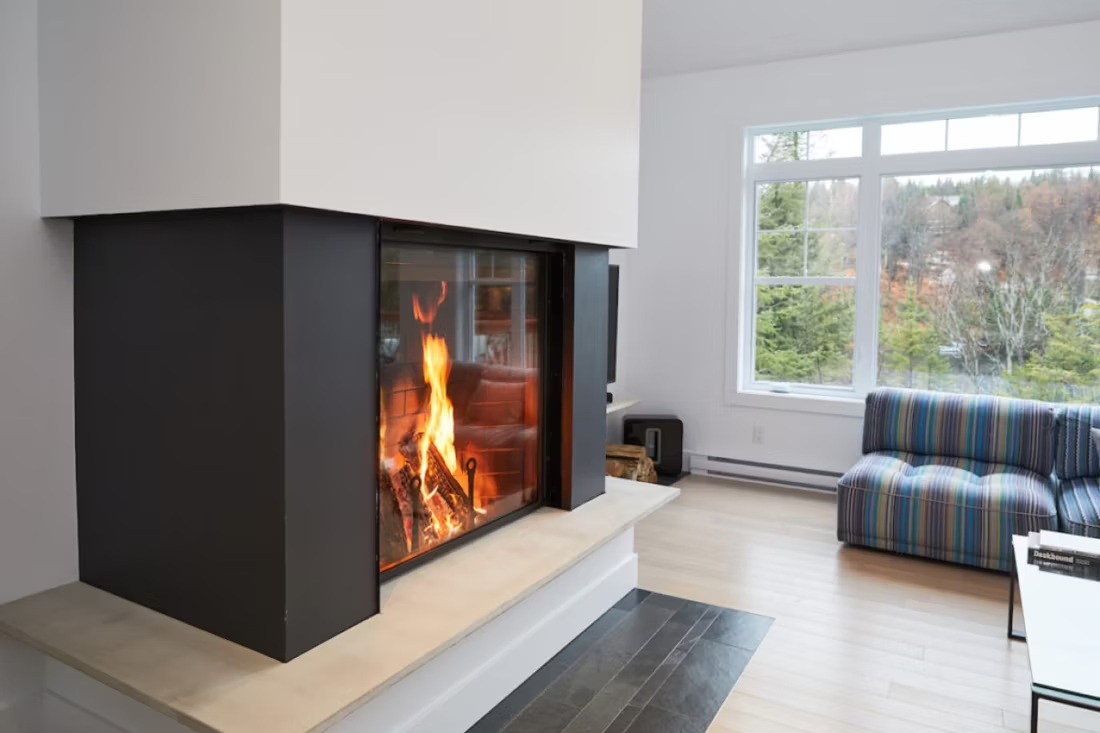
That said, wood-burning fireplaces and stoves haven't disappeared entirely. Older Mediterranean Revival and Spanish-style homes in downtown Sarasota and Laurel Park sometimes still have the original masonry fireplace, and owners want it working rather than bricked up. Siesta Key and Longboat Key vacation cottages occasionally add a small wood stove purely for atmosphere on the handful of genuinely chilly nights each winter. And after a hurricane knocks out power for days, a wood-burning unit is one of the few heat and cook sources that doesn't need the grid—locally available oak and pine, and the mahogany that comes down from ornamental storm-damaged trees, all burn fine once seasoned. This is a niche fit, not a mainstream heating choice, and it's worth going in with that expectation.
Three steps. No salesperson until you're ready.
Tell us about your project
Your zip code, your situation, and the fuel you're leaning toward—or let the answers point you to one.
See what's actually available
The brands dealers within 100 miles genuinely carry—real options, never a catalog mirage.
Get your dealer & Project Guide
A trusted local dealer, plus the free Project Guide & Parts List that names every component of the job.
Frequently Asked Questions
How much does a wood stove installation cost in Sarasota County?
Because wood-burning installs are uncommon in Sarasota County, pricing varies more than it would in a cold-climate market with a dozen competing installers. A straightforward freestanding wood stove with a new Class A chimney typically lands somewhere in the $3,500 to $8,000 range, depending on the unit and how much new venting is required. Converting an existing masonry fireplace in an older downtown Sarasota home to a wood-burning insert is often less expensive if the chimney is already sound. Get a firm quote from a local dealer rather than assuming a number—with so few installers doing this work regularly, quotes can differ significantly from one company to the next.
What size wood stove do I need in a climate this mild?
Almost any Sarasota County installation is going to be undersized relative to what you'd see in a cold climate, and that's by design. With winter lows averaging 50°F and only 417 heating degree days a year, you're not trying to heat a home through a hard winter—you're running the stove occasionally for atmosphere, a rare cold snap, or backup heat after a storm. Small stoves rated for 1,000 square feet or less are usually plenty, even in a larger home, because they're supplementing central HVAC rather than replacing it. A local dealer can confirm this during an in-home look at your existing fireplace or planned install location.
How do I find someone who actually installs wood stoves in Sarasota County?
Most hearth retailers in Sarasota County are set up around gas and electric fireplaces, which is where the local demand actually is. Wood installation is a smaller part of their business, so ask directly whether they handle wood-burning units and chimney work, not just gas conversions. Look for NFI (National Fireplace Institute) or CSIA (Chimney Safety Institute of America) credentials specifically—the same credentials that matter in cold-climate markets apply here, they're just less common to find locally. We match you with a dealer who has confirmed they still do this work rather than sending you to a generalist.
Should I install a wood stove or a wood insert in my Sarasota home?
If your home already has a masonry fireplace—common in the older Mediterranean Revival and Spanish-style houses around downtown Sarasota, Laurel Park, and Bay Front—a wood insert is usually the simpler and less expensive path, since it reuses the existing chimney and dramatically improves how much heat you actually get from a fire that was previously mostly decorative. A freestanding wood stove makes more sense if you don't have an existing fireplace and want a standalone unit, though in a climate this mild that's a bigger commitment for less use.
Do I need a permit to install a wood stove in Sarasota County?
Yes. New wood-burning installations require a building permit, either through the Sarasota County Building Department for unincorporated areas or the City of Sarasota's building division if you're within city limits. The permit process covers the same things it would anywhere—proper clearances, Class A chimney specs, and hearth pad requirements—even though wood-burning appliances are a small fraction of the permits either office issues in a given year. A local installer familiar with wood-burning work (rather than only gas) will know which office to file with and typically handles the paperwork as part of the job.
What's the best wood stove for a climate this mild?
You don't need the long-burn, cold-climate-optimized catalytic stoves that dominate markets like Bozeman, MT or Burlington, VT. In Sarasota County, a smaller, EPA-certified non-catalytic stove is usually the better fit—it's easier to run for a short evening fire, doesn't require you to manage a 20-hour burn cycle you'll never need, and costs less up front. Local oak and pine both burn well and are readily available; mahogany from downed landscape trees after storms can work too once properly seasoned, though it's not a typical firewood species and burns hotter and faster than oak.
How often should my chimney be inspected if I barely use my fireplace?
Even with light use, the CSIA still recommends an annual inspection—arguably more important in Sarasota County, not less, because a chimney that only gets used a handful of nights a year is more likely to have gone unnoticed if a bird's nest, debris, or storm damage got into the flue between uses. Schedule the inspection before hurricane season or before the first cool front of the year, whichever comes first, so the fireplace is ready if you lose power and need it.
Where do I get firewood in Sarasota County?
Firewood suppliers are less common here than in a cold-climate market, but local tree services and landscaping companies are a good source, especially after storm season when downed oak, pine, and ornamental mahogany need to go somewhere. Buy well-seasoned wood rather than green wood cut from a recent storm—freshly downed wood needs six months to a year to dry out enough to burn cleanly, so plan ahead if you're relying on storm debris rather than buying split, seasoned cords.
Should I get a wood fireplace, or would gas or electric make more sense in Sarasota County?
For most Sarasota County homes, gas or electric is the more practical choice—both are rated standard for this climate, meaning local dealers stock and install them routinely, parts and service are easy to find, and there's no chimney or wood storage to deal with. A gas fireplace gives you instant, clean heat on the rare cool evening; an electric unit is even simpler and works well in condos and homes without gas service. Wood is worth pursuing specifically if you want the authentic fire experience, you're restoring a historic fireplace, or you want a non-electric backup for hurricane season outages—but go in knowing you're choosing it for the experience, not for heating performance.
Why is my open fireplace making my house colder?
Open fireplaces suck—literally. As the fire burns, it consumes air your furnace already paid to heat and pulls it out through the chimney, so the house is actually colder after the fire goes out than before you lit it. An insert fixes this: it seals the chimney, puts fixed glass across the front, and turns that hole in your house into a real heat source.
Why is a fireplace insert so efficient?
An insert does two things: it seals the chimney completely, so you stop losing air you already paid to heat, and it radiates warmth into the room through the firebox and glass. Most add a heat-exchange fan that pulls cool room air underneath, wraps it around the hot firebox, and pushes it back out warm. Your home is more efficient before you've even lit the first fire.
What is an in-home preview and do I need one?
It's a visit where a hearth professional measures your space, confirms the model you picked actually works in your home, and walks the specs—framing, gas line, venting, finish work—before anything is ordered. Some details you just can't know until you see the house. Never make a down payment without one; it's the single most-skipped step that burns buyers.
How much should I budget for a fireplace?
For an average home—covering the fireplace, the vent pipe, and basic installation—a budget between $3,900 and $5,500 gives you a lot of options across wood, gas, and pellet. By the time you add finish work, gas line, and electrical, the average complete installation lands between $5,000 and $12,000 all-in. In a remodel or new build, a good rule is to put about 2.5% of the total project cost toward the fireplace.
Stove and Fireplace Dealers in Sarasota County
Find your wood fireplace in Sarasota County.
Tell us about your home and your reason for wanting a wood-burning fireplace or stove—ambiance, a historic restoration, or hurricane-season backup—and we'll match you with a local Sarasota County dealer who actually installs wood units, plus a free Project Guide & Parts List with the exact parts and vent kit for your project.
Find Your Fireplace →