
Keep Your Family Warm and Safe—No Matter What
Wood heat isn't the norm along the Indian River, but for ambiance, hurricane-season backup, or a vacation home up north, it's still a real option. We'll connect you with a local dealer who can tell you straight whether it's worth it.
Every Project Starts From One of These Five Situations
Wood heat isn't a necessity in Rockledge—but it's still a genuine option.
Rockledge sits at just 23 feet above sea level along the Indian River in Brevard County, in climate zone 2A, where the average winter low hovers around 50°F and the city has a winter heating load that's only a fraction of what a place like Duluth, MN or Burlington, VT racks up in a single cold month. Practically speaking, almost no Rockledge home needs a wood stove to survive winter. That's a very different starting point from most cities on this site, and we'd rather tell you that up front than pretend otherwise.
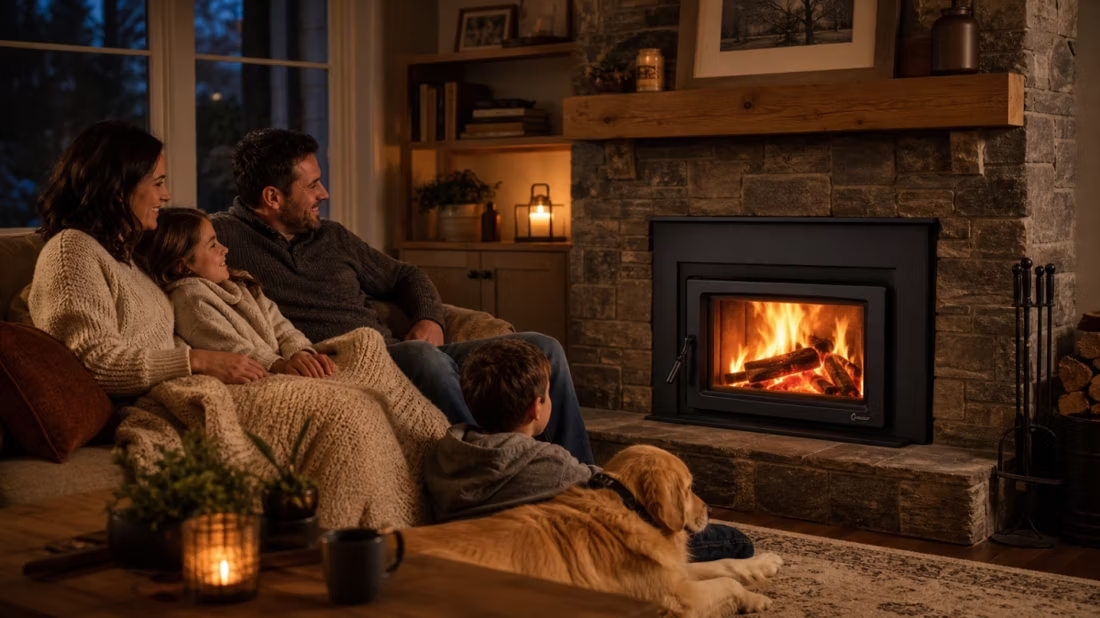
That said, homeowners here do install wood-burning fireplaces and stoves—usually for the ambiance of a real fire, for a second home or camp further north, or as a genuine backup during hurricane season when Florida Power & Light or Duke Energy Florida service can be out for days at a time. A wood-burning unit is one of the few heat sources that keeps working with the grid down. If that's your reason, a trusted local dealer can size a unit appropriately for occasional use rather than daily heating load, which changes the whole recommendation.
Three steps. No salesperson until you're ready.
Tell us about your project
Your zip code, your situation, and the fuel you're leaning toward—or let the answers point you to one.
See what's actually available
The brands dealers within 100 miles genuinely carry—real options, never a catalog mirage.
Get your dealer & Project Guide
A trusted local dealer, plus the free Project Guide & Parts List that names every component of the job.
Frequently Asked Questions
Does a wood fireplace actually make sense in Rockledge's climate?
For most homes, not as a primary heat source—with a winter heating load that's only a fraction of colder climates and winter lows averaging 50°F, Rockledge simply doesn't get cold enough often enough to justify daily wood heat the way a home in Minneapolis or Bismarck would. Where it does make sense is ambiance (a real hearth for the handful of genuinely chilly nights each winter), resale appeal in certain homes, or backup heat and cooking capability during hurricane-season power outages. A local dealer will be upfront with you about which category your project falls into before recommending equipment sized for actual use, not year-round heating.
How much does a wood stove or fireplace installation cost in Rockledge?
Because wood-burning installs are uncommon this far south—most Central Florida hearth companies focus on gas and electric—expect quotes toward the higher end of the national range, often $5,000 to $9,000, versus $3,500 to $7,000 in a market where installers do this work weekly. Much of that cost comes from building a proper Class A chimney system in a home that, like most Florida construction, was never built with a masonry flue. Homes near the coast also need chimney bracing that accounts for Florida Building Code wind-load requirements, which adds labor a cold-climate installer wouldn't factor in.
Do I need a permit to install a wood-burning fireplace in Rockledge?
Yes. Any new wood-burning appliance requires a building permit through the City of Rockledge Building Division (or Brevard County's building department if you're in an unincorporated pocket near the 32955 or 32926 zips), and the installation has to meet Florida Building Code clearance, hearth, and structural requirements—including wind-load bracing for the chimney chase, since Brevard County sits in a hurricane-prone coastal zone. A certified installer will typically pull this permit as part of the job rather than leaving it to you.
What firewood is actually available locally?
Oak and pine are the practical local supply—slash pine and live oak are common yard and canopy trees in Brevard County, and a lot of usable firewood shows up after storm cleanup during hurricane season. Mahogany turns up occasionally from ornamental yard trees or storm-downed limbs and burns well due to its density, but it's not something you'll find sold by the cord commercially the way oak and pine are. Most Rockledge burners are buying seasoned oak or pine from a landscaping supplier or firewood seller rather than cutting their own, since there's no public forest land or cutting-permit system here like there is out west.
Can a wood stove work as backup heat during a hurricane power outage?
Yes, and it's one of the more legitimate reasons to install one here. Unlike an electric fireplace or a gas unit with electronic ignition, a wood stove needs no utility hookup at all—useful when Florida Power & Light or Duke Energy Florida service is down for an extended stretch after a storm. It won't be needed for warmth in the way it would be up north, but it can provide cooking heat, light, and a functioning heat source if a rare cold snap follows a storm outage. Size the unit for occasional use, not daily heating, and a local dealer can guide that decision.
Wood vs. electric fireplace—which fits Rockledge better?
For most Rockledge homes, electric wins on practicality: no chimney, no permit for structural venting, install costs typically under $1,500, and it runs on either Florida Power & Light or Duke Energy Florida service (residential rates run roughly 13.7¢ to 16.6¢ per kWh depending on which utility serves your address). The tradeoff is that electric does nothing during a power outage, which is exactly when a wood-burning unit earns its keep. If ambiance and low-maintenance operation matter most, go electric. If genuine grid-independent backup matters, wood is the only option between the two that still functions with the power out.
Wood vs. gas—which fits Rockledge better?
Gas is far more common in this market, since natural gas and propane infrastructure already reach most Rockledge neighborhoods and a gas insert or fireplace requires no chimney construction the way a wood-burning unit does. Gas also gives you instant, controllable heat for the occasional cool evening without hauling or storing firewood in Florida humidity. Wood still has an edge in one specific scenario: a standard gas fireplace with electronic ignition typically won't operate in a power outage unless it has a battery-backup or millivolt system, while a basic wood stove works regardless. If hurricane resilience is the deciding factor, that's worth weighing against gas's everyday convenience.
Are there any burn restrictions or air quality rules in Rockledge?
No—Brevard County doesn't have the winter temperature inversions or non-attainment air quality status that trigger burn curtailment programs in places like the Pacific Northwest or interior mountain valleys. Coastal Brevard's flat terrain and steady sea breeze off the Indian River and the Atlantic disperse smoke well, and there's no local wood-smoke ordinance restricting use. The bigger practical consideration is usually your neighborhood's HOA deed restrictions, which occasionally limit exterior chimney additions—worth checking before you commit to a design.
How should I store firewood in Florida's humidity?
Keep it off the ground, covered on top but open on the sides for airflow, and away from the house foundation—Central Florida's humidity and termite pressure make ground-contact woodpiles a fast route to rot and pest problems. Seasoned oak or pine bought from a local supplier is usually already dry enough to burn, but if you're storing more than a few weeks' supply, a raised rack with a metal roof panel keeps it burn-ready and keeps wood-boring insects from migrating toward your house. Given how little wood most Rockledge households burn in a year, buying smaller amounts more often is often more practical than keeping a full cord on hand.
Why is my open fireplace making my house colder?
Open fireplaces suck—literally. As the fire burns, it consumes air your furnace already paid to heat and pulls it out through the chimney, so the house is actually colder after the fire goes out than before you lit it. An insert fixes this: it seals the chimney, puts fixed glass across the front, and turns that hole in your house into a real heat source.
Why is a fireplace insert so efficient?
An insert does two things: it seals the chimney completely, so you stop losing air you already paid to heat, and it radiates warmth into the room through the firebox and glass. Most add a heat-exchange fan that pulls cool room air underneath, wraps it around the hot firebox, and pushes it back out warm. Your home is more efficient before you've even lit the first fire.
Does a fireplace add value to my home?
On average, a fireplace adds back to the home about the same amount you spent installing it. Add the monthly savings from heating the rooms you actually use instead of the whole house—often hundreds of dollars a year—and the value case is strong before you even count what a fire does for how your family uses the room.
Can I install a fireplace myself?
If you're putting a fire in your house on purpose, it's best to work with an expert. Unless you're genuinely experienced in framing, gas line, vent pipe, and the national code on clearances to combustibles, have a professional do it—and ideally the same company that sells you the fireplace, so warranty, service, and liability all live under one roof.
Nearby Dealers
Hearth shops serving Rockledge and the surrounding area.
Flame Tech Fireplace And Grill
Find your wood fireplace in Rockledge.
Tell us about your home and how you'd actually use a wood-burning fireplace—ambiance, hurricane backup, or both—and we'll match you with a local dealer and a free Project Guide & Parts List sized to that real-world use, not a one-size-fits-all install.
Find Your Fireplace →