
Pellet Heat in a Place That Rarely Needs It.
Port St. Lucie's mild winters mean pellet stoves are a niche choice here - we'll tell you honestly where they still make sense, and match you with a dealer who can source and install one correctly.
Every Project Starts From One of These Five Situations
A climate that almost never calls for it.
Port St. Lucie sits in climate zone 2A on Florida's Treasure Coast, at just 25 feet of elevation. The city logs an average of only 198 heating degree days a year - compare that to Buffalo, NY, which racks up more than 6,400, or Minneapolis, which sees over 7,600 - and the average winter low here hovers around 57°F. Most years bring a handful of nights in the 30s and 40s during a passing cold front, and that's about the extent of the heating season.
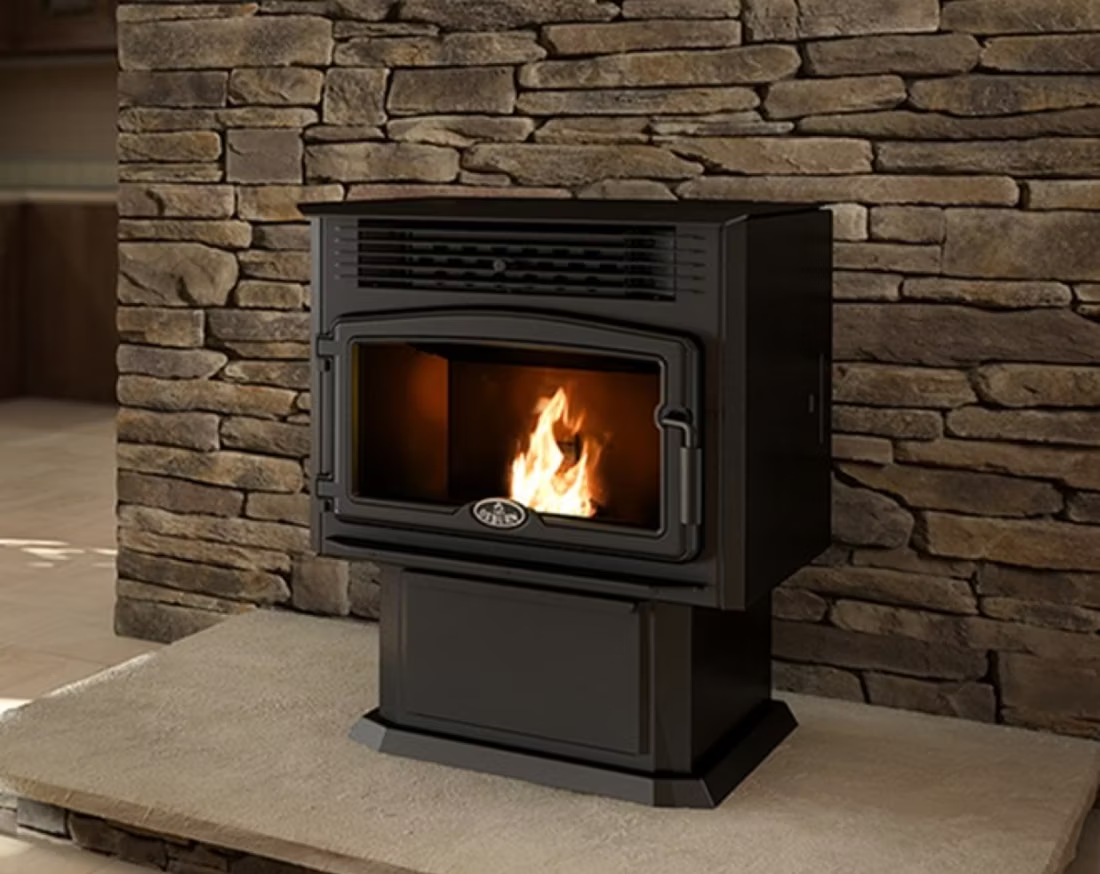
That reality means pellet stoves aren't a mainstream product in this market the way they are in the upper Midwest or mountain West. The homeowners who do install one here are typically running a screened lanai, a detached garage or workshop, or a second home they split time with a colder climate, and want the ambiance and occasional real warmth without dealing with an open wood fire. Local dealers can special-order units and fuel from regional suppliers like Lignetics, Hamer Pellet Fuel, and Greenway Renewable Energy, but for most Port St. Lucie households, an electric fireplace - powered through Florida Power & Light at roughly $0.1371 per kWh - covers the ambiance need with none of the fuel logistics.
Three steps. No salesperson until you're ready.
Tell us about your project
Your zip code, your situation, and the fuel you're leaning toward—or let the answers point you to one.
See what's actually available
The brands dealers within 100 miles genuinely carry—real options, never a catalog mirage.
Get your dealer & Project Guide
A trusted local dealer, plus the free Project Guide & Parts List that names every component of the job.
Frequently Asked Questions
Does a pellet stove actually make sense in Port St. Lucie?
For most homes, no - not as a primary or even meaningful supplemental heat source. With only about 198 heating degree days a year and an average winter low near 57°F, Port St. Lucie rarely sees the sustained cold that pellet stoves are built for. Where they can make sense is narrow: a screened lanai used on the occasional 40-degree morning, a detached workshop or garage, or a home where the owner wants the visual and radiant feel of a real flame more than actual heat output. If you're weighing pellet against electric, an electric fireplace is almost always the simpler, cheaper answer for ambiance-only use in this climate.
What does a pellet stove installation cost in Port St. Lucie?
Because pellet stove installs are infrequent here, there isn't a deep local cost history the way there is for gas or electric fireplaces. Nationally, a pellet stove installation with proper venting typically runs $3,000 to $6,000 depending on the unit and whether venting has to be run through an exterior wall. Given how rarely local dealers install these units, expect a case-by-case quote rather than a standard package price, and ask specifically about the installer's pellet-stove experience before committing.
Do I need a permit to install a pellet stove in Port St. Lucie?
Yes - any fuel-burning appliance installation, including a pellet stove, requires a building permit through the City of Port St. Lucie Building Department, or St. Lucie County's building division for homes outside city limits. Because these installs are uncommon locally, it's worth confirming your installer has pulled a pellet-appliance permit before and knows the venting clearance requirements, since inspectors here handle far more gas and electric fireplace permits than pellet ones.
Where do the wood pellets themselves come from?
Unlike a wood stove, a pellet stove doesn't run on locally cut oak, mahogany, or pine from St. Lucie County - pellets are a manufactured fuel, typically made from compressed softwood sawdust and shipped in from regional mills. Brands like Lignetics, Hamer Pellet Fuel, and Greenway Renewable Energy distribute in the Southeast and are the most likely to be stocked or special-ordered by a Port St. Lucie hearth dealer, usually by the 40-pound bag rather than by the ton the way a colder-climate customer might buy.
What's the more common fireplace choice in Port St. Lucie?
Electric fireplaces are by far the more common ambiance choice here, since Port St. Lucie's mild winters rarely call for real supplemental heat. Gas fireplaces and gas log sets also show up in newer construction, mostly for aesthetics rather than heating need. Pellet stoves are the outlier fuel type in this market - if you're drawn to one, it's worth being clear with your local dealer about whether you actually want heat output or mostly want the look and sound of a real flame, since that changes which unit makes sense.
Who actually buys a pellet stove in a climate like this?
The handful of Port St. Lucie buyers we hear about tend to fall into a few groups: owners of screened lanais or outdoor living spaces who want warmth on the rare chilly evening, workshop or garage owners who want a self-contained heat source that doesn't need a wood pile, and part-time residents who own a pellet stove at a northern property and want the same familiar setup here. It's a small slice of the market, and local dealers will usually tell you that upfront.
Is pellet fuel storage a problem in Florida's humidity?
Yes, and it's the biggest practical issue for pellet stove owners here. Wood pellets absorb moisture readily, and Port St. Lucie's humidity will cause bagged pellets to swell, clump, and crumble into sawdust if they're not stored in a sealed, climate-controlled space. Garages and lanais - the exact spaces where a pellet stove is most likely to be installed - are also the least humidity-controlled parts of most homes. Plan on airtight storage bins and buying pellets in smaller quantities rather than stockpiling a season's supply the way a Midwest homeowner would.
Pellet stove vs. electric fireplace - which should I choose?
For most Port St. Lucie homes, electric wins on practicality: no fuel to store, no auger or hopper to maintain, no humidity concerns, and installation costs that run a few hundred to about a thousand dollars instead of several thousand. Pellet earns its keep only if you specifically want real combustion heat and flame - useful for a workshop, garage, or lanai that occasionally needs actual BTUs, not just visual warmth. If ambiance is the primary goal, electric is the simpler and far more common local choice.
How do I find a dealer who actually installs pellet stoves in Port St. Lucie?
Because pellet stoves are a niche request here, not every hearth retailer in the area stocks or installs them regularly. We match Port St. Lucie homeowners with a trusted local dealer who has handled pellet installations before and can speak honestly about whether it's the right call for your space - rather than sending you into a big-box store with no local track record on this specific appliance.
Why is my open fireplace making my house colder?
Open fireplaces suck—literally. As the fire burns, it consumes air your furnace already paid to heat and pulls it out through the chimney, so the house is actually colder after the fire goes out than before you lit it. An insert fixes this: it seals the chimney, puts fixed glass across the front, and turns that hole in your house into a real heat source.
What's the difference between an insert and a zero-clearance fireplace?
An insert is a fireplace that slides into a pre-existing wood-burning fireplace—if you don't have one, there's nothing to insert it into. A zero-clearance fireplace is built into a framed wall, which makes it the answer for remodels and new construction. Simple test: existing masonry fireplace means insert; blank or framed wall means zero-clearance.
How much should I budget for a fireplace?
For an average home—covering the fireplace, the vent pipe, and basic installation—a budget between $3,900 and $5,500 gives you a lot of options across wood, gas, and pellet. By the time you add finish work, gas line, and electrical, the average complete installation lands between $5,000 and $12,000 all-in. In a remodel or new build, a good rule is to put about 2.5% of the total project cost toward the fireplace.
Does a fireplace add value to my home?
On average, a fireplace adds back to the home about the same amount you spent installing it. Add the monthly savings from heating the rooms you actually use instead of the whole house—often hundreds of dollars a year—and the value case is strong before you even count what a fire does for how your family uses the room.
Nearby Dealers
Hearth shops serving Port St. Lucie and the surrounding area. Every listing shows whether it is a WhyFire partner, a dealer we have verified as authorized for the brands we recommend, or a local business carrying hearth products. No manufacturer pays for placement. How we verify dealers →
Jtc Florida Homes
The Backyard Life
Ferrell Gas
Brandster
C And C Diversified
Guyton's Custom Designs, Inc.
Ghs Custom Home Design, Inc.
Como Oil And Propane
Pellet Brands Stocked Around Port St. Lucie
Manufacturers will point you to the nearest stocking dealer.
Find your pellet stove option in Port St. Lucie.
Tell us about your space and how you plan to use it, and we'll give you an honest read on whether pellet makes sense - plus a free Project Guide & Parts List with the exact parts, venting, and a recommended local dealer for your Port St. Lucie project.
Find Your Fireplace →