
Electric Warmth That Fits Florida Living.
With only a light, brief stretch of mild chilly days each year, Port St. Lucie doesn't need a chimney to stay warm. Find the right electric fireplace or insert, and connect with a trusted local dealer.
Every Project Starts From One of These Five Situations
Real ambiance for a climate that rarely needs real heat.
Port St. Lucie sits at just 25 feet above sea level in climate zone 2A, where the average winter low hovers around 57°F and the entire heating season adds up to only a light, brief stretch of mild chilly days—a fraction of what a cold-climate city like Buffalo, New York logs in a single month. Most homes here are built on concrete block slab foundations without chimneys, and wood is essentially absent as a heating fuel; even pellet stoves, common across much of the pellet belt, have no real market in St. Lucie County.
What does show up, consistently, is electric. Because it needs no gas line, no chimney, and no exterior venting, an electric fireplace or insert works in nearly any room of a Port St. Lucie home—including the deed-restricted and age-qualified communities around Tradition, PGA Village, and St. Lucie West, where HOA rules often rule out anything requiring combustion or venting. It's less about heating and more about ambiance and the occasional January cold snap, and Florida Power & Light's residential rate of roughly $0.1371 per kWh keeps running costs negligible either way.
Three steps. No salesperson until you're ready.
Tell us about your project
Your zip code, your situation, and the fuel you're leaning toward—or let the answers point you to one.
See what's actually available
The brands dealers within 100 miles genuinely carry—real options, never a catalog mirage.
Get your dealer & Project Guide
A trusted local dealer, plus the free Project Guide & Parts List that names every component of the job.
Frequently Asked Questions
How much does an electric fireplace installation cost in Port St. Lucie?
Because electric units don't need a chimney, gas line, or exterior venting, installation costs in Port St. Lucie run well below wood or gas options. A freestanding or insert-style plug-in unit typically costs $150 to $600 including basic setup, since it plugs into an existing 120-volt outlet. A wall-mounted linear electric fireplace with a custom surround or media wall—a popular choice in newer Tradition and PGA Village-area homes—runs $800 to $2,500 depending on the size of the unit and any carpentry involved. Built-in units that require a dedicated circuit run by a licensed electrician add $200 to $500 to the total. Local retailers can spec the right unit and wiring for your home.
Does an electric fireplace even make sense in Port St. Lucie's climate?
Port St. Lucie sits in climate zone 2A with an average winter low around 57°F and only a light, brief stretch of mild chilly days each year—for comparison, a place like Duluth, Minnesota faces a long, brutal winter heating season nearly year-round. That means almost nobody here is heating a home with a fireplace. What electric fireplaces are used for locally is ambiance and the occasional cool snap in January or February when overnight temperatures dip into the 40s. It's a supplemental comfort feature, not a heating system, and that's exactly the role it's built for.
Do I need a permit to install an electric fireplace in Port St. Lucie?
In most cases, no. A plug-in freestanding or insert unit that uses a standard outlet doesn't require a permit. If you're having a wall-mounted or built-in unit hardwired to a dedicated circuit, that electrical work typically needs a permit through the St. Lucie County Building Department (or the City of Port St. Lucie Building Department if you're inside city limits), and it should be pulled by a licensed electrician. Local retailers who install these units regularly can tell you which category your project falls into before you buy.
Can I install an electric fireplace in a condo or HOA community?
Yes, and it's often the only fireplace option available. Port St. Lucie has a large share of deed-restricted and age-qualified communities—PGA Village, Tradition, and various Del Webb-style neighborhoods among them—where HOA rules or condo bylaws prohibit anything requiring a chimney or exterior vent. Electric fireplaces sidestep that entirely: no venting, no gas line, no exterior penetration. That's a big reason electric is the standard fireplace fuel choice in this market even though wood and pellet appliances are essentially absent here.
Why don't wood or pellet stoves show up as options for Port St. Lucie?
With only a light, brief stretch of mild chilly days each year and winters that rarely require any home heating at all, there's no functional need for a wood or pellet stove here, and local hearth retailers generally don't stock them. Humidity and pest concerns also make storing seasoned firewood impractical for most Port St. Lucie homes. Electric—and for some homeowners, propane-fired gas—covers the ambiance and occasional-warmth use case that a fireplace serves in this climate.
Is electric a good choice for Florida's humidity?
Yes. Unlike vent-free gas units, which release water vapor into the room as a byproduct of combustion, electric fireplaces produce zero moisture, combustion gases, or particulates. In a coastal, humid climate like Port St. Lucie's, that matters—added indoor moisture contributes to mold and mildew issues in concrete block (CBS) homes that are already fighting humidity year-round. Electric units also don't require any masonry or venting penetration through an exterior wall, which is one less spot for moisture intrusion in a house near the coast.
How much does it cost to run an electric fireplace with FPL rates?
Florida Power & Light's residential rate runs about $0.1371 per kWh in Port St. Lucie. A typical 1,500-watt electric fireplace on its heat setting costs roughly $0.21 per hour to run, or about $2 for a full evening. Most owners run the flame effect without heat much of the year, which draws a fraction of that—often under 100 watts, essentially pennies per hour. Given how few days a year actually call for supplemental heat here, running costs are a non-issue either way.
Where do homeowners in Port St. Lucie typically install electric fireplaces?
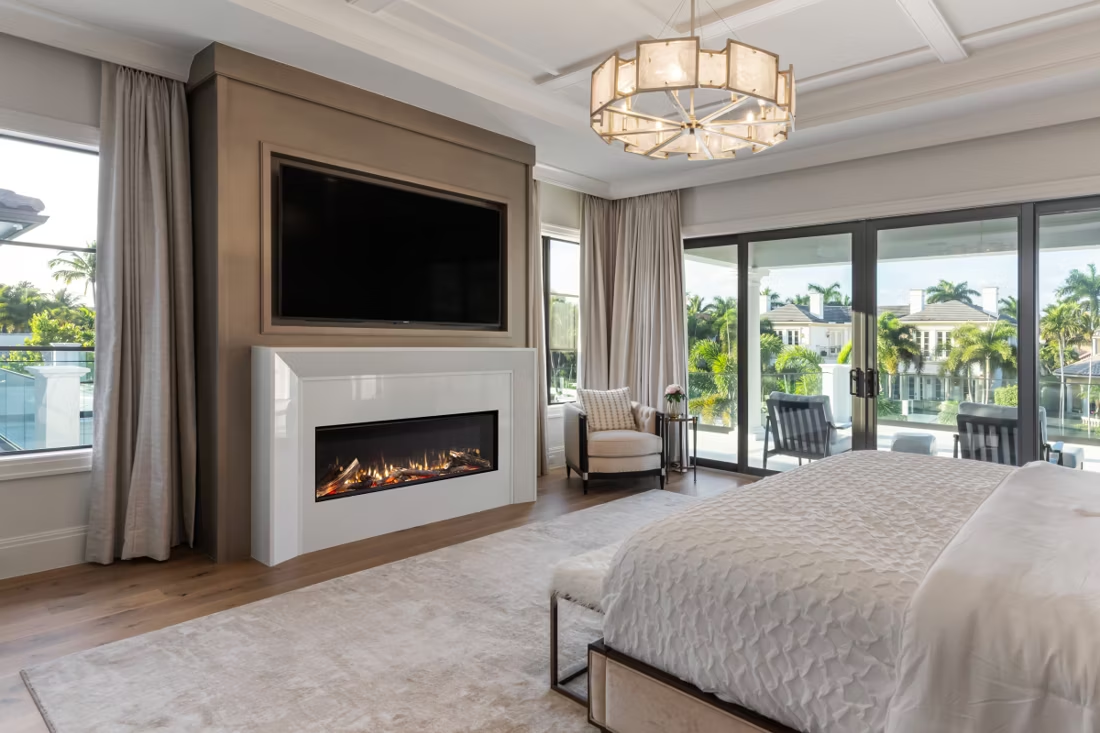
The most common spots are the primary bedroom, a den or home office, and the great room—often as a wall-mounted linear unit centered under a TV or built into a custom media wall, a layout common in newer construction throughout Tradition and St. Lucie West. Some homeowners also install a smaller freestanding or tabletop unit on a screened lanai for ambiance during outdoor entertaining in the cooler months. Local retailers can help you pick a size and mounting style that fits the room and your electrical setup.
Electric vs. gas—which should I choose for my Port St. Lucie home?
Gas fireplaces are available here, but since natural gas service is limited outside the core service areas, most gas installations in Port St. Lucie run on propane, which means adding a tank if you don't already have one for a water heater or range. Gas delivers a larger, more authentic-looking flame and real radiant heat output. Electric skips the tank, the gas line, and any venting altogether, installs in an afternoon, and works in HOA communities that restrict combustion appliances—but it won't function as backup heat during a power outage the way a battery-ignition gas unit can. For most Port St. Lucie homeowners prioritizing ambiance and easy installation, electric wins; for those wanting a bigger flame who don't mind propane logistics, gas is the better fit.
Can I put a TV above my fireplace?
Yes—with an asterisk. Fireplaces are hot and TVs don't like heat. Either put a mantel between them to deflect rising warmth, or choose a fireplace with heat-management technology that creates a cool zone on the wall above—the wall stays around 125 degrees, barely warm, while the room still gets full heat. If you like clean lines and don't want a mantel, heat management is the answer.
Does an electric fireplace need a vent or chimney?
No—that's its superpower. An electric fireplace needs a wall and an outlet, period. No vent pipe, no gas line, no clearances to design around, which is why it works in bedrooms, offices, apartments, and walls where venting a gas or wood unit would be impractical or impossible. Installation is typically the simplest and least expensive of any fireplace type.
Does a fireplace add value to my home?
On average, a fireplace adds back to the home about the same amount you spent installing it. Add the monthly savings from heating the rooms you actually use instead of the whole house—often hundreds of dollars a year—and the value case is strong before you even count what a fire does for how your family uses the room.
What is an in-home preview and do I need one?
It's a visit where a hearth professional measures your space, confirms the model you picked actually works in your home, and walks the specs—framing, gas line, venting, finish work—before anything is ordered. Some details you just can't know until you see the house. Never make a down payment without one; it's the single most-skipped step that burns buyers.
Nearby Dealers
Hearth shops serving Port St. Lucie and the surrounding area. Every listing shows whether it is a WhyFire partner, a dealer we have verified as authorized for the brands we recommend, or a local business carrying hearth products. No manufacturer pays for placement. How we verify dealers →
Jtc Florida Homes
The Backyard Life
Ferrell Gas
Brandster
C And C Diversified
Guyton's Custom Designs, Inc.
Ghs Custom Home Design, Inc.
Como Oil And Propane
Electric Service in Port St. Lucie
An electric fireplace's heater draws about 1,500 watts—pennies per hour at local rates.
Florida Power & Light Co
Find your electric fireplace in Port St. Lucie.
Tell us a bit about your home and we'll match you with the right electric fireplace or insert—and send over a free Project Guide & Parts List with your recommended local dealer.
Find Your Fireplace →