
A Small Fire for the Handful of Cold Nights You Get.
With such a light, short winter heating season, Port St. John rarely needs supplemental heat—but if you want a pellet stove for ambiance, a cold snap, or a second home up north, we'll connect you with a local dealer who can size it honestly.
Every Project Starts From One of These Five Situations
A pellet stove here is optional, not essential.
Port St. John sits at 32 feet in Brevard County on Florida's Space Coast, in climate zone 2A, where the average winter low hovers around 50°F and the entire heating season is short and mild, adding up to just a light dusting of chilly nights each year. Compare that to a place like Duluth, MN, which faces a heating load more than ten times as heavy most winters—the appliances that make sense there simply aren't doing the same job here. Most Port St. John homes run central AC nine months a year and never touch a thermostat set above 68°F even in January.
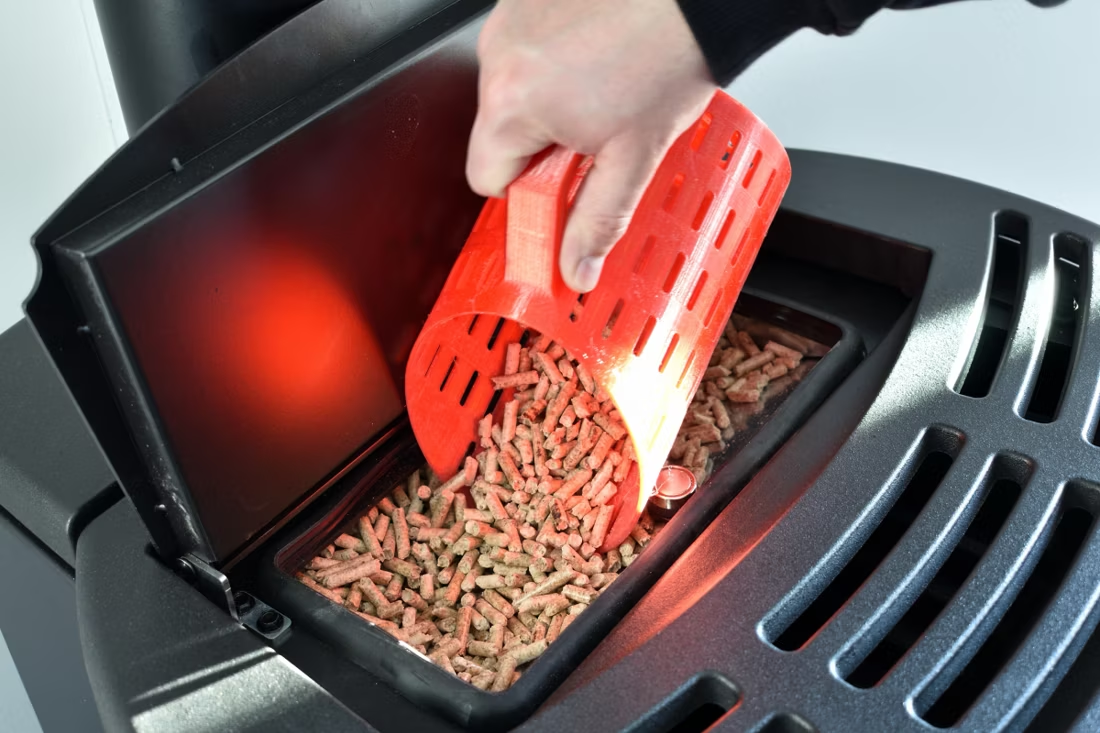
That's why pellet stoves show up on our list here as not-applicable in the strict heating sense—but that doesn't mean nobody installs one. A small number of homeowners in Port St. John add a freestanding pellet stove for the look and radiant glow it brings to a great room, for the rare radiational-cooling nights when inland Brevard County dips into the 30s, or because they split time with a colder property up north and already know the brand they like. Regional pellet fuel from Lignetics, Hamer Pellet Fuel, and Greenway Renewable Energy is available through farm-supply retailers along the Space Coast, so fuel sourcing isn't the obstacle—it's simply that almost no one here needs one for warmth.
Three steps. No salesperson until you're ready.
Tell us about your project
Your zip code, your situation, and the fuel you're leaning toward—or let the answers point you to one.
See what's actually available
The brands dealers within 100 miles genuinely carry—real options, never a catalog mirage.
Get your dealer & Project Guide
A trusted local dealer, plus the free Project Guide & Parts List that names every component of the job.
Frequently Asked Questions
Does a pellet stove make sense in Port St. John's climate?
Honestly, rarely as a heating necessity. With an average winter low near 50°F and a heating season so light it barely registers, Port St. John's heat load is a fraction of what a pellet stove is engineered for—a stove built to hold overnight heat through a Fargo, ND winter is massively overkill for a home that might see a handful of nights below 40°F. Where we do see them installed locally, it's almost always for the visual appeal of a real flame, a specific room that runs cold, or a homeowner who already loved their pellet stove at a previous northern property.
What are the actual situations where someone in Port St. John installs a pellet stove?
The most common cases we see: a great room or lanai conversion where the homeowner wants a fire feature more than functional heat, a manufactured or older home in inland Brevard that gets genuinely cold during a January radiational-cooling snap, and snowbirds or dual-residence owners who already run a pellet stove at a cabin up north and want the same setup here for consistency. None of these are about offsetting a real heating bill—Florida Power & Light and Duke Energy customers in this area simply don't have a heating bill worth offsetting.
How much does a pellet stove installation cost in Port St. John?
Nationally, a freestanding pellet stove with through-wall venting typically runs $3,000 to $6,000 installed, and that range holds reasonably well here too—but expect fewer installers to specialize in pellet appliances in Central Florida than you'd find in a wood-pellet-heavy market like the upper Midwest. Because most Port St. John homes are slab-built without an existing chimney, installs are almost always freestanding units with a horizontal through-wall vent rather than anything routed through a masonry flue. Get a firm quote from a local dealer rather than assuming a number—parts availability and installer scheduling both affect the final price here more than they would in a market with steady demand.
Can I put a pellet insert into an existing fireplace in Port St. John?
Possibly, but it's uncommon. Most homes in Port St. John and the surrounding Brevard County subdivisions were built from the 1970s through the 2000s without wood-burning masonry fireplaces, since heating was never a design priority. If your home is one of the exceptions with an existing hearth, a pellet insert can work, but the far more typical local install is a freestanding stove vented straight through an exterior wall in a garage, lanai, or den—no existing flue required.
Do I need a permit to install a pellet stove in Port St. John?
Yes. Any new fuel-burning appliance with venting through an exterior wall requires a building permit through Brevard County's Building Code Compliance office, along with an electrical permit for the stove's power connection. A local dealer who regularly installs pellet appliances in Brevard County will typically pull these permits as part of the job—which matters here specifically, because inspectors in a low-demand market like this one may see far fewer pellet-stove permit applications than in a heating-dependent state, so working with someone who's done it before avoids delays.
Where can I buy pellet fuel in Port St. John?
Regional brands including Lignetics, Hamer Pellet Fuel, and Greenway Renewable Energy are sold through farm-supply and hardware retailers along the Space Coast, though selection is thinner than in a market where pellet heat is standard. Because usage here is light—often just a bag or two per season rather than the two to three tons a northern home might burn—most Port St. John owners buy pellets as needed rather than stocking a season's supply in advance.
Will a pellet stove work during a hurricane power outage?
No, not without a generator. Pellet stoves rely on an electric auger to feed fuel and a blower to distribute heat, so they shut down the moment the power does—which matters in Brevard County, where hurricane season regularly brings multi-day outages. If backup heat during an outage is genuinely a concern (unlikely given how mild Port St. John winters are, but possible after a late-season storm), a battery-backup-equipped model or a small generator is the only way to keep a pellet stove running through a blackout.
Does Florida humidity affect stored pellet fuel?
Yes, significantly. Wood pellets are compressed sawdust with no binder other than natural lignin, and they absorb ambient moisture readily—in Port St. John's humid subtropical air, bags left in a garage or lanai without a sealed container can swell, crumble, and clog a stove's auger within a season. Store pellets in airtight bins rather than the original paper packaging, and given how rarely most local units run, buy in small quantities rather than stockpiling a full ton at a time.
Pellet stove vs. electric fireplace—which fits Port St. John better?
For nearly every Port St. John home, electric wins. Electric fireplaces and stoves need no fuel storage, no venting, no auger maintenance, and no humidity management—you plug them in and they work, drawing power from Florida Power & Light or Duke Energy Florida at roughly 13.7 to 16.6 cents per kWh. Pellet stoves offer a more authentic flame and genuine radiant heat, which is the entire reason someone chooses one here, but that choice is about aesthetics and personal preference rather than heating need. If you want ambiance without the fuel logistics, electric is the practical local answer; if you want a real fire and don't mind sourcing pellets, a local dealer can still make that happen.
Why is a fireplace insert so efficient?
An insert does two things: it seals the chimney completely, so you stop losing air you already paid to heat, and it radiates warmth into the room through the firebox and glass. Most add a heat-exchange fan that pulls cool room air underneath, wraps it around the hot firebox, and pushes it back out warm. Your home is more efficient before you've even lit the first fire.
How often does a pellet stove need cleaning?
A clean pellet stove is a happy pellet stove. Plan on cleaning the burn pot about once a week when you're burning regularly—ash and clinkers gum up the air holes just like a pellet barbecue. Most pellet stove problems trace back to skipped cleaning that nobody explained up front. Some designs make it easy with a trapdoor burn pot: pull a lever and the gunk drops into the ash pan.
Can a fireplace actually lower my heating bill?
Yes—by creating a comfort zone. A furnace heats every square foot of the house just to warm the one room you're in; a gas fireplace on low burns roughly a sixth of the gas a typical furnace does. Set the furnace around 55–60 degrees as a baseline, then heat the rooms your family actually uses. Families who heat this way commonly save $20–$60 a month.
Can I install a fireplace myself?
If you're putting a fire in your house on purpose, it's best to work with an expert. Unless you're genuinely experienced in framing, gas line, vent pipe, and the national code on clearances to combustibles, have a professional do it—and ideally the same company that sells you the fireplace, so warranty, service, and liability all live under one roof.
Nearby Dealers
Hearth shops serving Port St. John and the surrounding area.
Flame Tech Fireplace And Grill
Pellet Brands Stocked Around Port St. John
Manufacturers will point you to the nearest stocking dealer.
Find your pellet stove in Port St. John.
Tell us about your space and we'll match you with a local dealer who installs pellet stoves in Brevard County, plus a free Project Guide & Parts List with the exact vent kit and parts your project needs.
Find Your Fireplace →