
Pellet Heat Isn't Common Here—Here's What's Realistic.
With only a light winter heating need and winter lows averaging 48°F, Poinciana rarely needs combustion heat—but if you still want a pellet stove for ambiance or a vacation property up north, here's what actually makes sense.
Every Project Starts From One of These Five Situations
Central Florida heating math doesn't often include pellets.
Poinciana sits at just 60 feet in elevation in Polk County, in climate zone 2A, where the average winter low hovers around 48°F and the entire winter heating need is roughly a tenth of what colder regions face. Compare that to a place like Duluth, MN, which has a heating season nearly twenty times longer and harsher, and it's clear why pellet stoves—designed to burn through cordwood's compressed cousin for hours of steady radiant heat—simply aren't a standard fixture in this part of Florida. Most Poinciana homes rely on a heat pump for the handful of nights each winter that dip near freezing, and that's genuinely all most households need.
That said, pellet stoves aren't unheard of here. Poinciana has a large population of retirees and part-time residents, many splitting time between a Florida home and a colder state up north, and some want the familiar look and feel of a stove they already know from up there. Others in the area's 55+ communities want a stylish focal point for a lanai or den rather than a serious heat source. Regional pellet suppliers like Lignetics, Hamer Pellet Fuel, and Greenway Renewable Energy do serve central Florida, though stock is generally thinner here than in colder states, since local demand is low. If a pellet stove still makes sense for your home, a local dealer can tell you honestly whether it's the right fit or whether a different fuel serves you better.
Three steps. No salesperson until you're ready.
Tell us about your project
Your zip code, your situation, and the fuel you're leaning toward—or let the answers point you to one.
See what's actually available
The brands dealers within 100 miles genuinely carry—real options, never a catalog mirage.
Get your dealer & Project Guide
A trusted local dealer, plus the free Project Guide & Parts List that names every component of the job.
Frequently Asked Questions
How much does a pellet stove installation cost in Poinciana?
Nationally, a pellet stove installation typically runs $3,500 to $6,500 depending on the unit and venting requirements, and Poinciana homeowners should expect to land in that range or slightly above it—not because the work is harder, but because so few local installers stock and service pellet appliances regularly. Expect the unit itself to be special-ordered, and factor in the cost of a horizontal through-wall vent kit, which is the most common venting path for pellet stoves in single-story Florida homes without an existing masonry chimney.
Why don't more homes in Poinciana have pellet stoves?
The short answer is climate. Poinciana's winter heating need is a small fraction of what places like Burlington, VT or International Falls, MN face each year. With winter lows averaging 48°F, most homes here are built around cooling loads, not heating loads, and a standard heat pump easily covers the handful of chilly nights each winter. Pellet stoves are built for sustained, all-night heat output in genuinely cold climates—a scenario Poinciana rarely sees.
Do I need a permit to install a pellet stove in Poinciana?
Yes—even though pellet stoves are uncommon here, a solid-fuel appliance installation still requires a building permit through the Polk County Building Division, since Poinciana is unincorporated. There's no local air quality non-attainment issue to navigate (Polk County has none on record), so the permitting process is mostly about verifying clearances, venting, and hearth pad specs match the manufacturer's listing—the same code review any Florida jurisdiction would run for a new solid-fuel appliance.
Where can I actually buy pellets in Poinciana?
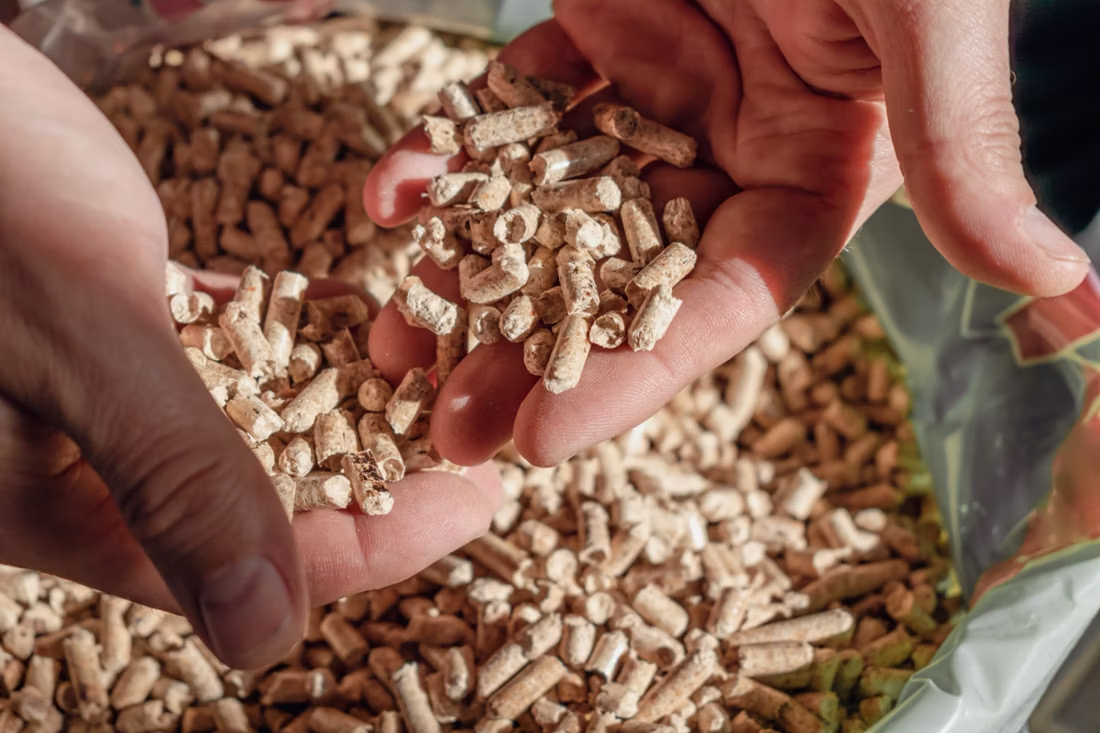
Pellet fuel isn't stocked on every hardware store shelf in central Florida the way it is in the Midwest or Northeast. Regional brands like Lignetics, Hamer Pellet Fuel, and Greenway Renewable Energy distribute through farm-and-feed stores and some big-box locations in the greater Orlando and Lakeland area, but supply is thinner and seasonal. Most Poinciana pellet stove owners buy a pallet (roughly 50 forty-pound bags, or one ton) at a time ahead of the cooler months rather than restocking bag by bag, both for convenience and to lock in stock before winter demand dries up shelves at the few retailers that carry it.
Does a pellet stove actually make sense for my Poinciana home?
It depends on what you want out of it. If you're hoping for a primary or even meaningful supplemental heat source, a pellet stove is probably overbuilt for a climate that only sees a handful of sub-50°F nights a year—a heat pump or a small electric fireplace will do the job with none of the fuel handling. Where a pellet stove genuinely fits is ambiance: a den or lanai focal point, a nod to a stove you're used to at a home up north, or a feature in a 55+ community model home. Being honest about the use case up front saves you from over-buying a unit sized for a Minnesota winter.
Pellet stove vs. electric fireplace—which is better for Poinciana?
For most Poinciana homes, an electric fireplace is the more practical choice. It needs no venting, no fuel storage, and no permit review, it runs on power from Duke Energy Florida at the area's residential rate of about 16.6 cents per kWh, and it fits neatly into HOA-governed communities like Solivita or the Poinciana Villages where exterior venting modifications can require extra approval. A pellet stove still has appeal if you want real flame and radiant heat rather than an electric glow, but given how little actual heating Poinciana needs, most homeowners here choose electric for convenience and choose pellet only when the fire itself—not the heat—is the point.
How do I store pellets in Florida's humidity without ruining them?
Florida's humidity is the real enemy of pellet fuel, more so than in drier climates where pellet heating is standard. Pellets absorb moisture quickly, swell, and turn to sawdust or clump if stored in a garage or shed without a tight seal. Keep bags in their original heavy plastic packaging, stack them off the concrete floor on a pallet or shelving, and store opened bags in a sealed rubber tote with a lid. Given Poinciana's rainy season and hurricane exposure, buying only what you'll burn within a season, rather than stockpiling a year's supply, is usually the smarter move here.
What size pellet stove do I need in Poinciana?
Almost certainly a small one. Manufacturer ratings for 1,000-1,500 square feet of heating capacity are more than enough for a Poinciana home, since the stove is realistically supplementing a heat pump on the coldest handful of nights rather than carrying the full heating load the way it might in a cold-climate house. Sizing up to a large, whole-home-rated unit—the kind recommended in places with real winters—would be significant overkill here and would likely run too hot to use comfortably.
Should I consider gas instead of pellet for my Poinciana home?
For most homeowners here, yes, if the goal is a usable heat-and-ambiance appliance rather than a decorative one. Gas fireplaces and inserts are a standard, well-supported option in Poinciana, with local propane suppliers serving areas without natural gas lines, and they offer instant on-off convenience with no fuel storage or humidity concerns. Pellet stoves remain the right call only for a specific use case—matching a unit from a home up north, or wanting the visual and tactile experience of a live pellet-fed flame. A local dealer can walk through both options honestly rather than pushing whichever is easier to sell.
Why is a fireplace insert so efficient?
An insert does two things: it seals the chimney completely, so you stop losing air you already paid to heat, and it radiates warmth into the room through the firebox and glass. Most add a heat-exchange fan that pulls cool room air underneath, wraps it around the hot firebox, and pushes it back out warm. Your home is more efficient before you've even lit the first fire.
What's the difference between an insert and a zero-clearance fireplace?
An insert is a fireplace that slides into a pre-existing wood-burning fireplace—if you don't have one, there's nothing to insert it into. A zero-clearance fireplace is built into a framed wall, which makes it the answer for remodels and new construction. Simple test: existing masonry fireplace means insert; blank or framed wall means zero-clearance.
Does a fireplace add value to my home?
On average, a fireplace adds back to the home about the same amount you spent installing it. Add the monthly savings from heating the rooms you actually use instead of the whole house—often hundreds of dollars a year—and the value case is strong before you even count what a fire does for how your family uses the room.
How much should I budget for a fireplace?
For an average home—covering the fireplace, the vent pipe, and basic installation—a budget between $3,900 and $5,500 gives you a lot of options across wood, gas, and pellet. By the time you add finish work, gas line, and electrical, the average complete installation lands between $5,000 and $12,000 all-in. In a remodel or new build, a good rule is to put about 2.5% of the total project cost toward the fireplace.
Nearby Dealers
Hearth shops serving Poinciana and the surrounding area.
Pellet Brands Stocked Around Poinciana
Manufacturers will point you to the nearest stocking dealer.
Get matched with a Poinciana pellet dealer who'll tell you the truth.
Tell us about your home and how you'd actually use a pellet stove, and we'll match you with a trusted local dealer and send over your free Project Guide & Parts List—the exact parts, vent kit, and recommended installer for your project.
Find Your Fireplace →